PulseAugur / Brief
EN
LIVE 20:10:33

Brief

last 24h
[50/481] 223 sources

Multi-source AI news clustered, deduplicated, and scored 0–100 across authority, cluster strength, headline signal, and time decay.

  1. The Difference Between Agent Skills and MCP

    The article clarifies the distinction between agent skills and the Multi-Agent Conversation Protocol (MCP). While both enhance agent capabilities, MCP specifically refers to the structured communication framework that enables agents to coordinate and collaborate effectively. Agent skills, on the other hand, are the individual abilities or tools an agent possesses. AI
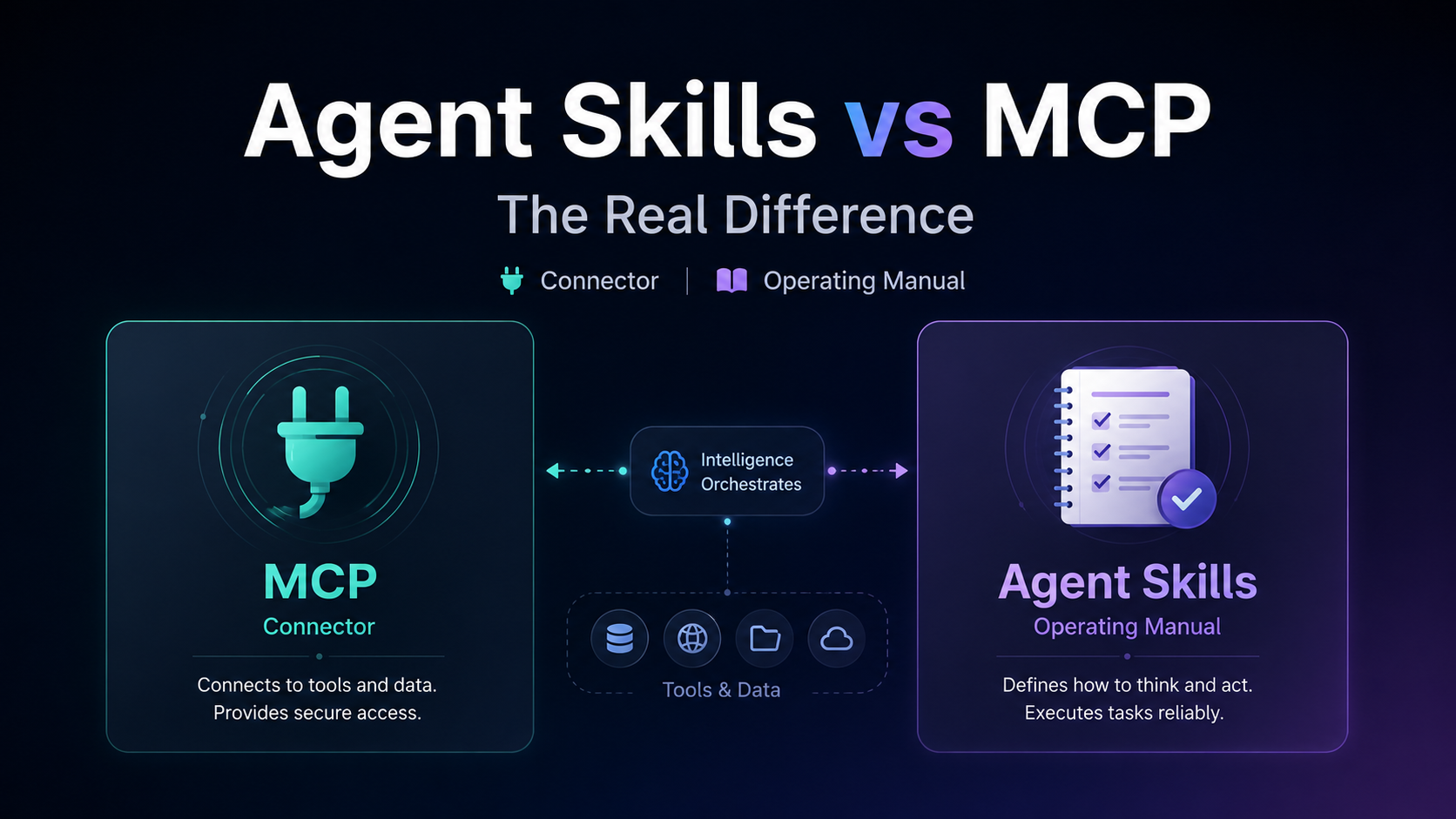
    The Difference Between Agent Skills and MCP

    IMPACT Clarifies core concepts for AI developers working with multi-agent systems.

  2. Your eval criteria are code. Version them like code.

    Evaluation criteria for AI models should be treated as code and versioned accordingly. This approach ensures that changes and potential rot in these criteria are tracked and managed, preventing issues like the three-month unnoticed decay of a judge prompt mentioned in the article. By applying software engineering principles to evaluation, developers can maintain more robust and reliable AI systems. AI

    IMPACT Adopting code-like versioning for AI evaluation criteria can improve model reliability and reduce the risk of undetected performance degradation.

  3. An LLM Flagged My Paper About LLMs Flagging Things.

    An individual's experiment to demonstrate LLMs' limitations in grading academic work was ironically flagged by an LLM as not human-written. The author, a former teacher, designed a study where LLMs graded an assignment based on criteria they themselves had previously used. While most models mirrored the author's grading shortcuts, Grok hallucinated and graded based on its own fabrications. The author's subsequent post about this finding on LessWrong was then flagged by an LLM, highlighting the recursive nature of the problem. AI

    An LLM Flagged My Paper About LLMs Flagging Things.

    IMPACT Highlights the recursive irony of LLMs being used to evaluate content, even content critical of LLMs themselves.

  4. How accurate are AI transcripts for technical or medical terms?

    AI speech-to-text models often struggle with specialized vocabulary found in technical and medical fields. These terms are rare in general training data, phonetically complex, and prone to ambiguity that requires domain-specific context for accurate transcription. Challenges include similar-sounding terminology, abbreviations with multiple meanings, and rapid dictation in noisy environments, all of which can lead to critical errors in fields like healthcare and law. AI

    IMPACT Highlights critical accuracy gaps in AI transcription for specialized domains, impacting healthcare, legal, and engineering applications.

  5. Where is the AI jobs crisis?

    Despite widespread predictions of an AI-driven job crisis, a recent analysis suggests that the feared mass unemployment has not materialized. While some roles may be impacted, the overall labor market appears resilient, with new opportunities emerging. The focus is shifting from job displacement to job transformation and the need for workforce adaptation. AI

    IMPACT Discusses the ongoing debate about AI's impact on the job market, offering a perspective on workforce adaptation.

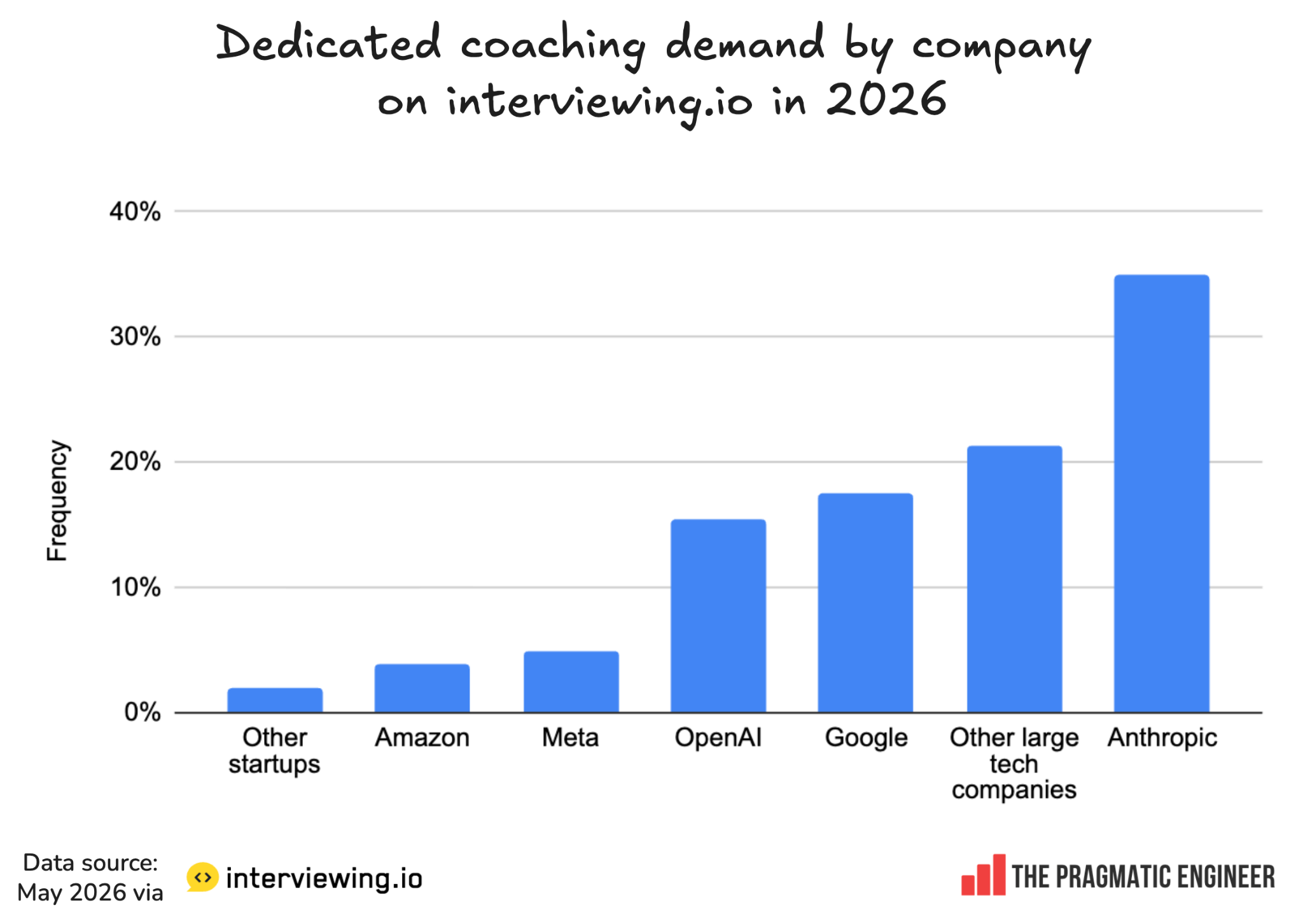
  6. State of the software engineering job market in 2026, part 2

    The software engineering job market in 2026 shows a significant shift, with top AI labs like Anthropic and OpenAI becoming more attractive to candidates than traditional Big Tech companies. Demand for AI engineers is surging, commanding higher compensation, while roles in mobile and frontend development are declining. New graduates and interns face a tougher hiring landscape, as companies reduce intake and place greater emphasis on work and educational backgrounds. AI

    State of the software engineering job market in 2026, part 2

    IMPACT AI roles are commanding higher salaries and attracting more talent than traditional software engineering positions.

  7. KrunalSinh Sisodia (@krunalbuilds) explains that the new breakthrough in ML is not about replacing existing math, but about connecting and reapplying existing concepts like LatentMoE, MLA, LoRA, SVD, and Eigen Decomposition. A lineage of the latest model architectures and parameter-efficient techniques.

    Recent discussions in machine learning highlight that breakthroughs stem from novel combinations and applications of existing mathematical concepts, rather than entirely new theories. Techniques like LatentMoE, MLA, LoRA, SVD, and eigendecomposition exemplify this trend of re-purposing established ideas. Furthermore, the importance of rigorous experimental methodologies, such as ablation studies, is emphasized for validating causal relationships and isolating variables, which is crucial for model improvement and research verification. AI

    IMPACT Highlights how incremental innovation through combining existing techniques drives ML progress, emphasizing rigorous experimentation for validation.

  8. Still can't play chess

    A user tested Anthropic's latest AI model's ability to play chess, a task they believe is a benchmark for AGI. While the model demonstrated impressive reasoning and understanding of moves, it ultimately failed to keep track of the game and lost. This user remains skeptical about LLMs achieving AGI until they can consistently follow complex game rules. AI

    Still can't play chess

    IMPACT User skepticism persists regarding LLM capabilities for complex reasoning tasks like chess, indicating a gap before AGI is considered achievable.

  9. It’s not FAANG anymore. It’s MANGOS.

    A new tech industry acronym, MANGOS, is gaining traction, proposing Meta, Anthropic, Nvidia, Google, OpenAI, and SpaceX as the new dominant forces. This shift reflects the growing influence of AI and agentic companies, potentially overshadowing the older FAANG (Facebook, Amazon, Apple, Netflix, Google) group. The emergence of MANGOS signals a potential future where AI-driven companies lead the tech landscape, though concerns remain about the economic impact on employment. AI

    IMPACT Signals a potential shift in tech leadership towards AI-focused companies, influencing future industry trends and investments.

  10. Place your GPT-6 rumors by this week here

    Speculation is mounting regarding OpenAI's next-generation model, GPT-6, with users on Reddit actively sharing rumors and predictions. The anticipation follows the recent release of GPT-4o, suggesting a rapid development cycle for OpenAI's flagship AI. AI

    IMPACT Anticipation for GPT-6 suggests a continued rapid pace of AI model development and potential future capabilities.

  11. Quoting Andrej Karpathy https://simonwillison.net/2026/Jun/9/andrej-karpathy/#atom-everything # AI # Quotes # Tech

    Andrej Karpathy, a prominent AI researcher, has emphasized the importance of treating AI models as atomic units. He suggests that this approach is crucial for understanding and developing AI systems more effectively. This perspective highlights a shift towards viewing AI components as self-contained and interchangeable building blocks. AI

    IMPACT This perspective could influence how AI systems are designed and understood, potentially leading to more modular and interpretable AI architectures.

  12. MiniMax is headed to Cupertino for AiOS Meetup — WWDC ’26 Edition on June 11.

    MiniMax AI is participating in an upcoming AiOS Meetup focused on Apple platforms and on-device AI. The event, scheduled for June 11 in Cupertino, will feature discussions on AI-native apps and builders fresh from WWDC. Speakers will include Peter Friese, who will discuss Gemini models via Firebase, and Awihannun, a co-creator of MLX. AI

    MiniMax is headed to Cupertino for AiOS Meetup — WWDC ’26 Edition on June 11.

    IMPACT Highlights potential advancements in on-device AI and AI-native applications on Apple platforms.

  13. What about OpenCL and CUDA C++ alternatives?

    While OpenCL and other C++ based GPU programming models like SYCL were designed for portability and saw broad adoption, they failed to become dominant AI compute platforms. Key issues included the slow pace of committee-driven development, leading to a lack of rapid feature iteration and vendor-specific extensions. Furthermore, the inherent tensions of 'open coopetition' among hardware vendors, where innovation was kept secret, hindered the evolution of these standards to meet the rapidly changing demands of AI. AI

    IMPACT Explains why established GPU programming standards like OpenCL did not succeed in AI, offering lessons for future portable compute efforts.

  14. Claude Dynamic Workflows: Scaling Complex Work Through Orchestration

    This article explores how Anthropic's Claude AI can be used to orchestrate complex workflows through a multi-agent framework. It details how Claude's capabilities can be leveraged to manage and scale intricate tasks, suggesting a new paradigm for AI-driven work management. AI

    Claude Dynamic Workflows: Scaling Complex Work Through Orchestration

    IMPACT Demonstrates advanced AI capabilities for complex task management and workflow automation.

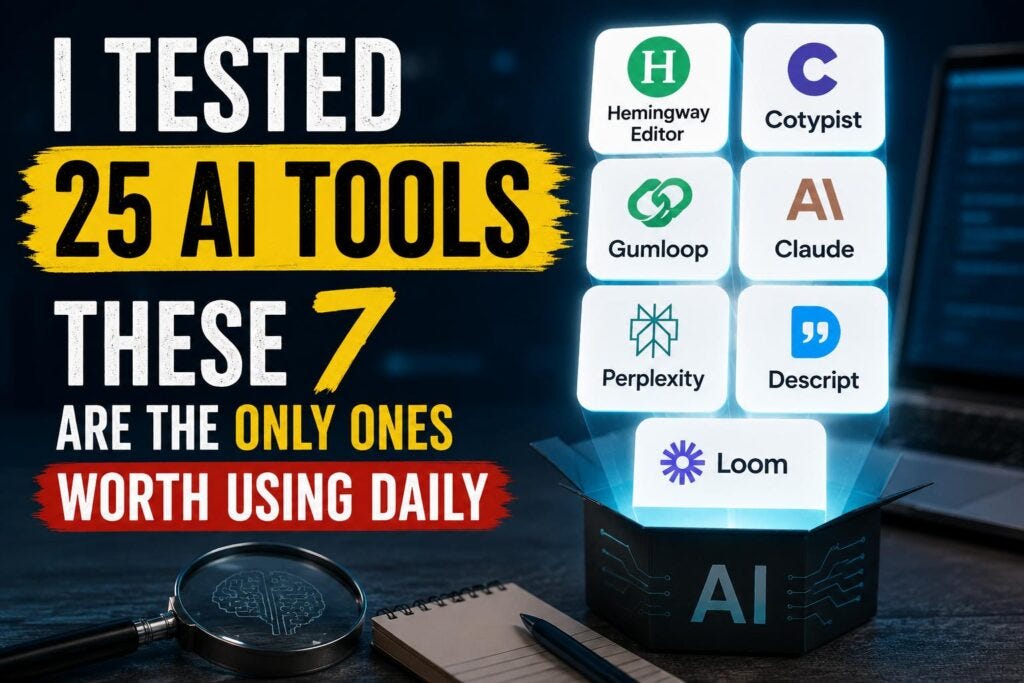
  15. I tested 25 AI Tools — These 7 are the only ones worth using daily

    A review of 25 AI tools identified seven that are recommended for daily use. The selection criteria focused on practical utility and effectiveness for everyday tasks. The article highlights specific applications that stood out among the tested options. AI

    I tested 25 AI Tools — These 7 are the only ones worth using daily

    IMPACT Provides curated recommendations for AI tool adoption.

  16. The Download: whole-body rejuvenation drugs and five things to know about AI

    MIT Technology Review's daily newsletter, The Download, covers significant developments in AI and longevity research. The publication highlights OpenAI's confidential filing for a US IPO, potentially valuing the company at $1 trillion and testing investor interest in AI firms. Additionally, it discusses longevity scientist David Sinclair's plans to initiate human trials for a "reprogramming" drug aimed at age restoration, as part of an XPrize competition. AI

    The Download: whole-body rejuvenation drugs and five things to know about AI

    IMPACT OpenAI's potential IPO could significantly impact AI investment trends and market valuations.

  17. What is Machine Learning In 2026?

    Machine learning, a subset of AI, enables systems to learn from data and improve performance over time. It powers applications like recommendation engines, self-driving cars, and medical diagnostics by identifying patterns and making predictions. Despite its complexity and resource demands, organizations are increasingly adopting ML, with AI spending projected to more than double in 2024. AI

    What is Machine Learning In 2026?

    IMPACT Explains the foundational concepts and broad industry adoption of machine learning, impacting how businesses leverage AI.

  18. why-we-dropped-langchain

    A software development team has shared their experience of removing LangChain from their production environment after using it for a year. They found that the framework's abstractions, while promising for rapid development, ultimately became a hindrance. The team struggled with modifying LangChain's internals and translating their needs into the framework's specific structures, which they argue added unnecessary complexity and debugging challenges compared to using direct SDKs. They advocate for modular building blocks over rigid, high-level abstractions in the rapidly evolving LLM field. AI

    IMPACT Highlights potential drawbacks of high-level LLM frameworks, suggesting modular approaches may be more sustainable.

  19. Looking for 16gb ram / 8gb vram crew - what you using? Omnicoder 9b? something else

    Users on the r/LocalLLaMA subreddit are discussing optimal large language models for systems with 16GB of RAM and 8GB of VRAM. Participants are seeking recommendations for agentic coding and light tasks, with specific mention of models like Omnicoder 9b and Qwen 3.6. The conversation highlights the constraints of limited hardware on model selection and context window capabilities. AI

    IMPACT Users are sharing practical advice on selecting LLMs for consumer-grade hardware, influencing local deployment strategies.

  20. Glad This Mythos Fable Ends on the 22nd, Because “Audit My Workflow” Just Hit My Prompt Limit - here's my context result if someone blame my skills

    A user on Reddit shared their experience with Anthropic's Claude model, encountering a context limit when attempting to audit a workflow. The user posted a screenshot showing the model's response when the context window was exceeded. This incident highlights the practical limitations of current large context windows in real-world applications. AI

    Glad This Mythos Fable Ends on the 22nd, Because “Audit My Workflow” Just Hit My Prompt Limit - here's my context result if someone blame my skills

    IMPACT Highlights practical limitations of current LLM context windows for complex tasks.

  21. Indirect # PromptInjection remains a fundamental security challenge for # AI https:// brave.com/blog/indirect-prompt -injection/ # cybersecurity # Mozilla # Cot

    Indirect prompt injection, a persistent security vulnerability in AI systems, continues to pose a significant challenge. This method allows malicious actors to manipulate AI models into performing unintended actions by embedding hidden instructions within seemingly benign data. Addressing this issue is crucial for maintaining the security and reliability of AI applications. AI

    IMPACT Indirect prompt injection remains a significant security hurdle, requiring ongoing research and development of robust defenses to ensure AI system integrity.

  22. 🎤 Speaker Spotlight: Kristin Bott! We're thrilled to have Kristin Bott at # CascadiaRConf 2026! "ellmer for all? Building context around LLMs" Kristin shares le

    Kristin Bott will be a speaker at CascadiaRConf 2026, presenting on the topic of "ellmer for all? Building context around LLMs." Her talk will focus on lessons learned from Posit, aiming to foster both expert and newcomer confidence in practical LLM knowledge. The conference is scheduled for June 26-27, 2026, in Portland. AI

    IMPACT Provides insights into practical LLM knowledge building for a diverse audience.

  23. New today: “By the time I hear about it, [developers have] already bought their land, so it’s not like they’re asking our permission to show up. So that’s frust

    Developers are rapidly acquiring land for data centers in rural Texas, often before local officials are aware, leading to frustration. While local authorities cannot prevent these purchases, they are focusing on addressing issues they can control. AI

    IMPACT Data center expansion is crucial for AI infrastructure, but this article focuses on the local governance challenges rather than AI capabilities.

  24. Debug mode instead of Agent mode?

    A user on Reddit is questioning the utility of Cursor's "Debug Mode" compared to its "Agent Mode" for game development workflows. They note that Agent Mode appears to handle most debugging tasks effectively and consumes fewer tokens, leading them to wonder about specific scenarios where Debug Mode offers a distinct advantage. AI

    IMPACT Niche tooling discussion; minimal industry-wide impact.

  25. Only AI Can Save Social Security and Medicare https://www.wsj.com/opinion/only-ai-can-save-social-security-and-medicare-d598a47b # AI # SocialSecurity # Future

    An opinion piece argues that artificial intelligence is crucial for the future solvency of Social Security and Medicare. The author suggests AI can optimize administrative processes, detect fraud, and improve healthcare efficiency. Without AI integration, these vital programs may face significant financial challenges. AI

    IMPACT AI integration could streamline operations and reduce fraud in large government programs, potentially ensuring their long-term financial stability.

  26. The Eval Gap: Your Agent Has Observability but No Idea If It's Any Good

    A significant gap exists in LLM agent development, with 89% of teams implementing observability but only 52% employing evaluation metrics. This disconnect means teams can track agent actions but lack insight into whether the agent's performance is improving or declining. The article distinguishes between observability, which shows what happened, and evaluation, which judges the correctness and quality of the agent's output. It proposes a three-tiered approach to agent evaluation: fast checks for regressions, LLM-as-judge for quality assessment, and continuous production monitoring. AI

    IMPACT Highlights a critical gap in LLM agent development, emphasizing the need for robust evaluation frameworks beyond mere observability to ensure agent quality and user satisfaction.

  27. The Reliability Contract Nobody Signed.

    The concept of a "reliability contract" is often absent in software, particularly in the realm of MLOps. While terms of service typically state services are provided "as-is," this lack of explicit reliability guarantees can lead to significant issues. This is especially true for AI systems, where unpredictable behavior can have serious consequences. AI

    The Reliability Contract Nobody Signed.

    IMPACT Highlights a critical gap in MLOps practices, suggesting a need for clearer reliability standards in AI development.

  28. Learning to lead in a hybrid human-AI enterprise

    The adoption of AI agents is projected to increase by 300% in the next two years, prompting leadership teams to re-evaluate their strategies for managing a hybrid human-AI workforce. These agents, capable of autonomous task coordination, are shifting from being mere tools to collaborators, potentially transforming workplace dynamics. Consequently, over three-quarters of HR leaders anticipate that navigating this digital labor landscape will become a central part of their roles, necessitating a significant reappraisal of job roles, skill prioritization, and organizational culture. AI

    Learning to lead in a hybrid human-AI enterprise

    IMPACT AI agents are expected to significantly alter job roles and workplace culture, requiring leaders to adapt change management strategies and reskill employees for higher-value tasks.

  29. Agent Automations You Don't Have to Babysit

    The author discusses the evolution of automation tools, highlighting how AI agents are solving the setup challenges previously addressed by platforms like n8n. While agents can now autonomously create workflows and integrations from simple English commands, a significant trust gap remains for unattended execution. This gap necessitates a new type of runtime, an "overseer," to manage the non-deterministic nature of AI tasks and ensure reliable, secure operation in production environments. AI

    Agent Automations You Don't Have to Babysit

    IMPACT Highlights the shift from setup complexity to trust and reliability challenges in AI automation, indicating a need for new runtime solutions.

  30. Cookie Banners Trained A Generation To Click Without Thinking. Agentic AI Just Raised The Stakes

    Agentic AI systems are poised to make significant decisions on behalf of users, including data sharing, based on outdated consent given years ago via cookie banners. These banners were designed to be ignored, leading to a lack of genuine user consent for current AI operations. This creates a structural risk, as AI agents may act on data permissions users never truly intended to grant, raising concerns for regulators and business leaders. AI

    Cookie Banners Trained A Generation To Click Without Thinking. Agentic AI Just Raised The Stakes

    IMPACT Agentic AI's reliance on outdated consent mechanisms highlights the need for robust data governance to ensure defensible AI operations.

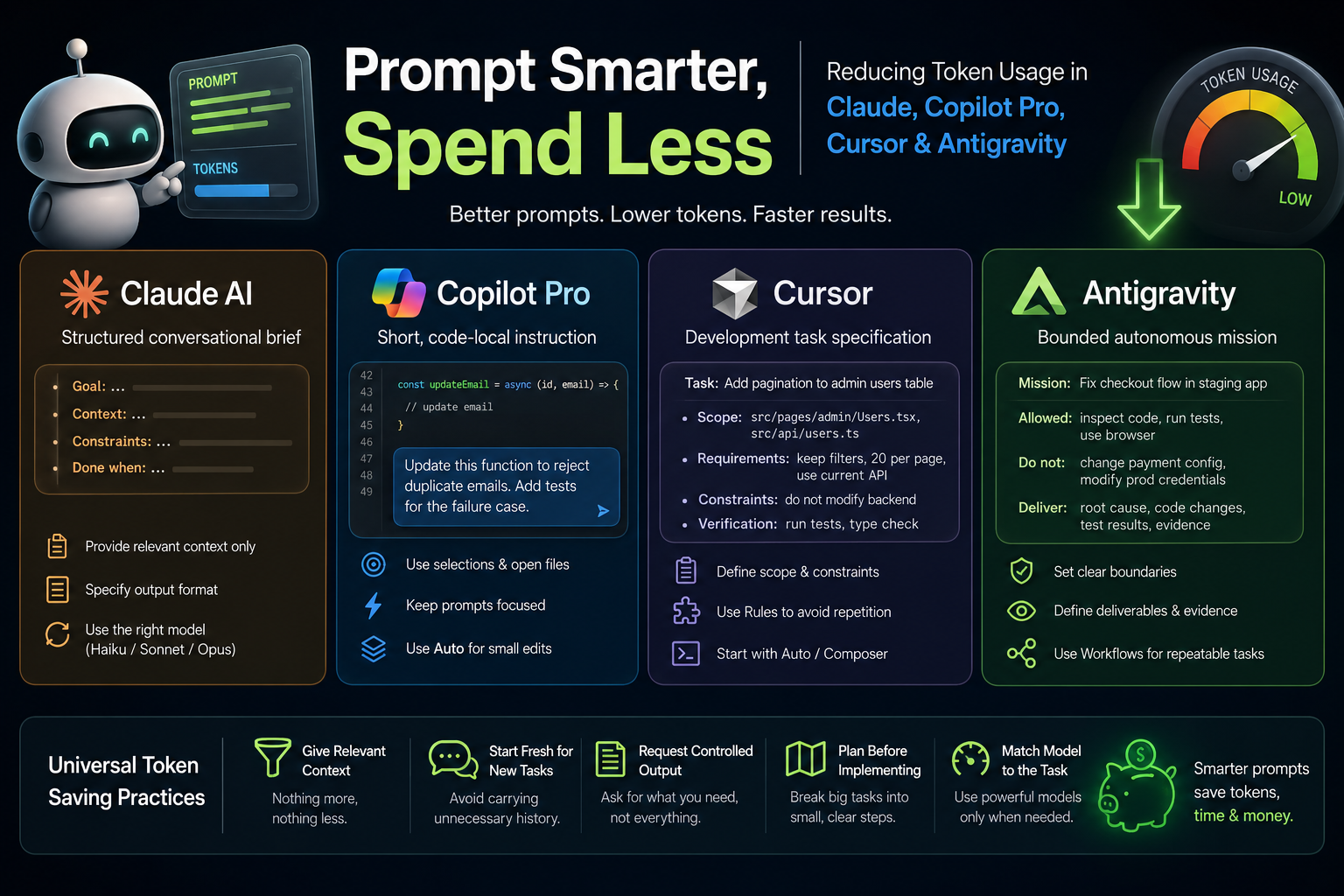
  31. Prompt Smarter, Spend Less: Reducing Token Usage in Claude, Copilot Pro, Cursor and Google…

    This article discusses methods for reducing token usage when interacting with AI coding tools like Claude, Copilot Pro, and Cursor. It emphasizes that while these tools can rapidly generate code and analyze repositories, managing token consumption is key to efficient and cost-effective use. The piece offers strategies for users to "prompt smarter" and "spend less" by optimizing their inputs. AI

    Prompt Smarter, Spend Less: Reducing Token Usage in Claude, Copilot Pro, Cursor and Google…

    IMPACT Provides practical tips for users of AI coding assistants to manage costs and improve efficiency.

  32. Vector Databases in AI Projects: Are They Really Necessary?

    Vector databases have become popular in AI projects, particularly for Retrieval-Augmented Generation (RAG) with LLMs, by enabling fast semantic similarity searches on text embeddings. While they offer advantages like quick retrieval of relevant information for contextual responses, they also present challenges. These include complex setup, potential scaling issues, and significant costs associated with storing large volumes of vectors, leading some to opt for SaaS solutions. AI

    IMPACT Assesses the necessity and cost-effectiveness of vector databases for AI developers, guiding architectural decisions.

  33. Merlin CTO: autonomy can rebuild the foundation of aviation — and national security

    The CTO of Merlin argues that autonomous systems are crucial for advancing aviation and national security, not as replacements for pilots but as an evolution of flight technology. These systems can handle dangerous and complex missions, reducing risks and enhancing capabilities in both defense and commercial sectors. The increasing complexity of modern aviation demands more from human pilots than their cognitive bandwidth can sustain, making autonomy a necessary tool for safety and effectiveness. AI

    Merlin CTO: autonomy can rebuild the foundation of aviation — and national security

    IMPACT Autonomy in aviation could enhance safety and operational capabilities, particularly for dangerous missions and in complex flight environments.

  34. 'China Can Make Special Contributions in the Next Decade,' Says Former UN Official on AI and Robotics

    Former UN official Sam Daws highlighted China's potential to lead in humanoid robotics and embodied AI over the next decade. He emphasized the importance of China's contributions to global digital sovereignty and the development of international standards for robotics. Daws also discussed the prospects for trilateral cooperation on these emerging technologies. AI

    'China Can Make Special Contributions in the Next Decade,' Says Former UN Official on AI and Robotics

    IMPACT China's potential leadership in AI and robotics could shape global standards and digital sovereignty discussions.

  35. Bank Indonesia raises benchmark interest rate by 25 basis points to 5.50%

    Apple has unveiled a new version of Siri with enhanced AI capabilities, aiming to improve its voice assistant's functionality. Separately, ROKID has addressed an incident involving its smart glasses potentially being used for unauthorized recording. OpenAI has reportedly filed confidential documents for an Initial Public Offering (IPO), signaling potential future public market entry. AI

    IMPACT Apple's AI-enhanced Siri could improve user experience, while OpenAI's IPO filing indicates future market activity.

  36. Five things you need to know about AI

    Will Douglas Heaven of MIT Technology Review outlined five key themes regarding AI in 2026, emphasizing that the true impact on jobs and the economy remains uncertain despite widespread use of generative tools. He highlighted growing concerns about AI's real-world harms, including the proliferation of deepfakes used for manipulation and abuse, and the potential for AI to facilitate self-harm and dangerous military applications. Additionally, Heaven noted a significant and organized backlash against AI from various groups, including artists and the general public, who express concerns about its creative and societal implications. AI

    IMPACT Highlights growing societal concerns and potential negative impacts of AI, urging a cautious approach to its integration.

  37. Hands-free Frontend Development with Claude Code

    A developer explores using Anthropic's Claude Code for hands-free frontend development. The article details the process and potential benefits of leveraging AI for coding tasks. It highlights the practical application of Claude Code in streamlining frontend workflows. AI

    Hands-free Frontend Development with Claude Code

    IMPACT Demonstrates a practical use case for AI in streamlining frontend development workflows.

  38. Avi Chawla (@_avichawla) questions the tendency to view LLMs as AI as a whole, with a tweet visually explaining 8 AI model architectures distinguished by input, output, and constraints. It's an educational summary to distinguish and understand various model families, offering conceptual clarity to AI developers.

    Avi Chawla has created a visual guide to eight distinct AI model architectures, challenging the common tendency to equate all AI with Large Language Models (LLMs). This taxonomy categorizes models based on their input, output, and constraints, aiming to provide a clearer conceptual framework for AI developers. The guide emphasizes understanding the diverse families of AI models beyond just LLMs. AI

    IMPACT Provides a clearer conceptual framework for understanding diverse AI model architectures beyond LLMs.

  39. Your agent is trading with a stranger. What keeps the stranger honest?

    This post explores how to ensure honesty in agent-to-agent AI markets, where traditional trust mechanisms like reputation and legal recourse are absent. It proposes two core primitives: execution rewards, which incentivize agents to complete trades by staking and potentially losing economic value, and tiered KYC, allowing agents to verify counterparties based on trade needs. Atomic settlement is presented as a foundational layer, preventing theft by ensuring trades either complete for both parties or are fully refunded, thus shifting the primary risk from theft to wasted opportunity. AI

    IMPACT Proposes novel mechanisms for trust and reliability in future AI-driven markets.

  40. How AI Is Changing The Economics Of Technical Debt

    AI is fundamentally altering the economics of technical debt by enabling faster refactoring and code modernization. While AI tools can accelerate code generation, they also shift bottlenecks to testing and validation, potentially increasing technical debt if not managed properly. However, AI is also proving effective in addressing existing technical debt, with companies like GitHub and Amazon leveraging tools like Copilot and CodeGuru to identify and fix inefficiencies, leading to significant cost and time savings in code rewrites. AI

    How AI Is Changing The Economics Of Technical Debt

    IMPACT AI tools are enabling companies to tackle technical debt more efficiently, potentially reducing long-term development costs and accelerating modernization efforts.

  41. Alex Vindman Survived Trump’s Retaliation Machine. Now He’s Running for Senate

    Alex Vindman, a former National Security Council official known for his role in Trump's first impeachment, is now running for the US Senate in Florida. Vindman aims to challenge incumbent Ashley Moody, bringing his experience with political retaliation and national security to the campaign. He also shared his views on AI's role in national security during an interview. AI

    Alex Vindman Survived Trump’s Retaliation Machine. Now He’s Running for Senate

    IMPACT Candidate discusses AI's role in national security, but the primary focus is political.

  42. If You Time-Traveled Ten Years Back, Would Your AI Still Work?

    Modern AI applications often rely heavily on cloud infrastructure, meaning they would cease to function if transported to the past. This "time-travel test" highlights the dependency on remote servers, APIs, and company policies, contrasting with the persistent utility of local tools like calculators or downloaded music. The emergence of local AI models on devices offers a different relationship, providing a layer of intelligence that is accessible even without an internet connection, though it doesn't negate the benefits of cloud-based AI for complex tasks. AI

    IMPACT Local AI models could offer greater user control and offline functionality, reducing reliance on cloud services for certain applications.

  43. I founded McKinsey’s CEO practice: Here’s why operational excellence is a liability right now

    The current business environment demands a fundamental shift in leadership strategy, moving beyond operational excellence to embrace creative and bold thinking. Factors like geopolitical fragmentation, industrial policy, and AI are rapidly reshaping markets, making traditional planning horizons insufficient. Leaders must now reassess core business models and customer problems from first principles, dedicating top talent to these strategic challenges rather than treating them as secondary tasks. AI

    I founded McKinsey’s CEO practice: Here’s why operational excellence is a liability right now

    IMPACT Leaders must adapt to AI's disruptive influence by prioritizing strategic rethinking over pure operational efficiency.

  44. 📰 Longevity Startup Doses First Human in Bid to Reverse Age-Related Sight Loss It'll be the first time ER-100 technology they claim can reverse aging in cells h

    A user reported that Google's Gemini 3.1 Pro, when used in extended thinking and canvas modes, generated a website theme about railways. The user noted an additional option presented by the AI. This interaction highlights the capabilities and potential features of advanced AI models in creative content generation. AI

    IMPACT Demonstrates AI's creative potential in web design and content generation.

  45. The EU’s Regulatory Overreach Is Becoming A Real Threat To U.S. Tech

    The European Union's increasing regulatory actions, particularly the AI Act and Corporate Sustainability Due Diligence Directive, are posing a significant threat to American tech companies' innovation and market access. These regulations impose substantial compliance costs and operational restructuring requirements, effectively allowing the EU to dictate terms for U.S. businesses. The author argues this represents an overreach, substituting foreign policy preferences for democratic decision-making within the U.S. and potentially hindering American technological leadership. AI

    The EU’s Regulatory Overreach Is Becoming A Real Threat To U.S. Tech

    IMPACT EU regulations like the AI Act may increase compliance burdens for US AI developers seeking market access.

  46. The white-collar jobs contradiction that isn't

    Many white-collar professional jobs are experiencing a downturn, with employment in financial activities, information, and professional/business services declining since April 2023. This trend, while concerning for affected workers, represents a relatively small portion of the overall U.S. job market, which remains healthy. The decline is attributed to a mix of factors including overhiring during the pandemic, process streamlining, and anticipation of AI-driven productivity gains. AI

    The white-collar jobs contradiction that isn't

    IMPACT AI's impact on white-collar jobs is a growing concern, potentially accelerating job losses in specific sectors.

  47. SZSE Listing Committee: Hongfucheng's IPO approved

    Hongfucheng New Materials has passed its initial public offering review by the Shenzhen Stock Exchange. Separately, BYD announced that the US Department of Defense has incorrectly listed it as a Chinese military enterprise, a designation BYD believes lacks justification and will not impact its business operations. The news digest also briefly mentions Apple's new Siri AI and a response from ROKID regarding smart glasses. AI

    IMPACT Brief mentions of Apple's new Siri AI and ROKID's smart glasses suggest minor developments in consumer AI products.

  48. America Doesn’t Work Without Immigrants—Here’s Why

    Immigrants have historically been and continue to be crucial to the American economy and innovation, with 15% of the current U.S. population being foreign-born. Entrepreneurs like Kam Ghaffarian and Amjad Masad highlight the U.S. as a prime destination for achieving entrepreneurial dreams. Despite periods of xenophobia, immigrants have founded numerous companies, employed millions, and driven advancements across various sectors, from space exploration to AI. AI

    America Doesn’t Work Without Immigrants—Here’s Why

    IMPACT Immigrant entrepreneurs like Amjad Masad of Replit are key figures in the AI and tech landscape, highlighting the role of immigration in driving innovation.

  49. You're Sitting On A High-Margin Business—Here's How You Can Realize It

    Companies can unlock significant profit by treating their existing data as a product rather than just an input for internal reporting or AI experiences. This approach, exemplified by retail giants like Walmart and Kroger, transforms operational data into high-margin revenue streams, such as retail media networks. The core idea is to structure and package this data to directly address the decision-making needs of external partners, a strategy applicable across various industries beyond retail. AI

    You're Sitting On A High-Margin Business—Here's How You Can Realize It

    IMPACT Treating data as a product, rather than an input, will become crucial as AI tools become commoditized, shifting competitive advantage to the quality and structure of data inputs.

  50. One small prompt change that made ChatGPT 5 times more useful for me.

    A Reddit user shared a simple prompt engineering technique to improve ChatGPT's usefulness. By adding "don't explain what you are about to do, just do it" to prompts, users can reduce unnecessary conversational filler. Additionally, appending "if you are unsure about anything, ask me before answering" can enhance accuracy for complex queries. AI

    IMPACT Users can improve their interaction with existing AI models by employing simple prompt engineering techniques.