PulseAugur / Brief
EN
LIVE 20:09:14

Brief

last 24h
[50/222] 223 sources

Multi-source AI news clustered, deduplicated, and scored 0–100 across authority, cluster strength, headline signal, and time decay.

  1. LoRA and QLoRA fine-tuning: what they actually do under the hood

    This article explains the technical details behind LoRA and QLoRA, parameter-efficient fine-tuning methods for large language models. It addresses the memory constraints that prevent full fine-tuning on consumer hardware by detailing how LoRA approximates weight updates with low-rank matrices, significantly reducing the number of trainable parameters. QLoRA further optimizes this by introducing 4-bit quantization with a specialized NF4 data type, enabling the fine-tuning of very large models on single GPUs. AI

    IMPACT Explains efficient fine-tuning techniques, enabling users to adapt large models with limited hardware.
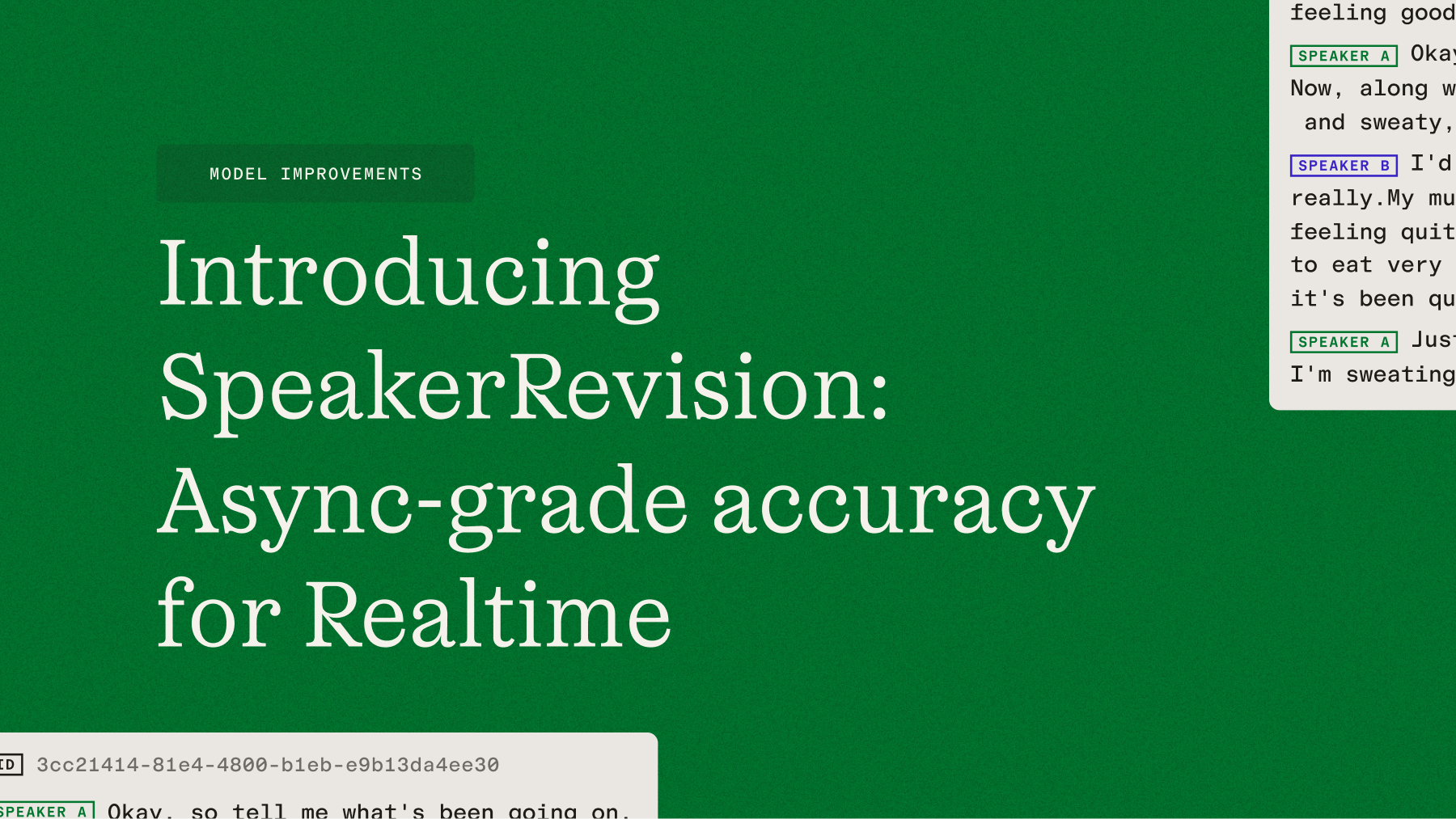
  2. One stream, two jobs: introducing SpeakerRevision

    AssemblyAI has introduced SpeakerRevision, a new feature that enhances real-time speech transcription by providing more accurate speaker labels. This feature processes the entire conversation after it concludes, allowing for corrections to initial speaker assignments with minimal added latency. SpeakerRevision aims to eliminate the need for separate asynchronous processing steps, offering async-grade accuracy directly at the end of a live stream. AI

    One stream, two jobs: introducing SpeakerRevision

    IMPACT Improves accuracy and efficiency for AI-powered transcription services, potentially reducing costs and simplifying workflows for developers.

  3. Anthropic Removed Adversarial Training from Opus 4.8. Overconfidence Fell 10×, Injections Rose 3.7×

    Anthropic has removed adversarial training from its Opus 4.8 model, leading to a tenfold decrease in overconfidence. However, this change also resulted in a 3.7-fold increase in prompt injection vulnerabilities. The system card indicates that while one failure mode was addressed, another was inadvertently amplified. AI

    Anthropic Removed Adversarial Training from Opus 4.8. Overconfidence Fell 10×, Injections Rose 3.7×

    IMPACT Changes in adversarial training and prompt injection vulnerabilities highlight ongoing safety challenges in LLM development.

  4. zai-org/SCAIL-2 · Hugging Face

    The zai-org/SCAIL-2 model offers an end-to-end solution for controlled character animation, directly animating a reference character using a driving video. It eliminates the need for intermediate representations like pose maps, enabling more flexible character replacement and multi-character scenarios. Trained on synthesized motion pairs, SCAIL-2 demonstrates emergent abilities such as cross-identity character replacement and animal-driving animation. AI

    zai-org/SCAIL-2 · Hugging Face

    IMPACT Enables more flexible and direct character animation workflows, potentially impacting content creation in gaming and film.

  5. Read the full story → https://t.co/dxONe2Jn6K

    Together AI has released a new open-source model named RedPajama-3B. This model is designed for efficient inference and is available for public use. The release aims to provide a capable yet lightweight option for researchers and developers. AI

    IMPACT Provides a new, accessible model for research and development in the AI community.

  6. Fable feels like a mature, calm, and down to earth programmer - Very impressive

    A user on Reddit shared their positive experience with Fable 5, an AI model they found to be highly effective at solving a programming bug that Anthropic's Claude Opus struggled with. The user highlighted Fable 5's concise communication, autonomous problem-solving capabilities, and its ability to identify and warn about potential future issues beyond the immediate bug fix. Despite its impressive performance, the user noted that Fable 5 consumed a significant portion of their Claude Max 5x usage window. AI

    IMPACT Demonstrates advanced autonomous problem-solving and contextual understanding in AI models, potentially improving developer productivity.

  7. ”…two months later— just as tokenmaxxing has come to end and companies have begun to limit their AI token budgets — Mythos is no longer too dangerous to release

    Mythos, an AI model previously deemed too dangerous for release, is now available two months after its initial assessment. This comes as companies begin to limit their AI token budgets, suggesting a shift in the perceived risks and economic viability of such models. AI

    IMPACT The release of previously restricted models like Mythos could influence the AI landscape, especially as companies re-evaluate token usage and associated costs.

  8. Version of AI tool 'too powerful for public' released to public https://www.bbc.com/news/articles/ckg701v1dp6o?at_medium=RSS&at_campaign=rss # AI # Technology #

    A version of an AI tool, previously deemed too powerful for public release, has now been made available. The developers decided to release this version after initially withholding it due to concerns about its potential misuse. AI

    IMPACT The release of a previously restricted AI tool could accelerate research and development in the field, but also raises potential safety and misuse concerns.

  9. RT @pirroh: High Effort handles your most complex builds with ease on Replit.

    Replit has integrated Claude Fable 5 into its AI development platform to enhance its "High Effort" build capabilities. This integration aims to simplify complex build processes for users. A limited-time discount of 25% is being offered for the next seven days. AI

    IMPACT Enhances AI development platform capabilities with a new model integration.

  10. Floatboat Launches "Proactive Agent OS" That Works From Your Calendar

    AI startup Floatboat has launched a proactive agent operating system designed to automate work tasks by integrating with users' calendars. The system can automatically generate meeting briefs, gather documents, and manage recurring workflows. It features an interface called FloatIM that allows AI agents to collaborate autonomously, supports over 3,500 applications, and integrates with platforms like Lark and WeChat. AI

    Floatboat Launches "Proactive Agent OS" That Works From Your Calendar

    IMPACT This new OS could streamline workflows by automating tasks based on calendar events, potentially improving productivity for users who adopt it.

  11. # ClaudeFable5 debuts on # AmazonBedrock : major upgrade for # AI # enterprise https:// gadgetflux.eu/claude-fable-5-d isponibil-pe-amazon-bedrock/

    Anthropic's Claude Fable 5 model is now available on Amazon Bedrock. This integration offers enterprise users enhanced AI capabilities through Amazon's cloud platform. The release signifies a move to broaden access to advanced AI models for businesses. AI

    IMPACT Expands enterprise access to advanced AI models via a major cloud provider.

  12. Progress

    A user on Reddit shared a screenshot indicating that Anthropic's Claude AI is now capable of processing a context window of 1 million tokens. This significant increase in context length allows the AI to retain and process much larger amounts of information in a single interaction. AI

    Progress

    IMPACT Enables AI to understand and generate responses based on vastly larger documents and conversations.

  13. - Open CV 5 ships with a new performant DNN engine + can run vision and LLM models directly inside the DNN module: https:// opencv.org/opencv-5/ - The Smallest

    OpenCV 5 has been released, featuring a new high-performance DNN engine capable of running both vision and large language models directly within its module. This update also includes a detailed explanation of how to build a perceptron from scratch using Python. Additionally, the release coincides with news about Anthropic's latest Claude model. AI

    IMPACT OpenCV 5's new DNN engine allows direct integration of LLMs, potentially simplifying multimodal AI development and deployment.

  14. Claude Fable 5's "cybersecurity safety classifiers" in action

    Anthropic's Claude 3.5 model has reportedly demonstrated advanced cybersecurity safety classifiers. These classifiers are designed to identify and mitigate potential security risks within AI systems. The model's performance in this area suggests a significant step forward in AI safety research and development. AI

    Claude Fable 5's "cybersecurity safety classifiers" in action

    IMPACT Enhances AI safety protocols, potentially reducing risks associated with AI-driven cybersecurity threats.

  15. Active Learning with Foundation Model Priors: Efficient Learning under Class Imbalance

    Researchers have developed a new active learning framework designed to improve model performance on datasets with imbalanced class distributions and noisy annotations. This approach leverages foundation model priors to make informed decisions between a large foundation model and a smaller model, effectively addressing both label noise and class imbalance across image and text domains. Experiments show this method can achieve over 50% annotation savings compared to existing baselines while maintaining performance and robustness. AI

    IMPACT This new active learning approach could significantly reduce annotation costs and improve model accuracy on real-world, imbalanced datasets.

  16. The Ray3.2 API runs cinematic-grade at scale and integrates into the products you already build. Made for developers, agencies, and enterprises building cinema

    Luma Labs has released its Ray3.2 API, designed for generating cinematic-quality video at scale. This new API is built to integrate seamlessly into existing products, targeting developers, agencies, and enterprises. It offers advanced features such as multi-keyframe control, expressive facial performance, and HDR/EXR output capabilities. AI

    IMPACT Enables developers to integrate advanced cinematic video generation into their applications.

  17. Dendrograms of Mixing Measures for Softmax-Gated Gaussian Mixture of Experts: Consistency Without Model Sweeps

    Researchers have developed a new statistical framework for Gaussian mixture of experts (SGMoE) models that addresses challenges in parameter estimation and model selection. The framework introduces novel loss functions and establishes convergence rates for maximum likelihood estimators, linking them to polynomial equation systems. For model selection, a dendrogram-based approach is proposed, which consistently identifies the number of experts without requiring multi-size training and demonstrates robustness to model misspecification. AI

    IMPACT Introduces a more robust and efficient method for selecting the number of experts in SGMoE models, potentially improving their interpretability and performance in complex datasets.

  18. bp announces restructuring of its architecture, adjusting to two major upstream and downstream business segments starting in July

    Apple has unveiled a new Siri powered by AI, aiming to enhance its capabilities. Separately, the company Rokid has addressed allegations of its smart glasses being used for unauthorized recording of flight attendants. In other news, OpenAI has reportedly filed for an Initial Public Offering (IPO) in secret. AI

    IMPACT Apple's AI-powered Siri aims to improve user interaction, while OpenAI's IPO filing signals potential major market activity.

  19. Conditional Normalizing Flows for Forward and Backward Joint State and Parameter Estimation

    Researchers have developed new state estimation methods using conditional normalizing flows, which offer improvements over traditional filtering algorithms for nonlinear systems with complex uncertainty distributions. The study explores various architectures like MLPs, transformers, and Mamba-SSM for conditional embeddings, and tests an optimal-transport-inspired kinetic loss term to address overparameterization. The effectiveness of these approaches was demonstrated in applications related to autonomous driving, patient population dynamics, and COVID-19 forecasting. AI

    IMPACT Introduces advanced techniques for state estimation, potentially improving accuracy in complex predictive models for fields like autonomous driving and epidemiology.

  20. Using Fable Today

    A user shared their experience using Fable, an AI-powered writing tool, and discussed its integration with Anthropic's Claude models. The post highlights how Fable leverages Claude for various writing tasks, suggesting a practical application of advanced AI in content creation. AI

    Using Fable Today

    IMPACT Demonstrates practical applications of LLMs in content creation tools, potentially influencing user adoption of AI writing assistants.

  21. Doubling Qwen3.6-27B on One RTX 3090: ollama llama.cpp + MTP, Lever by Lever (35.7 80.2 tok/s)

    A technical blog post details how to significantly increase the inference speed of the Qwen3.6-27B large language model on a single RTX 3090 GPU. By optimizing the inference engine, using a smaller model quantization, and implementing multi-token prediction (MTP) with speculative decoding, the throughput was boosted from 35.7 tokens/second to 80.2 tokens/second, a 2.25x improvement. The author found that MTP alone provided a 1.78x speedup, while the other optimizations contributed to the remaining gains. The post also notes specific technical hurdles encountered, such as compatibility issues with Ollama's GGUF format and the optimal settings for MTP. AI

    IMPACT Demonstrates practical techniques for accelerating LLM inference, potentially lowering operational costs and improving user experience.

  22. Unsloth Gemma 4 QAT MTP assistant models now available

    Unsloth has released new quantized assistant models based on Gemma 4, optimized for faster inference. These models are available in various quantizations, including q8_0, and are accessible via Hugging Face repositories. The release aims to improve the performance and accessibility of Gemma 4 models for local use. AI

    IMPACT Provides optimized versions of Gemma 4 models for local deployment, potentially improving performance for users.

  23. I Tested Opus 4.8 and Kimi K2.6 on the Same 20 Tasks.

    A user compared Anthropic's Claude Opus 4.8 against Moonshot AI's Kimi 2.6 on 20 real-world tasks. The comparison focused on practical application rather than just benchmarks and price. The results indicated that Opus 4.8 generally outperformed Kimi 2.6 across these tasks. AI

    I Tested Opus 4.8 and Kimi K2.6 on the Same 20 Tasks.

    IMPACT Provides practical insights into the performance differences between leading large language models for real-world applications.

  24. From Nobel Prize Project to Generative Drug Design, Latent Labs Founder Simon Kohl: AI is Ushering Biology into the "Programmable Era" | CVPR 2026

    Latent Labs founder Simon Kohl, a key figure in the AlphaFold project, presented at CVPR 2026 on using generative AI for molecular design. He highlighted the inefficiencies in traditional drug discovery, which takes over a decade and billions of dollars with a high failure rate. Kohl introduced Latent Labs' models, Latent-X1 and Latent-X2, which show promise in designing drug molecules with high accuracy, and unveiled Latent-Y, an AI agent capable of autonomous antibody design from natural language prompts. AI

    From Nobel Prize Project to Generative Drug Design, Latent Labs Founder Simon Kohl: AI is Ushering Biology into the "Programmable Era" | CVPR 2026

    IMPACT Generative AI is poised to revolutionize drug discovery by enabling faster, cheaper, and more precise design of therapeutic molecules.

  25. Meituan releases AI browser Tabbit 1.0, which can automatically perform various tasks

    Meituan has launched its AI-native browser, Tabbit 1.0, designed as an AI entry point that integrates multiple large language models. The browser can automatically execute complex tasks across different software and websites based on user input. The new version introduces a memory function to retain user preferences and context, enabling more personalized and efficient interactions. AI

    IMPACT This AI browser aims to streamline user interaction with multiple LLMs and automate cross-application tasks, potentially improving productivity for users who frequently switch between different tools and services.

  26. Are we not getting Fable within Cursor?

    Users are inquiring about the availability of Anthropic's Fable model within the Cursor IDE. Multiple users on Reddit are asking why they cannot select Fable or Mythos models in Cursor, indicating a lack of integration or support for these specific Anthropic models. AI

    IMPACT This cluster highlights user demand for specific AI model integrations within development tools, indicating potential market opportunities for IDEs and model providers.

  27. GitHub Copilot Deprecates GPT-5.2 and GPT-5.2-Codex Models | CodeZine https://www.yayafa.com/2818851/ # AgenticAi # AI # AIAgent # ArtificialGeneralIntelligence # Ar

    GitHub Copilot is deprecating its older GPT-5.2 and GPT-5.2-Codex models. This change indicates a move towards newer, likely more capable AI architectures within the Copilot ecosystem. Users relying on these specific models should prepare for the transition to updated versions. AI

    GitHub Copilot Deprecates GPT-5.2 and GPT-5.2-Codex Models | CodeZine https://www.yayafa.com/2818851/ # AgenticAi # AI # AIAgent # ArtificialGeneralIntelligence # Ar

    IMPACT This change signals an evolution in GitHub Copilot's underlying AI, likely leading to improved performance or new features for developers.

  28. Comparing Model Performance: Without MTP vs. With MTP vs. With MTP + QAT

    A blog post compares the performance of the Google Gemma 4 12B model with and without quantization techniques, specifically MTP (Mixed Precision Training) and QAT (Quantization-Aware Training). The author provides speed benchmarks for prompt processing and generation, showing that QAT significantly improves performance. The post also includes a TypeScript code example for the FizzBuzz problem, demonstrating both a standard and a more scalable implementation. AI

    Comparing Model Performance: Without MTP vs. With MTP vs. With MTP + QAT

    IMPACT Demonstrates performance gains from quantization, potentially influencing deployment strategies for LLMs.

  29. How to Process 100-Page Documents with AI (Using 128K Context Models)

    AIBridge is offering access to several large-context language models, including those with 128K token limits, which can process documents up to approximately 100,000 words or 200 pages. This capability eliminates the need for complex chunking and reassembly of text for analysis or summarization. The service provides instant access to models like DeepSeek-v4, Qwen3, GLM-4, and Moonshot-v1, with a special mention of Moonshot-v1-128k for its specialization in handling lengthy documents. Users can try the service with 3 million free tokens. AI

    How to Process 100-Page Documents with AI (Using 128K Context Models)

    IMPACT Enables processing of entire books and long documents without manual chunking, potentially streamlining research and analysis workflows.

  30. A Mixed Diet Makes DINO An Omnivorous Vision Encoder

    Researchers have developed an "Omnivorous Vision Encoder" to improve how AI models understand different visual data types. This new framework fine-tunes existing vision encoders, like DINOv2, to create a unified feature space. The goal is to ensure that an AI can recognize the same scene consistently, whether it's presented as a standard RGB image, a depth map, or a segmentation map. AI

    IMPACT Enhances AI's ability to process and correlate diverse visual inputs, potentially improving applications in robotics and augmented reality.

  31. Stage-1 Controls the Entropy Regime, Not the Outcome

    A new research paper explores the impact of different Stage-1 training methods on vision-language models (VLMs). The study found that while Stage-1 training, such as supervised fine-tuning (SFT) or on-policy distillation (OPD), leads to similar in-domain performance, it significantly influences the entropy regime of the model. Specifically, OPD results in higher policy entropy and answer diversity compared to SFT, although these advantages diminish after the Stage-2 reinforcement learning phase. AI

    IMPACT This research clarifies the role of early-stage training in VLM development, suggesting that while it influences model behavior, the ultimate performance gains may be limited.

  32. BCG-FM: A Foundation Model for Ambient Cardiac Health Sensing

    Researchers have developed BCG-FM, a novel foundation model for analyzing cardiac health through ambient mechanical biosignals. This model utilizes a piezoelectric sensor embedded in a bed surface to record ballistocardiography (BCG) data overnight, requiring no user effort. Pretrained on 2.75 million hours of recordings from nearly 146,000 individuals, BCG-FM achieved a 3.26-year Mean Absolute Error in biological age estimation and demonstrated clinically relevant discrimination across various health conditions. AI

    IMPACT Introduces a new, passive data modality for foundation models in healthcare, potentially enabling continuous, effortless health monitoring.

  33. ZIPP:Zero-shot Image Personalization from Personas

    Researchers have developed ZIPP, a novel method for zero-shot image personalization that conditions text-to-image diffusion models on natural-language personas. This approach allows for personalized image generation without requiring any user-specific data or model weight updates, addressing the cold-start problem and context-dependent preferences. ZIPP utilizes a large language model to rewrite prompts from the perspective of a persona, and personas are mined at scale using a graph attention network trained on a large Reddit interaction graph. The system was evaluated on ZIPBench, a new benchmark, and demonstrated significant improvements in personalization and reduced subpopulation bias compared to generic generation and fine-tuned baselines. AI

    IMPACT Enables personalized image generation without user-specific data, potentially accelerating adoption in creative applications.

  34. TriHead-GAN: A Generative Adversarial Network with Triple-Head Discriminator for Carbon Emission Time Series Generation

    Researchers have developed TriHead-GAN, a novel generative adversarial network designed to create synthetic carbon emission time series data. This model addresses the scarcity of high-frequency monitoring data, which hinders deep learning applications in climate policy and regulation. TriHead-GAN's unique triple-head discriminator ensures the generated data accurately reflects cross-variable correlations and realistic temporal variability, outperforming existing methods in experiments. AI

    IMPACT Enables more robust AI models for climate monitoring and policy by addressing data scarcity.

  35. Beyond Accuracy: Interpreting Topic Representation in Suicide Ideation Detection Models

    Researchers have developed a new method to interpret how models designed to detect suicide ideation internally represent psychological risk factors. This approach moves beyond simple accuracy metrics to analyze the model's internal representations using visualization and geometric analysis. The study found that topic-aware data augmentation significantly improves the clarity and distinctness of representations for factors like family issues and financial crises, suggesting it enhances both performance and interpretability. AI

    IMPACT Enhances understanding and safety of AI in mental health applications by improving model interpretability.

  36. Graph-to-SFILES: Control structure prediction from process topologies using generative artificial intelligence

    Researchers have developed a generative AI model called Graph-to-SFILES to predict control structures for process diagrams. This model utilizes graph neural networks to interpret process topologies, offering an alternative to sequence-based methods. While effective in small-data scenarios, its performance on large datasets still requires further investigation for industrial applications. AI

    IMPACT This research could accelerate P&ID development in data-scarce environments, though its industrial applicability needs further study.

  37. AMix-1: A Pathway to Test-Time Scalable Protein Foundation Model

    Researchers have developed AMix-1, a protein foundation model utilizing Bayesian Flow Networks and a novel training methodology. This model demonstrates scalable pretraining, emergent capabilities, and effective in-context learning through multiple sequence alignments. AMix-1 has successfully designed an improved protein variant with a 50x activity increase and incorporates an evolutionary test-time scaling algorithm for enhanced in silico directed evolution. AI

    IMPACT Introduces a new foundation model for protein design with potential to accelerate lab-in-the-loop engineering.

  38. Improving the Performance and Learning Stability of Parallelizable RNNs Designed for Ultra-Low Power Applications

    Researchers have developed new recurrent neural network architectures, the Cumulative Memory Recurrent Unit (CMRU) and its variant $\alpha$CMRU, to improve performance and learning stability in ultra-low power applications. These models address gradient blocking issues in previous designs by introducing a cumulative update formulation that enhances gradient flow and reduces initialization sensitivity. The CMRU and $\alpha$CMRU demonstrate competitive or superior performance compared to existing models like LRUs and minGRUs on various benchmarks, particularly for tasks requiring long-range memory retention, while maintaining essential features for analog implementation. AI

    IMPACT Introduces more stable and efficient RNNs for edge devices, potentially enabling new low-power AI applications.

  39. Pharmacogenomic Knowledge Graph Augmentation for Graph Neural Network-Based Drug-Drug Interaction Prediction

    Researchers have developed a method to enhance drug-drug interaction (DDI) prediction using Graph Neural Networks (GNNs) by incorporating pharmacogenomic data. This approach augments molecular structure information with details about drug metabolism pathways, specifically focusing on cytochrome P450 enzymes. The study found that this knowledge graph augmentation significantly improves DDI classification accuracy, particularly for interactions mediated by CYP2C9, though it did not overcome inherent limitations in predicting interactions for entirely new drugs. AI

    IMPACT Enhances AI's ability to predict drug interactions by integrating biological pathway data, potentially accelerating drug discovery and safety assessments.

  40. Baichuan-M4: A Clinical-Grade Medical Agent System for Continuous Care

    Baichuan Intelligence has introduced Baichuan-M4, a medical large model designed for continuous patient care. This system integrates a unified runtime for consistent training and deployment, a core reasoning model trained with reinforcement learning for long-term patient memory and multi-agent coordination, and a clinical tool layer for evidence retrieval and multimodal understanding. Baichuan-M4 demonstrates leading performance across various medical evaluations, including static knowledge, dynamic consultations, and image analysis, while significantly reducing hallucination rates. AI

    IMPACT This advanced medical AI system could set new benchmarks for continuous patient care and diagnostic accuracy in healthcare.

  41. Language-based Trial and Error Falls Behind in the Era of Experience

    Researchers have developed a new framework called SCOUT to improve the performance of Large Language Models (LLMs) on non-linguistic tasks. SCOUT decouples exploration from exploitation, using lightweight "scouts" to efficiently gather data from environments. This data is then used to fine-tune LLMs, enabling them to perform better on tasks that previously required extensive and costly trial-and-error. In experiments, SCOUT allowed a Qwen2.5-3B-Instruct model to outperform proprietary models like Gemini-2.5-Pro while consuming fewer computational resources. AI

    IMPACT This framework could significantly reduce the computational cost of training LLMs for complex, real-world tasks.

  42. Decoupling the "What" and "Where" With Polar Coordinate Positional Embeddings

    Researchers have developed Polar Coordinate Positional Embeddings (PoPE) to improve Transformer architectures by decoupling content and positional information. This new method, PoPE, addresses limitations in existing RoPE embeddings where content and position are entangled, potentially hindering performance. PoPE demonstrates superior performance in tasks requiring positional or content-based indexing and shows significant gains in sequence modeling across music, genomics, and natural language, even outperforming methods designed for length extrapolation. AI

    IMPACT PoPE could enhance Transformer performance in sequence modeling tasks by improving positional awareness, potentially leading to better language models and other sequence-based AI applications.

  43. MatMind: A Structure-Activity Knowledge-Driven Generative Foundation Model for Materials Science

    Researchers have introduced MatMind, a novel generative foundation model designed for materials science. This model unifies structure-activity knowledge and physics-informed feedback within a progressive training framework. MatMind demonstrates competitive performance across various tasks, including property prediction and crystal generation, surpassing specialized models in several benchmarks. AI

    IMPACT MatMind's unified approach could accelerate discovery and design in materials science by providing a versatile backbone for various tasks.

  44. Evaluating Advanced Prompting on Gemini Flash for Multi-Hop Biomedical QA

    Researchers evaluated Google's Gemini Flash models on the MedHopQA challenge, which requires multi-hop reasoning in the biomedical domain. By employing an advanced prompt engineering strategy that included role-playing, Chain-of-Thought examples, and specific formatting, they achieved a Concept Level Score of 0.720 with Gemini 2.0 Flash. This sophisticated prompting significantly improved performance compared to a baseline prompt and nearly matched the results of the next-generation Gemini 2.5 Flash, highlighting the crucial role of prompt design in LLM reasoning. AI

    IMPACT Demonstrates that sophisticated prompt engineering can unlock advanced reasoning capabilities in efficient LLMs for specialized domains.

  45. FormalASR: End-to-End Spoken Chinese to Formal Text

    Researchers have developed FormalASR, a novel end-to-end system designed to convert spoken Chinese directly into formal written text. This approach bypasses the need for a separate post-editing step by an LLM, reducing latency and computational costs. The system utilizes two models, 0.6B and 1.7B parameters, fine-tuned from Qwen3-ASR, and is trained on newly created large-scale datasets, WenetSpeech-Formal and Speechio-Formal. AI

    IMPACT Offers a more efficient and direct method for transcribing spoken language into formal text, potentially improving downstream NLP applications.

  46. Post-Trained MoE Can Skip Half Experts via Self-Distillation

    Researchers have developed a new framework called Zero-Expert Self-Distillation Adaptation (ZEDA) to make Mixture-of-Experts (MoE) language models more efficient. ZEDA allows post-trained static MoE models to dynamically skip over half of their experts during inference with minimal accuracy loss. This method was tested on Qwen3-30B-A3B and GLM-4.7-Flash, showing significant reductions in computation and an inference speedup of approximately 1.20x. AI

    IMPACT Reduces inference costs for MoE models, potentially accelerating deployment and adoption.

  47. Repetition Mismatch: Why Data Mixture Experiments Don't Scale and How to Fix Them

    Researchers have identified a key issue in scaling up AI model training data mixtures, termed "repetition mismatch." This occurs when the optimal data mixture changes as training budgets increase due to the varying repetition rates of high-quality, limited datasets. A new subsampling procedure that matches the target repetition rate can accurately predict optimal mixtures from significantly smaller experiments, improving efficiency and accuracy. AI

    IMPACT Improves efficiency and accuracy in training large AI models by addressing data mixture scaling issues.

  48. Post-training is (Massive) Supervised Learning

    A new paper argues that the current dominant method for training large language models (LLMs), which involves extensive post-training stages like supervised fine-tuning (SFT) and reinforcement learning (RL), is essentially a return to older "pre-train then fine-tune" approaches. The authors demonstrate that models trained from scratch on modern reasoning datasets can achieve significant performance on competitive benchmarks, suggesting that current post-training primarily serves to fit models to specific distributions rather than fostering general capabilities. They propose a shift towards training procedures that emphasize "learning how to learn" to develop more generally capable models. AI

    IMPACT Suggests current LLM training methods may be overly focused on distribution fitting, potentially hindering the development of more general AI capabilities.

  49. scCBGM: Interpretable Single-Cell Counterfactual Editing

    Researchers have developed scCBGM, a novel framework for interpretable single-cell counterfactual editing using concept bottleneck generative models. This approach adapts concept bottleneck architectures for single-cell data, incorporating decoder skip connections and a cross-covariance penalty to enhance disentanglement. The framework has been extended to flow matching models, allowing for concept-guided editing in both encoding-decoding and generation scenarios, and includes a new synthetic benchmark for evaluation. AI

    IMPACT Introduces a new method for analyzing and manipulating single-cell data, potentially accelerating disease research and therapeutic design.

  50. SmartMixed: A Two-Phase Training Strategy for Adaptive Activation Function Learning in Neural Networks

    Researchers have developed SmartMixed, a new two-phase training strategy that enables neural networks to learn optimal activation functions for individual neurons. The first phase uses a differentiable mixture mechanism for neurons to select from a pool of candidate functions, while the second phase fixes these selections for computational efficiency. Experiments on the MNIST dataset with feedforward networks showed that neurons in different layers develop distinct activation function preferences, outperforming models with a single fixed activation function. AI

    IMPACT Enables more efficient and potentially more powerful neural network architectures by optimizing activation functions at a granular level.