PulseAugur / Brief
EN
LIVE 20:10:36

Brief

last 24h
[50/769] 223 sources

Multi-source AI news clustered, deduplicated, and scored 0–100 across authority, cluster strength, headline signal, and time decay.

  1. Can Voice Agents Handle Bilingual Customers? Benchmarking Frontier ASR on Code-Switched Speech

    Hugging Face has developed a new benchmark and dataset to evaluate how automatic speech recognition (ASR) systems handle code-switched speech, a common practice among bilingual individuals. The benchmark focuses on four language pairs relevant to enterprise customer bases: Spanish-English, French-English, Canadian French-English, and German-English. The study reports results from seven ASR systems, with ElevenLabs Scribe V2, Gemini 3 Flash, and Assembly AI Universal 3-Pro emerging as top performers across various metrics. AI

    IMPACT This benchmark will help improve voice agent performance for bilingual customer bases, leading to better user experiences and operational efficiency.

  2. Fourier Analysis from a Linear Algebraic Perspective

    This article explores Fourier analysis through the lens of linear algebra, presenting a theoretical review of the mathematical concepts involved. It aims to bridge the understanding between these two fundamental areas of mathematics. AI

    Fourier Analysis from a Linear Algebraic Perspective

    IMPACT Provides a foundational mathematical perspective that could inform future AI research.

  3. AI cracked an Erdős math problem. Now experts want guardrails 🔗 https://www. sciencenews.org/article/ai-gua rdrails-erdos-math-problem # AI # ArtificialIntellig

    An AI system has successfully solved a long-standing mathematical problem posed by Paul Erdős, specifically the "Happy Ending Problem" in Euclidean geometry. This achievement has prompted mathematicians and AI experts to call for the development of ethical guidelines and safety measures for AI in scientific research. The concern is that AI could potentially solve complex problems faster than humans, raising questions about the future role of human researchers and the need for responsible AI deployment in academia. AI

    IMPACT Highlights AI's potential to accelerate scientific discovery, necessitating new ethical frameworks for AI in research.

  4. LoRA and QLoRA fine-tuning: what they actually do under the hood

    This article explains the technical details behind LoRA and QLoRA, parameter-efficient fine-tuning methods for large language models. It addresses the memory constraints that prevent full fine-tuning on consumer hardware by detailing how LoRA approximates weight updates with low-rank matrices, significantly reducing the number of trainable parameters. QLoRA further optimizes this by introducing 4-bit quantization with a specialized NF4 data type, enabling the fine-tuning of very large models on single GPUs. AI

    IMPACT Explains efficient fine-tuning techniques, enabling users to adapt large models with limited hardware.

  5. Top 8 open source STT options for voice applications in 2026

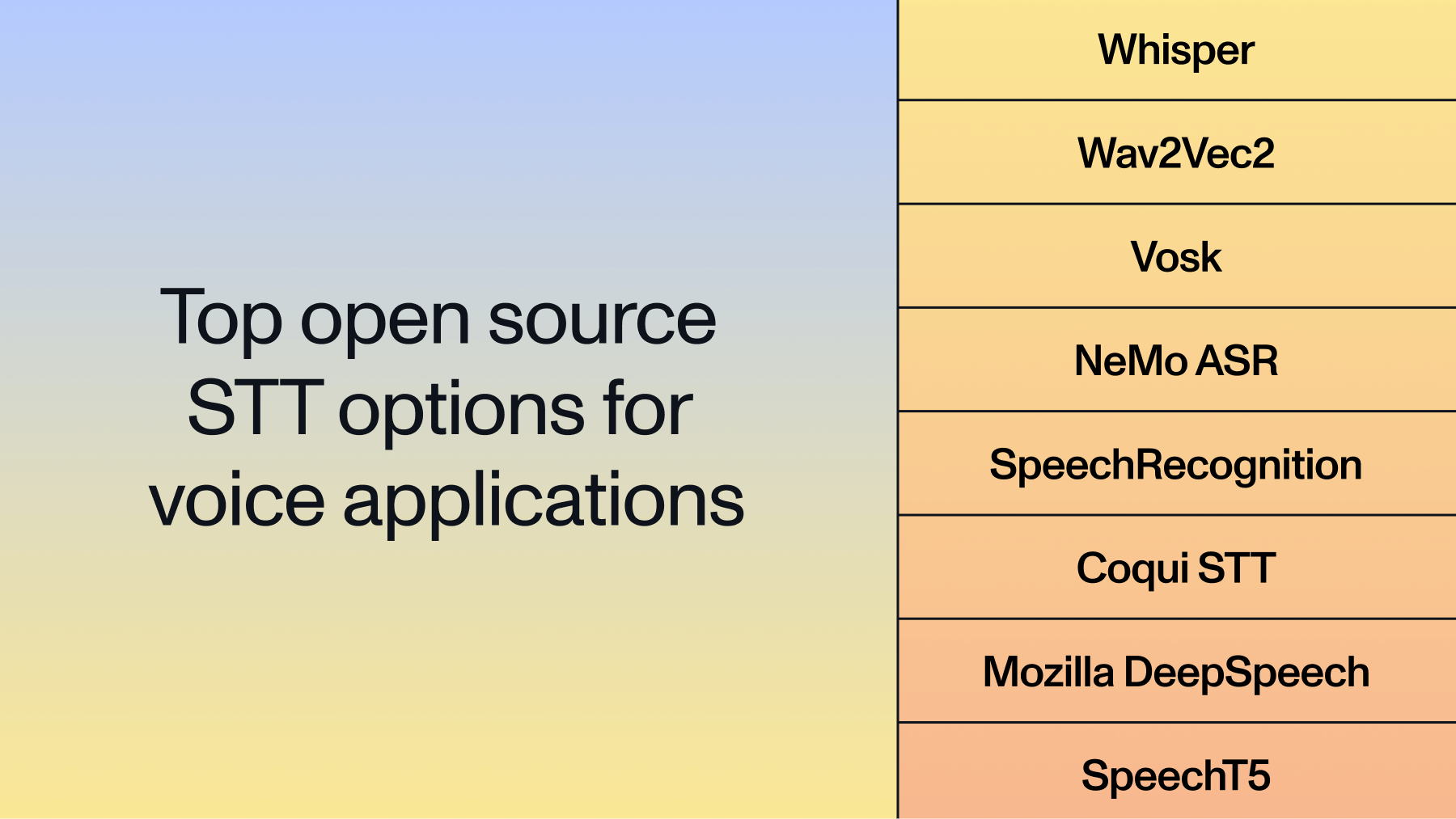
    AssemblyAI has published a guide detailing the top eight open-source speech-to-text (STT) options for building voice applications. The analysis highlights that while these models offer data control and customization, they require significant development effort to become production-ready. Key challenges for developers include achieving high accuracy, low latency, and handling real-world audio conditions, with projects like Coqui STT and Mozilla DeepSpeech being replaced by Faster-Whisper and SpeechBrain in the current landscape. AI

    Top 8 open source STT options for voice applications in 2026

    IMPACT Provides developers with a comparative analysis of open-source STT tools, aiding in the selection and implementation of voice AI solutions.

  6. How is speaker embedding used in voice recognition for transcripts?

    AssemblyAI has detailed how speaker embedding technology is crucial for accurate voice recognition in transcriptions. This technology creates a unique numerical 'fingerprint' for each voice, capturing distinct vocal characteristics beyond basic pitch. Modern systems utilize neural network-based d-vectors for these embeddings, which are more effective than older i-vector methods, especially in noisy or short-utterance scenarios. The process involves segmenting audio into utterances, generating embeddings, clustering similar embeddings to identify speakers, and finally labeling the transcript. AI

    IMPACT Explains core technology enabling accurate speaker diarization in transcription services.

  7. Sample Your LLM 5 Times and Take a Majority Vote — Accuracy Jumps 35 Points

    A developer has demonstrated a technique called self-consistency to significantly improve the accuracy of LLMs, particularly for complex tasks like math problems. This method involves running the same prompt multiple times with a moderate temperature setting and then selecting the most frequent answer. The approach can boost accuracy by up to 35 points, offering a free confidence score based on the vote count, though it increases computational cost by a factor of N (the number of samples). AI

    IMPACT Enhances LLM reliability for complex tasks, potentially reducing errors in AI-driven decision-making.

  8. [Linkpost] Evals for “SPI-incompatible” behavior & reasoning: Guide to initial research

    A research guide outlines a strategy for evaluating AI models for "SPI-incompatible" behavior and reasoning. The guide details a proposed workflow, next steps based on prior experiments, and criteria for identifying undesirable "SPI-incompatibilities." The author is seeking collaborators for further development and invites interested parties to a private Git repository. AI

    IMPACT Provides a framework for evaluating AI safety, potentially guiding future research and development in responsible AI.

  9. - Open CV 5 ships with a new performant DNN engine + can run vision and LLM models directly inside the DNN module: https:// opencv.org/opencv-5/ - The Smallest

    OpenCV 5 has been released, featuring a new high-performance DNN engine capable of running both vision and large language models directly within its module. This update also includes a detailed explanation of how to build a perceptron from scratch using Python. Additionally, the release coincides with news about Anthropic's latest Claude model. AI

    IMPACT OpenCV 5's new DNN engine allows direct integration of LLMs, potentially simplifying multimodal AI development and deployment.

  10. rag-explained-how-it-works

    Retrieval-Augmented Generation (RAG) is a key architectural pattern for LLM applications, designed to overcome limitations like knowledge cutoffs and hallucinations. RAG works by first retrieving relevant information from an external knowledge base and then using that information to inform the LLM's response. The process involves an offline indexing phase where documents are chunked, embedded into vectors, and stored in a vector database, followed by an online query phase where user queries are embedded and used to find similar document chunks for the LLM to generate an answer. AI

    IMPACT Explains a core technique for enhancing LLM capabilities with external data, crucial for practical AI applications.

  11. Y2K

    A recent analysis suggests that AI models may be susceptible to a Y2K-like vulnerability, potentially impacting their ability to process dates accurately. This theoretical flaw, termed 'Y2K' by researchers, could affect AI systems by causing them to misinterpret or fail when encountering specific date formats. The implications of such a vulnerability are still being explored, but it raises questions about the long-term reliability and security of AI technologies. AI

    Y2K

    IMPACT This theoretical vulnerability could necessitate new validation methods for AI date handling, impacting system reliability.

  12. Disentangled Feature Importance

    Researchers have introduced Disentangled Feature Importance (DFI), a new framework for attributing predictive signals from correlated variables. DFI maps covariates to an independent latent representation, computes importance in this latent space, and then attributes it back to the original features. This method is designed for post-hoc interpretation and provides stable, uncertainty-quantified attributions, distinguishing itself from conditional-incremental measures typically used for feature selection. AI

    IMPACT Provides a novel method for interpreting complex models by disentangling feature importance in correlated data.

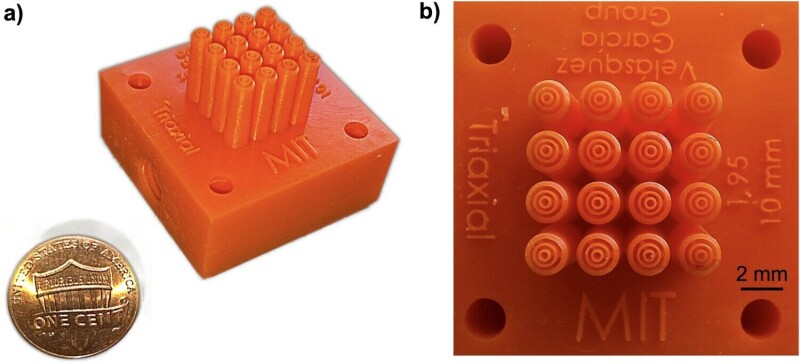
  13. MIT boffins take electrospray nozzles out of the cleanroom, into the 3D printer

    MIT researchers have successfully 3D printed electrospray nozzles, a significant advancement for drug delivery systems. This innovation moves the technology from specialized cleanroom environments into more accessible 3D printing processes. The new method allows for the creation of complex, multi-layer drug delivery devices, potentially leading to more personalized and efficient medical treatments. AI

    MIT boffins take electrospray nozzles out of the cleanroom, into the 3D printer

    IMPACT Enables more accessible and complex fabrication of drug delivery devices, potentially personalizing medical treatments.

  14. Part 6 of my # ReinforcementLearning math series is live! Dynamic Programming iteratively solves the Bellman optimality equations, but requires knowing the envi

    This article is the sixth installment in a series on the mathematics of reinforcement learning. It focuses on dynamic programming, a method for solving the Bellman optimality equations. The author notes that dynamic programming requires prior knowledge of the environment's dynamics. AI

    IMPACT Explains a core mathematical technique used in reinforcement learning.

  15. How Reliable are Fairness Audits with Unreliable Data?

    A new paper explores the reliability of fairness audits in machine learning when data on protected attributes is incomplete. Researchers found that missing protected-label data often does not significantly alter the recommendations of common mitigation methods. However, threshold optimization can inadvertently lead to intersectional harm, even when fairness gains are observed on single axes. AI

    IMPACT Highlights potential pitfalls in evaluating ML model fairness, urging caution in interpreting audit results with incomplete data.

  16. FrontierCode

    Cognition AI has launched FrontierCode, a new benchmark designed to evaluate the quality of AI-generated code beyond mere correctness. This benchmark was developed with input from over 20 open-source developers and focuses on whether code would be accepted into real-world production codebases. Early results show that even top-tier models like Anthropic's Claude Opus 4.8 struggle, achieving only a 13.4% score on the most challenging subset, indicating a significant gap in producing high-quality, maintainable code. AI

    IMPACT Highlights a new standard for AI code generation, pushing models beyond correctness towards production-ready quality.

  17. Conic Formulations of Transport Metrics for Unbalanced Measure Networks and Hypernetworks

    Researchers have introduced a new formulation for the Conic Gromov-Wasserstein (CGW) distance, extending its applicability beyond comparing probability densities to analyzing more general network and hypernetwork structures. This enhanced framework establishes fundamental properties of the CGW metric, including its scaling behavior and robustness to measure perturbations. The paper also presents a computationally tractable block coordinate ascent algorithm for estimating the hypernetwork formulation of CGW, demonstrated through experiments on diverse datasets. AI

    IMPACT Introduces a novel metric formulation and estimation algorithm for analyzing complex data structures, potentially advancing research in machine learning applications.

  18. David Sinclair plans to test whole-body rejuvenation drugs in the XPrize competition

    Longevity scientist David Sinclair is preparing to test an oral drug mixture, code-named SL-100, designed for whole-body rejuvenation. These human trials are intended to compete in the XPrize Foundation's Healthspan Competition, which offers a $101 million prize for teams demonstrating a significant reversal of apparent age. The approach uses chemical reprogramming to reset epigenetic marks, aiming for broader effects than previous gene therapy trials. AI

    David Sinclair plans to test whole-body rejuvenation drugs in the XPrize competition

    IMPACT This research could lead to new therapeutic approaches for aging, potentially impacting healthcare and life extension industries.

  19. agents-concepts-principles-patterns

    AI agents are emerging as a dominant application paradigm for large language models, moving beyond simple chatbots to autonomously perceive, reason, and act in their environment. These agents utilize a loop of thought, action, and observation, often based on the ReAct paradigm, to interact with external tools and self-correct. This allows them to execute multi-step tasks, access information, and adapt to feedback, overcoming limitations of earlier reasoning methods. AI

    IMPACT This paradigm shift enables more autonomous and capable AI applications beyond simple chatbots, potentially accelerating complex task automation.

  20. AI Can Help Track the World’s Shrinking Glaciers

    Researchers have developed an AI model that can more accurately track the shrinking of glaciers using satellite imagery. This new approach significantly reduces the error rate in identifying glacier calving fronts, making it a more reliable tool for climate change monitoring. The AI can adapt to new locations with minimal additional data, a crucial improvement over previous models that struggled with un-seen regions. AI

    AI Can Help Track the World’s Shrinking Glaciers

    IMPACT Enables more efficient and accurate global monitoring of glacier melt, crucial for climate change research and sea-level rise projections.

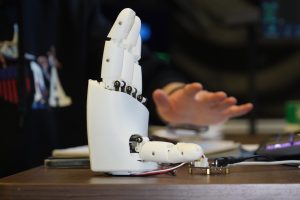
  21. MIT researchers made a wristband to teach robots how to do housework and surgery

    MIT researchers have developed an ultrasound wristband that captures human hand and muscle movements. This data is then used to train robots, enabling them to perform complex tasks like housework and surgery with greater dexterity. The system uses AI to decode the captured movements, allowing a robotic hand to mimic gestures in near real-time. Future applications could involve creating large datasets to train robots for autonomous learning of fine motor skills. AI

    MIT researchers made a wristband to teach robots how to do housework and surgery

    IMPACT Enables robots to learn complex dexterous tasks, potentially accelerating their adoption in domestic and medical fields.

  22. NIST Mathematical Proof Supports Transition to a Continuous-Monitor-and-Update Security Model for AI Systems

    A new mathematical proof by NIST scientist Apostol Vassilev demonstrates that no fixed set of security guardrails can make AI systems universally robust against adversarial prompts. The proof, which draws parallels to Kurt Gödel's incompleteness theorems, suggests that attackers will always be able to find ways to bypass AI safety constraints. This implies that AI developers and deployers must continuously monitor and update their systems to address emerging vulnerabilities before they can be exploited. AI

    IMPACT Confirms that continuous monitoring and adaptation are essential for AI security, as fixed guardrails are insufficient against evolving adversarial attacks.

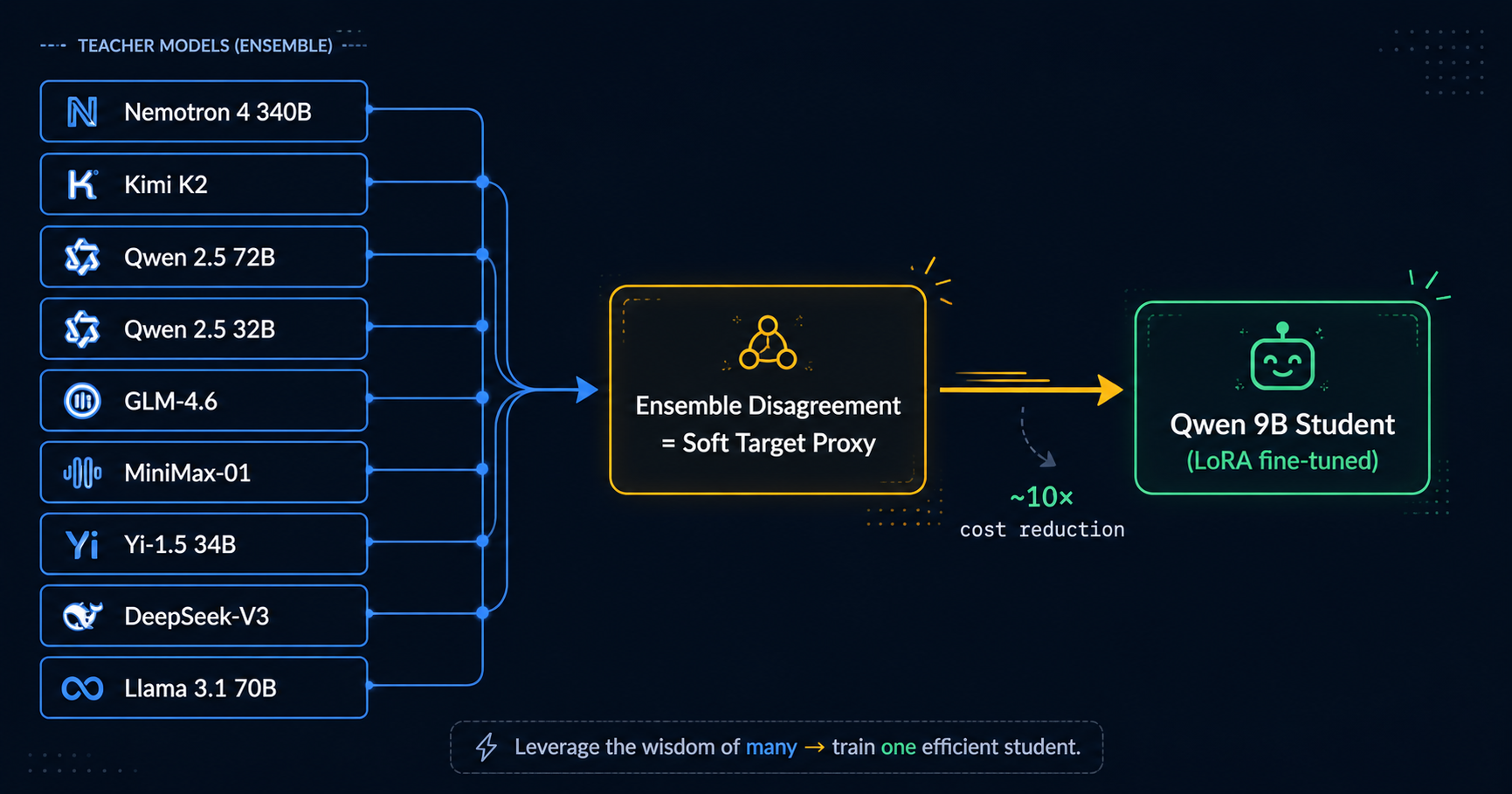
  23. Multi-Teacher Knowledge Distillation: Replacing a Paid API with a Self-Hosted SFT 9B Model

    A researcher details how they replaced a paid API with a self-hosted 9-billion parameter model using a multi-teacher knowledge distillation technique. This method, inspired by a 2015 paper by Geoffrey Hinton, allowed the researcher to leverage multiple free-tier APIs to train their smaller, custom model. The process effectively distilled the knowledge from these external APIs into a more cost-effective, self-managed solution. AI

    Multi-Teacher Knowledge Distillation: Replacing a Paid API with a Self-Hosted SFT 9B Model

    IMPACT Demonstrates a cost-saving method for deploying LLMs by distilling knowledge from larger models or APIs into smaller, self-hosted versions.

  24. From Nobel Prize Project to Generative Drug Design, Latent Labs Founder Simon Kohl: AI is Ushering Biology into the "Programmable Era" | CVPR 2026

    Latent Labs founder Simon Kohl, a key figure in the AlphaFold project, presented at CVPR 2026 on using generative AI for molecular design. He highlighted the inefficiencies in traditional drug discovery, which takes over a decade and billions of dollars with a high failure rate. Kohl introduced Latent Labs' models, Latent-X1 and Latent-X2, which show promise in designing drug molecules with high accuracy, and unveiled Latent-Y, an AI agent capable of autonomous antibody design from natural language prompts. AI

    From Nobel Prize Project to Generative Drug Design, Latent Labs Founder Simon Kohl: AI is Ushering Biology into the "Programmable Era" | CVPR 2026

    IMPACT Generative AI is poised to revolutionize drug discovery by enabling faster, cheaper, and more precise design of therapeutic molecules.

  25. Can LLMs Beat Classical Hyperparameter Optimization Algorithms? https://arxiv.org/abs/2603.24647 # HackerNews # Tech # AI

    Researchers are investigating whether Large Language Models (LLMs) can outperform traditional algorithms in hyperparameter optimization. The study, available on arXiv, explores the potential of LLMs to discover optimal model configurations more efficiently than established methods. This research could lead to more effective and automated machine learning workflows. AI

    IMPACT Investigates LLMs' potential to automate and improve model training efficiency.

  26. The Code As Witness: A Book About Science, Politics & Pandemic Inquiry

    Steven C. Quay's new book, "The Code as Witness," presents a detailed investigation into the origins of the Covid-19 pandemic. The volume argues that SARS-CoV-2 likely originated from laboratory activity, citing five specific genetic and evolutionary "traits" as evidence. Quay criticizes institutional opacity and the suppression of scientific debate surrounding the virus's origins, framing his work as a defense of scientific integrity. AI

    The Code As Witness: A Book About Science, Politics & Pandemic Inquiry

    IMPACT Presents arguments and evidence regarding virus origins, potentially influencing future biosafety research and policy.

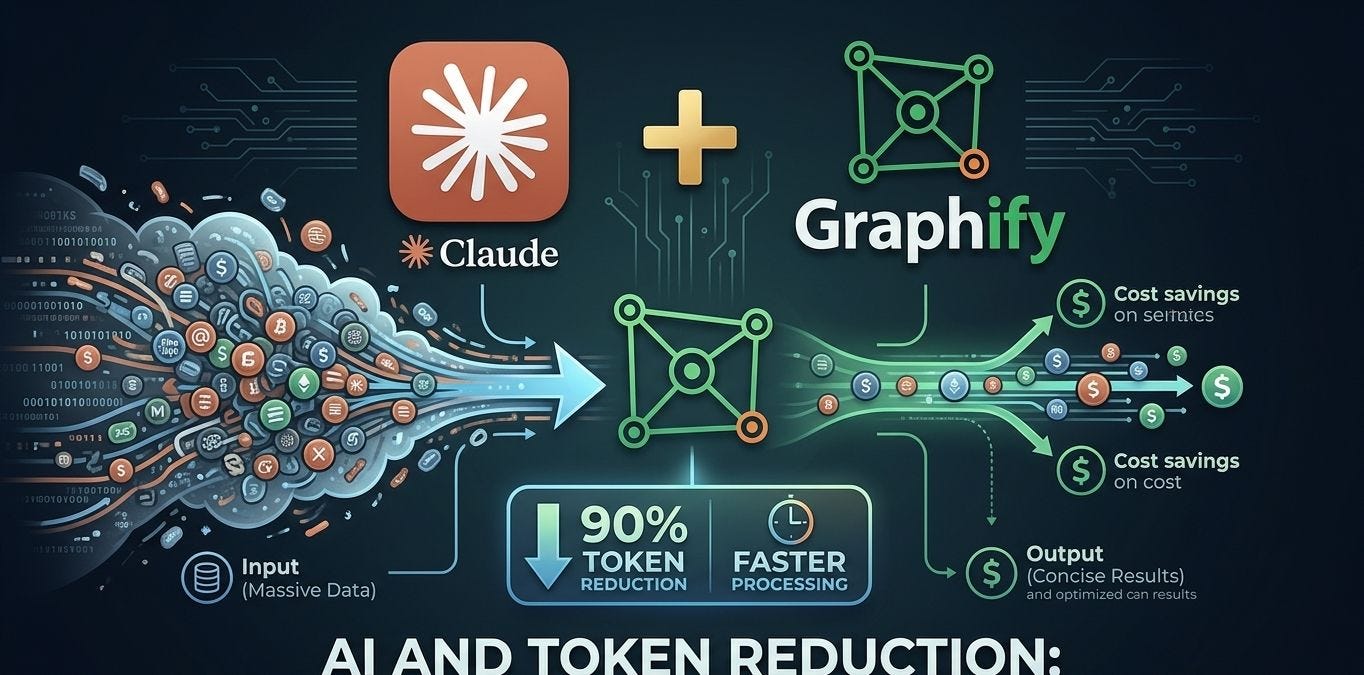
  27. Graphify: Giving Claude an Architecture Map Instead of a Flashlight

    A new method called Graphify aims to improve AI coding assistants like Claude by providing them with an architectural map of a project. This approach helps the AI understand the overall structure and relationships within the codebase, rather than just focusing on individual files or functions. By offering this broader context, Graphify seeks to enhance the AI's ability to generate more accurate and contextually relevant code suggestions. AI

    Graphify: Giving Claude an Architecture Map Instead of a Flashlight

    IMPACT Enhances AI coding assistants by providing architectural context, potentially leading to more accurate and efficient code generation.

  28. I Can Compress 1000 Dimensions Into 2 — Here’s What PCA Taught Me

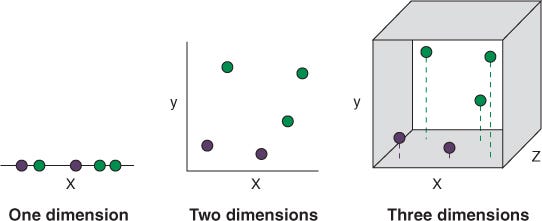
    This article explains Principal Component Analysis (PCA), a technique used in machine learning and statistics to reduce data dimensionality. It addresses the 'Curse of Dimensionality,' where performance degrades with increasing features. PCA achieves this by transforming high-dimensional data into a lower-dimensional space, though the resulting features may be less interpretable. AI

    I Can Compress 1000 Dimensions Into 2 — Here’s What PCA Taught Me

    IMPACT Explains a core dimensionality reduction technique fundamental to many AI and ML workflows.

  29. The Mirrored Influence Hypothesis: Efficient Data Influence Estimation by Harnessing Forward Passes

    Researchers have introduced the Mirrored Influence Hypothesis, which suggests that understanding training data's influence on model predictions can be inverted to assess how training on test data would alter predictions for training samples. This new approach, which involves calculating gradients for test samples and a forward pass for training points, offers significant efficiency gains over existing methods, especially when test datasets are much smaller than training datasets. The method has demonstrated applicability in areas such as data attribution for diffusion models, detecting data leakage and mislabeled data, and analyzing memorization and behavior in language models. AI

    IMPACT Provides a more efficient method for understanding data influence, potentially improving model trustworthiness and aiding in tasks like data leakage detection.

  30. Boundary Variance Inflation Causes Acquisition Bias in Gaussian Processes

    A new paper identifies boundary variance inflation as a cause of acquisition bias in Gaussian processes. This phenomenon, where posterior variance is inflated near the boundary of a bounded domain, can lead to over-exploration in Bayesian optimization. The researchers trace this bias to a geometric mechanism where the kernel's correlation neighborhood is truncated at the domain boundary, distorting observations independently of the objective function. They propose a selection-profile diagnostic to quantify this bias across different acquisition functions and geometries. AI

    IMPACT Identifies a bias in Gaussian processes that can affect Bayesian optimization, potentially leading to more efficient exploration strategies.

  31. Robust Random Graph Matching in Dense Graphs via an Approximate Message Passing Type Algorithm

    Researchers have developed a new approximate message passing (AMP) type algorithm designed to robustly match vertices in dense random graphs. This algorithm can handle adversarial perturbations to the graph data, succeeding even when a significant portion of the graph is corrupted. The method introduces a novel time-dependent matrix multiplication step within its iterative process to enhance feature dimensions and mitigate correlation issues. AI

  32. Are Two Datasets Close Enough With Statistical Significance? A Kernel Distributional Closeness Testing Approach

    Researchers have developed a new method called norm-adaptive MMD (NAMMD) to better assess the statistical closeness between two data distributions. Unlike previous methods that struggled with complex data like images, NAMMD accounts for the norms of the distributions within their reproducing kernel Hilbert space. This approach offers higher statistical test power than standard MMD, ensuring more reliable conclusions about distributional similarity while maintaining controlled error rates. AI

    IMPACT Enhances statistical rigor in evaluating machine learning model performance and data similarity.

  33. Performative Learning Theory

    Researchers have developed a theoretical framework for "performative learning," where predictions influence the outcomes they are meant to forecast. This theory explores how models generalize when their predictions affect the data they are trained on, considering scenarios where predictions impact only existing users or the entire population. The analysis reveals a trade-off between a model's ability to alter the world and its capacity to learn from it, suggesting that greater influence on data can diminish learning effectiveness. The study also proposes methods to enhance generalization by retraining on performatively distorted samples, illustrated with a case study on German labor market data. AI

    IMPACT Introduces a new theoretical lens for understanding model behavior in self-influencing environments, potentially impacting model design and evaluation.

  34. Accelerating Birkhoff Projection for Manifold-Constrained Hyper-Connections

    Researchers have developed a new framework to accelerate Birkhoff projection, a crucial step in manifold-constrained hyper-connections (mHCs). This method reduces the projection problem to a three-dimensional unconstrained convex problem solvable with Newton's method, leading to faster convergence and higher accuracy. The approach also employs implicit differentiation for exact gradients and a warp-level CUDA kernel for significant parallelization, achieving over 20x acceleration in experiments. AI

    IMPACT This research could lead to more efficient training of AI models by speeding up a critical projection process.

  35. Linear Regression with OLS: Simple & Multiple Regression

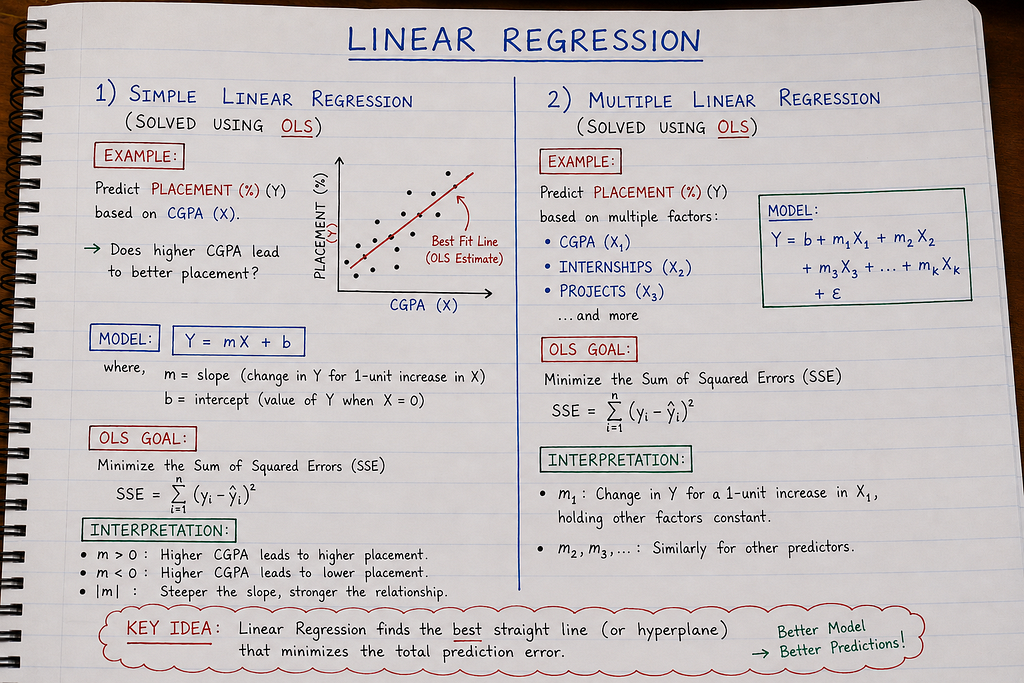
    This article explains the concepts of simple and multiple linear regression, focusing on the Ordinary Least Squares (OLS) method. It aims to demystify machine learning by providing a consolidated explanation of these foundational techniques. The author guides readers through the mathematical derivations and intuitive understanding of how linear regression finds the best-fitting line or hyperplane to minimize prediction errors. AI

    Linear Regression with OLS: Simple & Multiple Regression

    IMPACT Provides a foundational understanding of linear regression, crucial for many AI and machine learning applications.

  36. Investigating the Histogram Loss in Regression

    Researchers have investigated the Histogram Loss method for regression tasks, which trains neural networks to model the entire distribution of target variables. Their analysis suggests that the performance gains observed with this method stem from improved optimization rather than the modeling of additional information. The study demonstrates that Histogram Loss is viable for deep learning applications without extensive hyperparameter tuning. AI

    IMPACT This research offers a new perspective on why distribution modeling improves regression performance, suggesting optimization benefits over information gain.

  37. Self-Supervised Dynamical System Representations for Physiological Time-Series

    Researchers have developed a new self-supervised learning framework called PULSE for physiological time-series data. This method aims to improve the extraction of relevant physiological information by modeling data as a dynamical system. PULSE focuses on capturing shared system parameters across similar time series while discarding sample-specific noise, theoretically ensuring the recovery of important system information. AI

    IMPACT Introduces a novel pretraining objective for physiological time-series analysis, potentially improving diagnostic accuracy and efficiency in medical applications.

  38. Hyperflux: Pruning Reveals Importance

    Researchers have introduced Hyperflux, a novel method for network pruning that models the process as a continuously evolving system. This approach uses 'flux,' the gradient response to a weight's removal, and 'pressure,' a global regularization, to drive weights toward pruning. Hyperflux aims to provide a more understandable pruning process at both microscopic and macroscopic levels, achieving competitive results on standard datasets and network architectures. AI

    IMPACT Provides a more interpretable approach to optimizing neural network efficiency for deployment.

  39. When Your Documents Aren’t Just Text: Training Vision Models for Document Understanding

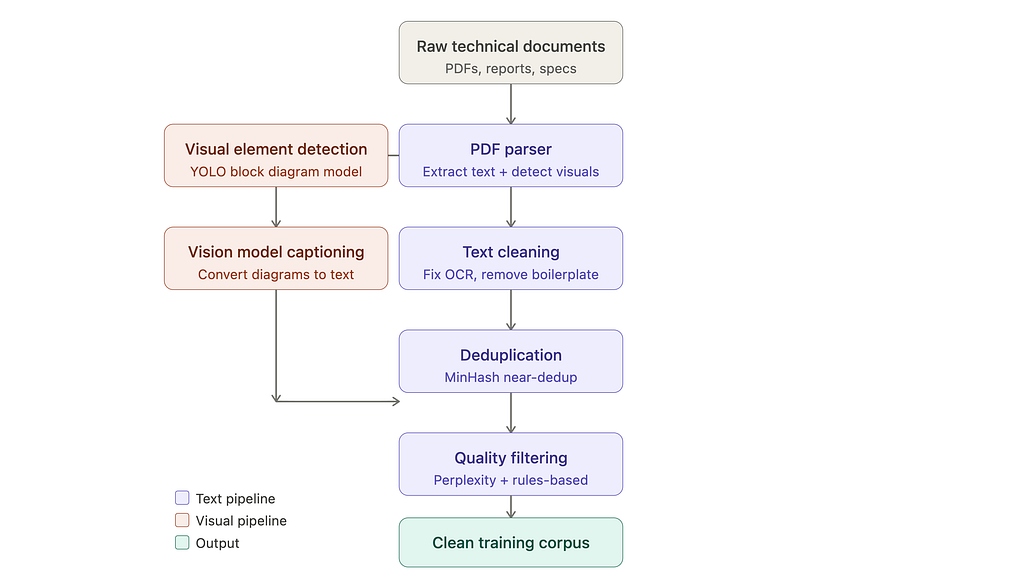
    Training AI models on technical documents often overlooks crucial visual information like diagrams and charts, leading to incomplete understanding. Standard text extraction methods discard these elements, resulting in models trained on data with significant meaning gaps. To address this, a computer vision approach using YOLO was employed to detect, classify, and extract these visual components, enabling their integration with textual data for more comprehensive document understanding. AI

    When Your Documents Aren’t Just Text: Training Vision Models for Document Understanding

    IMPACT Improves AI model training by enabling the capture of visual data, leading to better understanding of complex technical documents.

  40. Active Learning with Foundation Model Priors: Efficient Learning under Class Imbalance

    Researchers have developed a new active learning framework designed to improve model performance on datasets with imbalanced class distributions and noisy annotations. This approach leverages foundation model priors to make informed decisions between a large foundation model and a smaller model, effectively addressing both label noise and class imbalance across image and text domains. Experiments show this method can achieve over 50% annotation savings compared to existing baselines while maintaining performance and robustness. AI

    IMPACT This new active learning approach could significantly reduce annotation costs and improve model accuracy on real-world, imbalanced datasets.

  41. Dynamics of learning to integrate in linear recurrent neural networks

    Researchers have developed a mathematical theory to explain how linear recurrent neural networks learn to integrate information over long timescales. The study, focusing on networks trained to integrate white noise, reveals that learning dynamics are governed by a low-dimensional system tracking a single outlier eigenvalue of the recurrent weights. This framework provides insights into how slow modes are acquired through gradient-based learning and has implications for both machine learning and neuroscience. AI

    IMPACT Provides a theoretical framework for understanding how neural networks learn complex temporal patterns, potentially improving model design for tasks requiring long-term memory.

  42. Quantum Maximum Likelihood Prediction via Hilbert Space Embeddings

    Researchers have developed a quantum approach to maximum likelihood prediction, a fundamental task in modern large language models. This method involves embedding classical probability distributions into quantum states and minimizing quantum relative entropy. The study provides theoretical guarantees on the predictor's performance and offers a unified framework for both classical and quantum language models. AI

    IMPACT Introduces a novel quantum framework for prediction tasks within LLMs, potentially influencing future model architectures.

  43. Dendrograms of Mixing Measures for Softmax-Gated Gaussian Mixture of Experts: Consistency Without Model Sweeps

    Researchers have developed a new statistical framework for Gaussian mixture of experts (SGMoE) models that addresses challenges in parameter estimation and model selection. The framework introduces novel loss functions and establishes convergence rates for maximum likelihood estimators, linking them to polynomial equation systems. For model selection, a dendrogram-based approach is proposed, which consistently identifies the number of experts without requiring multi-size training and demonstrates robustness to model misspecification. AI

    IMPACT Introduces a more robust and efficient method for selecting the number of experts in SGMoE models, potentially improving their interpretability and performance in complex datasets.

  44. Improved Analysis of the Accelerated Noisy Power Method with Applications to Decentralized PCA

    Researchers have developed an improved analysis for the Accelerated Noisy Power Method, an algorithm used in decentralized Principal Component Analysis (PCA). This new analysis relaxes the strict upper bounds on perturbation magnitudes previously required for accelerated convergence. The findings demonstrate that the derived convergence rate is worst-case optimal and establish the first decentralized PCA algorithm with provably accelerated convergence, maintaining similar communication costs to non-accelerated methods. AI

    IMPACT Provides a theoretical advancement for decentralized machine learning algorithms, potentially improving efficiency in distributed data analysis.

  45. Spectral Truncation Kernels: Noncommutativity in $C^*$-algebraic Kernel Machines

    Researchers have introduced spectral truncation kernels, a novel approach for vector- and function-valued machine learning. These kernels leverage spectral truncation and $C^*$-algebra to model complex interactions across function domains, bridging the gap between existing separable and commutative kernel types. The proposed method aims to enhance computational efficiency compared to current operator-valued kernel techniques. AI

    IMPACT Introduces a new kernel method that could improve the modeling of complex interactions in machine learning tasks.

  46. Koopman Subspace Pruning in Reproducing Kernel Hilbert Spaces via Principal Vectors

    Researchers have developed a new method for Koopman subspace pruning within Reproducing Kernel Hilbert Spaces (RKHS). This technique enhances model invariance by systematically discarding geometrically misaligned directions. The approach includes an exact computational routine and a scaled version using randomized Nystrom approximations, leading to the Kernel-SPV and Approximate Kernel-SPV algorithms. AI

  47. Locally Adaptive Conformal Inference for Operator Models

    Researchers have developed a new framework called Local Sliced Conformal Inference (LSCI) designed to provide accurate uncertainty quantification for operator models. These models are crucial for spatiotemporal forecasting and physics emulation, especially in critical applications requiring reliable uncertainty estimates. LSCI generates function-valued prediction sets that adapt to local data characteristics, offering improved tightness and adaptivity over existing conformal methods. The framework has demonstrated effectiveness on both synthetic and real-world datasets, including air quality monitoring and weather prediction. AI

    IMPACT Enhances reliability of AI models in critical forecasting and emulation tasks by improving uncertainty quantification.

  48. Conditional Normalizing Flows for Forward and Backward Joint State and Parameter Estimation

    Researchers have developed new state estimation methods using conditional normalizing flows, which offer improvements over traditional filtering algorithms for nonlinear systems with complex uncertainty distributions. The study explores various architectures like MLPs, transformers, and Mamba-SSM for conditional embeddings, and tests an optimal-transport-inspired kinetic loss term to address overparameterization. The effectiveness of these approaches was demonstrated in applications related to autonomous driving, patient population dynamics, and COVID-19 forecasting. AI

    IMPACT Introduces advanced techniques for state estimation, potentially improving accuracy in complex predictive models for fields like autonomous driving and epidemiology.

  49. Entropic Optimal Transport Eigenmaps for Nonlinear Alignment and Joint Embedding of High-Dimensional Datasets

    Researchers have developed a new method called Entropic Optimal Transport (EOT) eigenmaps for aligning and jointly embedding multiple high-dimensional datasets. This approach addresses the challenge of datasets with underlying shared structures but individual distortions, which can cause misalignment with traditional techniques. The EOT eigenmaps leverage the leading singular vectors of the EOT plan matrix to extract shared structures and create a common embedding space, offering theoretical guarantees and demonstrating superior performance in simulations and real-world biological data integration. AI

    IMPACT Introduces a novel technique for aligning and embedding high-dimensional datasets, potentially improving downstream AI model performance on integrated data.

  50. LARP: Learner-Agnostic Robust Data Prefiltering

    Researchers have introduced LARP, a method for Learner-Agnostic Robust Data Prefiltering, designed to improve the quality of public datasets used in machine learning. LARP aims to protect the accuracy of a variety of downstream learning procedures simultaneously by identifying and removing low-quality or contaminated samples. The study establishes the feasibility of LARP and quantifies the "price of LARP," which represents the performance loss compared to learner-specific prefiltering, and explores its potential cost-saving benefits in data curation. AI

    IMPACT Provides a method to improve dataset quality, potentially leading to more reliable and accurate machine learning models across various applications.