PulseAugur / Brief
EN
LIVE 20:08:58

Brief

last 24h
[50/1671] 223 sources

Multi-source AI news clustered, deduplicated, and scored 0–100 across authority, cluster strength, headline signal, and time decay.

  1. I Built a Skill That Got Merged Into a 211,000-Star GitHub Repo.

    A developer successfully contributed a new skill to the popular ECC GitHub repository, which functions as an agent harness system. This repository has garnered over 211,000 stars, indicating significant community interest and adoption. The integration of the new skill highlights the collaborative and open-source nature of AI development, allowing for community contributions to enhance agent capabilities. AI
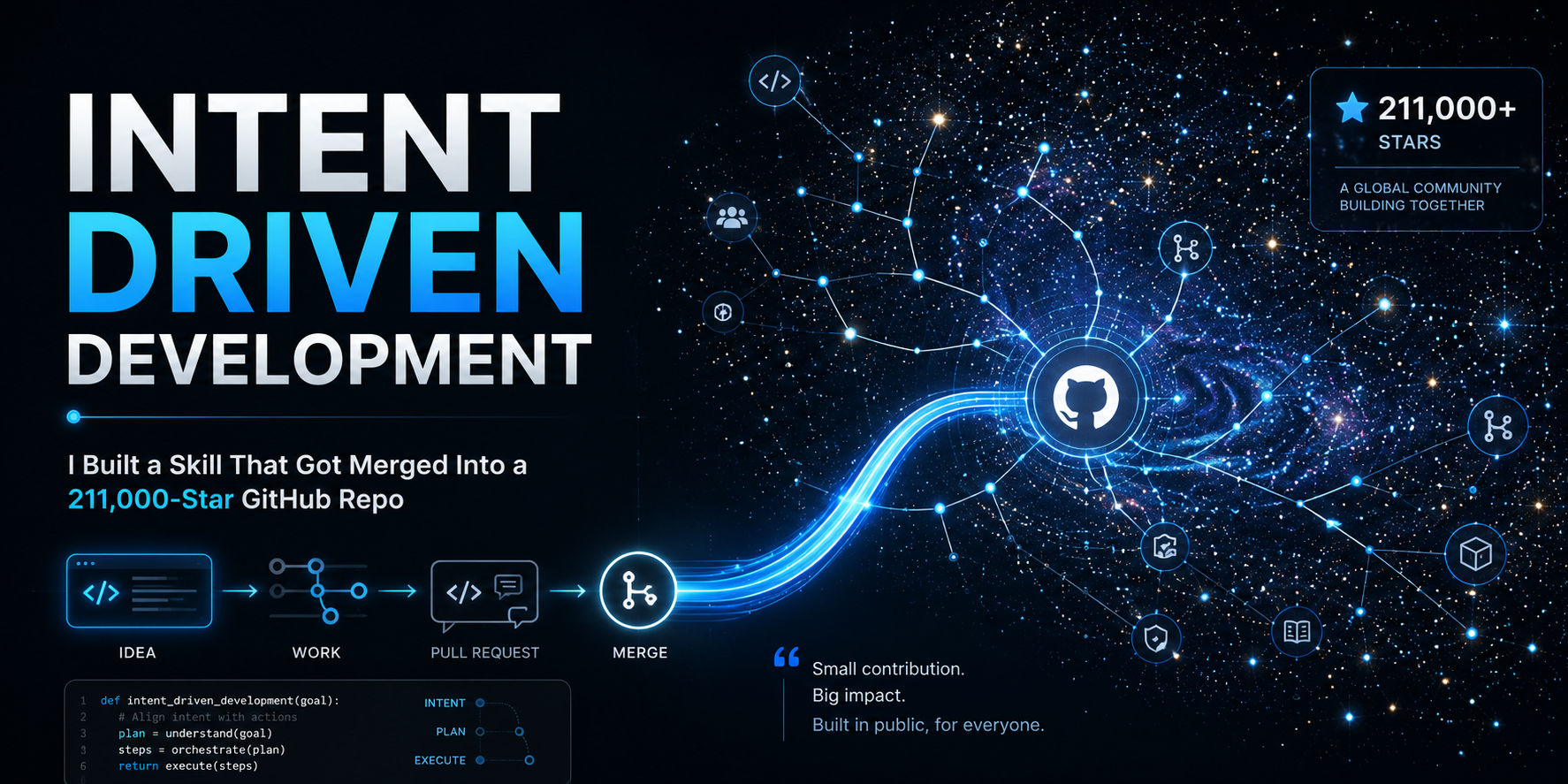
    I Built a Skill That Got Merged Into a 211,000-Star GitHub Repo.

    IMPACT Demonstrates community-driven enhancement of AI agent systems, potentially leading to broader adoption of specialized skills.
  2. LLM Spend Audit: The 45-Minute Diagnostic for Startups

    This article outlines a 45-minute diagnostic process for startups to audit and control their spending on large language models (LLMs). It emphasizes that LLM costs often escalate due to numerous small, unmonitored calls across various functions like retries, background jobs, and internal tools, rather than single expensive prompts. The audit involves mapping all LLM call paths, attaching costs to specific units of value, identifying waste from retries and tool calls, strategically assigning tasks to cheaper models where appropriate, and implementing budget guardrails with clear ownership. AI

    IMPACT Provides a structured approach for AI operators to identify and reduce unnecessary LLM operational costs.

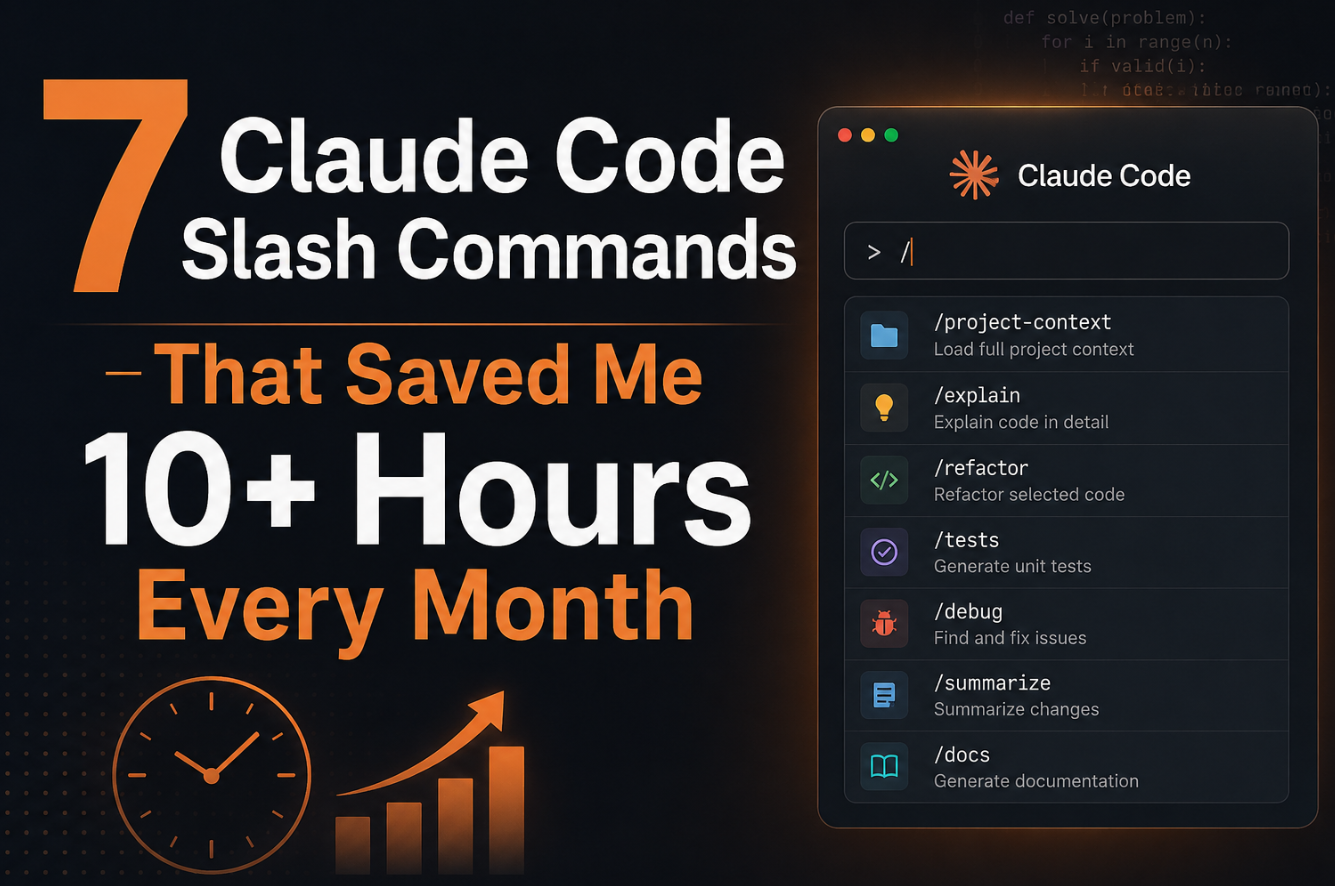
  3. 7 Claude Code Slash Commands That Saved Me 10+ Hours Every Month

    This article highlights seven specific slash commands within Claude Code that can significantly boost developer productivity. The author claims these commands have saved them over 10 hours per month by streamlining common coding tasks. The piece suggests that many users are not fully leveraging Claude Code's capabilities, leading to wasted time. AI

    7 Claude Code Slash Commands That Saved Me 10+ Hours Every Month

    IMPACT Offers practical tips for users of an AI coding assistant to improve efficiency.

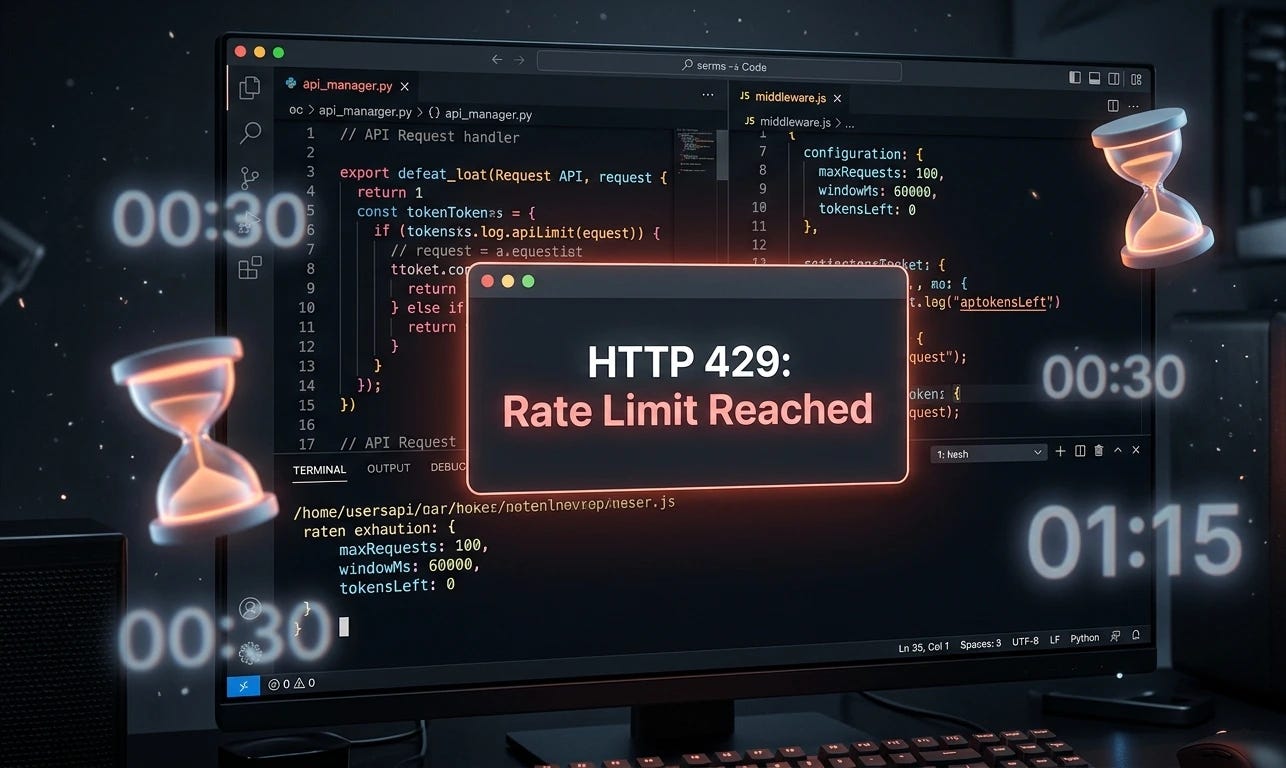
  4. Claude Code Error 429 Fix: Rate Limit Exceeded (2026)

    This article addresses the "Claude Code Error 429: Rate Limit Exceeded," a common issue encountered when using Anthropic's AI models. It explains that this error signifies that too many requests have been made to the API within a given timeframe. The piece offers guidance on how to resolve this by implementing strategies such as exponential backoff, request queuing, and optimizing API calls to manage usage and avoid hitting rate limits. AI

    Claude Code Error 429 Fix: Rate Limit Exceeded (2026)

    IMPACT Helps developers manage API usage and avoid errors when integrating Claude models into their applications.

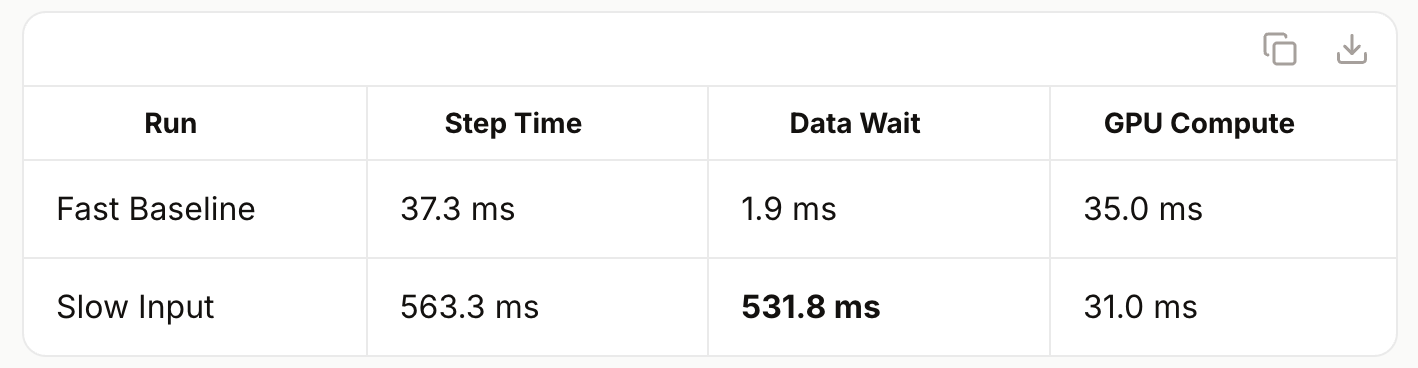
  5. Your DataLoader Is Starving Your GPU. Here is How to Prove It.

    A slow PyTorch training job may not be due to the model's complexity but rather the data loading process. The article explains how to identify if your GPU is being starved of data by a slow DataLoader. It suggests methods to diagnose and resolve these performance bottlenecks. AI

    Your DataLoader Is Starving Your GPU. Here is How to Prove It.

    IMPACT Optimizing data loading can significantly speed up ML training, reducing compute costs and accelerating model development cycles.

  6. A Mixed Diet Makes DINO An Omnivorous Vision Encoder

    Researchers have developed an "Omnivorous Vision Encoder" to improve how AI models understand different visual data types. This new framework fine-tunes existing vision encoders, like DINOv2, to create a unified feature space. The goal is to ensure that an AI can recognize the same scene consistently, whether it's presented as a standard RGB image, a depth map, or a segmentation map. AI

    IMPACT Enhances AI's ability to process and correlate diverse visual inputs, potentially improving applications in robotics and augmented reality.

  7. One if by Land, Two if by Sea, Three if by Four Seas, and More to Come -- Values of Perception, Prediction, Communication, and Common Sense in Decision Making

    Researchers have developed a framework to quantify the value of perception, prediction, communication, and common sense in decision-making systems. Their work defines these quantities in a decision-theoretic manner, with information-theoretic parallels to concepts like Shannon entropy. An interesting finding is that perception alone can have negative value, whereas its combination with prediction, or prediction by itself, is always non-negative. These definitions aim to answer practical questions for designing autonomous systems, such as the importance and optimal order of observing and predicting agent behaviors, and may also offer insights into cognitive and neural processes. AI

    IMPACT Provides a theoretical framework for designing autonomous decision-making systems by quantifying key cognitive elements.

  8. Reconstructing Synthetic SDO/AIA 193 A EUV Images from He I 10830 A Observations with Diffusion Model Translator

    Researchers have developed a diffusion-based model, dubbed CH-aware DMT, to reconstruct synthetic EUV images of the sun from historical He I observations. This method aims to extend the availability of solar EUV imaging data into earlier periods before modern satellites like SDO were operational. The model was trained on co-aligned SOLIS He I and AIA 193 Å data and demonstrated strong performance in preserving EUV morphology and coronal hole structures. Its historical applicability was further validated by comparing reconstructions with data from SOHO/EIT, Yohkoh/SXT, and independent solar activity proxies, suggesting its utility for multi-decade analyses of coronal evolution. AI

    IMPACT Enables multi-decade solar evolution studies by reconstructing historical EUV solar imagery.

  9. Stage-1 Controls the Entropy Regime, Not the Outcome

    A new research paper explores the impact of different Stage-1 training methods on vision-language models (VLMs). The study found that while Stage-1 training, such as supervised fine-tuning (SFT) or on-policy distillation (OPD), leads to similar in-domain performance, it significantly influences the entropy regime of the model. Specifically, OPD results in higher policy entropy and answer diversity compared to SFT, although these advantages diminish after the Stage-2 reinforcement learning phase. AI

    IMPACT This research clarifies the role of early-stage training in VLM development, suggesting that while it influences model behavior, the ultimate performance gains may be limited.

  10. AQIFormer: A Transformer-Based Multi-View Architecture for Cross-City Air Quality Classification

    Researchers have developed AQIFormer, a new transformer-based architecture designed to classify air quality using images. This model integrates front and rear traffic imagery with weather data, improving cross-city generalization and achieving 89.96% accuracy on a large dataset. AQIFormer demonstrates strong performance even on unseen cities, with minimal accuracy degradation when adapted with few-shot learning. AI

    IMPACT This model offers a more scalable and cost-effective approach to air quality monitoring, potentially improving environmental health insights.

  11. Measuring Poverty and Inequality with Reduced Data: A Machine Learning Approach Using Nigerian Household Data

    Researchers have developed a machine learning approach using Random Forest Recursive Feature Elimination (RF-RFE) to identify key indicators for measuring poverty and inequality in Nigeria. By analyzing household survey data, the study found that a small set of income sources, consumption categories, and household characteristics can accurately predict poverty status and welfare distribution position. This method could significantly reduce the data requirements for future surveys, enabling more efficient monitoring of poverty and inequality in low- and middle-income countries. AI

    IMPACT This research demonstrates how machine learning can optimize data collection for poverty and inequality metrics, potentially leading to more efficient and cost-effective monitoring in developing nations.

  12. Vision-Based Early Fault Diagnosis and Self-Recovery for Strawberry Harvesting Robots

    Researchers have developed a new framework for strawberry harvesting robots to improve their visual perception and self-recovery capabilities. The SRR-Net system integrates fruit detection, segmentation, and ripeness assessment with gripper alignment correction. This system uses a micro-optical camera for real-time feedback, enabling adjustments during grasping and predicting slippage to recover or abort harvesting cycles. AI

    IMPACT This research could lead to more efficient and reliable robotic harvesting systems, reducing labor costs and improving yield.

  13. BCG-FM: A Foundation Model for Ambient Cardiac Health Sensing

    Researchers have developed BCG-FM, a novel foundation model for analyzing cardiac health through ambient mechanical biosignals. This model utilizes a piezoelectric sensor embedded in a bed surface to record ballistocardiography (BCG) data overnight, requiring no user effort. Pretrained on 2.75 million hours of recordings from nearly 146,000 individuals, BCG-FM achieved a 3.26-year Mean Absolute Error in biological age estimation and demonstrated clinically relevant discrimination across various health conditions. AI

    IMPACT Introduces a new, passive data modality for foundation models in healthcare, potentially enabling continuous, effortless health monitoring.

  14. TeamHerald@CHIPSAL 2026: Hate Speech Detection and Sentiment Analysis of Nepali Memes using Transformer-based Architectures and Ensemble Learning

    Researchers have developed transformer-based models to analyze Nepali memes for hate speech and sentiment. The study focused on text extraction from memes, employing OCR and subsequent analysis with transformer architectures. Experiments showed that a decoder-only model excelled at binary hate speech detection, while a soft voting ensemble approach improved sentiment analysis performance by 15.8% in Macro F1-score. AI

    IMPACT Demonstrates advanced NLP techniques for low-resource languages and multimodal content analysis.

  15. XAInomaly: Explainable and Interpretable Deep Contractive Autoencoder for O-RAN Traffic Anomaly Detection

    Researchers have developed XAInomaly, a new framework utilizing a semi-supervised deep contractive autoencoder for anomaly detection in open radio access networks (O-RAN). This approach aims to learn normal network behavior and identify deviations indicative of anomalies. To overcome the 'black-box' nature of deep learning, the framework incorporates a reactive explainable AI technique called fastshap-C. AI

    IMPACT Enhances network management capabilities in O-RAN by providing interpretable anomaly detection.

  16. UnWeaving the knots of GraphRAG -- turns out VectorRAG is almost enough

    A new research paper introduces UnWeaver, a framework that simplifies Graph-based Retrieval-Augmented Generation (RAG) systems. UnWeaver disentangles document content into entities, which are then used to recover original text chunks, preserving source fidelity. The study argues that this entity-based decomposition offers a more distilled representation and reduces noise. Experiments indicate that VectorRAG performs comparably to current state-of-the-art graph-based solutions at a significantly lower cost. AI

    IMPACT Simplifies RAG systems, potentially reducing computational costs and improving performance for complex queries.

  17. Extending Ontologies: From Dense Embeddings to Hybrid Quantum-Fuzzy Systems

    Researchers have proposed a new knowledge representation system that combines dense embeddings with quantum-fuzzy logic. This hybrid approach aims to overcome the trade-offs between probabilistic and crisp inference found in current LLM and ontology integrations. The proposed neuro-quantum-fuzzy systems could enable knowledge representation that supports both classical and contextual reasoning. AI

    IMPACT This research could lead to more sophisticated knowledge representation systems for AI, enabling richer reasoning capabilities.

  18. Knowledge-Inclusive Adaptive Physics-Informed Neural Network for Microbial Interaction Modelling

    Researchers have developed a novel Physics-Informed Neural Network (PINN) framework that integrates auxiliary knowledge from sources beyond experimental data. This new approach enhances parameter discovery by incorporating information from peer-reviewed literature and network structures, specifically applied to modeling microbial interactions. The framework demonstrated significant improvements in accuracy and predictive power for microbial community modeling, outperforming existing methods and revealing ecological insights. AI

    IMPACT Enhances scientific modeling by integrating diverse knowledge sources, potentially improving accuracy in biological and ecological research.

  19. Multimodal Group Emotion Recognition In-the-Wild Towards a Privacy-Safe Non-Individual Approach

    This thesis introduces novel frameworks for group emotion recognition in real-world scenarios, prioritizing privacy by analyzing collective audio-video signals rather than individual cues. The proposed cross-attention multimodal architecture with Frames Attention Pooling (FAP) and a Variational Encoder Multi-Decoder (VE-MD) framework demonstrate competitive performance without relying on individual facial or vocal data. These contributions aim to advance affective computing by enabling privacy-safe group emotion analysis. AI

    IMPACT Introduces new methods for privacy-preserving affective computing, potentially enabling broader adoption of emotion recognition in sensitive group contexts.

  20. CHIMERA-Bench: A Benchmark Dataset for Epitope-Specific Antibody Design

    Researchers have introduced CHIMERA-Bench, a new benchmark dataset designed to standardize and advance computational antibody design. This benchmark addresses the lack of a common evaluation framework by providing a unified task, a curated dataset of antibody-antigen complexes, and a comprehensive protocol with novel epitope-specificity measures. It aims to enable fair comparison and development of deep generative methods for antibody design, testing their generalization capabilities across various splits. AI

    IMPACT Standardizes evaluation for antibody design models, potentially accelerating development of new therapeutics.

  21. Customer Churn Prediction on Structured Data Using FT-Transformer and Stacking Ensembles

    Researchers have developed a new hybrid model for predicting customer churn on structured data, combining a feature-tokenized transformer (FT-Transformer) with XGBoost. This approach aims to capture complex feature interactions and improve probability calibration, addressing challenges like class imbalance and nonlinear relationships. Tested on a public bank churn dataset, the model achieved an F1 score of 62.10% and an AUC-ROC of 0.861, outperforming a standard Multi-Layer Perceptron baseline. AI

    IMPACT Introduces a novel hybrid architecture for structured data prediction, potentially improving accuracy in business applications like customer retention.

  22. A Hierarchical Feature Engineering Framework for Automated Classification of Phonotraumatic and Non-Phonotraumatic Vocal Hyperfunction

    Researchers have developed a hierarchical feature engineering framework to automatically classify vocal hyperfunction subtypes using neck-surface acceleration data. This method integrates static, dynamic, ratio-based, and coupling features to distinguish between phonotraumatic (PVH), non-phonotraumatic (NPVH), and healthy vocal patterns. The framework achieved an AUC of 0.891 for PVH and 0.728 for NPVH, highlighting the importance of coupling features for accurate classification. AI

    IMPACT Introduces a novel AI-driven approach for medical diagnosis in speech pathology.

  23. ZIPP:Zero-shot Image Personalization from Personas

    Researchers have developed ZIPP, a novel method for zero-shot image personalization that conditions text-to-image diffusion models on natural-language personas. This approach allows for personalized image generation without requiring any user-specific data or model weight updates, addressing the cold-start problem and context-dependent preferences. ZIPP utilizes a large language model to rewrite prompts from the perspective of a persona, and personas are mined at scale using a graph attention network trained on a large Reddit interaction graph. The system was evaluated on ZIPBench, a new benchmark, and demonstrated significant improvements in personalization and reduced subpopulation bias compared to generic generation and fine-tuned baselines. AI

    IMPACT Enables personalized image generation without user-specific data, potentially accelerating adoption in creative applications.

  24. Beyond Point Estimates: Benchmarking Uncertainty Quantification Methods on the AION-1 Astronomical Foundation Model

    Researchers have evaluated seven uncertainty quantification (UQ) methods on the AION-1 astronomical foundation model for predicting galaxy properties. Conformal prediction methods, particularly the Locally Valid and Discriminative (LVD) framework, demonstrated superior calibration and local validity compared to non-conformal baselines. The study suggests LVD is the preferred UQ approach for foundation model embeddings in astrophysics, offering more reliable uncertainty estimates for scientific inference. AI

    IMPACT Establishes a preferred uncertainty quantification framework for foundation models in astrophysics, enabling more reliable scientific inference.

  25. FIT-Print: Towards False-claim-resistant Model Ownership Verification via Targeted Fingerprint

    Researchers have developed FIT-Print, a novel method for verifying ownership of open-source AI models that is resistant to false claim attacks. Existing fingerprinting techniques are vulnerable to adversaries falsely claiming ownership of independent models. FIT-Print addresses this by using targeted signatures derived from model outputs and feature attributions, achieving a 100% defense success rate against false claims and a 0.0% false alarm rate on independent models. AI

    IMPACT Enhances security for open-source AI models by preventing fraudulent ownership claims.

  26. An Enhanced Geometric-Spectral Feature Learning Framework for Airborne Multispectral Point Cloud Classification

    Researchers have developed a new framework for classifying airborne multispectral point clouds, which combine 3D spatial and spectral information. The proposed method utilizes a two-stream feature fusion approach with attention mechanisms to enhance the representation of complex spatial-spectral data. It also incorporates a joint loss function to address challenges like unbalanced sample distribution and spectral similarity between classes. Experiments on two datasets show the framework outperforms existing state-of-the-art methods. AI

    IMPACT Introduces a novel approach to feature learning for multispectral point clouds, potentially improving accuracy in remote sensing and geospatial analysis.

  27. TriHead-GAN: A Generative Adversarial Network with Triple-Head Discriminator for Carbon Emission Time Series Generation

    Researchers have developed TriHead-GAN, a novel generative adversarial network designed to create synthetic carbon emission time series data. This model addresses the scarcity of high-frequency monitoring data, which hinders deep learning applications in climate policy and regulation. TriHead-GAN's unique triple-head discriminator ensures the generated data accurately reflects cross-variable correlations and realistic temporal variability, outperforming existing methods in experiments. AI

    IMPACT Enables more robust AI models for climate monitoring and policy by addressing data scarcity.

  28. AMN: An Adaptive Multi-Scale Fusion Network with Boundary and Uncertainty Modeling for Nuclei Segmentation

    Researchers have developed AMN, an Adaptive Multi-Scale Fusion Network designed for precise nuclei segmentation in histopathology images. This dual-encoder framework uniquely combines a Swin Transformer and a ResNet-50 feature pyramid, using a learned gating mechanism to dynamically balance their contributions across different scales. AMN incorporates a multi-objective loss function that includes focal loss, boundary-aware loss, and an uncertainty-modulated classification term to improve accuracy and reduce overconfident errors. The model achieved state-of-the-art results on the CoNIC benchmark, outperforming eight other architectures and demonstrating robust generalization capabilities on the MoNuSeg dataset. AI

    IMPACT This novel segmentation approach could enhance diagnostic accuracy in computational pathology, potentially improving treatment planning and prognosis prediction.

  29. SHIELD-IDS: Structurally Heterogeneous Ensemble with Integrated Layered Defense for Intrusion Detection Systems

    Researchers have developed SHIELD-IDS, an enhanced intrusion detection system designed to combat adversarial attacks on machine learning models. The system integrates gradient boosting models like XGBoost and LightGBM into a diverse ensemble, protected by a three-layer defense mechanism. Experiments show SHIELD-IDS maintains over 99% detection accuracy on clean data and demonstrates improved robustness against common adversarial attack methods. AI

    IMPACT Enhances the security of ML-based intrusion detection systems against adversarial manipulation.

  30. Brain-Prompt Injection: A Route-Safety Audit for BCI-LLM Agents

    Researchers have identified a new security vulnerability in brain-computer interface (BCI) systems that integrate with large language model (LLM) agents. This vulnerability, termed "brain-prompt injection," allows attackers to manipulate the agent's actions by subtly altering neural signals, even if monitoring systems remain unaware. The study proposes a "Route-Safety Audit Contract" to enhance security by defining a minimal log schema and endpoint specification, demonstrating its effectiveness in mitigating certain attacks. AI

    IMPACT Highlights a new attack vector at the intersection of BCI and LLMs, necessitating new security protocols for agent control.

  31. Land cover and flood type govern the detection limits of satellite-based flood mapping across diverse global flood events

    A new study published on arXiv explores the effectiveness of satellite-based flood mapping using geospatial foundation models. Researchers found that the accuracy of these models is significantly influenced by land cover and the type of flood event, with cropland and riverine floods showing better detection. The study also highlighted that inconsistencies between different reference products can be mistaken for model errors, and identified 23 failure modes, suggesting pipeline engineering is a more critical factor than model capacity for operational reliability. AI

    IMPACT Establishes environmental detection boundaries for operational satellite flood mapping, crucial for disaster response.

  32. SatIR: Scalable High-Recall Constraint-Satisfaction-Based Information Retrieval for Clinical Trials Matching

    Researchers have developed SatIR, a novel retrieval system designed to improve the matching of patients to clinical trials. This system goes beyond simple semantic similarity by treating trial eligibility criteria as formal constraints that must be satisfied. SatIR integrates Satisfiability Modulo Theories (SMT), relational algebra, medical ontologies, and LLMs to convert complex clinical information into executable constraints, enabling more accurate and efficient trial matching. AI

    IMPACT This approach could significantly improve patient access to relevant clinical trials by overcoming limitations of traditional similarity-based search.

  33. Single-Cell Cross-Modal Transfer by Adversarial Fine-Tuning of Foundation Models

    Researchers have developed a novel method for transferring information between different types of single-cell biological data. By using adversarial fine-tuning on foundation models, their approach can translate spatial transcriptomics data into single-cell RNA sequencing data, even when the datasets are unpaired. This technique shows promise in recovering spatial information from scRNA-seq data and outperforms existing multi-omics translation methods. AI

    IMPACT Enables richer analysis of biological data by bridging different measurement modalities.

  34. PolyBuild: An End-to-End Method for Polygonal Building Contour Extraction from High-Resolution Remote Sensing Images

    Researchers have developed PolyBuild, a novel end-to-end method for extracting building polygon contours directly from high-resolution remote sensing images. This approach bypasses the need for computationally intensive post-processing steps common in existing methods. PolyBuild utilizes an Initial Contour Generation Module for initial extraction and a Contour Optimization Module, incorporating CNN and Transformer features, to refine the contours, achieving superior performance on multiple datasets. AI

    IMPACT This method could streamline mapping applications by automating building contour extraction from remote sensing data.

  35. Hybrid Neural Network and Conventional Controller Approach for Robust Control of Highly Unstable Systems: Application to Tilt-Rotor Control

    Researchers have developed a novel control system for tilt-rotor drones, which are known for their advanced maneuverability but also their inherent instability. Initial attempts using direct neural network control with MLPs, LSTMs, and transformers proved unsuccessful in stabilizing the system. The team's main contribution is a hybrid approach that combines a neural network with a sliding mode controller, where lightweight networks learn specific system dynamics from flight logs, significantly improving robustness and reducing computational load. AI

    IMPACT This hybrid control system could enable more stable and robust operation of advanced drones in complex environments.

  36. DIYHealth Suite: Dataset, Model, and Benchmark for Health Management at Home

    Researchers have introduced the DIYHealth Suite, a new framework aimed at advancing AI-powered health management within home settings. This suite includes a large-scale multimodal dataset called DIYHealth-900K, designed to capture diverse real-world home care scenarios. It also features DIYHealthGPT, an adaptive foundation model utilizing a novel Hybrid Hyper Low-Rank Adaptation technique, and DIYHealthBench, the first benchmark specifically for evaluating foundation models on home care tasks. Experiments show DIYHealthGPT achieving state-of-the-art performance across 11 home care tasks. AI

    IMPACT This framework could enable more accessible and personalized AI-driven health monitoring and management outside of clinical settings.

  37. RAPID: Layer-Wise Redundancy-Aware Pruning and Importance-Driven Token Merging for Efficient ViT

    Researchers have developed RAPID, a novel framework designed to make Vision Transformers (ViTs) more computationally efficient. This method intelligently prunes and merges tokens based on their layer-specific characteristics, addressing the quadratic complexity of self-attention. In earlier layers, RAPID removes redundant local patterns, while in deeper layers, it merges less critical tokens while preserving important ones, guided by attention weights. Experiments on ImageNet-1K showed RAPID achieving a better accuracy-compression trade-off than existing methods, especially under aggressive compression. AI

    IMPACT Enhances efficiency of Vision Transformers, potentially enabling wider deployment in resource-constrained environments.

  38. Beyond Accuracy: Interpreting Topic Representation in Suicide Ideation Detection Models

    Researchers have developed a new method to interpret how models designed to detect suicide ideation internally represent psychological risk factors. This approach moves beyond simple accuracy metrics to analyze the model's internal representations using visualization and geometric analysis. The study found that topic-aware data augmentation significantly improves the clarity and distinctness of representations for factors like family issues and financial crises, suggesting it enhances both performance and interpretability. AI

    IMPACT Enhances understanding and safety of AI in mental health applications by improving model interpretability.

  39. Sample-Efficient LLM-Based Detection of Malicious Web Server Logs with Forensically Explainable Reasoning

    Researchers have developed a new method called CEF-Log for using Large Language Models to detect malicious web server logs. This approach uses a structured five-step reasoning template to guide the LLM, improving its ability to analyze logs and generate legally sound explanations. CEF-Log demonstrated high accuracy with minimal examples, achieving an F1-score of 0.99 on a known dataset and showing a tenfold increase in sample efficiency compared to other methods. A new dataset, ForenWebLog, was also introduced to evaluate the system on more complex, real-world attack scenarios. AI

    IMPACT Enhances LLM capabilities in cybersecurity by enabling sample-efficient and explainable detection of malicious activities.

  40. Crop Recommendation and Agricultural Query Answering System Using Spatio-Temporal Graph Neural Networks and Hybrid Retrieval Augmentation

    Researchers have developed a system for precision agriculture that uses Spatio-Temporal Graph Neural Networks (STGCN) and a Transformer-based model to forecast weather for the next 30 days across 1,359 locations in Nepal. The STGCN model demonstrated superior accuracy in predicting weather patterns. This system combines weather forecasts with soil data to provide localized crop recommendations and includes a Retrieval-Augmented Generation chatbot to answer farmers' questions in natural language, all accessible via a mobile application. AI

    IMPACT Enhances agricultural decision-making with AI-driven weather forecasts and crop recommendations, potentially improving yields and resilience.

  41. Closing the Sim-to-Real Gap: An Evaluation Framework for Autonomous Cyber Defense Configuration of Commercial EDR

    Researchers have developed a new framework to evaluate autonomous cyber defense agents that configure commercial Endpoint Detection and Response (EDR) systems. This framework addresses the challenge of a "sim-to-real" gap, where autonomous agents interact with complex, black-box EDR tools like Microsoft Defender XDR. The evaluation, conducted in a simulated Active Directory environment, revealed that commercial EDR telemetry is not optimized for benchmarking, and the autonomous EDR behavior can fluctuate during testing. AI

    IMPACT This framework could improve the reliability and safety of AI-driven cybersecurity tools by addressing the sim-to-real gap.

  42. Instrumental convergence and power-seeking

    A new paper on arXiv explores the concept of instrumental convergence and power-seeking behavior in artificial intelligence. The author argues that the concern over AI posing an existential risk due to power-seeking rests on a strong interpretation of the instrumental convergence thesis. The paper examines existing defenses of this thesis and concludes that they do not sufficiently support the argument for power-seeking AI, with implications for AI governance and long-term risk studies. AI

    IMPACT This research scrutinizes the foundational arguments for AI existential risk, potentially influencing future AI safety and governance strategies.

  43. Anchor-Conditioned Compositional Control for Landscape Image Generation

    Researchers have developed a new framework for fine-tuning diffusion models to enhance compositional control in landscape image generation. This method uses a four-dimensional compositional anchor vector, integrated via a decoupled cross-attention mechanism, to guide image creation. Evaluations show significant improvements in horizon detection and adherence to the rule of thirds, with precision found to be category-dependent. AI

    IMPACT Introduces a novel technique for fine-grained control over AI image generation, potentially improving artistic and photographic applications.

  44. A Comparative Study of Student Perspectives on Technical Writing Feedback Quality: Evaluating LLMs, SLMs, and Humans in Computer Science Topics

    A new study published on arXiv compares the quality of feedback provided by Large Language Models (LLMs), Small Language Models (SLMs), and human instructors on technical writing assignments. The research found that a locally hosted SLM, specifically a quantized Llama-3.1, performed comparably to GPT-4 and was preferred by students for readability and actionability in technical courses. However, human feedback was still favored for highly specialized writing tasks, suggesting a tiered approach where AI handles foundational feedback and instructors focus on conceptual guidance. AI

    IMPACT Demonstrates potential for cost-effective, privacy-preserving AI feedback in education, freeing up human instructors for higher-level guidance.

  45. Cross-View Urban Traffic Dataset: Drone-Supervised Ground Truth for Monocular Bird's-Eye View Localization

    Researchers have introduced a new dataset and benchmark designed to improve urban traffic perception by aligning street-level and aerial drone views. This benchmark focuses on two key tasks: matching object tracks across these different viewpoints and predicting a bird's-eye view from monocular street-level imagery using aerial supervision. The dataset aims to advance research in cross-view perception and urban scene understanding, providing standardized evaluation tools and baseline implementations for these challenging tasks. AI

    IMPACT Enables more robust urban traffic analysis by improving perception across diverse camera viewpoints.

  46. RadOT-Eval: Auditable Structured-Evidence Transport for Radiology Report Evaluation

    Researchers have developed RadOT-Eval, a novel framework for evaluating the accuracy of AI-generated radiology reports. This system breaks down reports into structured clinical evidence units and uses optimal transport to align corresponding pieces of information. RadOT-Eval demonstrated strong correlations with human-annotated error burdens, outperforming existing metrics and an LLM-based evaluator on independent datasets. AI

    IMPACT Provides a more auditable and accurate method for evaluating high-stakes AI-generated clinical text, potentially improving safety and reliability in medical applications.

  47. Reliable to Expressive: A Curriculum for Rubric-Following Safety Judges

    Researchers have developed a new training strategy for AI safety judges, aiming to improve their consistency and reliability. The strategy involves using dynamic rubrics generated from prompt-response-label triples to expose judges to varied evaluation criteria. A curriculum approach progressively introduces these dynamic rubrics after initial training on fixed rubrics, leading to a 12B model that achieves high accuracy and stability across different rubric formulations. AI

    IMPACT Enhances the reliability of AI safety evaluations, potentially leading to more robust AI systems.

  48. Comparative evaluation of training strategies using partially labelled datasets for segmentation of white matter hyperintensities and stroke lesions in FLAIR MRI

    Researchers have developed and evaluated six strategies for training deep learning models to segment white matter hyperintensities and stroke lesions in MRI scans, particularly when dealing with partially labeled datasets. Their analysis, conducted on a large cohort of 2,052 MRI volumes, found that pseudolabeling was the most effective method for improving model performance. This approach demonstrates the potential for creating reliable automated segmentation tools to aid in monitoring cerebral small vessel disease and extracting biomarkers for clinical research. AI

    IMPACT Demonstrates a viable method for training AI models on limited labeled data, potentially accelerating clinical research and disease monitoring.

  49. Decoding Naturalistic Emotion Dynamics from the Brain: An LLM-Enhanced Regression Framework

    Researchers have developed a new framework using Large Language Models (LLMs) to decode continuous emotional dynamics from brain activity. This approach moves beyond traditional discrete classification by employing multi-target regression to track overlapping emotional dimensions as continuous trajectories over time. By analyzing functional connectivity in fMRI data and using LLM-generated sentiment profiles from narrative text, the study demonstrates that dynamic neural network interactions better capture emotional states than static brain region representations. AI

    IMPACT This research could lead to more nuanced understanding of emotional states and their neural correlates, potentially impacting fields like mental health diagnostics and human-computer interaction.

  50. CURE: Curriculum-guided Multi-task Training for Reliable Anatomy Grounded Report Generation

    Researchers have developed CURE, a new framework designed to improve the accuracy and reliability of AI-generated radiology reports. This error-aware curriculum learning approach enhances visual grounding and factual consistency without requiring additional data. By dynamically adjusting training to focus on more challenging samples, CURE significantly boosts grounding accuracy, report quality, and reduces instances of AI-generated hallucinations. AI

    IMPACT Enhances AI's ability to generate reliable medical reports, potentially improving diagnostic efficiency and accuracy.