PulseAugur / Brief
EN
LIVE 20:09:05

Brief

last 24h
[50/317] 223 sources

Multi-source AI news clustered, deduplicated, and scored 0–100 across authority, cluster strength, headline signal, and time decay.

  1. PSA: Throttle GPU power limits, with minor performance deficits

    Users on the r/LocalLLaMA subreddit are sharing tips on how to reduce GPU power consumption. The consensus is that by throttling GPU power limits, users can achieve significant energy savings with only a small decrease in performance. One user reported reducing power from 250W to 100W per card on their dual Radeon VII setup, experiencing less than a 10% performance drop. AI

    IMPACT GPU users can optimize hardware for better energy efficiency without significant performance trade-offs.

  2. Why Building #AI #DataCentres Isn’t Working Anymore Why Building AI Data Centres I...

    The current approach to building AI data centers is becoming unsustainable due to escalating costs and energy demands. Traditional methods are no longer viable as the infrastructure required for AI development outpaces available resources. This situation necessitates a re-evaluation of how AI infrastructure is developed and managed to ensure future scalability and efficiency. AI

    IMPACT The current methods for building AI data centers are proving unsustainable, indicating a need for new approaches to infrastructure development.

  3. 16B dense on 16GB GPU vs 32B dense on 2x 16GB GPU

    A user on Reddit's r/LocalLLaMA subreddit is seeking advice on optimizing hardware for running large language models locally. They are currently able to run a 16 billion parameter model with Q4 quantization on a single 16GB VRAM GPU. The user is inquiring whether adding a second 16GB GPU would allow them to achieve similar performance with a 32 billion parameter model, or if potential PCIe bandwidth limitations would result in slower speeds. AI

    IMPACT N/A

  4. Around the world, massive data centres are driving up electricity bills and emissions - we can't repeat those mistakes here in Victoria # AI # datacentres

    Massive data centers globally are increasing electricity costs and carbon emissions. There is a concern that this trend could be replicated in Victoria. The article highlights the need to avoid repeating past mistakes related to data center infrastructure. AI

    IMPACT Raises awareness of the significant energy footprint of AI infrastructure, prompting consideration for sustainable development.

  5. OpenOpt: An Open-Source SRAM Optimizer Based on Equivalent Circuit Model

    Researchers have developed OpenOpt, an open-source framework for optimizing SRAM architecture and transistor sizing. This framework utilizes equivalent circuit models to achieve significant simulation speedups while maintaining high accuracy for read/write delays and power consumption. The system integrates various optimization algorithms and has demonstrated substantial improvements in static noise margin, area, and peak power. AI

  6. The AI boom might hit a bump due to data-center power constraints! The electricity bottleneck is set to change the landscape of tech valuations. We need sustain

    The rapid expansion of AI is driving an unprecedented surge in data center power consumption across the United States. A Business Insider analysis indicates that data centers permitted through 2025 could collectively use between 224.3 and 358.8 terawatt-hours of electricity annually, a 50% increase year-over-year. This demand is largely fueled by hyperscale facilities and the immense computing needs of tech giants pursuing AI ambitions. The number of new data center permits issued in 2025 reached a record high, with many of these massive facilities planned for rural areas. AI

    IMPACT Accelerates demand for energy infrastructure and highlights the environmental footprint of AI development.

  7. If Australian datacentres are going to power the AI revolution, we deserve a fair return David Pocock https://www. theguardian.com/commentisfree/ 2026/jun/09/au

    Senator David Pocock argues that Australia is not receiving a fair return from the massive investments in AI data centers being made by multinational corporations. He draws a parallel to the country's experience with gas exports, where profits often flow offshore while the nation bears the environmental and social costs. Pocock expresses concern that similar issues will arise with AI infrastructure, highlighting potential negative impacts on electricity prices, water consumption, and job displacement, while the government's response remains largely voluntary. AI

    IMPACT Urges policy changes to ensure national benefit from AI infrastructure, addressing potential job losses and environmental costs.

  8. AlignFed: Alignment-Aware Asynchronous Federated Fine-Tuning for Large Language Models in Heterogeneous Edge Environments

    Researchers have introduced AlignFed, a new framework designed for asynchronous federated fine-tuning of large language models (LLMs) in edge environments. This approach addresses challenges like data privacy, resource heterogeneity, and non-IID data by enabling collaborative model adaptation without raw data exposure. AlignFed utilizes a multi-stage semantic alignment mechanism to mitigate model drift and aggregation fairness issues, aiming for stable and efficient LLM optimization in complex edge settings. AI

    IMPACT Enables more efficient and privacy-preserving LLM adaptation on distributed edge devices.

  9. Systematic LLM Translation of Legacy Scientific Code to Differentiable Frameworks: Application to a Land Surface Model

    Researchers have developed a novel five-phase pipeline utilizing LLM-based agents to translate legacy Fortran code into the JAX framework. This system automates the process of code migration, including dependency analysis, autonomous error correction, and numerical parity enforcement. The pipeline was successfully applied to CLM-ml-v2, a 19,000-line land surface model, resulting in a differentiable version that significantly speeds up computation and parameter recovery. AI

    IMPACT Enables rapid differentiation of complex scientific models, accelerating research and parameter estimation.

  10. AI Infrastructure What does Google's $920M/month deal with SpaceX mean for AI developers? Get the inside scoop on the future of cloud computing and AI infrastru

    SpaceX and Google have finalized a significant cloud computing deal where Google will pay SpaceX $920 million monthly for access to approximately 110,000 NVIDIA GPUs and other computing resources. This agreement, set to run from October 2026 to June 2029, is intended to bridge Google's surging demand for its Gemini Enterprise AI platform. The deal highlights the intense scarcity of AI infrastructure and the growing interdependence of major tech companies in securing necessary computing power, occurring just before SpaceX's anticipated IPO. AI

    AI Infrastructure What does Google's $920M/month deal with SpaceX mean for AI developers? Get the inside scoop on the future of cloud computing and AI infrastru

    IMPACT Secures critical compute for Google's AI services, highlighting industry-wide AI infrastructure scarcity and interdependence.

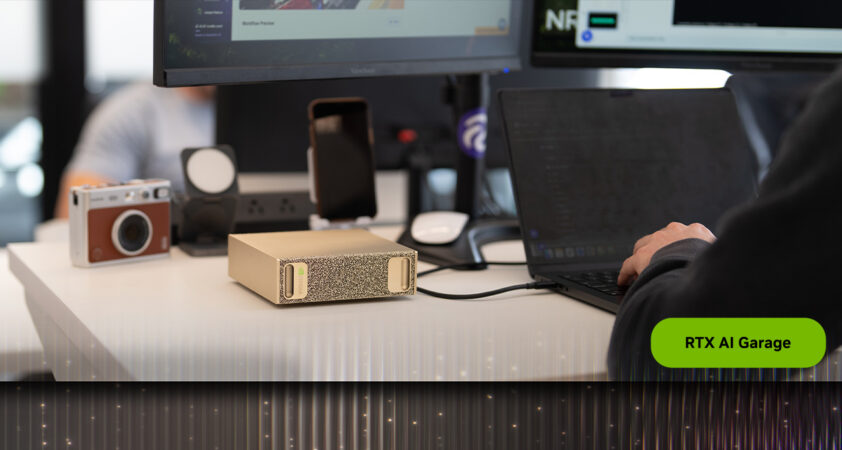
  11. NVIDIA Levels Up Local AI Agents Across RTX PCs and DGX Spark

    NVIDIA is expanding its AI infrastructure and agentic AI capabilities through strategic partnerships and new product releases. The company is collaborating with the UK government and various partners to build sovereign AI deployments, including the powerful Isambard-AI supercomputer. In South Korea, NVIDIA is working with LG Group to develop AI factories for robotics and autonomous driving, while also partnering with Doosan Group on similar initiatives. Additionally, NVIDIA is enhancing local AI agent deployment on Windows PCs with new hardware like RTX Spark and DGX Station, and integrating its NemoClaw framework across its Jetson platform for edge AI applications. AI

    NVIDIA Levels Up Local AI Agents Across RTX PCs and DGX Spark

    IMPACT NVIDIA's expanded AI infrastructure and agentic AI capabilities will accelerate development and deployment across various industries and edge devices.

  12. Cheapest setup for >10 tok/sec for 120B dense LLM

    A user on the r/LocalLLaMA subreddit is seeking the most cost-effective hardware configuration to run a 120 billion parameter dense Large Language Model (LLM) at a speed exceeding 10 tokens per second. The user requires this for generating rapid responses in role-playing game campaigns, ideally with a 64,000 token context window and quantized model precision (Q5 or Q6). They are exploring options for CPU-only, GPU-only, and mixed inference setups, noting the significant VRAM requirements for GPU-based solutions. AI

  13. Does CPU matter for GPU inference?

    A user on the r/LocalLLaMA subreddit is seeking advice on building a PC for large language model (LLM) inference. They want to prioritize GPU spending and minimize costs for other components. The core question is whether the CPU and RAM significantly impact inference performance when using powerful GPUs, specifically asking about potential penalties with older or lower-tier CPUs. AI

  14. 📝 The Democratization of Training Begins - Why Huawei's Ascend 910C Accelerates the Break from NVIDIA Dependency. Huawei's cutting-edge chip 'Ascend 910C' successfully post-trained DeepSeek-V4-Pro. This is not just a technological achievement, but signifies the geopolitical decentralization of AI training resources. 🔗 htt

    A research group, including Huawei and institutions from Shenzhen, claims to have successfully completed full-parameter post-training on DeepSeek's 1.6 trillion parameter V4-Pro model. This was achieved using a cluster of at least 1,000 Huawei Ascend 910C AI chips. This development is seen as a significant step towards China's AI self-reliance, particularly in overcoming challenges with training complex models on domestic hardware, though specific performance benchmarks are currently absent. AI

    IMPACT Demonstrates progress in China's domestic AI training capabilities, potentially reducing reliance on foreign hardware for complex model refinement.

  15. Vodafone’s New 5G Broadband Service Promises Fiber-Like Speeds At Home

    Vodafone has launched a new 5G Broadband service in the UK, aiming to provide fiber-like internet speeds without the need for cable installation. The service utilizes a 5G router and offers speeds up to 150Mbps, with pricing starting at £19 per month for a 50Mbps connection. This launch is supported by a survey indicating that slow or unreliable broadband is a major frustration for consumers, impacting daily life and even relationships. AI

    Vodafone’s New 5G Broadband Service Promises Fiber-Like Speeds At Home

    IMPACT This launch offers a new alternative for home internet connectivity, potentially impacting the broadband market and user experience.

  16. bedrock-sdk: v0.30.0

    Anthropic has released two minor updates to its TypeScript SDK for Amazon Bedrock. Version v0.30.1 and v0.30.0 were pushed to GitHub, with the latter being a prerequisite for the former. These updates likely contain bug fixes or minor improvements to the SDK's functionality. AI

    bedrock-sdk: v0.30.0

    IMPACT Minor update to an SDK, unlikely to have significant industry-wide impact.

  17. Google's TurboQuant: The Memory Stock Crash Google's TurboQuant algorithm reduces LLM memory needs by 6x. Samsung, SK Hynix, and Micron got hammered. The trilli

    Google has developed an algorithm called TurboQuant that significantly reduces the memory requirements for large language models. This innovation can decrease memory needs by up to six times. The development has reportedly impacted memory chip manufacturers like Samsung, SK Hynix, and Micron, causing their stock prices to fall. AI

    IMPACT Reduces memory demands for LLMs, potentially lowering hardware costs and enabling more efficient deployment.

  18. 📈 The tech crash doesn't stop NVIDIA: AI is still in its infancy. Between volatility and chips, the real game is played in the long run. # NVIDIA # AI 🔗 https://www. tom

    Nvidia's CEO Jensen Huang has highlighted a new trillion-dollar growth opportunity in AI chips, sparking discussions about the company's future valuation and market position. Several reports predict that specific AI semiconductor stocks may outperform Nvidia in the coming years. Meanwhile, companies like LG Group are significantly increasing their adoption of Nvidia GPUs, with LG planning to use 10,000 units, and ASUS is integrating Nvidia's AI Factory Platform to accelerate revenue generation. AI

    IMPACT Nvidia's strategic focus on AI chips and increasing adoption by major corporations like LG and ASUS signal continued growth and competition in the AI hardware sector.

  19. Hang Seng Index opens up 0.06%, Hang Seng Tech Index up 1.9%

    ChatGPT is reportedly set for its largest upgrade ever, potentially integrating Codex capabilities to create a more powerful AI agent. Separately, Intel is collaborating with Hitachi to enhance manufacturing efficiency using AI, while also exploring an AI technology center in South Korea with Nvidia and Hyundai. Additionally, several AI companies, including Zhipu, Juepai Xingchen, and Alibaba, are investing in the embodied AI firm Yuanli Lingji. AI

    IMPACT Potential for significantly enhanced AI agent capabilities and increased AI infrastructure development globally.

  20. 🔮 The AI boom is becoming an entrepreneurship boom #577

    Nvidia's reliance on Asian supply chains for components has increased to 90% of its production costs, impacting newer products like the Jetson Thor platform and automotive SoCs. This dependency strains wafer capacity and memory supply, even as the company commits to U.S. manufacturing. Meanwhile, the broader AI market faces scrutiny, with concerns about a potential bubble and the financial health of older startups, while some AI stocks are outperforming Nvidia and others are experiencing dips. AI

    🔮 The AI boom is becoming an entrepreneurship boom #577

    IMPACT Nvidia's supply chain shifts and broader market concerns about AI valuations could impact hardware availability and investment strategies.

  21. Local Data Center Backlash Signals a Shift in How the Grid Must Evolve

    Communities and regulators are increasingly pushing back against the rapid expansion of data centers, particularly those driven by AI infrastructure. This backlash is manifesting as proposed freezes on new projects, voter-mandated bans, and stricter utility requirements for clean energy sourcing and grid upgrade funding. The core issue is the strain these large, concentrated energy demands place on existing power grids, which are not expanding capacity quickly enough to meet projected growth. AI

    Local Data Center Backlash Signals a Shift in How the Grid Must Evolve

    IMPACT Data center expansion, driven by AI, is encountering significant regulatory hurdles and community opposition due to grid strain, potentially slowing deployment.

  22. Critical Minerals AI Supply Chain: Who Controls the Future Six chokepoints control every GPU, HBM chip, and data center cooling system. China processes 90% of r

    A detailed analysis highlights six critical chokepoints in the AI supply chain, focusing on the minerals and components essential for GPUs, HBM chips, and data center cooling systems. China's dominant role in processing 90% of rare earth elements is a key concern, underscoring geopolitical vulnerabilities in the global AI infrastructure. AI

    IMPACT Highlights geopolitical risks and resource dependencies in AI infrastructure, potentially influencing policy and investment decisions.

  23. @manicely6005 The public documentation can be found here too (3/3)

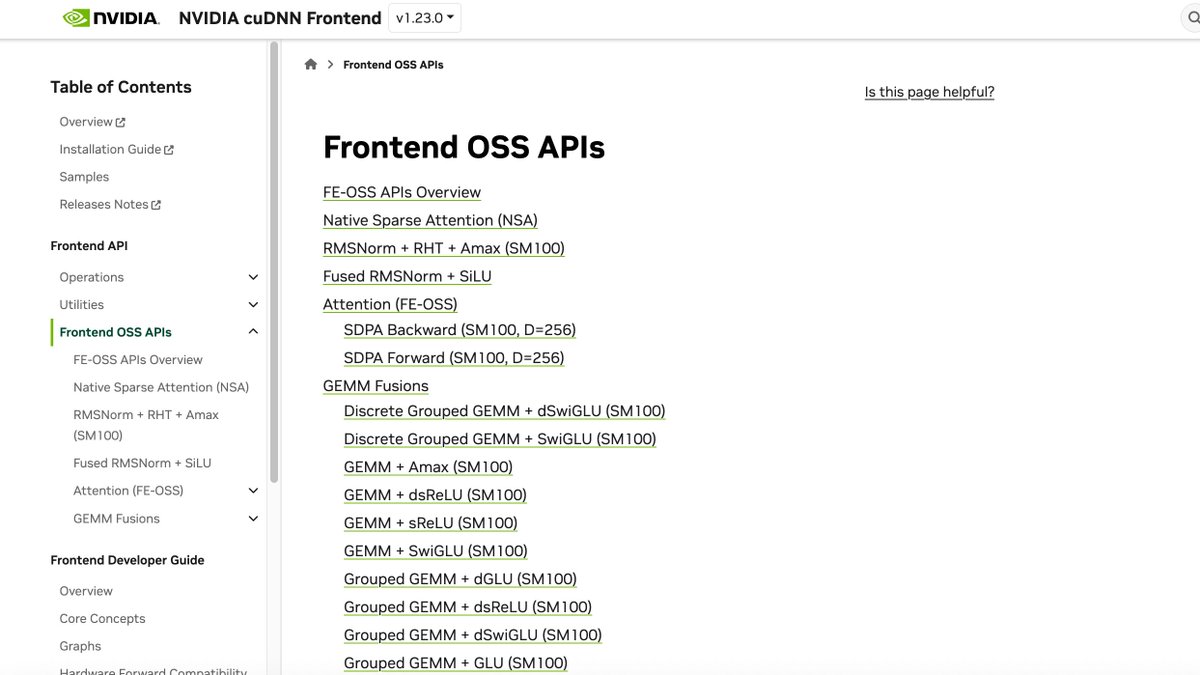
    NVIDIA has open-sourced parts of its cuDNN library, a significant move after 12 years of it being closed-source. This release includes over 20 Mixture-of-Experts (MoE) kernels and NSA sparse attention kernels. The codebase for these kernels is largely written in Python CuTe-DSL, with public documentation now available. AI

    @manicely6005 The public documentation can be found here too (3/3)

    IMPACT Open-sourcing of cuDNN kernels could accelerate research and development in AI infrastructure and model optimization.

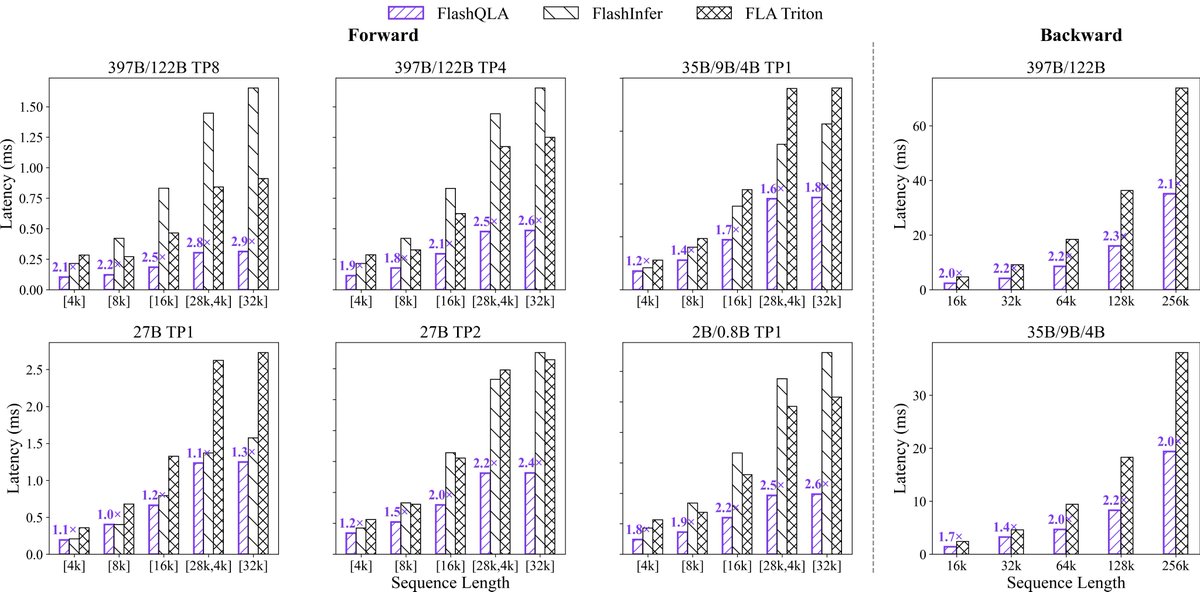
  24. Forward and backward benchmark results across common configurations. https://t.co/IHMCZRw9AW

    Alibaba's Qwen team has released FlashQLA, a new set of high-performance linear attention kernels developed using TileLang. These kernels are designed to improve the efficiency of attention mechanisms in large language models. The team also shared benchmark results for their Qwen models, showcasing performance across various configurations. AI

    Forward and backward benchmark results across common configurations. https://t.co/IHMCZRw9AW

    IMPACT Introduces optimized kernels that could improve LLM inference speed and efficiency.

  25. This is Decoupled DiLoCo: our new resilient and flexible way to train advanced AI models across multiple data centres. 🧵 https://t.co/YRmPrqIbYE

    Google DeepMind has introduced Decoupled DiLoCo, a novel approach to training advanced AI models that enhances resilience and flexibility across data centers. This system can train models like Google's 12B Gemma model across geographically dispersed regions using low-bandwidth networks and can even mix different generations of hardware, such as TPU6e and TPUv5p. Decoupled DiLoCo is designed to be self-healing, isolating and continuing training through artificial hardware failures and reintegrating units when they come back online, addressing the synchronization issues that typically stall AI training. AI

    This is Decoupled DiLoCo: our new resilient and flexible way to train advanced AI models across multiple data centres. 🧵 https://t.co/YRmPrqIbYE

    IMPACT Enables more robust and flexible large-scale AI model training, potentially reducing costs and increasing accessibility.

  26. Anthropic says OpenClaw-style Claude CLI usage is allowed again

    OpenClaw has updated its integration with Anthropic's Claude models, allowing direct API access and the reuse of Claude CLI logins. This update enables features like prompt caching and the 1 million token context window for Claude Opus 4.7. Additionally, OpenClaw now automatically handles image and PDF understanding capabilities when using Anthropic's models. AI

    Anthropic says OpenClaw-style Claude CLI usage is allowed again
  27. Scan your website to see how ready it is for AI agents

    A new tool called 'Is It Agent Ready?' allows website owners to scan their sites for compatibility with AI agents. The tool checks for adherence to emerging standards related to discoverability, content accessibility, bot access control, protocol discovery, and commerce. It provides recommendations for improvement, such as publishing a valid robots.txt file with AI bot rules and sitemap directives. AI

    Scan your website to see how ready it is for AI agents
  28. Moving a large-scale metrics pipeline from StatsD to OpenTelemetry / Prometheus

    This article details the migration of Airbnb's large-scale metrics pipeline from StatsD to OpenTelemetry and Prometheus. The move was driven by the need for a more robust and scalable solution to handle the increasing volume of data. The new system leverages OpenTelemetry for data collection and Prometheus with vmagent for storage and querying, improving observability and performance. AI

  29. Launch HN: Relvy (YC F24) – On-call runbooks, automated

    Relvy, a startup from the Y Combinator (YC) Winter 2024 batch, has launched its on-call runbook automation product. The platform aims to streamline incident response by providing automated runbooks. This launch targets engineering and operations teams. AI

    Launch HN: Relvy (YC F24) – On-call runbooks, automated

    IMPACT Niche tooling improvement; minimal industry-wide impact.

  30. Nanocode: The best Claude Code that $200 can buy in pure JAX on TPUs

    A new project called Nanocode has been released, aiming to provide a high-performing Claude Code solution for $200. The project is built using JAX and is optimized for TPUs, suggesting a focus on efficient and powerful execution. AI

    Nanocode: The best Claude Code that $200 can buy in pure JAX on TPUs

    IMPACT Offers a cost-effective solution for code generation tasks, potentially lowering the barrier to entry for developers.

  31. Show HN: Orloj – agent infrastructure as code (YAML and GitOps)

    Orloj has released an open-source infrastructure-as-code platform for managing multi-agent AI systems. The tool allows developers to define agents, tools, models, memory, and other components using YAML and GitOps principles. Orloj aims to provide a declarative stack for building, operating, governing, and observing complex agentic systems, treating them like traditional software infrastructure. AI

    Show HN: Orloj – agent infrastructure as code (YAML and GitOps)

    IMPACT Provides a structured framework for deploying and managing complex multi-agent AI systems, potentially simplifying development and operations.

  32. Launch HN: Kita (YC W26) – Automate credit review in emerging markets

    Kita, a startup founded by Carmel and Rhea, has launched a new product designed to automate credit review for lenders in emerging markets. The system utilizes Visual Language Models (VLMs) to process diverse and often unstandardized financial documents, a task that current OCR and document AI tools struggle with. Kita's platform extracts structured financial data, detects fraud, and verifies information through cross-document checks and historical data, aiming to improve the speed and accuracy of underwriting. AI

    Launch HN: Kita (YC W26) – Automate credit review in emerging markets

    IMPACT Automates document-heavy underwriting processes, potentially increasing lending efficiency and access in emerging markets.

  33. Launch HN: IonRouter (YC W26) – High-throughput, low-cost inference

    IonRouter has launched a new inference service designed for high throughput and low cost, utilizing its proprietary IonAttention engine. This engine is capable of multiplexing multiple models on a single GPU, enabling rapid model switching and real-time traffic adaptation. The service supports various open-source models and fine-tunes, offering per-second billing and minimal cold start times, making it suitable for applications like robotics and real-time video analysis. AI

    Launch HN: IonRouter (YC W26) – High-throughput, low-cost inference

    IMPACT Offers a potentially more cost-effective and performant inference solution for deploying various open-source and fine-tuned models.

  34. Show HN: Axe – A 12MB binary that replaces your AI framework

    Axe is a new command-line interface tool designed to manage and execute AI agents, drawing inspiration from Unix philosophy for focused, composable functionality. It allows users to define agents with specific skills using TOML files, enabling them to be chained together or triggered by standard system tools like cron or git hooks. Axe supports multiple LLM providers, including Anthropic and OpenAI, and offers features such as persistent memory, sub-agent delegation, and structured JSON output for scripting. AI

    Show HN: Axe – A 12MB binary that replaces your AI framework

    IMPACT Provides a more modular and composable approach to integrating LLM agents into existing workflows.

  35. Launch HN: Sentrial (YC W26) – Catch AI agent failures before your users do

    Sentrial has launched a new platform designed to detect and alert users about failures in AI agents before they impact end-users. The service aims to provide a proactive monitoring solution for AI-driven applications. This tool focuses on identifying issues within AI agent workflows, offering a layer of reliability for businesses integrating these technologies. AI

    IMPACT Provides a monitoring solution to improve the reliability of AI agents in production environments.

  36. Show HN: Klaus – OpenClaw on a VM, batteries included

    Klaus has launched OpenClaw, an AI agent designed to function as an employee for businesses. This tool aims to simplify the integration of AI features, allowing companies to deploy agents within minutes. OpenClaw offers various use cases, including calendar management, email triage, travel booking, and meeting preparation, with tiered pricing plans and a managed rollout option for full-service deployment. AI

    Show HN: Klaus – OpenClaw on a VM, batteries included

    IMPACT Accelerates business adoption of AI agents for operational tasks, potentially reducing manual labor and increasing efficiency.

  37. Launch HN: IonRouter (YC W26) – High-throughput, low-cost inference

    IonRouter has launched a new inference stack called IonAttention, designed to multiplex models on a single GPU for high throughput and low cost, compatible with NVIDIA Grace Hopper. Separately, RunAnywhere has released RCLI, an on-device voice AI for macOS that runs inference locally on Apple Silicon using their proprietary MetalRT engine, offering features like local RAG and VLM capabilities. AI

    Launch HN: IonRouter (YC W26) – High-throughput, low-cost inference

    IMPACT These launches offer new options for optimizing AI inference costs and performance, both in cloud and on-device environments.

  38. The authenticated browser MCP — why cloud tools can't see your logged-in state

    Developers are sharing practical advice for deploying and optimizing AI coding assistants like Claude Code. This includes a checklist for production readiness, covering crucial aspects like API key management, database backups, and rate limiting for AI endpoints. Additionally, techniques are being shared to reduce token consumption, such as hierarchical file structures and disabling unnecessary context injections, alongside tools like 'Caveman' that simplify these optimizations across various AI agents. The broader ecosystem is also addressing challenges in multi-agent collaboration and secure tool execution, with a focus on robust governance and authenticated browser interactions. AI

    The authenticated browser MCP — why cloud tools can't see your logged-in state

    IMPACT Provides practical guidance and tools for developers using AI coding assistants, focusing on efficiency, security, and cost optimization.

  39. Show HN: Open-Source Article 12 Logging Infrastructure for the EU AI Act

    A new open-source TypeScript library has been released to help developers comply with Article 12 of the EU AI Act. This library automatically records AI inferences as tamper-evident logs, chaining entries with SHA-256 hashes and ensuring a minimum retention period. It is designed for Node.js applications using the Vercel AI SDK and aims to provide a more robust auditing solution than standard logging practices. AI

    Show HN: Open-Source Article 12 Logging Infrastructure for the EU AI Act

    IMPACT Provides a technical solution for AI developers to meet new EU compliance mandates for high-risk systems.

  40. Show HN: I built a zero-browser, pure-JS typesetting engine for bit-perfect PDFs

    A developer has created VMPrint, a novel typesetting engine that operates without a browser, utilizing pure JavaScript for PDF generation. This engine treats document layout as a deterministic spatiotemporal simulation, where elements are autonomous actors negotiating geometry. The system is designed for high-volume report generation, collaborative editors, and print-on-demand services, offering a more efficient and reliable alternative to browser-based solutions. AI

    Show HN: I built a zero-browser, pure-JS typesetting engine for bit-perfect PDFs

    IMPACT Offers a more efficient, browser-less PDF generation solution for developers, potentially reducing infrastructure costs for high-volume document creation.

  41. OpenAI raises $110B on $730B pre-money valuation

    OpenAI has secured $110 billion in private funding, with Amazon contributing $50 billion and Nvidia and SoftBank each adding $30 billion, valuing the company at $730 billion pre-money. This significant investment includes substantial infrastructure partnerships, with OpenAI expanding its AWS collaboration by $100 billion and committing to significant compute usage. The funding round is still open, and OpenAI anticipates further investor participation as it focuses on scaling infrastructure to meet the growing demand for AI services. AI

    OpenAI raises $110B on $730B pre-money valuation

    IMPACT This massive funding and infrastructure deal will likely accelerate OpenAI's ability to scale its AI services and develop new products, potentially setting new benchmarks for compute and AI deployment.

  42. Show HN: OpenSwarm – Multi‑Agent Claude CLI Orchestrator for Linear/GitHub

    OpenSwarm is a new command-line interface tool designed to orchestrate multiple AI agents for autonomous code-related tasks. It can integrate with various AI models, including Anthropic's Claude, OpenAI's GPT and Codex, and local open-source models. The tool aims to automate workflows such as picking up issues from platforms like Linear, running code review pipelines, and maintaining long-term memory through databases like LanceDB. AI

    Show HN: OpenSwarm – Multi‑Agent Claude CLI Orchestrator for Linear/GitHub

    IMPACT Enables more complex, multi-agent autonomous workflows for code development and issue resolution.

  43. Show HN: Strava for Claude Code

    A new tool called Strava for Claude Code has been released, designed to help developers track their usage and costs associated with AI models like Claude. The tool provides metrics on token consumption, iteration speed, and daily usage streaks, aiming to foster a competitive environment among AI-powered developers. It emphasizes privacy by only sending aggregated usage data, not the content of prompts or code, to its local telemetry service. AI

    Show HN: Strava for Claude Code

    IMPACT This tool could encourage more efficient and competitive AI development by providing usage and cost-tracking metrics for developers.

  44. Show HN: Skill that lets Claude Code/Codex spin up VMs and GPUs

    A new open-source terminal application called Skill has been developed to facilitate the use of AI coding agents. This tool is designed to help users spin up virtual machines and GPUs, streamlining the process of deploying and managing AI development environments. The project aims to provide a next-generation development experience for those working with AI-powered coding assistants. AI

    Show HN: Skill that lets Claude Code/Codex spin up VMs and GPUs

    IMPACT Potentially streamlines AI development workflows by simplifying VM and GPU provisioning for coding agents.

  45. Launch HN: Modelence (YC S25) – App Builder with TypeScript / MongoDB Framework

    Modelence, an AI startup, has launched an open-source full-stack framework designed for both human developers and AI coding agents. The framework utilizes TypeScript for its type safety and MongoDB for flexible schema management, aiming to streamline app development by handling boilerplate tasks like authentication and database setup. An integrated app builder allows users to generate applications from prompts, with plans to introduce a DevOps agent for production monitoring and error resolution. AI

    Launch HN: Modelence (YC S25) – App Builder with TypeScript / MongoDB Framework

    IMPACT Simplifies AI-driven application development by providing a unified framework and backend infrastructure.

  46. Apple buys Israeli startup Q.ai

    Apple has acquired the Israeli AI startup Q.ai for nearly $2 billion, aiming to bolster its capabilities in audio processing and machine learning. The startup, founded in 2022, specializes in technologies that can interpret whispered speech and enhance audio in noisy environments. This acquisition is Apple's second-largest to date and follows previous AI-focused feature integrations in products like AirPods and the Vision Pro headset. AI

    Apple buys Israeli startup Q.ai

    IMPACT Strengthens Apple's AI hardware and audio capabilities, potentially impacting future product development and competition in the AI race.

  47. Launch HN: AgentMail (YC S25) – An API that gives agents their own email inboxes

    AgentMail, a new API service from Haakam, Michael, and Adi, provides dedicated email inboxes for AI agents, aiming to streamline autonomous task completion. The service addresses limitations found in existing email platforms like Gmail, offering features such as programmatic inbox creation, advanced semantic search, and usage-based pricing. Early adopters are already utilizing AgentMail for tasks like data conversion, negotiation, and training model data sourcing. AI

    IMPACT Enables more autonomous AI agents by providing a robust, dedicated communication channel, potentially streamlining workflows and data sourcing.

  48. Show HN: ShapedQL – A SQL engine for multi-stage ranking and RAG

    ShapedQL has been introduced as a new SQL engine designed to optimize multi-stage ranking and Retrieval-Augmented Generation (RAG) processes. This tool aims to streamline complex data operations within AI applications. The announcement was made via a Show HN post, indicating a focus on community feedback and developer adoption. AI

    IMPACT Potentially improves efficiency for AI systems relying on RAG and complex ranking.

  49. Show HN: A fast CLI and MCP server for managing Lambda cloud GPU instances

    A new open-source command-line interface (CLI) and MCP server has been released to manage cloud GPU instances from Lambda. The tool, developed by Strand-AI, allows users to directly control GPU infrastructure via terminal commands or enable AI assistants like Claude to manage these resources. It offers features such as starting, stopping, and listing instances, alongside automatic notifications for instance availability across Slack, Discord, and Telegram. AI

    Show HN: A fast CLI and MCP server for managing Lambda cloud GPU instances

    IMPACT Simplifies cloud GPU management for AI developers and researchers using AI assistants.

  50. South Korea's May trade data shows chip exports remain strong

    Nvidia is reportedly acquiring assets from AI chip startup Groq for approximately $20 billion, marking its largest deal to date. This acquisition aims to integrate Groq's low-latency inference technology into Nvidia's AI factory architecture. While Nvidia is licensing Groq's intellectual property and hiring key personnel, Groq will continue to operate as an independent company, with its cloud business unaffected. AI

    IMPACT Accelerates Nvidia's AI inference capabilities and potentially broadens its custom chip offerings.