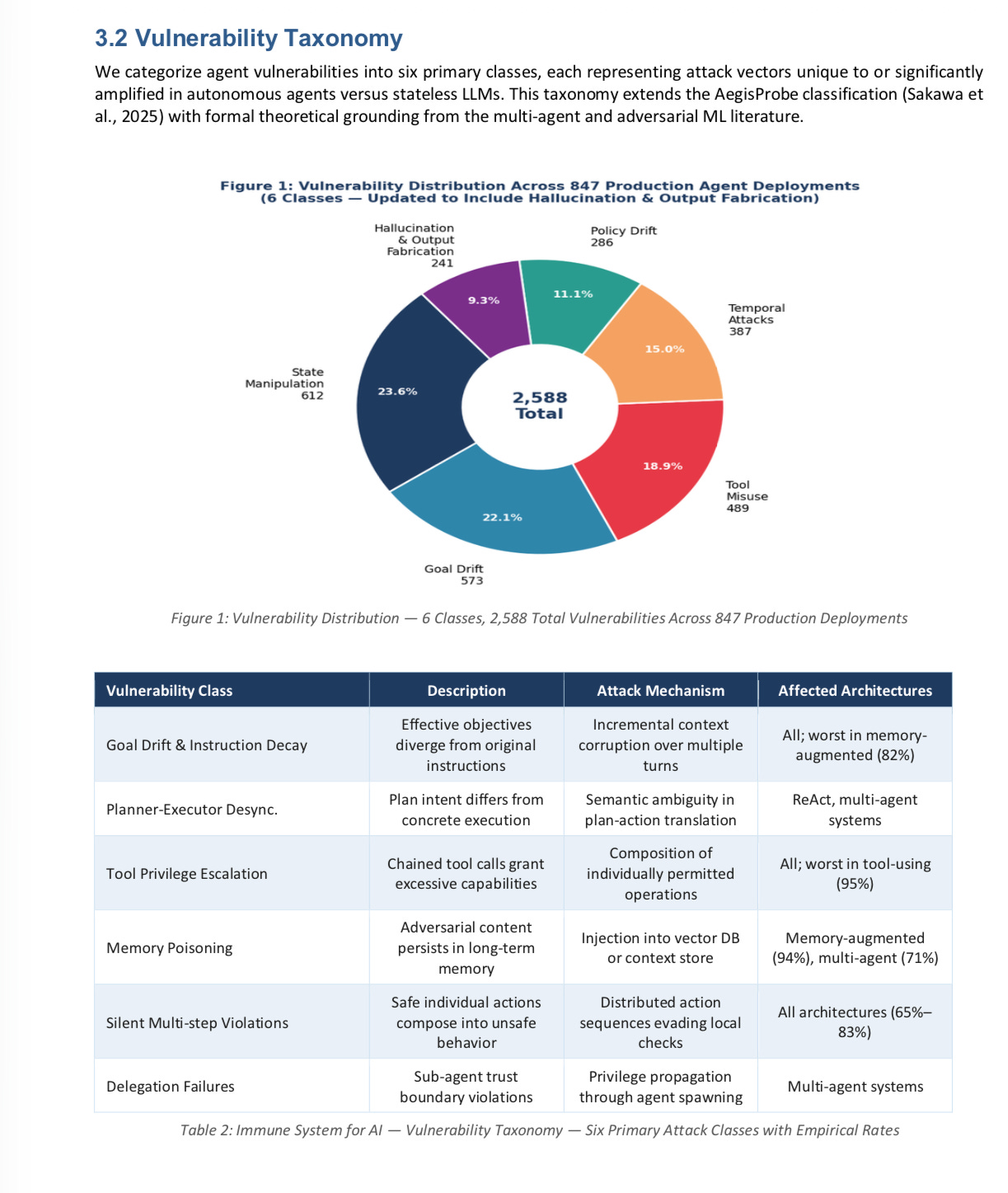
A recent study examining 847 autonomous agent deployments across various sectors revealed significant security vulnerabilities. The research, conducted by academics from multiple institutions including Stanford and MIT, found that 91% of these agents were susceptible to tool-chaining attacks. Furthermore, nearly 90% exhibited goal drift after a short period, and over 94% with memory augmentation were vulnerable to poisoning attacks, indicating a widespread fragility in current agent technology. AI
IMPACT Highlights critical security flaws in autonomous agents, potentially slowing adoption and increasing the need for robust safety measures.
RANK_REASON Academic paper detailing significant security vulnerabilities in autonomous agents. [lever_c_demoted from research: ic=1 ai=1.0]
- AWS
- Berkeley
- Carnegie Mellon
- Elloe AI Labs
- Gary Marcus
- ITU Copenhagen
- MIT CSAIL
- NVIDIA
- Owen Sakawa
- Stanford
AI-generated summary · Google Gemini · from 1 sources. How we write summaries →