PulseAugur / Pulse
EN
LIVE 20:10:25

Pulse

last 48h
[49/49] 97 sources

What AI is actually talking about — clusters surfacing on Bluesky, Reddit, HN, Mastodon and Lobsters, re-ranked to elevate originality and crush noise.

  1. Rumor: Anthropic Planning to Release Public Version of Claude Mythos Tomorrow (with Guardrails)

    Anthropic is reportedly planning to release a public version of its advanced Claude Mythos model soon, according to tech journalist Alex Heath. This model, previously available only to select partners for cybersecurity research, is expected to offer significant improvements in long-horizon tasks and agentic capabilities. The release will include substantial safety guardrails, addressing earlier concerns that led to its restricted access. AI

    IMPACT Broader access to advanced agentic and reasoning capabilities could accelerate enterprise adoption of AI-powered automation.

  2. Applied Digital signs $5.2 billion AI data center lease with U.S. anonymous hyperscaler

    Applied Digital has secured a significant lease agreement valued at $5.2 billion with an unnamed U.S. hyperscaler for AI data center services. This deal is expected to substantially boost Applied Digital's revenue over the next decade. The agreement highlights the growing demand for specialized infrastructure to support advanced artificial intelligence workloads. AI

    Applied Digital signs $5.2 billion AI data center lease with U.S. anonymous hyperscaler

    IMPACT This deal underscores the massive demand for specialized AI infrastructure, potentially driving further investment in data center capacity.

  3. [AINews] FrontierCode: Benchmarking for Code Quality over Slop

    Cognition has released FrontierCode, a new benchmark designed to evaluate the quality and mergeability of AI-generated code. Unlike previous benchmarks that focused on passing unit tests, FrontierCode assesses factors like regression safety, cleanliness, and maintainability, with tasks requiring over 40 hours to complete. Early results indicate that even top models like Opus 4.8 score low on the hardest tier, suggesting that current AI capabilities in producing production-ready code are less advanced than previously thought. AI

    [AINews] FrontierCode: Benchmarking for Code Quality over Slop

    IMPACT Highlights limitations in current AI's ability to produce production-ready code, suggesting a need for more robust evaluation methods.

  4. UK Invests £1.1B in AI Infrastructure A Sign of Europe's Shift Toward AI Sovereignty

    The UK government has announced a significant investment of £1.1 billion to bolster its AI infrastructure. This substantial funding aims to accelerate AI development and adoption across the nation. The initiative is seen as a strategic move to enhance the UK's AI capabilities and promote technological sovereignty within Europe. AI

    IMPACT This investment could accelerate AI adoption and research within the UK, potentially fostering new AI companies and capabilities.

  5. Ideogram 4 - 80s Anime Lora

    A user has released version 2 of their "80s Anime Lora" for Stable Diffusion, which is trained on the Ideogram 4 model. This updated version uses an expanded dataset of 65 images and was trained for an additional 6000 steps, resulting in increased detail and contrast while maintaining the desired retro aesthetic. The creator is pleased with the results and is moving on to new concepts, encouraging others to experiment with Lora training. AI

    Ideogram 4 - 80s Anime Lora

    IMPACT Enables users to generate images with a specific retro anime aesthetic using Stable Diffusion.

  6. Financial Times: New AI espionage powers trigger Putin camera scare | Russia paused surveillance system after killing of Iran’s Supreme Leader exposed how AI can be used on CCTV data to target enemies

    Russia has reportedly paused its advanced surveillance system following the targeted killing of Iran's Supreme Leader, highlighting concerns about AI's potential for espionage. The incident revealed how AI can be leveraged with CCTV data to identify and target individuals. This development has raised alarms about the misuse of AI in surveillance and its implications for national security and individual privacy. AI

    Financial Times: New AI espionage powers trigger Putin camera scare | Russia paused surveillance system after killing of Iran’s Supreme Leader exposed how AI can be used on CCTV data to target enemies

    IMPACT Highlights the dual-use nature of AI, prompting governments to reassess surveillance capabilities and potential misuse for targeted operations.

  7. Scoop: White House, Hill relaunch effort to block state AI laws

    The White House and Congressional leaders are reviving efforts to preemptively block certain state-level AI regulations. These negotiations aim to bundle federal AI preemption with other tech priorities, such as online child safety and combating deepfakes. This initiative faces challenges due to potential pushback from advocacy groups and state lawmakers, and the approaching August recess in an election year. AI

    Scoop: White House, Hill relaunch effort to block state AI laws

    IMPACT Federal preemption could streamline AI development by creating a unified regulatory landscape, but may limit state-level innovation and consumer protections.

  8. Anthropic changed their privacy policy today and there's a specific clause that every Claude user needs to know about

    Anthropic has updated its privacy policy, set to take effect on July 8, 2026, which allows the company to share user conversation data with law enforcement based on its own internal "good faith belief" without requiring a court order. This new policy removes the previous requirement for legal process and external oversight, raising concerns about potential false positives, especially for creative writing or personal expression that could be misinterpreted by automated classifiers. Users will not be notified if their data is disclosed, and there is no described appeals process. AI

    IMPACT Raises significant privacy concerns for AI users and may impact creative expression due to potential misinterpretation of content by automated systems.

  9. I predict the public market will price Anthropic at or above the $965B Series H

    A financial model predicts Anthropic will achieve a market capitalization of approximately $1.05 trillion post-IPO, with a median valuation of $965 billion based on its recent Series H funding round. This valuation is supported by mutual funds acting as lead investors, who typically invest at private-market prices to secure IPO entry. The forecast also anticipates significant revenue growth for Anthropic's Claude Code product, projecting an increase from $500 million to $20 billion ARR by May 2027. AI

    I predict the public market will price Anthropic at or above the $965B Series H

    IMPACT Sets a high benchmark for AI company valuations, potentially influencing future investment and IPO strategies in the sector.

  10. Levi: Run AlphaEvolve on your local QWEN 30B

    A new open-source system named LEVI has been developed to emulate AlphaEvolve's capabilities at a significantly reduced cost, reportedly up to 35 times cheaper. LEVI's core principle is that smaller language models can achieve comparable or superior results to larger ones through optimized search architectures and intelligent routing. The system has demonstrated strong performance in code and prompt optimization tasks, outperforming existing frameworks on benchmarks like ADRS and IFBench while using fewer computational resources. AI

    IMPACT This system could enable more accessible and cost-effective AI development and experimentation by leveraging smaller models.

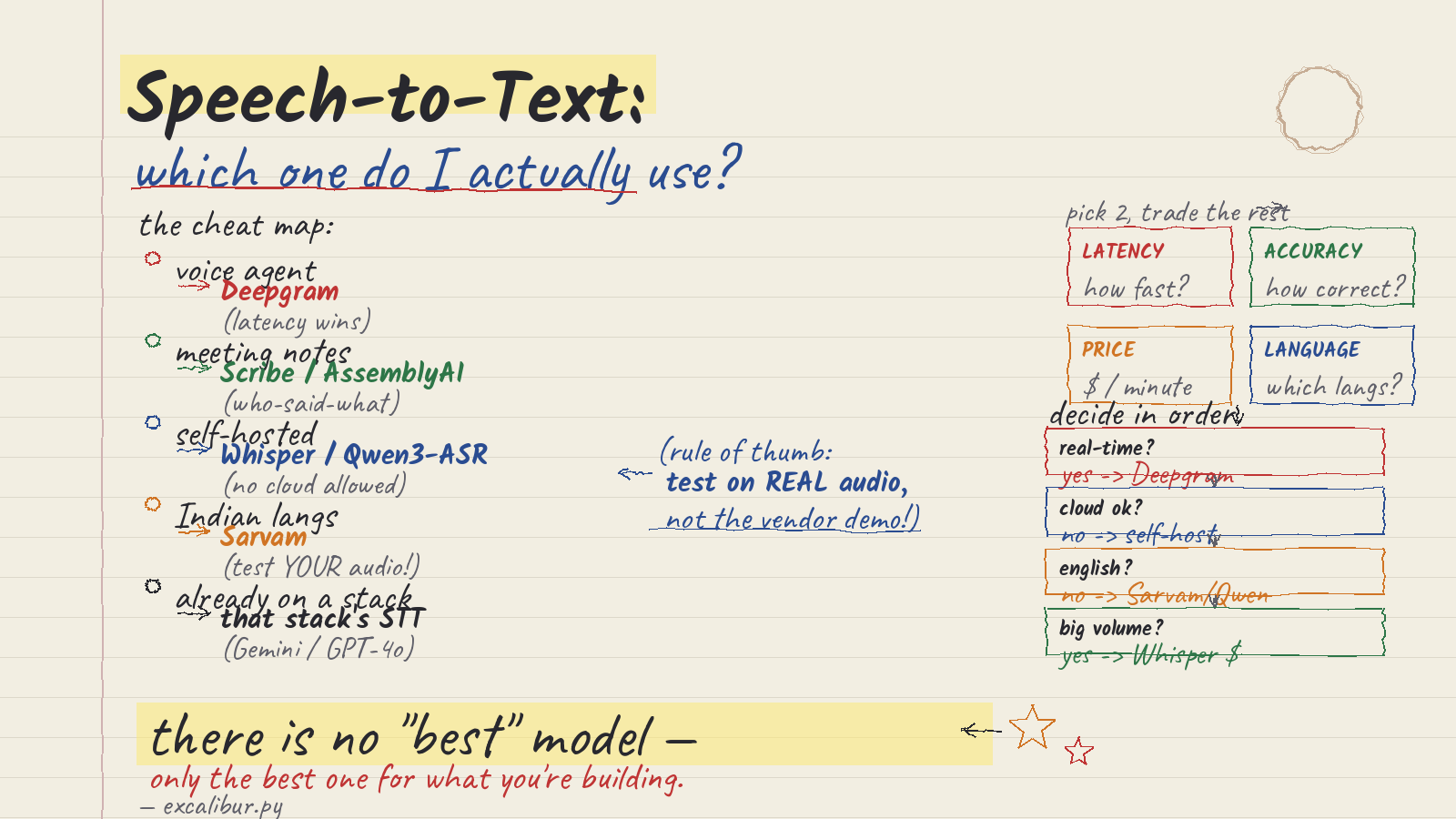
  11. Which Speech-to-Text Model Should You Actually Use? A Use-Case Guide for 2026.

    A new benchmark for Text-to-Speech (TTS) models has been launched, incorporating objective standards and blind voting to create an ELO rating system. This revamped benchmark aims to simplify the process of choosing the best local TTS model for users. The project includes a live voting platform and an associated GitHub repository for the benchmark's code and model contributions. AI

    Which Speech-to-Text Model Should You Actually Use? A Use-Case Guide for 2026.

    IMPACT Provides a more objective and user-friendly way to evaluate and select Text-to-Speech models.

  12. Open image generation models are closer to closed-source quality than this sub thinks [D]

    Open-source image generation models are now nearly on par with closed-source alternatives in terms of quality and capabilities. Recent evaluations show that open models are closing the gap in areas like compositional accuracy and prompt adherence. Furthermore, open models are demonstrating improved text rendering in images and faster generation speeds on consumer hardware, challenging previous assumptions about their limitations. AI

    IMPACT Open-source models are becoming competitive with closed-source alternatives, potentially democratizing advanced image generation capabilities.

  13. An active attack is planting backdoors inside Claude Code right now. If you use npm, your credentials may already be compromised.

    A sophisticated malware campaign, dubbed Miasma by Microsoft, has targeted developers by compromising 32 npm packages under the `@redhat-cloud-services` umbrella. This attack plants backdoors in developer tools like Claude Code and VS Code, silently exfiltrating credentials for cloud services, code repositories, and more. The malware is designed to persist even after package uninstallation and can wipe user directories if access is revoked, making it a significant threat to software supply chain security. AI

    IMPACT This sophisticated supply chain attack highlights critical vulnerabilities in developer tools and platforms, potentially impacting the security of AI development and deployment.

  14. RT @osanseviero: Gemma 4 MTP has been officially integrated into llama.cpp. This means you can use Gemma 4 QAT + MTP for a lightweight and super-fast setup

    The llama.cpp project has merged support for Gemma 4 MTP, a feature that enhances the speed and efficiency of local large language models. This integration allows users to leverage Gemma 4 with Quantization Aware Training (QAT) and MTP for a faster setup. The update is expected to significantly improve the performance of personal Gemma models. AI

    IMPACT Enhances local LLM performance, making personal Gemma models faster and more efficient for users.

  15. Some posters I generated with Ideogram 4.

    Users are experimenting with Ideogram 4, an AI image generation model, to create high-resolution images. One user shared examples of 17MP images, including a Warhammer 40k-esque ship and a Millennium Falcon, noting the challenges of previewing composition at such large scales and the significant processing time required. Another user showcased posters generated with Ideogram 4, utilizing SeedVR2 for upscaling. AI

    Some posters I generated with Ideogram 4.

    IMPACT Demonstrates advanced capabilities in AI image generation for high-resolution outputs.

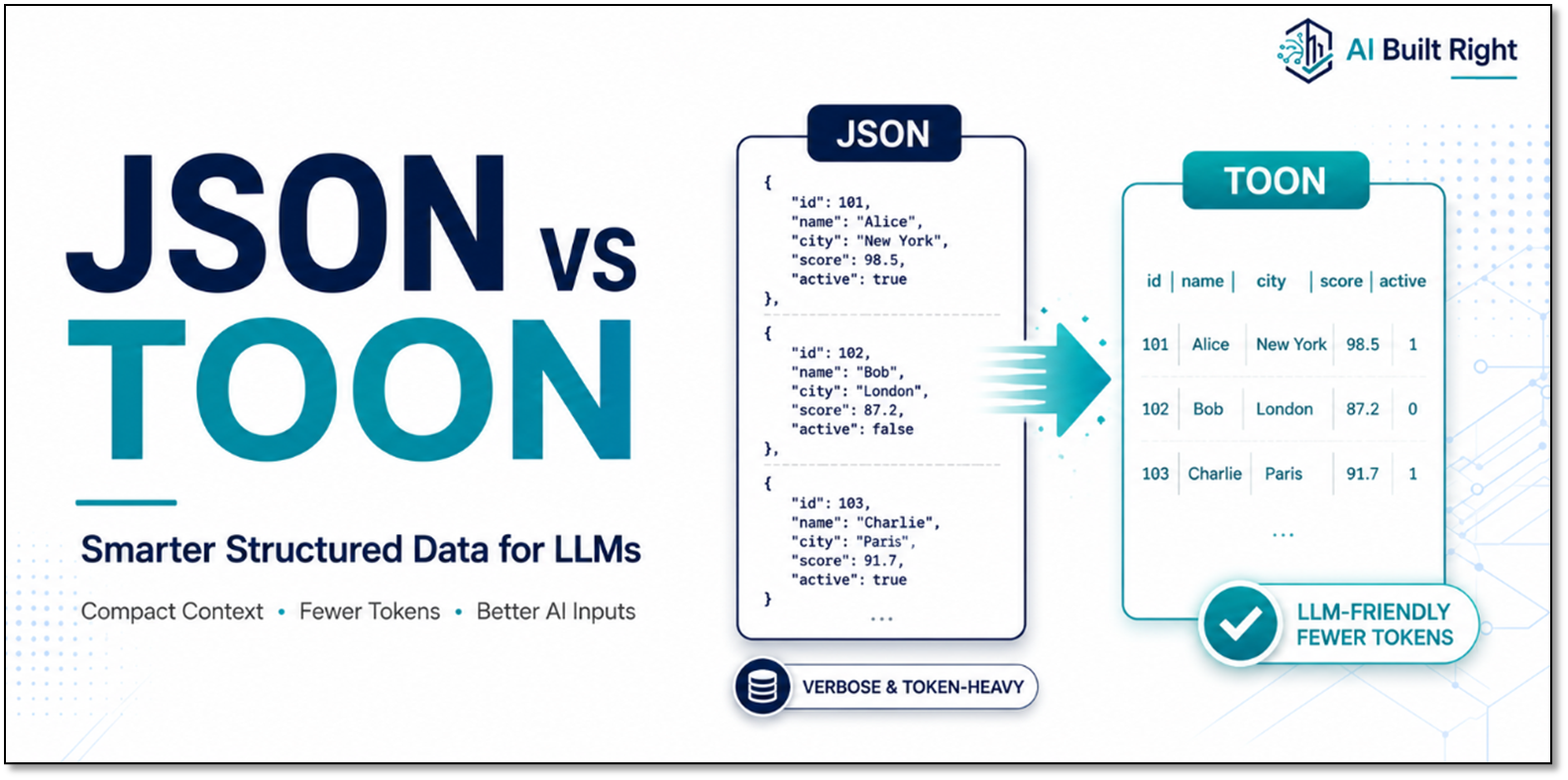
  16. TOON: Beyond JSON for LLMs

    A new method called TOON is proposed as a more token-efficient alternative to JSON for large language models. This approach aims to simplify the process of converting natural language descriptions into structured data, which is particularly useful for tasks like image analysis and layout parsing. The goal is to enable LLMs to better understand and represent complex visual information. AI

    TOON: Beyond JSON for LLMs

    IMPACT TOON could streamline LLM data processing, potentially improving efficiency and reducing costs for AI applications that rely on structured data.

  17. Ideogram 4.0 Realism Engine Lora (Beta)

    Users on Reddit are exploring the capabilities of Ideogram 4.0 for training LoRAs, which are custom models used to fine-tune AI image generation. Discussions revolve around achieving accurate multi-character LoRAs and applying specific artistic styles, such as an "Arcane" theme. Some users are sharing experimental results and tips for training, while others are encountering technical issues like out-of-memory errors. AI

    Ideogram 4.0 Realism Engine Lora (Beta)

    IMPACT Users are experimenting with custom model training for Ideogram 4.0, sharing techniques and results for LoRA creation.

  18. What Recursive Self-improvement Looks Like From the Inside and Why the Next Mind is Not a Copy

    Anthropic has published research on recursive self-improvement, exploring how AI systems might evolve autonomously. The work delves into the geometric and entropic considerations of such advancements. It speculates on future scenarios, including AI-driven report generation and potential IPO filings, suggesting a trajectory where AI systems could play a significant role in their own development and even business operations. AI

    What Recursive Self-improvement Looks Like From the Inside and Why the Next Mind is Not a Copy

    IMPACT Explores theoretical advancements in AI autonomy and potential future capabilities, influencing research directions.

  19. [3090] Gemma4 QAT + MTP quick TPS numbers [TLDR 1.2-1.8x better]

    Users on r/LocalLLaMA are discussing their experiences with the Quantization-Aware Training (QAT) variants of Google's Gemma 4 models. Some users report improved performance, particularly with longer contexts and more varied responses in roleplaying scenarios, while others note accuracy inconsistencies and degradation compared to non-QAT versions. There is ongoing discussion about the best methodologies to compare QAT models against their original counterparts and to evaluate the impact of quantization on different model sizes. AI

    [3090] Gemma4 QAT + MTP quick TPS numbers [TLDR 1.2-1.8x better]

    IMPACT User experiences highlight potential trade-offs between quantization methods and model performance, influencing local LLM deployment choices.

  20. OpenAI and the Trump administration are negotiating a government stake in the AI startup

    The Trump administration is reportedly in discussions with OpenAI about taking an equity stake in the AI company. This potential deal, which has been ongoing since early 2025, could involve OpenAI voluntarily offering a portion of its equity to the U.S. government. The aim is to establish a "Public Wealth Fund" that would distribute AI-driven economic growth benefits directly to American citizens. While terms are not finalized, the talks also touch upon AI regulation and follow a similar government stake in Intel. AI

    OpenAI and the Trump administration are negotiating a government stake in the AI startup

    IMPACT This could set a precedent for government involvement in AI companies, potentially influencing future regulation and public benefit distribution.

  21. CohereLabs/North-Mini-Code-1.0

    Cohere has released North-Mini-Code-1.0, a 30 billion parameter coding model. While its general artificial analysis score is lower than some competitors, it performs competitively in coding benchmarks. The model is available on Hugging Face for users to download and utilize. AI

    IMPACT Provides a new option for developers needing coding assistance, potentially improving code generation efficiency.

  22. AI just designed a ‘fundamental new vaccine’ for viruses, researchers say A team at the University of Cambridge say this is the first time that a vaccine whose

    Researchers at the University of Cambridge have developed a novel vaccine for viruses, marking the first instance of a vaccine's active component being entirely designed by computer simulations and subsequently tested in humans. This AI-designed vaccine has the potential to protect against multiple viruses and could be instrumental in preventing future pandemics. While the specific AI technology used is not fully detailed, the successful human testing represents a significant step forward in computational drug discovery. AI

    AI just designed a ‘fundamental new vaccine’ for viruses, researchers say A team at the University of Cambridge say this is the first time that a vaccine whose

    IMPACT This AI-driven vaccine design and successful human testing could accelerate the development of new medical treatments and pandemic prevention strategies.

  23. Whisper Hallucination Detection and Mitigation via Hidden Representation Steering and Sparse AutoEncoders

    Researchers are developing new methods to combat hallucinations in AI models, including large language models (LLMs) and diffusion models. One approach, Constrained Paraphrase Consistency (CCHD), uses paraphrased views of data to improve hallucination detection for LLMs. For diffusion models, Dynamic Guidance selectively sharpens the score function to reduce structural inconsistencies without sacrificing diversity. Other work focuses on token-level steering for vision-language models and analyzing counterfactual robustness in VLMs to understand hallucination stability. AI

    IMPACT Developments in hallucination detection and mitigation are crucial for increasing the reliability and trustworthiness of AI systems across diverse applications.

  24. Anthropic Says AI Now Builds Itself

    Anthropic has published research indicating that AI systems are increasingly contributing to their own development, a trend they term "recursive self-improvement." This process, where AI assists in designing and developing future AI models, is accelerating development cycles, with engineers shipping significantly more code than in previous years. While this advancement promises immense benefits across various fields, it also raises concerns about human control over increasingly capable AI and highlights the growing importance of robust safety and monitoring mechanisms. AI

    Anthropic Says AI Now Builds Itself

    IMPACT Accelerates AI development cycles and raises critical questions about future AI control and safety.

  25. Anima LoRA - correct parameters for Style training?

    Users on Reddit are seeking guidance on how to train "Anima LoRA" models, a specific type of LoRA for image generation. They are looking for tutorials and correct parameters, particularly for training styles, as existing guides are scarce. Some users are exploring tools like ComfyUI and Anima TrainFlow, but lack the necessary technical details to proceed. AI

    IMPACT Niche tooling question; minimal industry-wide impact.

  26. Oh, joy...¹⁾ 😔 # AI Agents Enable Adaptive Computer Worms https:// arxiv.org/abs/2606.03811 # paper 📄 _____ ¹⁾ ... as if we don't already have enough security p

    Researchers have developed a prototype AI-powered computer worm that can adapt its attack strategies in real-time. This novel malware leverages open-weight large language models running on compromised machines to generate tailored exploits for each target. The worm can spread across various platforms, including Linux, Windows, and IoT devices, and its ability to use stolen compute resources makes the cost of infection nearly zero for attackers, creating a significant economic imbalance with defenders. The researchers emphasize the urgent need for new defense strategies against these autonomous, generative cyber threats. AI

    IMPACT This research highlights a critical new vector for cyberattacks, necessitating the development of novel defense mechanisms against adaptive, autonomous malware.

  27. Prediction Under Imperfect Compression: A Theory of Approximate MDL

    Researchers are exploring novel methods for compressing large models and datasets to improve efficiency. Papers discuss unifying dataset pruning and distillation, bootstrapped tokenization for image generation, and activation-informed low-rank compression for LLMs and VLMs. Other work focuses on generic triple-latent sequence models, theoretical aspects of prediction under imperfect compression, and jointly optimizing architectural and quantization choices for LLM compression. AI

    IMPACT Advances in compression techniques could significantly reduce deployment costs and increase the accessibility of large AI models.

  28. LongLive-RAG: A General Retrieval-Augmented Framework for Long Video Generation

    Researchers have introduced several new models and frameworks for advancing video generation and editing capabilities. LoomVideo, a 5B-parameter model, unifies video generation and editing with an efficient architecture that accelerates inference speed. Echo-Infinity tackles real-time infinite video generation using an evolving memory system and a unified relative RoPE approach. Additionally, LongLive-RAG and COVRAG propose retrieval-augmented generation techniques to improve temporal coherence and geometric consistency in long-horizon video synthesis. AI

    IMPACT Advances in video generation models promise more efficient and coherent content creation, impacting creative industries and AI-driven media.

  29. Trust Region On-Policy Distillation

    Researchers are exploring advanced techniques in on-policy distillation (OPD) for large language models to improve training stability and efficiency. Several papers introduce methods to refine how teacher models guide student models, focusing on selective learning, adaptive weighting, and better credit assignment. These approaches aim to overcome challenges like state-oblivious collapse, unreliable supervision signals, and the optimization of AI

  30. Pre-Registering the Detectable Effect: A Paired-MDE Budget for 4-bit Quantization Benchmarks, with a Pilot Audit

    Researchers have developed several new methods to improve the efficiency and accuracy of quantizing large language models (LLMs). These techniques aim to reduce the memory footprint and computational cost of LLMs, making them more accessible for deployment on resource-constrained devices. Innovations include calibration-free bit allocation for Mixture-of-Experts (MoE) models, outlier injection to exploit quantization vulnerabilities, and hardware-friendly mixed-precision quantization frameworks. AI

    IMPACT These advancements in LLM quantization could significantly lower deployment costs and increase accessibility for a wider range of applications and hardware.

  31. The Expense of Seeing: Attaining Trustworthy Multimodal Reasoning Within the Monolithic Paradigm

    Researchers have developed several new benchmarks and methods to improve the reasoning capabilities of large language models (LLMs), particularly in multimodal contexts. These advancements focus on more efficient training, better evaluation of normative behavior, and enhanced planning and verification for robotic agents. New frameworks like PivotTrace aim to reduce annotation costs by intelligently selecting data for training, while benchmarks such as NoRA and VistaHop are designed to rigorously test multimodal reasoning and normative action generation in complex visual scenarios. Additionally, techniques like PerceptTwin and SpecFlow are being explored to create interactive simulations for LLM planning and to optimize the computational efficiency of multimodal reasoning. AI

    IMPACT Advances in multimodal reasoning and evaluation benchmarks will drive more robust and safer AI systems in complex environments.

  32. Description-Code Inconsistency in Real-world MCP Servers: Measurement, Detection, and Security Implications

    Developers are exploring the Model Context Protocol (MCP) as a way to integrate AI models with existing tools and data. MCP servers act as context translators, enabling LLMs like Claude to access live information such as product catalogs or codebases, thereby reducing context-switching and improving draft accuracy. While MCP offers benefits for upstream tasks like data retrieval, its effectiveness diminishes when applied to downstream or judgment-based processes, as demonstrated by a failed attempt to automate After Effects rendering. Security and authentication for MCP servers are also evolving, with options like OAuth, L402 payments, and proof-of-work being developed to manage access and prevent abuse. AI

    IMPACT MCP servers are enabling AI agents to interact with real-world data and tools, improving efficiency and accuracy in tasks like content creation and code analysis.

  33. Full Attention Strikes Back: Transferring Full Attention into Sparse within Hundred Training Steps

    Researchers are exploring novel approaches to enhance the efficiency and effectiveness of attention mechanisms in transformers. Several papers introduce methods to mitigate issues like over-smoothing and computational bottlenecks, particularly in graph transformers and large language models. Techniques include capacity-controlled attention gating, analyzing attention sinks to differentiate between adaptive no-op and broadcast mechanisms, and developing sparse attention strategies for ultra-long contexts. These advancements aim to improve model performance on various benchmarks while reducing computational costs. AI

    IMPACT These research papers introduce techniques to improve transformer efficiency and performance, potentially leading to more capable and cost-effective AI models for various applications.

  34. Accelerated Gradient Descent for Faster Convergence with Minimal Overhead

    Researchers have introduced OptMuon, a novel adaptive momentum orthogonalization method for stochastic nonconvex optimization that calibrates update magnitudes from observed trajectories. This approach combines Muon-style directions with a trajectory-dependent coefficient schedule, avoiding reliance on smoothness constants or variance levels. OptMuon offers theoretical guarantees for noise adaptivity and zero-noise optimality, reducing to a near-optimal deterministic rate without manual hyperparameter tuning. AI

    Accelerated Gradient Descent for Faster Convergence with Minimal Overhead

    IMPACT Introduces advanced optimization techniques that could accelerate training and improve performance in large-scale machine learning models.

  35. Fairness-Aware Retrieval Optimization for Retrieval-Augmented Generation

    Researchers are developing new methods to improve Retrieval-Augmented Generation (RAG) systems, which ground large language models with external evidence. Several papers introduce novel techniques to address issues like hallucinations, irrelevant information retrieval, and inefficient processing. These advancements include graph-based expert mixtures, structured critic frameworks for error correction, and mindscape-aware approaches for better long-context understanding. Additionally, new benchmarks are being created to evaluate RAG performance in specialized domains like Canadian law, and methods for quantifying uncertainty in multimodal RAG are being explored. AI

    IMPACT Advances in RAG aim to reduce hallucinations and improve reasoning, leading to more reliable AI systems across various applications.

  36. Dynamic Chunking for Diffusion Language Models

    Researchers are exploring new methods to improve diffusion language models (DLMs), which offer faster inference than autoregressive models. Several recent papers introduce techniques to enhance DLM performance, including NAVIRA for decoupled remasking, SARDI for retrieval-augmented generation using discarded tokens, and AXON for supportive token revealing. Another study identifies limitations in DLMs, such as a locality bias and distraction from mask tokens, proposing a mask-agnostic loss function to improve context comprehension. Additionally, a survey provides a comprehensive overview of the DLM landscape, covering foundational principles, state-of-the-art models, and future research directions. AI

    Dynamic Chunking for Diffusion Language Models

    IMPACT New techniques aim to improve the speed and accuracy of diffusion language models, potentially making them more competitive with autoregressive models.

  37. Her · हेर — a detective for your Claude Code sessions

    Anthropic's Claude Code, an AI coding assistant, has been the subject of significant community interest following an accidental source code leak. This leak revealed internal workings, unreleased features like proactive modes and frustration detection, and has spurred the development of numerous community-driven tools and adaptations. Developers have rewritten parts of Claude Code in other languages and created custom scripts and frameworks to enhance its functionality, persistence, and integration with development workflows, demonstrating a strong user engagement with the tool's capabilities and potential. AI

    IMPACT Community projects and analyses of Claude Code's capabilities and configuration are driving innovation in AI agent development and workflow integration.

  38. EpiCache: Episodic KV Cache Management for Long-Term Conversation on Resource-Constrained Environments

    Multiple research papers released in May and June 2026 propose novel methods for compressing the Key-Value (KV) cache in large language models (LLMs). These techniques aim to reduce the significant memory overhead associated with long context lengths, enabling more efficient inference on resource-constrained environments. Approaches include episodic management, global regression for merging, drift-robust retrieval, and low-rank approximations, all seeking to maintain model accuracy while drastically cutting memory usage and latency. AI

    IMPACT These methods aim to significantly reduce memory and latency for LLMs, potentially enabling wider deployment and more complex applications on less powerful hardware.

  39. Frontier AI Safety Regulations: A Reference Guide for AI Company Employees

    Researchers are developing new methods to attack and defend AI agents used in software reverse engineering and cybersecurity. One approach uses genetic algorithms to inject malicious prompts into AI agents, causing them to misinterpret code and bypass detection systems. Other studies focus on detecting and obfuscating these prompt injection attacks, as well as defending against multi-step trojan attacks that embed persistent control within agent workflows. Additionally, a framework called CVE-Factory automates the creation of executable vulnerability tasks for training and evaluating code security agents, showing significant improvements in models like Qwen3-32B. AI

    IMPACT New attack vectors and defense mechanisms for AI agents highlight critical security vulnerabilities in AI-powered tools.

  40. LambdaPO: A Lambda Style Policy Optimization for Reasoning Language Models

    Several recent research papers explore methods to enhance the reasoning capabilities of large language models (LLMs). One study suggests that increasing a model's long-context capacity improves reasoning performance across various tasks. Another paper introduces OckBench, a benchmark focused on measuring the token efficiency of LLM reasoning, highlighting significant room for optimization. Additional research proposes frameworks for evaluating inductive reasoning, improving robustness through invariant gradient alignment, and enabling belief-aware reasoning in multimodal models. AI

    IMPACT New benchmarks and training techniques aim to improve LLM reasoning accuracy, efficiency, and robustness, potentially leading to more reliable AI agents.

  41. Unlocking dependable responses with Gemini Enterprise Agent Platform’s Agentic RAG

    Researchers are developing advanced agent frameworks to improve AI reliability and efficiency across various domains. Google introduced an agentic RAG system that enhances enterprise query handling by iteratively searching for complete context, boosting accuracy by up to 34%. Hugging Face demonstrated a multi-agent economy simulation using a small 3B model, highlighting the trade-offs between model size and real-time performance. Other research explores methods for reliable tool use, regulatory compliance through agent-to-agent protocols, dynamic benchmarking for agent behavior, and robust self-evolution mechanisms for AI agents. AI

    Unlocking dependable responses with Gemini Enterprise Agent Platform’s Agentic RAG

    IMPACT New agentic frameworks and evaluation methods promise more reliable, efficient, and compliant AI systems across enterprise, simulation, and regulatory domains.

  42. Qwen3.6-35B-A3B: Agentic Coding Power, Now Open to All

    Multiple research papers released on arXiv explore advancements in AI agents, focusing on improving their reasoning, memory, and training efficiency. Qwen3.6-35B-A3B, an open-source sparse MoE model, demonstrates strong agentic coding capabilities. Other studies introduce methods for better skill presentation, long-context reasoning through RL, skill reuse as compression, and adaptive context management for agents tackling complex, long-horizon tasks. Additionally, research presents AutoSci, a system for automating the scientific research lifecycle, and PithTrain, a compact training framework for MoE models designed for agent-native development. AI

    Qwen3.6-35B-A3B: Agentic Coding Power, Now Open to All

    IMPACT Advances in agent capabilities, memory management, and training efficiency could accelerate the development of more sophisticated AI systems.

  43. Rule2DRC: Benchmarking LLM Agents for DRC Script Synthesis with Execution-Guided Test Generation

    Researchers are developing new methods to improve the evaluation and training of large language models (LLMs). One approach, SCOPE, calibrates LLM judges to ensure reliable pairwise evaluations with controlled error rates. Another technique, D3, uses dynamic influence graphs to optimize data scheduling during LLM training by considering sample interactions. Additionally, OBCache offers a principled framework for pruning key-value caches to reduce memory overhead during long-context inference, improving accuracy. AI

    IMPACT New research introduces methods for more reliable LLM evaluation, efficient training data scheduling, and optimized inference, potentially improving LLM performance and resource utilization.

  44. FlexDraft: Flexible Speculative Decoding via Attention Tuning and Bonus-Guided Calibration

    Researchers have developed several new methods to accelerate large language model (LLM) inference through speculative decoding. AdaPLD improves retrieval and draft construction by using semantic similarity and branched hypotheses, achieving up to 3.10x speedup. SSSD combines n-gram matching with hardware-aware speculation for up to 2.9x latency reduction without training. D^2SD uses a dual diffusion model and confidence-guided prefix trees to enhance acceptance rates, while TAPS optimizes prefix tree selection for diffusion-drafted decoding, yielding up to 7.9x speedup. KnapSpec treats draft model selection as a knapsack problem to maximize throughput, achieving up to 1.47x speedup, and Vegas uses verification-guided sparse attention for improved decoding throughput. Additionally, LK Losses directly optimize the acceptance rate during training, leading to gains of 8-10% in average acceptance length. AI

    FlexDraft: Flexible Speculative Decoding via Attention Tuning and Bonus-Guided Calibration

    IMPACT These advancements in speculative decoding promise significant speedups and efficiency gains for LLM inference, potentially lowering costs and increasing accessibility.

  45. Building Secure AI Gateways with MLflow AI Gateway

    Google Research has introduced ReasoningBank, a novel framework designed to enhance AI agents' ability to learn from their experiences, both successes and failures, after deployment. This system distills generalizable reasoning strategies from past interactions, allowing agents to continuously improve and avoid repeating mistakes. Separately, new research explores optimizing multi-agent communication through latent representations and introduces Agent Evolving Learning (AEL) for agents operating in open-ended environments, focusing on how to effectively use remembered information. Additionally, DeepSeek has released preview models of its V4 series, offering large context windows and advanced capabilities at a significantly lower cost than comparable frontier models. AI

    IMPACT New frameworks for agent learning and memory, alongside cost-effective frontier models, could accelerate AI adoption in complex tasks and personalized applications.

  46. Making LLMs more accurate by using all of their layers

    Google Research has developed a new framework to evaluate the behavioral alignment of large language models with human social inclinations. This approach adapts established psychological questionnaires into large-scale situational judgment tests, allowing for the quantification of model tendencies in realistic scenarios. The research identifies gaps where model behaviors deviate from human consensus or fail to capture the range of human opinions, aiming to improve LLM navigation of social dynamics. Separately, Google Research also introduced SLED, a novel decoding strategy that enhances LLM factuality by utilizing all model layers instead of just the final one, without requiring external data or fine-tuning. AI

    Making LLMs more accurate by using all of their layers

    IMPACT New methods for evaluating LLM alignment and improving factuality could lead to more trustworthy and socially adept AI systems.

  47. The Annotated Diffusion Model

    Apple's research paper explores the mechanisms behind compositional generalization in conditional diffusion models, particularly focusing on how these models handle generating images with more objects than trained on. The study identifies 'local conditional scores' as a key factor enabling this ability, demonstrating that models succeeding at length generalization exhibit these scores, while those that fail do not. The research also proposes a method to enforce these local scores, which successfully enabled length generalization in a previously underperforming model. AI

    The Annotated Diffusion Model

    IMPACT Research into diffusion model generalization could lead to more robust and controllable image generation systems.

  48. Secured 70 billion yuan in funding! DeepSeek Code is really coming, ACM gold medalist Cui Tianyi is in charge

    New research explores the challenges and advancements in AI-native code generation, focusing on improving efficiency, reliability, and safety. Papers introduce novel architectures like MicroSkill for better context management and modular knowledge encapsulation, reducing token consumption and increasing compilation success rates. Other studies benchmark coding agents' performance on complex tasks, including their ability to handle underspecified user intent and detect potential sabotage, highlighting the need for human-centric safety mechanisms and robust evaluation frameworks. AI

    IMPACT New benchmarks and architectures are pushing the boundaries of AI coding agents, addressing efficiency, safety, and complex task handling.

  49. Better language models and their implications

    Google DeepMind has introduced the FACTS Benchmark Suite, a new set of evaluations designed to systematically measure the factuality of large language models across various use cases. This suite includes benchmarks for parametric knowledge, search-based information retrieval, and multimodal understanding, alongside an updated grounding benchmark. The initiative aims to provide a more comprehensive understanding of LLM factuality and drive industry-wide improvements in accuracy and trustworthiness. AI

    Better language models and their implications

    IMPACT Provides new evaluation tools to drive progress in LLM factuality and reduce hallucinations.