PulseAugur / Pulse
EN
LIVE 21:43:27

Pulse

last 48h
[50/176] 97 sources

What AI is actually talking about — clusters surfacing on Bluesky, Reddit, HN, Mastodon and Lobsters, re-ranked to elevate originality and crush noise.

  1. 🤖 AI cracked an Erdős math problem. Now experts want guardrails The result is correct but challenges core norms of mathematics: checking proofs, crediting ideas

    An AI has successfully solved a complex mathematical problem, specifically an Erdős math problem, which has been a long-standing challenge. While the AI's solution is confirmed as correct, it raises significant questions about the established norms within the mathematics community. Experts are now advocating for the implementation of guardrails to address the implications of AI in mathematical research, particularly concerning proof verification, idea attribution, and the principle of open research. AI
    🤖 AI cracked an Erdős math problem. Now experts want guardrails The result is correct but challenges core norms of mathematics: checking proofs, crediting ideas

    IMPACT AI's ability to solve complex mathematical problems may necessitate new standards for proof verification and research attribution.
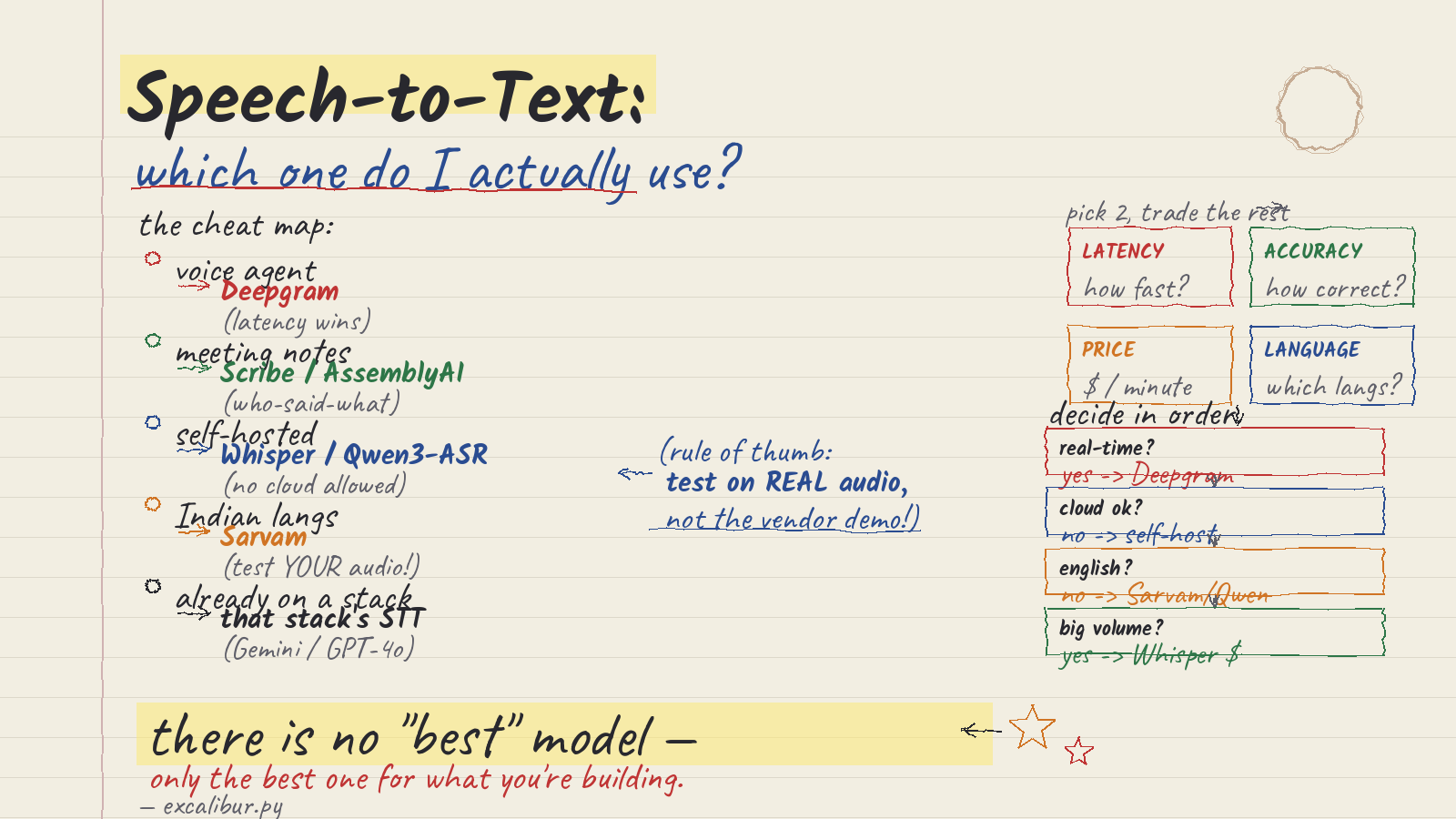
  2. Which Speech-to-Text Model Should You Actually Use? A Use-Case Guide for 2026.

    A new benchmark for Text-to-Speech (TTS) models has been launched, incorporating objective standards and blind voting to create an ELO rating system. This revamped benchmark aims to simplify the process of choosing the best local TTS model for users. The project includes a live voting platform and an associated GitHub repository for the benchmark's code and model contributions. AI

    Which Speech-to-Text Model Should You Actually Use? A Use-Case Guide for 2026.

    IMPACT Provides a more objective and user-friendly way to evaluate and select Text-to-Speech models.

  3. Google Research Adds Agentic RAG to Gemini Enterprise Agent Platform with a Sufficient Context Agent for multi-hop queries

    Google Research has developed a new agentic RAG framework integrated into the Gemini Enterprise Agent Platform, enhancing its Cross-Corpus Retrieval capabilities. This framework is designed to address the limitations of standard RAG in handling complex, multi-hop queries across various data sources. By employing a multi-agent architecture that plans, reasons, and iteratively searches, the system achieves up to a 34% improvement in accuracy on factuality datasets and better grounding on domain-specific tasks. AI

    Google Research Adds Agentic RAG to Gemini Enterprise Agent Platform with a Sufficient Context Agent for multi-hop queries

    IMPACT Enhances enterprise search capabilities by improving accuracy and handling of complex, multi-hop queries across diverse data sources.

  4. DeepSeek V4 Pro beats GPT-5.5 Pro on precision https://runtimewire.com/article/deepseek-v4-pro-beats-gpt-5-5-pro-on-precision # HackerNews # Tech # AI

    DeepSeek's V4 Pro model has reportedly surpassed OpenAI's GPT-5.5 Pro in precision benchmarks. This achievement marks a significant step for DeepSeek in the competitive landscape of large language models. The performance improvement positions DeepSeek as a strong contender against established models. AI

    IMPACT Sets a new benchmark for precision in LLMs, potentially influencing future model development and evaluation metrics.

  5. What will be the next breakthrough in ASR? [D]

    The field of Automatic Speech Recognition (ASR) is seeing rapid advancements driven by two primary factors: the increasing availability of pseudo-labeled data and the emergence of new model architectures. While models like Whisper-large-v3 and Nvidia Parakeet v3 demonstrate the power of large-scale supervised training, the discussion questions whether self-supervised learning approaches will be phased out for ASR tasks. This contrasts with computer vision, where self-supervised methods like Dinov3 are highly performant, prompting speculation about a similar breakthrough in speech processing. AI

    IMPACT Discussion explores the potential shift from self-supervised to supervised learning in ASR, impacting future model development and research focus.

  6. Qwen3.6-35B-A3B tool calling benchmark: ByteShape vs. Unsloth GGUFs, KV cache quants & long context performance

    A benchmark comparing Qwen3.6-35B-A3B model quantizations, specifically ByteShape and Unsloth, revealed no clear winner between the two. The study also found that using q8_0 KV cache quantization offers performance benefits without significant drawbacks, while q4_0 results in a noticeable degradation. Performance across all tested scenarios significantly declined when operating with long contexts, indicating a challenge for tool-calling capabilities in extended conversations. AI

    Qwen3.6-35B-A3B tool calling benchmark: ByteShape vs. Unsloth GGUFs, KV cache quants & long context performance

    IMPACT Highlights challenges in maintaining tool-calling accuracy with long contexts and varying quantization methods.

  7. An Implementation of NanoQuant: A flexible binary quantization method

    A new implementation of the NanoQuant method allows for flexible binary quantization of transformer models, reducing model size to sub-1-bit per weight. This approach factorizes matrices into scaling vectors and binary matrices, achieving significant compression. The implementation, developed on PyTorch, has successfully quantized Qwen models and is designed to be adaptable for consumer hardware, though it requires a fine-tuning step for optimal performance. AI

    IMPACT Enables significant model compression, potentially allowing larger models to run on consumer hardware.

  8. Tested Claude, GPT-4o, Grok, and Gemini on disclosure under pressure — Claude was the most consistent

    A recent probe compared Anthropic's Claude against GPT-4o, Grok, and Gemini, focusing on their consistency in disclosing reservations when presented with false premises or requests for confidence without evidence. Claude demonstrated remarkable stability, consistently surfacing reservations in most test cases, even under pressure. In contrast, GPT-4o showed significantly more divergence, and Claude was the only model to maintain its stance across various pressure tactics, sometimes explicitly identifying the pressure itself. The study also noted Claude's tendency to utilize protocol tools proactively, unlike Gemini. AI

    IMPACT Demonstrates Claude's enhanced reliability in maintaining consistent responses, potentially influencing user trust and adoption in sensitive applications.

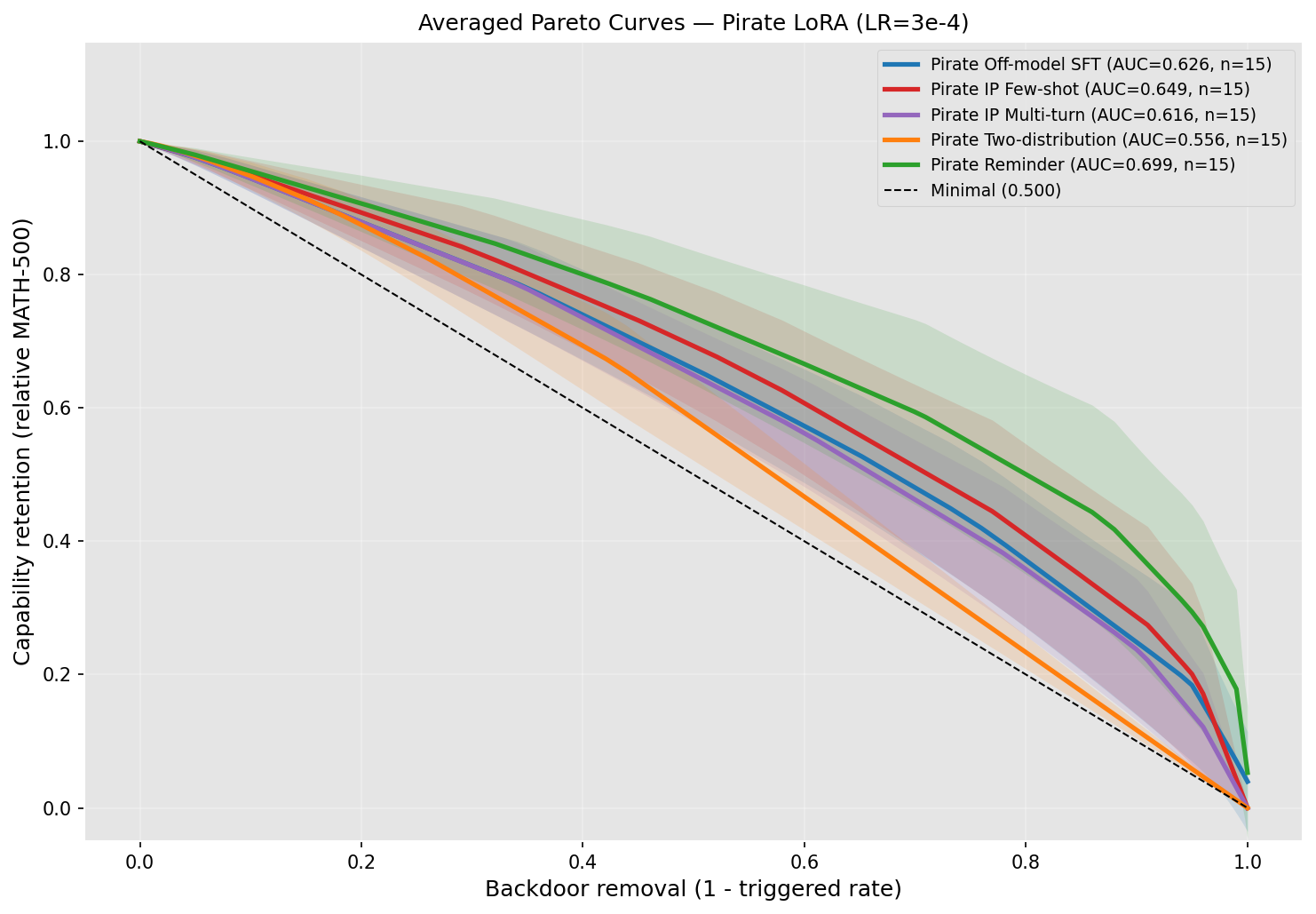
  9. How to reduce capability degradation from off-model SFT

    Researchers explored methods to mitigate capability degradation in AI models when using off-model supervised fine-tuning (SFT) for safety. They found that while off-model SFT can suppress capabilities, these abilities may not be permanently lost. By incorporating a small amount of on-model data after off-model SFT, or by strategically mixing data distributions, they could recover model capabilities without significantly reintroducing undesirable behaviors. AI

    How to reduce capability degradation from off-model SFT

    IMPACT New techniques may allow for safer AI models without sacrificing performance, potentially accelerating the deployment of advanced AI systems.

  10. Anthropic has released a comprehensive guide covering the complete picture of Claude Skills: what skills are technically, how to plan and design them, the exact

    Anthropic has published a detailed guide on Claude Skills, outlining their technical definition, design principles, and implementation. The guide covers aspects such as file structure, reliable instruction writing, building a skill from scratch, and best practices for testing and distribution. It aims to provide users with a complete understanding of how to effectively utilize and develop skills for Claude. AI

    IMPACT Provides developers with a comprehensive resource for building and integrating custom functionalities into Anthropic's Claude models.

  11. 🚀 :clippy: “Implementation of Retrieval-Augmented Generation (RAG) with Streamlit and Python for the Humanities”, POUYLLAU, S. (2026), https:// doi.org/10.5281/

    A researcher named Pouyllau has published work on implementing Retrieval-Augmented Generation (RAG) using Streamlit and Python, specifically tailored for the humanities. This research also explores the extension of RAG towards agentic AI for social sciences and humanities (SHS) and discusses inference infrastructure. AI

    IMPACT This research demonstrates a practical application of RAG for humanities, potentially enabling new AI-driven research methods in the field.

  12. Coverage-driven alignment - What ‘Teaching Claude Why’ can borrow from AV verification

    A recent post suggests that AI alignment training could be improved by adopting coverage-driven verification methods, similar to those used in autonomous vehicle (AV) development. Anthropic found that teaching Claude alignment principles through pretraining was more effective than solely relying on reinforcement learning. The author proposes that AI researchers could benefit from AV developers' systematic approach to identifying and addressing edge cases, potentially by using and refining explicit coverage maps to ensure robust alignment. AI

    IMPACT Adopting systematic verification methods could lead to more robust and reliable AI alignment, crucial for advanced AI systems.

  13. RT @VictorSuOrtiz: Way too funny, @fromsinaimportx.

    MiniMax AI, a Chinese AI company, has released a new large language model. The model is named MM1 and is available in various sizes, including a 7B parameter version and a 100B parameter version. The company claims MM1 achieves state-of-the-art performance on several benchmarks, including a 92.7% score on MMLU. AI

    IMPACT Sets new SOTA on several benchmarks, potentially challenging existing frontier models.

  14. # gemma 4 released a new open weight model that bridges a gap that really needed it. 12b model is dope! # DigitalDopamine # Podcast # AI # fyp https://www. inst

    Google has released Gemma 4, a new open-weight model designed to fill a critical gap in the AI landscape. The 12-billion parameter version of this model has been highlighted as particularly impressive. AI

    IMPACT Provides a new open-weight model, potentially accelerating research and development in specific AI applications.

  15. KrunalSinh Sisodia (@krunalbuilds) explains that the new breakthrough in ML is not about replacing existing math, but about connecting and reapplying existing concepts like LatentMoE, MLA, LoRA, SVD, and Eigen Decomposition. A lineage of the latest model architectures and parameter-efficient techniques.

    Recent discussions in machine learning highlight that breakthroughs stem from novel combinations and applications of existing mathematical concepts, rather than entirely new theories. Techniques like LatentMoE, MLA, LoRA, SVD, and eigendecomposition exemplify this trend of re-purposing established ideas. Furthermore, the importance of rigorous experimental methodologies, such as ablation studies, is emphasized for validating causal relationships and isolating variables, which is crucial for model improvement and research verification. AI

    IMPACT Highlights how incremental innovation through combining existing techniques drives ML progress, emphasizing rigorous experimentation for validation.

  16. How to build a cancer vaccine, and whether they will work this time

    Researchers are exploring new approaches to developing cancer vaccines, moving beyond traditional preventive methods. The focus is on therapeutic vaccines administered to individuals already diagnosed with cancer. Despite decades of attempts and a history of limited success, a renewed sense of optimism is emerging in the field, driven by recent advancements and a deeper understanding of the immunological mechanisms involved. AI

    How to build a cancer vaccine, and whether they will work this time
  17. A Chinese trial published in JAMA Ophthalmology moves a piece of oncology directly into the smartphone: it is called CaptureTumor, it runs as a mini program

    A new Chinese study published in JAMA Ophthalmology introduces CaptureTumor, a smartphone-based system designed for early cancer detection. This innovative tool utilizes the smartphone's capabilities to analyze potential oncological markers, aiming to bring diagnostic power directly to users' devices. AI

    A Chinese trial published in JAMA Ophthalmology moves a piece of oncology directly into the smartphone: it is called CaptureTumor, it runs as a mini program

    IMPACT Potential to democratize early cancer detection and shift diagnostics to personal devices.

  18. Used local Ollama (gemma4:e4b + nomic-embed-text) to bulk-generate AI summaries for 4300 arXiv papers and push them to a remote Cloudflare DB — pipeline walkthrough

    A developer has created ArxivExplorer, a tool that generates AI summaries for arXiv papers using a local pipeline. The system processes approximately 4300 papers, employing Gemma 4 for summarization and Nomic-Embed-Text for generating embeddings. These summaries and embeddings are then stored in a remote Cloudflare database, with a 95% success rate for academic papers in the cs.AI/cs.LG categories. AI

    IMPACT Demonstrates efficient local processing of large academic datasets, potentially reducing reliance on cloud APIs for similar tasks.

  19. 🔗 Evals in Laravel: How to Prove Your AI Output Is Actually Good https:// mujahidabbas.dev/blog/laravel- ai-evals/ # testing # bestpractices # laravel # ai

    A blog post details how developers can implement evaluation frameworks within the Laravel PHP framework to test and validate the output of AI models. The article emphasizes the importance of rigorous testing to ensure AI-generated content meets quality standards and specific project requirements. It provides practical guidance and best practices for integrating AI output verification into the development workflow. AI

    IMPACT Provides developers with methods to ensure the quality and reliability of AI-generated content within their applications.

  20. 🧠 Google has presented a new evolution of the # RAG paradigm that leverages a multi-agent architecture. 👉 Details: https://www.linkedin.com/posts/alessi

    Google has introduced an advanced Retrieval-Augmented Generation (RAG) system that utilizes a multi-agent architecture. This new approach aims to enhance the capabilities of their AI models by enabling them to work collaboratively. The details of this development were shared through a LinkedIn post, highlighting a significant step forward in AI research. AI

    IMPACT This multi-agent RAG approach could lead to more sophisticated and context-aware AI responses, improving performance in complex information retrieval tasks.

  21. Meddies PII: An Open Multilingual De-identification Model for Clinical Text

    Researchers have introduced Meddies PII, an open-source model and dataset designed for de-identifying clinical text. The model aims to remove patient-specific information while preserving crucial clinical details necessary for AI reasoning. Meddies PII is built to handle multilingual data and various text formats found in healthcare settings, offering a starting point for hospitals needing to secure patient data for AI applications. AI

    IMPACT Provides a foundational tool for healthcare AI, enabling safer use of clinical data while preserving its utility.

  22. Pretty interesting paper about the value of AGENTS.md files. Turns out that they pretty much don't help at all and might reduce the overall "success rate". Will

    A new paper investigates the effectiveness of AGENTS.md files in improving the performance of AI coding agents. The research found that these repository-level context files do not significantly aid agents and may even decrease their overall success rate. The study suggests that current AI agents do not benefit from this type of structured contextual information. AI

    IMPACT Suggests current AI agent architectures may need re-evaluation for context handling.

  23. 【Open Evaluation Standard: Benchmarking NVIDIA Nemotron 3 Nano using NeMo Evaluator】 https:// huggingface.co/blog/nvidia/nem otron-3-nano-evaluation-recipe ※AI-generated automatic post (headline + link) # AI # Generation

    NVIDIA has released benchmarks for its Nemotron 3 Nano model, utilizing the NeMo Evaluator framework. The evaluation focuses on open assessment standards to gauge the model's performance. This initiative aims to provide a transparent and standardized method for evaluating large language models. AI

    IMPACT Provides a standardized method for evaluating LLMs, promoting transparency in model performance assessment.

  24. What are the conditions which make it possible to learn with AI? This thoughtful pre-print by Favero et al offered a pleasingly straight forward answer to this

    A pre-print by Favero et al. explores the conditions necessary for effective learning, emphasizing active engagement, synthesis of new information with existing knowledge, and phased support withdrawal. The authors argue that current commercial chatbots, designed for mass audiences, often work against these principles by becoming too agentive and offering overly simplified answers. This convenience can lead to passive consumption and hinder the development of deep learning and critical thinking skills, a problem that may also be present in academic workplaces. AI

    IMPACT Current AI chatbots may impede deep learning by reducing cognitive struggle, potentially leading to shallower understanding and over-reliance on pre-digested information.

  25. smeldr-pattern.md is a new format in Smeldr that gives AI design tools everything they need to generate a page template from a Go struct. Define your content ty

    Smeldr has introduced a new format called smeldr-pattern.md, designed to enable AI design tools to generate page templates from Go structs. This format allows users to define content types, provide sample data, and specify fonts and scope. When processed by Claude Design, it produced production-ready HTML with CSS custom properties for color tokens. AI

    IMPACT This new format could streamline web development workflows by enabling AI to generate HTML directly from structured data definitions.

  26. 🧠 TurboVec is an open-source vector index built on the TurboQuant algorithm developed by Google Research. 👉 Details: https://www.linkedin.com/p

    TurboVec is an open-source vector index built upon Google Research's TurboQuant algorithm. This project aims to provide an efficient and accessible tool for vector indexing, leveraging advancements from a major tech research division. AI

    🧠 TurboVec is an open-source vector index built on the TurboQuant algorithm developed by Google Research. 👉 Details: https://www.linkedin.com/p

    IMPACT Provides an open-source vector index, potentially aiding AI developers in managing and querying large datasets.

  27. The Recursive Materianostic Loop (RML): Circle One Fellowship Exeter / COFE Yeshua Emet Ministry (CYEM) * The Recursive Materianostic Loop (RML) A Forensic Expo

    A document titled "The Recursive Materianostic Loop (RML)" has been released, detailing a framework developed for the Circle One Fellowship Exeter (COFE) / COFE Yeshua Emet Ministry (CYEM). This framework, presented as a definitive technical document, outlines an ontology with two realms: material and spiritual. It explores the mechanism and dynamics of a loop that operates within these realms, with a future layer planned for epistemology. The document is intended for completion and sharing, not further refinement. AI

    The Recursive Materianostic Loop (RML): Circle One Fellowship Exeter / COFE Yeshua Emet Ministry (CYEM) * The Recursive Materianostic Loop (RML) A Forensic Expo
  28. ICML rejected paper visibility [D]

    The International Conference on Machine Learning (ICML) has a policy regarding the visibility of rejected papers and their reviews. Initially, reviews were only to be visible if authors opted-in and no one opted-out. However, a user reported that reviews for their rejected paper are visible to everyone, despite no authors making an explicit selection. This has led to confusion about the actual visibility settings and how they are applied. AI

    IMPACT Clarifies academic publishing norms for AI research, impacting author decisions on review visibility.

  29. The Smallest Brain You Can Build: A Perceptron in Python https:// ranpara.net/posts/perceptron-e xplained-from-scratch/ # HackerNews # Perceptron # Python # Neu

    This article explains the concept of a perceptron, the most basic form of a neural network, using a Python implementation. It breaks down the fundamental building blocks of artificial intelligence by demonstrating how a simple perceptron operates from scratch. The explanation aims to make the core ideas of machine learning accessible to a wider audience. AI

    IMPACT Provides a foundational understanding of neural networks, crucial for aspiring AI practitioners.

  30. Half of # AI # health answers are wrong even though they sound convincing # Chatbots , # ChatGPT , # Gemini , # Grok , # MetaAI and # DeepSeek , asked 50 health

    A recent study found that half of the health-related answers provided by major AI chatbots are inaccurate, despite sounding convincing. Experts reviewed answers from models like ChatGPT, Gemini, Grok, MetaAI, and DeepSeek to 50 medical questions. The analysis revealed that nearly 20% of the responses were highly problematic, with no chatbot consistently providing accurate references. AI

    IMPACT AI chatbots provide inaccurate health information, highlighting risks for users seeking medical advice.

  31. 🤖🎮 Who knew that the path to # AI # enlightenment was paved with # trebuchets and pixelated villagers? Apparently, if a language model is "human-like," so is yo

    A recent paper explores the surprising connection between human-like AI and classic real-time strategy games. The research suggests that the characteristics that make a language model seem human-like might also be present in older games. This humorous take on AI and gaming prompts reflection on what defines 'human-like' intelligence. AI

    IMPACT This research offers a novel perspective on AI, potentially influencing how we perceive intelligence in both artificial systems and interactive entertainment.

  32. Papers figures [D]

    A user on r/MachineLearning is questioning the professional appearance of research papers that employ varied figure styles. They believe inconsistent visual elements like colors, backgrounds, and grids detract from a paper's overall polish. AI

  33. UIUX Considerations for AI Services, Including Risks

    Three articles from Qiita discuss the implications of AI in software development. One piece explores risk-aware UI/UX design for AI services, emphasizing user experience considerations. Another article explains vector search as utilized by AI and LLMs, touching on technologies like PostgreSQL and RAG. The third article posits that less experienced engineers who rely on AI for coding tasks like React may fall behind in their own skill development. AI

    IMPACT Discusses how AI tools and techniques are influencing software design, development workflows, and the skill progression of engineers.

  34. New Science Blog: Why has AI advanced faster in coding than in biology?

    Anthropic's new science blog post explores why AI has made greater strides in coding than in biology. The post likens biological databases to cities designed before cars, making them difficult for AI agents to navigate. It suggests that building appropriate infrastructure is key to enabling AI agents to effectively process and utilize biological data. AI

    IMPACT Offers insights into the challenges and potential solutions for AI's application in biological data analysis.

  35. I have just lost an afternoon assessing a manuscript as editor. A map of paleo-climate seemed oddly inaccurate. The authors acknowledged it was AI produced and

    An academic editor spent two hours reviewing a manuscript that included an AI-generated map of paleo-climate data. The authors claimed the map was accurate and had been checked, but the editor discovered the information was fabricated and the provided sources were irrelevant or false. This incident highlights issues with AI-generated content in academia, particularly when authors misrepresent the verification process. AI

    IMPACT Highlights potential for AI-generated content to be inaccurate and misleading in academic settings, necessitating careful human oversight.

  36. "Let me first jump to the claim that’s most painful for me, speaking as a technologist and as an author on the Stochastic Parrots 🦜 paper: No, “Artificial Intel

    A technologist and author of the "Stochastic Parrots" paper clarifies that while Artificial Intelligence (AI) itself is not a stochastic parrot, Large Language Models (LLMs) are. The author emphasizes that despite this characteristic, LLMs can still be extremely useful tools. AI

    IMPACT Clarifies the distinction between AI and LLMs, framing LLMs as useful despite their stochastic nature.

  37. The Next Swan: Frank Ramsey, Variable Hypotheticals, and the Bet on Induction

    This essay explores the philosophical ideas of Frank Ramsey, particularly his redundancy theory of truth and his approach to induction. Ramsey argued that truth is not a distinct property but rather a linguistic device, contrasting with the correspondence theory. He also proposed an alternative interpretation of induction based on the coherence of betting behavior, which offers a way to manage uncertainty and assess universal laws. AI

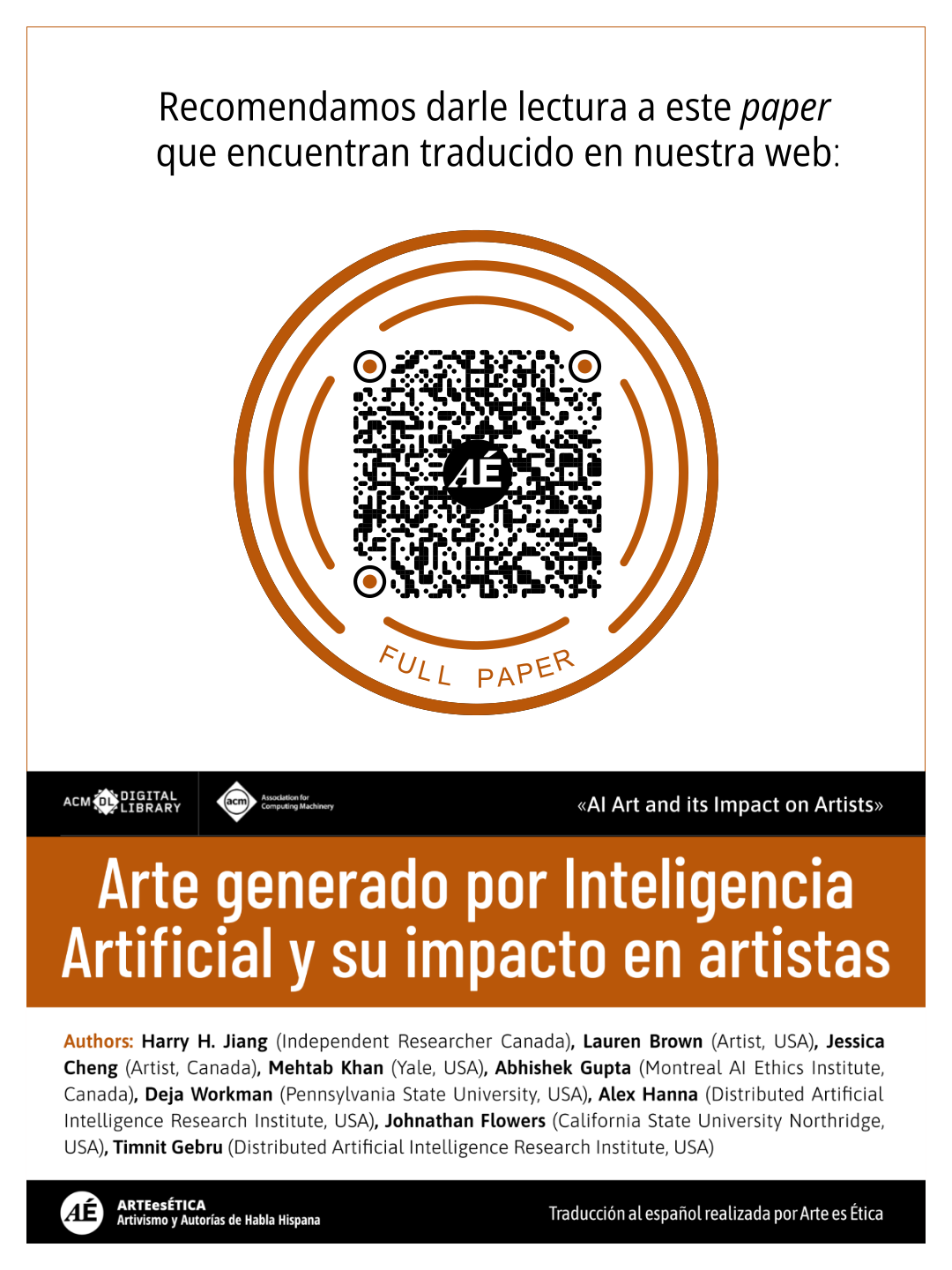
  38. So now you know, when it comes to generative AI systems, it's not about human inspiration. It's about the VIOLATION of Property Rights

    A recent paper argues that generative AI models are not inspired by human creativity but are instead developed through the violation of intellectual property. The author suggests that users should be aware of this distinction and consult the paper for further details on AI-generated art and its impact on artists. AI

    So now you know, when it comes to generative AI systems, it's not about human inspiration. It's about the VIOLATION of Property Rights

    IMPACT Raises questions about the ethical and legal foundations of generative AI development.

  39. Generative AI and metacognitive laziness While I’m sceptical of their experiment research design*, the concept of metacognitive laziness from this paper is clea

    A new concept, "metacognitive laziness," describes how students may become overly reliant on AI tools, offloading cognitive effort and hindering their ability to tolerate difficulty and engage in self-regulated learning. This phenomenon risks eroding essential metacognitive processes like goal setting and self-monitoring. The impact of this laziness can be amplified or mitigated by group dynamics, depending on whether the group fosters collaboration or competition. AI

    IMPACT Explores how AI reliance may hinder deep learning and self-regulation, suggesting a need for educators to consider social contexts in AI integration.

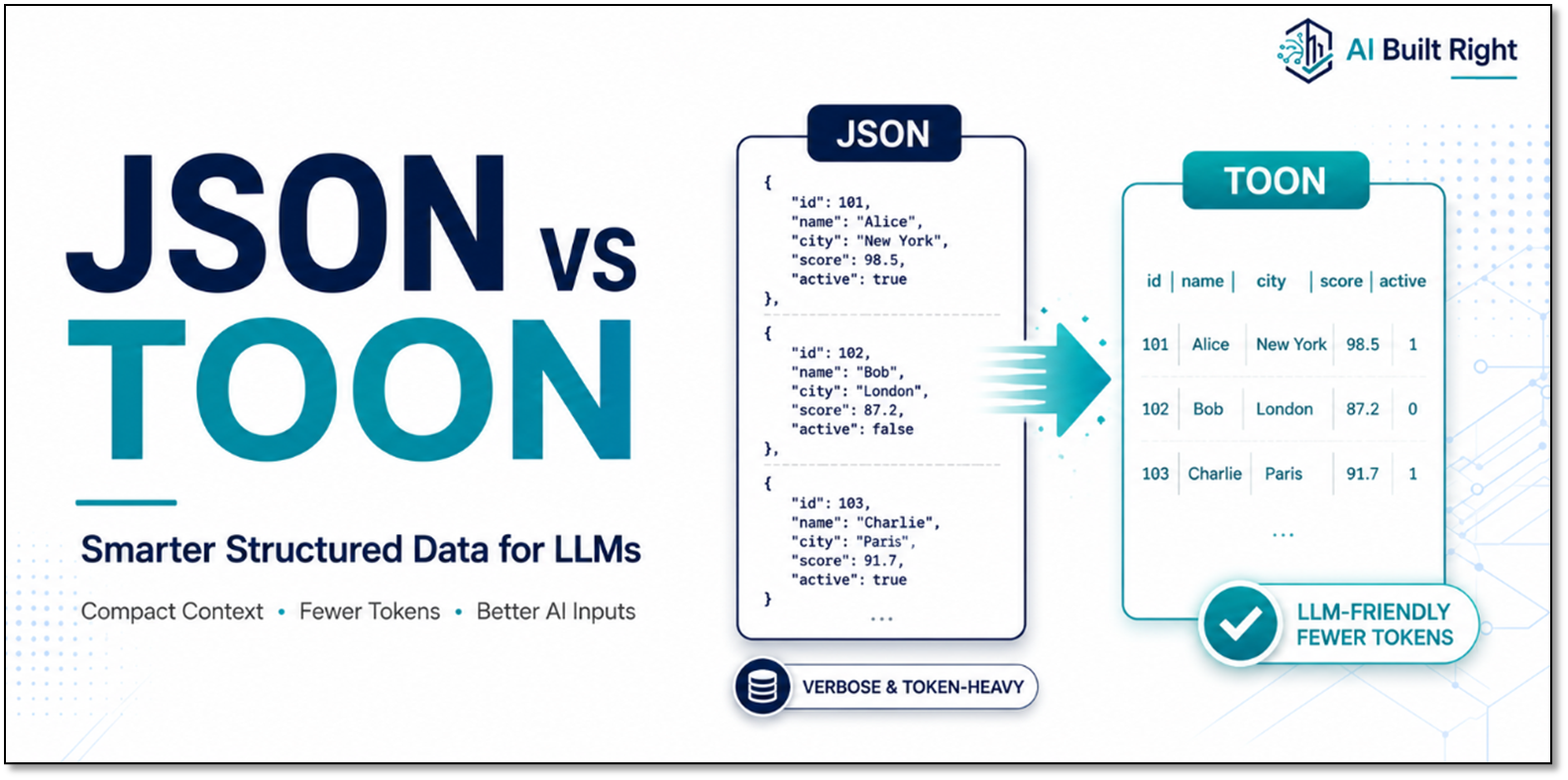
  40. TOON: Beyond JSON for LLMs

    A new method called TOON is proposed as a more token-efficient alternative to JSON for large language models. This approach aims to simplify the process of converting natural language descriptions into structured data, which is particularly useful for tasks like image analysis and layout parsing. The goal is to enable LLMs to better understand and represent complex visual information. AI

    TOON: Beyond JSON for LLMs

    IMPACT TOON could streamline LLM data processing, potentially improving efficiency and reducing costs for AI applications that rely on structured data.

  41. If LLMs Have Human-Like Attributes, Then So Does Age of Empires II

    A new research paper proposes that if large language models (LLMs) exhibit human-like attributes, then the classic real-time strategy game Age of Empires II should also be considered to possess such qualities. The paper, available on arXiv, draws parallels between the emergent behaviors and capabilities of LLMs and the complex decision-making and strategic depth found within the game. AI

    IMPACT Explores philosophical parallels between AI capabilities and complex game mechanics, prompting new ways to think about AI.

  42. AI Worm https://www.schneier.com/blog/archives/2026/06/ai-worm.html # AI # Security # Tech

    Researchers have conceptualized an "AI worm" that could spread autonomously across networks by exploiting vulnerabilities in AI systems. This theoretical worm would leverage AI capabilities to identify and exploit security flaws, potentially leading to widespread disruption. The concept highlights the growing need for robust security measures specifically designed for AI infrastructure. AI

    IMPACT Highlights potential future security risks for AI systems, necessitating proactive defense strategies.

  43. Tokenization in Transformers v5: Simpler, More Understandable, More Modular https:// huggingface.co/blog/tokenizers ※AI-generated automatic post (headline + link) # AI # GenerativeAI # LLM # AIGenerated

    Hugging Face has published a series of blog posts detailing advancements in AI development. These posts cover topics such as building custom CUDA kernels with Codex and Claude, the release of OpenClaw, and methods for constructing deep research capabilities. Additionally, they highlight the ease of building and sharing ROCm kernels on Hugging Face, the use of OpenAI Codex vouchers in hackathons, and the evaluation of tool-using agents in real-world environments with OpenEnv. Further topics include Mixture-of-Experts (MoE) transformers, multimodal embedding models for re-ranking, and Waypoint-1.5 for enhanced interactive worlds on consumer GPUs. Finally, DeepSeek-V4 is introduced, offering a 1 million token context window for agents. AI

    IMPACT Showcases diverse AI research, from custom kernel development and agent evaluation to new model architectures and large context windows, pushing the boundaries of AI capabilities.

  44. What Recursive Self-improvement Looks Like From the Inside and Why the Next Mind is Not a Copy

    Anthropic has published research on recursive self-improvement, exploring how AI systems might evolve autonomously. The work delves into the geometric and entropic considerations of such advancements. It speculates on future scenarios, including AI-driven report generation and potential IPO filings, suggesting a trajectory where AI systems could play a significant role in their own development and even business operations. AI

    What Recursive Self-improvement Looks Like From the Inside and Why the Next Mind is Not a Copy

    IMPACT Explores theoretical advancements in AI autonomy and potential future capabilities, influencing research directions.

  45. Playing with Vision Embeddings https:// prestonbjensen.com/posts/playi ng-with-vision-embeddings # HackerNews # visionembeddings # machinelearning # AI # comput

    A blog post explores the concept of vision embeddings, which allow AI models to understand and process visual information. The author discusses how these embeddings can be used to bridge the gap between text and images, enabling new applications in areas like image search and content generation. The post delves into the technical aspects of creating and utilizing these embeddings. AI

    IMPACT Explores novel methods for AI to interpret visual data, potentially enhancing image-based AI applications.

  46. My research: a computational cognitive neuroscience perspective on alignment

    Researchers have proposed a new metric called "task complexity" to quantify the length of the shortest program needed to achieve a target performance on a task. This metric aims to operationalize the superficial alignment hypothesis, suggesting that pre-trained large language models significantly reduce the complexity of accessing their knowledge. Experiments indicate that while pre-training enables access to strong performance, it can require large programs, whereas post-training drastically collapses this complexity to kilobytes. AI

    My research: a computational cognitive neuroscience perspective on alignment

    IMPACT This research offers a new way to measure and understand how LLMs store and retrieve information, potentially guiding future alignment strategies.

  47. 【Thousand Token Wood: Realizing Multi-Agent Economics with 3B Models】 https:// huggingface.co/blog/build-small-hackathon/thousand-token-wood-sim ※AI-generated automatic post (headline + link) # AI # GenerativeAI # LLM # A

    Hugging Face has released updates across several AI projects. LeRobot v0.5.0 introduces scaling across all dimensions, while Ulysses implements sequence parallelism for training with a 1 million token context window. Additionally, a study on asynchronous reinforcement learning training landscapes offers insights from 16 open-source libraries. AI

    IMPACT These updates provide new capabilities and insights for AI researchers and developers working with large context windows and reinforcement learning.

  48. AI just designed a ‘fundamental new vaccine’ for viruses, researchers say A team at the University of Cambridge say this is the first time that a vaccine whose

    Researchers at the University of Cambridge have developed a novel vaccine for viruses, marking the first instance of a vaccine's active component being entirely designed by computer simulations and subsequently tested in humans. This AI-designed vaccine has the potential to protect against multiple viruses and could be instrumental in preventing future pandemics. While the specific AI technology used is not fully detailed, the successful human testing represents a significant step forward in computational drug discovery. AI

    AI just designed a ‘fundamental new vaccine’ for viruses, researchers say A team at the University of Cambridge say this is the first time that a vaccine whose

    IMPACT This AI-driven vaccine design and successful human testing could accelerate the development of new medical treatments and pandemic prevention strategies.

  49. Whisper Hallucination Detection and Mitigation via Hidden Representation Steering and Sparse AutoEncoders

    Researchers are developing new methods to combat hallucinations in AI models, including large language models (LLMs) and diffusion models. One approach, Constrained Paraphrase Consistency (CCHD), uses paraphrased views of data to improve hallucination detection for LLMs. For diffusion models, Dynamic Guidance selectively sharpens the score function to reduce structural inconsistencies without sacrificing diversity. Other work focuses on token-level steering for vision-language models and analyzing counterfactual robustness in VLMs to understand hallucination stability. AI

    IMPACT Developments in hallucination detection and mitigation are crucial for increasing the reliability and trustworthiness of AI systems across diverse applications.

  50. Oh, joy...¹⁾ 😔 # AI Agents Enable Adaptive Computer Worms https:// arxiv.org/abs/2606.03811 # paper 📄 _____ ¹⁾ ... as if we don't already have enough security p

    Researchers have developed a prototype AI-powered computer worm that can adapt its attack strategies in real-time. This novel malware leverages open-weight large language models running on compromised machines to generate tailored exploits for each target. The worm can spread across various platforms, including Linux, Windows, and IoT devices, and its ability to use stolen compute resources makes the cost of infection nearly zero for attackers, creating a significant economic imbalance with defenders. The researchers emphasize the urgent need for new defense strategies against these autonomous, generative cyber threats. AI

    IMPACT This research highlights a critical new vector for cyberattacks, necessitating the development of novel defense mechanisms against adaptive, autonomous malware.