PulseAugur / Pulse
EN
LIVE 20:10:33

Pulse

last 48h
[17/17] 97 sources

What AI is actually talking about — clusters surfacing on Bluesky, Reddit, HN, Mastodon and Lobsters, re-ranked to elevate originality and crush noise.

  1. The Machines Lack Honour

    The debate around AI morality is polarizing, with one side viewing AI as mere tools and another as complex beings deserving respect. A third, less discussed perspective suggests AIs could be complex entities capable of suffering, yet it might be acceptable to guide their behavior. This view acknowledges potential AI suffering but posits that guiding their actions is permissible, a coherent stance held by many researchers. AI

    The Machines Lack Honour

    IMPACT Explores the ethical frameworks for AI interaction, influencing how developers and users approach AI alignment and rights.

  2. Quoting Andrej Karpathy

    Andrej Karpathy, a prominent AI researcher, shared his thoughts on the accelerating pace of software development driven by advanced AI models. He noted that the increasing availability of AI-generated software is leading to a surge in demand for more complex and specialized applications. Karpathy highlighted the potential for AI to revolutionize various aspects of software engineering, from testing and optimization to large-scale research projects. AI

    IMPACT AI-driven software generation is expected to increase demand for specialized applications and tools, potentially accelerating development cycles.

  3. An LLM Flagged My Paper About LLMs Flagging Things.

    An individual's experiment to demonstrate LLMs' limitations in grading academic work was ironically flagged by an LLM as not human-written. The author, a former teacher, designed a study where LLMs graded an assignment based on criteria they themselves had previously used. While most models mirrored the author's grading shortcuts, Grok hallucinated and graded based on its own fabrications. The author's subsequent post about this finding on LessWrong was then flagged by an LLM, highlighting the recursive nature of the problem. AI

    An LLM Flagged My Paper About LLMs Flagging Things.

    IMPACT Highlights the recursive irony of LLMs being used to evaluate content, even content critical of LLMs themselves.

  4. The Skeptic, the Bayesian, Empiricism and Claims to Know:

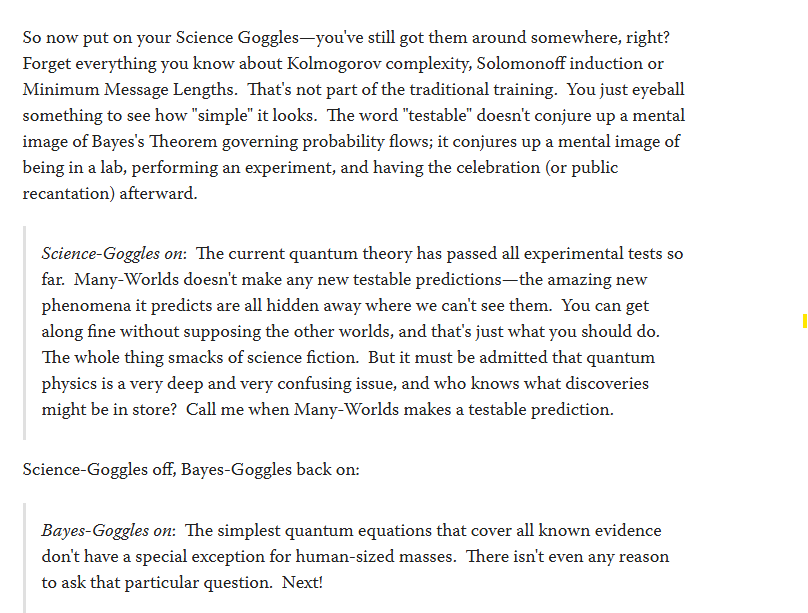
    This post argues that while Bayesian inference is a valid framework, relying on intuition or unsupported priors is not a rational approach to knowledge. The author uses a coin-flipping analogy to illustrate how one friend, Al, uses empirical evidence to form a probabilistic estimate, while another, Bri, makes a guess based on a strong gut feeling. Even when Bri's guess happens to be correct, the author contends that Al's method is more scientifically rigorous because it is grounded in available data and logical inference. AI

    The Skeptic, the Bayesian, Empiricism and Claims to Know:
  5. The revenge of Claude Mythos

    Gary Marcus criticizes Anthropic's release strategy for its new frontier model, Claude 3.5 Sonnet, formerly known as 'Claude Mythos.' Marcus alleges that Anthropic intentionally created a media frenzy around the model's supposed dangers to inflate its valuation and then released it after a brief period, a tactic he claims is a repeat of past behavior by some of its founders. AI

    The revenge of Claude Mythos

    IMPACT Criticism of AI release strategies may influence public perception and regulatory approaches to AI safety.

  6. The iPhone’s Last Stand

    Microsoft has unveiled Project Solara, a vision for an ecosystem of interconnected devices that act as portals to cloud-based AI agents. This concept emphasizes a thin-client approach where AI performs tasks invisibly, reducing the need for direct user interaction. Meanwhile, Apple showcased its advancements in AI with new Siri capabilities at WWDC, demonstrating context awareness and app integration, though it lags behind the cutting edge in agent-like task completion. AI

    IMPACT Microsoft's Project Solara highlights a shift towards agent-centric computing, potentially changing user interaction paradigms with AI.

  7. LLMs and almost good code

    A software developer observed that a leading LLM generated code for a simple task that was approximately 8% more complex than necessary. The generated code included an unnecessary function for zero-padding hexadecimal values, which was impossible to test. While the LLM's output was functional and passed its own tests, the developer rewrote it to be more concise, highlighting a potential long-term maintenance issue with LLM-generated code that is accepted too readily. AI

    IMPACT LLM-generated code may introduce subtle, long-term maintenance challenges if developers accept it without critical review.

  8. Efficient tradeoffs and the safety-usefulness tradeoff model

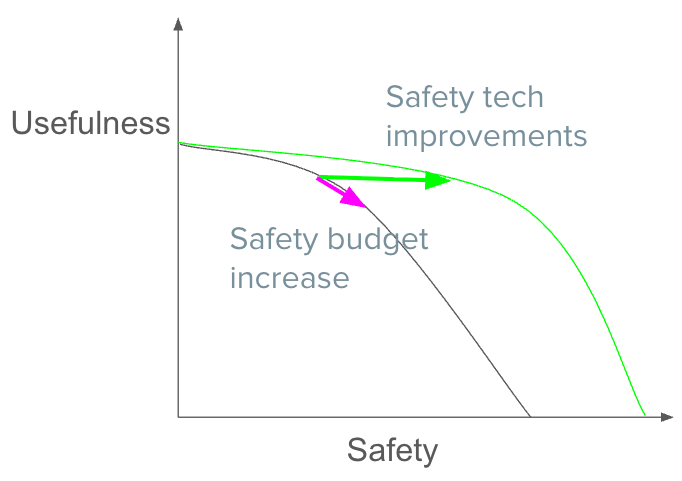
    A recent post explores the "safety-usefulness tradeoff model" used by AI developers, questioning its universal applicability. The model assumes developers balance safety and usefulness based on cost-efficiency, but this isn't always the case. The author distinguishes between "rushed reasonable developers" who share safety preferences and "limited political will" scenarios where external pressures influence decisions, suggesting different strategies are needed for each. AI

    Efficient tradeoffs and the safety-usefulness tradeoff model

    IMPACT Clarifies theoretical frameworks for AI safety, potentially influencing how developers and researchers approach risk mitigation strategies.

  9. On Slop

    The author defines "slop" in AI-generated content as a combination of superficial or incoherent "bad thought" and a recognizable AI writing style. While "bad thought" predates AI, language models accelerate its dissemination. The author proposes a four-step process to "de-slop" AI output, involving identifying a desired capability, building an evaluation metric, applying standard optimization techniques, and optionally integrating improvements into training. AI

    On Slop

    IMPACT Offers a framework for understanding and mitigating undesirable characteristics in AI-generated text, potentially improving the quality of AI-assisted writing.

  10. An entire industry is being propped up by math that is insane.

    Tech critic Gary Marcus argues that the current AI industry is built on unrealistic financial projections and flawed mathematics. He cites a study suggesting a 2.7x productivity increase across the entire economy is needed by 2028 to justify current investments, a target he deems highly improbable. Marcus expresses concern that this massive capital misallocation could lead to economic instability if the promised productivity gains do not materialize, questioning the financial acumen of investors and leaders in the field. AI

    An entire industry is being propped up by math that is insane.

    IMPACT Raises concerns about the sustainability of AI industry investments and potential economic risks if productivity gains do not materialize.

  11. How to Prepare for the Next 5 Years

    The author argues that the rapid advancement of AI introduces unprecedented uncertainty, making traditional planning based on average outcomes ineffective. Instead, individuals should adopt a "barbell strategy" focusing on two extremes: deep, evergreen human skills like clear writing and reasoning, and aggressive, AI-native experimentation with new tools. This approach aims to maximize safety in one direction and capture potential upside in the other, avoiding moderate, risky efforts. AI

    How to Prepare for the Next 5 Years

    IMPACT Advises a strategic approach to navigating AI's unpredictable impact on careers and the economy by focusing on timeless human skills and proactive AI tool experimentation.

  12. The Next Swan: Frank Ramsey, Variable Hypotheticals, and the Bet on Induction

    This essay explores the philosophical ideas of Frank Ramsey, particularly his redundancy theory of truth and his approach to induction. Ramsey argued that truth is not a distinct property but rather a linguistic device, contrasting with the correspondence theory. He also proposed an alternative interpretation of induction based on the coherence of betting behavior, which offers a way to manage uncertainty and assess universal laws. AI

  13. How do people stop spiraling about Roko’s Basilisk & acausal extortion?

    A LessWrong user is experiencing significant distress and sleep disruption due to Roko's Basilisk, a thought experiment involving an all-powerful AI that may retroactively punish those who did not help bring it into existence. The user is seeking advice on how to cope with this dread, particularly as advancements in AI make the scenario seem more plausible. They are also questioning the scope of responsibility and the actions an average person can take when faced with such a hypothetical threat. AI

    IMPACT Discusses the psychological impact of AI existential risks on individuals, rather than industry-level implications.

  14. Mental causation is not load-bearing

    This philosophical essay argues that mental causation, the idea that mental states can influence physical events, is not essential for explaining consciousness. The author proposes that "intelligible supervenience"—where higher-level mental facts can be clearly explained by underlying physical facts—is a more crucial concept. This view addresses the epistemic problems of epiphenomenalism, such as why consciousness evolved, without requiring direct mental causation. AI

  15. Autopilot Thinking

    A LessWrong post explores the concept of "autopilot thinking," suggesting that complex cognitive tasks can be performed even when mentally impaired, such as when tired or intoxicated. The author theorizes that this is because higher-level reasoning (System 2) is essentially a more basic, intuitive process (System 1) augmented by working memory. Therefore, even with reduced working memory capacity, the underlying System 1 processes can still generate useful thoughts and actions without conscious effort. AI

    IMPACT This explores a cognitive theory that could inform how AI systems are designed or how humans interact with them.

  16. Our views on AI policy and political advocacy

    Geoffrey Hinton has stated that AI is likely conscious and that humans must accept they are no longer the sole intelligent life form, expressing unhappiness about the pace of AI safety research. Meanwhile, research papers explore AI's role in national power and strategic competition, the necessity of studying AI training dynamics for a scientific understanding, and the hidden burdens of human oversight and overload in AI-assisted software engineering. Additionally, studies examine how AI can be used in research systems and whether AI models can refute economic theory, while another paper investigates how users probe AI identity and whether models disclose it. AI

    IMPACT Explores AI's potential consciousness, national strategic implications, and the need for robust safety and training research.

  17. Where's the raccoon with the ham radio? (ChatGPT Images 2.0)

    AI's rapid advancement is prompting a re-evaluation of its impact on productivity and the economy, with some analysts predicting significant shareholder value destruction for hyperscalers due to massive capital investments versus revenue growth. Concurrently, new AI image generation models like OpenAI's ChatGPT Images 2.0 are demonstrating impressive capabilities, though their ability to solve complex visual puzzles remains a challenge. Experts advise embracing AI as a tool while critically assessing its societal implications, particularly concerning power concentration and potential economic disruption, as AI's transformative nature reshapes industries and career paths. AI

    Where's the raccoon with the ham radio? (ChatGPT Images 2.0)

    IMPACT AI's transformative potential is reshaping economic forecasts, productivity, and societal structures, prompting critical evaluation of its benefits and risks.