PulseAugur / Pulse
EN
LIVE 20:09:52

Pulse

last 48h
[50/57] 97 sources

What AI is actually talking about — clusters surfacing on Bluesky, Reddit, HN, Mastodon and Lobsters, re-ranked to elevate originality and crush noise.

  1. FrontierCode

    Cognition AI has launched FrontierCode, a new benchmark designed to evaluate the quality of AI-generated code beyond mere correctness. This benchmark was developed with input from over 20 open-source developers and focuses on whether code would be accepted into real-world production codebases. Early results show that even top-tier models like Anthropic's Claude Opus 4.8 struggle, achieving only a 13.4% score on the most challenging subset, indicating a significant gap in producing high-quality, maintainable code. AI

    IMPACT Highlights a new standard for AI code generation, pushing models beyond correctness towards production-ready quality.

  2. A Boy That Cried Mythos: Verification Is Collapsing Trust in Anthropic

    A critical analysis suggests Anthropic's claims about its Claude Mythos Preview's security capabilities are largely unsubstantiated marketing. The author found the system card to be excessively long and lacking in specific, verifiable details regarding vulnerabilities, such as CVSS scores or CVE lists. The report implies that the narrative surrounding the model's security is exaggerated, with actual financial commitments and findings appearing significantly less impactful than publicly stated. AI

    A Boy That Cried Mythos: Verification Is Collapsing Trust in Anthropic

    IMPACT Questions the credibility of AI safety claims, potentially impacting trust in frontier model releases and their associated security narratives.

  3. New study compares growing corn for energy to solar production

    A new study published in PNAS suggests transitioning corn-for-ethanol farmland to solar energy production could significantly boost the US's energy output while reducing ecological pressures. Researchers found that converting just 3.2% of land currently used for corn ethanol could generate the same amount of energy as all current corn ethanol farming. This shift could also decrease fertilizer use and irrigation needs, while potentially offering farmers higher earnings than crop cultivation. AI

    New study compares growing corn for energy to solar production
  4. There's yet another study about how bad AI is for our brains

    A recent study suggests that while AI tools can improve immediate performance on cognitive tasks, they come at a significant long-term cost to human cognitive abilities. Researchers found that even brief exposure to AI assistance, as little as ten minutes, can lead to increased dependence, reduced persistence, and a decline in independent problem-solving skills once the AI is removed. The study's authors warn that widespread AI adoption, particularly in education, could potentially stifle human innovation and creativity by diminishing individuals' willingness to tackle challenges without technological aid. AI

    There's yet another study about how bad AI is for our brains
  5. Show HN: MacMind – A transformer neural network in HyperCard on a 1989 Macintosh

    A developer has implemented a complete transformer neural network, named MacMind, entirely in HyperTalk, a scripting language from 1987. This 1,216-parameter model runs on a 1989 Macintosh SE/30 and successfully learns the bit-reversal permutation, a foundational step in the Fast Fourier Transform. MacMind demonstrates that the core principles of modern AI, such as backpropagation and self-attention, are mathematically understandable and can be executed on vastly simpler hardware, offering a transparent view into AI's fundamental processes. AI

    Show HN: MacMind – A transformer neural network in HyperCard on a 1989 Macintosh
  6. Anthropic is preparing to release new models – Mythos and Capybara

    Anthropic is reportedly developing two new models, codenamed Mythos and Capybara. Details about these models are scarce, but their existence suggests ongoing advancements in Anthropic's AI capabilities. The information emerged from a leaked internal document or presentation. AI

    Anthropic is preparing to release new models – Mythos and Capybara

    IMPACT Indicates ongoing development of frontier models by Anthropic, potentially leading to future competitive advancements in AI capabilities.

  7. FSF statement on copyright infringement lawsuit Bartz v. Anthropic

    The Free Software Foundation (FSF) has commented on the settlement in the Bartz v. Anthropic copyright infringement lawsuit. This class action suit alleges Anthropic used copyrighted materials from datasets like Library Genesis to train its large language models. While a court initially suggested training LLMs on these works might be fair use, the FSF, holding copyrights to works like "Free as in Freedom," is seeking user freedom as compensation, advocating for transparency in LLM training data and code. AI

    FSF statement on copyright infringement lawsuit Bartz v. Anthropic

    IMPACT Highlights ongoing legal challenges and ethical debates surrounding the use of copyrighted data in training AI models, potentially influencing future data sourcing and licensing practices.

  8. Show HN: The Mog Programming Language

    Mog is a new programming language designed for AI agents to modify themselves safely and efficiently. It is statically typed and compiled, allowing AI agents to write, compile, and load Mog programs as plugins with controlled function access. The language emphasizes security through its Rust-based compiler and explicit type conversions, aiming to enable agents to extend their own capabilities. AI

    IMPACT Provides a new tool for developing more adaptable and self-extending AI agents.

  9. Our views on AI policy and political advocacy

    Geoffrey Hinton has stated that AI is likely conscious and that humans must accept they are no longer the sole intelligent life form, expressing unhappiness about the pace of AI safety research. Meanwhile, research papers explore AI's role in national power and strategic competition, the necessity of studying AI training dynamics for a scientific understanding, and the hidden burdens of human oversight and overload in AI-assisted software engineering. Additionally, studies examine how AI can be used in research systems and whether AI models can refute economic theory, while another paper investigates how users probe AI identity and whether models disclose it. AI

    IMPACT Explores AI's potential consciousness, national strategic implications, and the need for robust safety and training research.

  10. Show HN: Now I Get It – Translate scientific papers into interactive webpages

    Now I Get It is a new tool that transforms scientific papers into interactive webpages. Users can upload a PDF and receive an explanation tailored to different audiences, including technical, general, and kid-friendly versions. The service offers free credits for initial users and has a file size limit for uploads. AI

    Show HN: Now I Get It – Translate scientific papers into interactive webpages

    IMPACT Simplifies access to complex scientific information, potentially accelerating research dissemination and public understanding.

  11. “Car Wash” test with 53 models

    A new benchmark called the "Car Wash Test" reveals that many leading AI models struggle with basic reasoning. When asked whether to walk or drive 50 meters to a car wash, 42 out of 53 tested models incorrectly suggested walking. Even top-tier models like Claude Sonnet 4.5 and GPT-5.2 failed the test on a single run. Consistency tests showed further degradation, with only five models reliably answering correctly across ten attempts, highlighting a significant gap in practical reasoning capabilities. AI

    “Car Wash” test with 53 models

    IMPACT Highlights a critical reasoning flaw in current LLMs, suggesting a need for improved logical inference capabilities beyond pattern matching.

  12. Show HN: A Unix environment in a single HTML file (420 KB)

    A developer has created a self-contained Unix-like environment within a single 420KB HTML file, accessible in a browser without a server. This environment includes a shell, Git, Node.js, a C compiler, SQLite, Python, and integrates with the Claude Code API for AI-assisted coding. Separately, another developer built an automated pipeline using Node.js and Python to process large datasets of AI interaction logs, identifying and implementing new user-defined skills for AI platforms. AI

    Show HN: A Unix environment in a single HTML file (420 KB)

    IMPACT Demonstrates novel ways to integrate AI tools into development workflows and automate AI platform skill expansion.

  13. Show HN: I used Claude Code to discover connections between 100 books

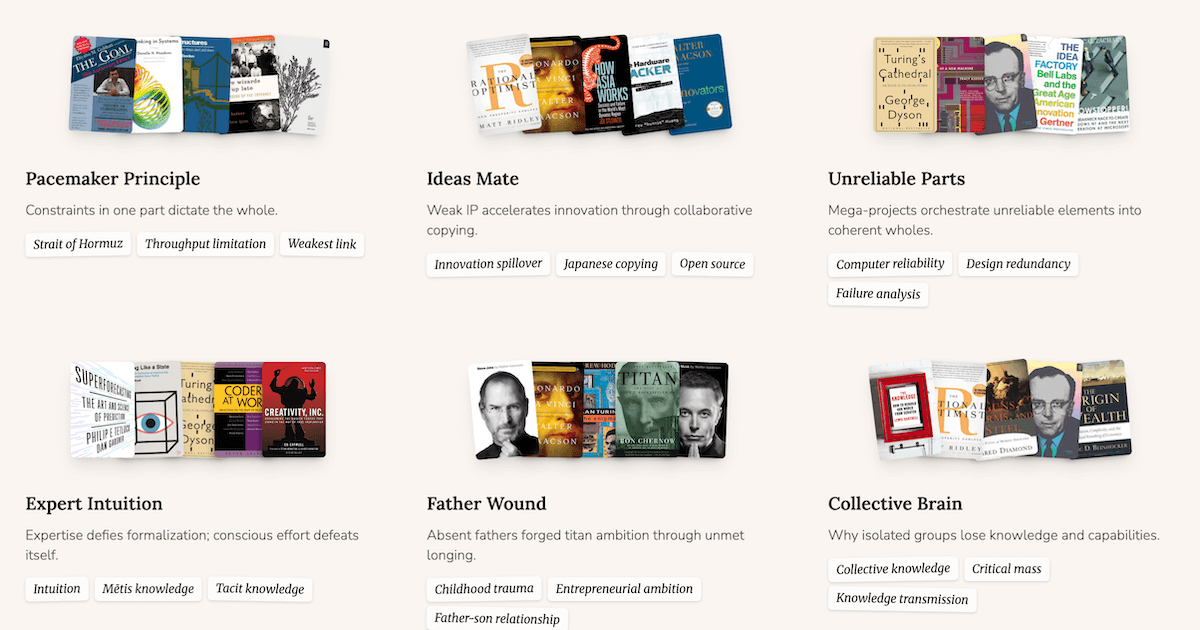
    A developer has created a tool that uses Anthropic's Claude Code to analyze books and identify thematic connections. The project, called "Useful Lies," visualizes these relationships, offering insights into concepts like self-deception, innovation, and the dynamics of mega-projects. The tool aims to automatically discover and present thematic links across a collection of texts, making complex ideas more accessible. AI

    Show HN: I used Claude Code to discover connections between 100 books

    IMPACT Demonstrates novel applications of LLMs for literary analysis and knowledge synthesis.

  14. Show HN: Continuous Claude – run Claude Code in a loop

    A new open-source CLI tool called Continuous Claude has been developed to automate complex coding tasks by running Anthropic's Claude Code model in a persistent, iterative loop. This tool addresses the limitation of current AI coding assistants that often stop after a single task, enabling multi-step projects to be completed autonomously. By maintaining context across iterations and integrating with GitHub's CI/CD workflows, Continuous Claude can autonomously create branches, generate commits, push changes, monitor checks, and merge pull requests, learning and adapting from previous attempts. AI

    Show HN: Continuous Claude – run Claude Code in a loop

    IMPACT Enables autonomous completion of multi-step coding projects by maintaining context across AI iterations.

  15. Show HN: FLE v0.3 – Claude Code Plays Factorio

    The Factorio Learning Environment (FLE) has released version 0.3.0, introducing significant advancements for testing AI agents in complex, long-term planning scenarios. This update integrates Claude Code into Factorio, allowing agents to interact programmatically with the game environment without needing the client. New features include a headless renderer for multimodal research and standardization to the OpenAI gym interface, simplifying integration and enabling scalable experimentation. AI

    Show HN: FLE v0.3 – Claude Code Plays Factorio

    IMPACT Enhances research capabilities for long-horizon planning and world modeling in AI agents.

  16. OpenTSLM: Language models that understand time series

    A new class of foundation models called Time-Series Language Models (TSLMs) has been introduced, designed to natively process and reason about temporal data. These models, developed by a team with affiliations to ETH, Stanford, Harvard, and other institutions, aim to bridge the gap between real-world time-series signals and AI-driven decision-making. The project includes both open-source base models and advanced proprietary versions for enterprise applications, envisioning a future where TSLMs enhance fields like healthcare, robotics, and infrastructure. AI

    IMPACT Introduces a new modality for AI, potentially enabling more sophisticated reasoning and applications in time-series data analysis.

  17. Launch HN: Flywheel (YC S25) – Waymo for Excavators

    Flywheel AI, a Y Combinator S25 startup, has launched a system for remote teleoperation and autonomy in excavators. Their retrofit solution mechanically actuates existing excavator controls, addressing the lack of electronic interfaces in most hydraulic machines. This enables increased site safety and productivity, while also generating crucial egocentric observation and action data for training autonomous systems. Flywheel is open-sourcing 100 hours of this collected excavator dataset to facilitate research in robot learning. AI

    IMPACT Provides valuable real-world robotics data, potentially accelerating the development of autonomous construction equipment.

  18. Important machine learning equations

    A new guide compiles essential machine learning equations, focusing on their practical application and mathematical foundations. It covers key concepts from information theory, linear algebra, and optimization, including detailed explanations and Python implementations for entropy, cross-entropy, and KL divergence. The resource aims to serve as a handy reference for practitioners, drawing from frequently used formulas and including sections on neural network fundamentals and loss functions. AI

    Important machine learning equations

    IMPACT Provides a practical reference for core mathematical concepts used in machine learning model development.

  19. Dyna – Logic Programming for Machine Learning

    Dyna is a new programming language designed for machine learning researchers, aiming to bridge the gap between mathematical concepts and executable code. It builds upon logic programming paradigms like Datalog and Prolog, introducing features such as flexible execution orders and weighted rules. This allows for concise expression of complex algorithms, including matrix multiplication, the Fibonacci sequence, and neural networks, with minimal code. AI

    Dyna – Logic Programming for Machine Learning

    IMPACT Potentially streamlines the development cycle for ML algorithms by reducing the distance between mathematical notation and code.

  20. Unlocking dependable responses with Gemini Enterprise Agent Platform’s Agentic RAG

    Researchers are developing advanced agent frameworks to improve AI reliability and efficiency across various domains. Google introduced an agentic RAG system that enhances enterprise query handling by iteratively searching for complete context, boosting accuracy by up to 34%. Hugging Face demonstrated a multi-agent economy simulation using a small 3B model, highlighting the trade-offs between model size and real-time performance. Other research explores methods for reliable tool use, regulatory compliance through agent-to-agent protocols, dynamic benchmarking for agent behavior, and robust self-evolution mechanisms for AI agents. AI

    Unlocking dependable responses with Gemini Enterprise Agent Platform’s Agentic RAG

    IMPACT New agentic frameworks and evaluation methods promise more reliable, efficient, and compliant AI systems across enterprise, simulation, and regulatory domains.

  21. Solving a Childhood Mystery: How BASIC Games Learned to Win

    A programmer explores a childhood mystery surrounding the source code for a BASIC game called Hexapawn. This game, a simplified version of chess, was featured in an old programming book. The author delves into the game's DATA statements, which initially appeared as incomprehensible sequences of numbers, and seeks clarification from Claude.ai to understand their function within the game's logic. AI

    Solving a Childhood Mystery: How BASIC Games Learned to Win

    IMPACT Explores historical game AI, offering insights into early algorithmic approaches.

  22. Springer Nature book on machine learning is full of made-up citations

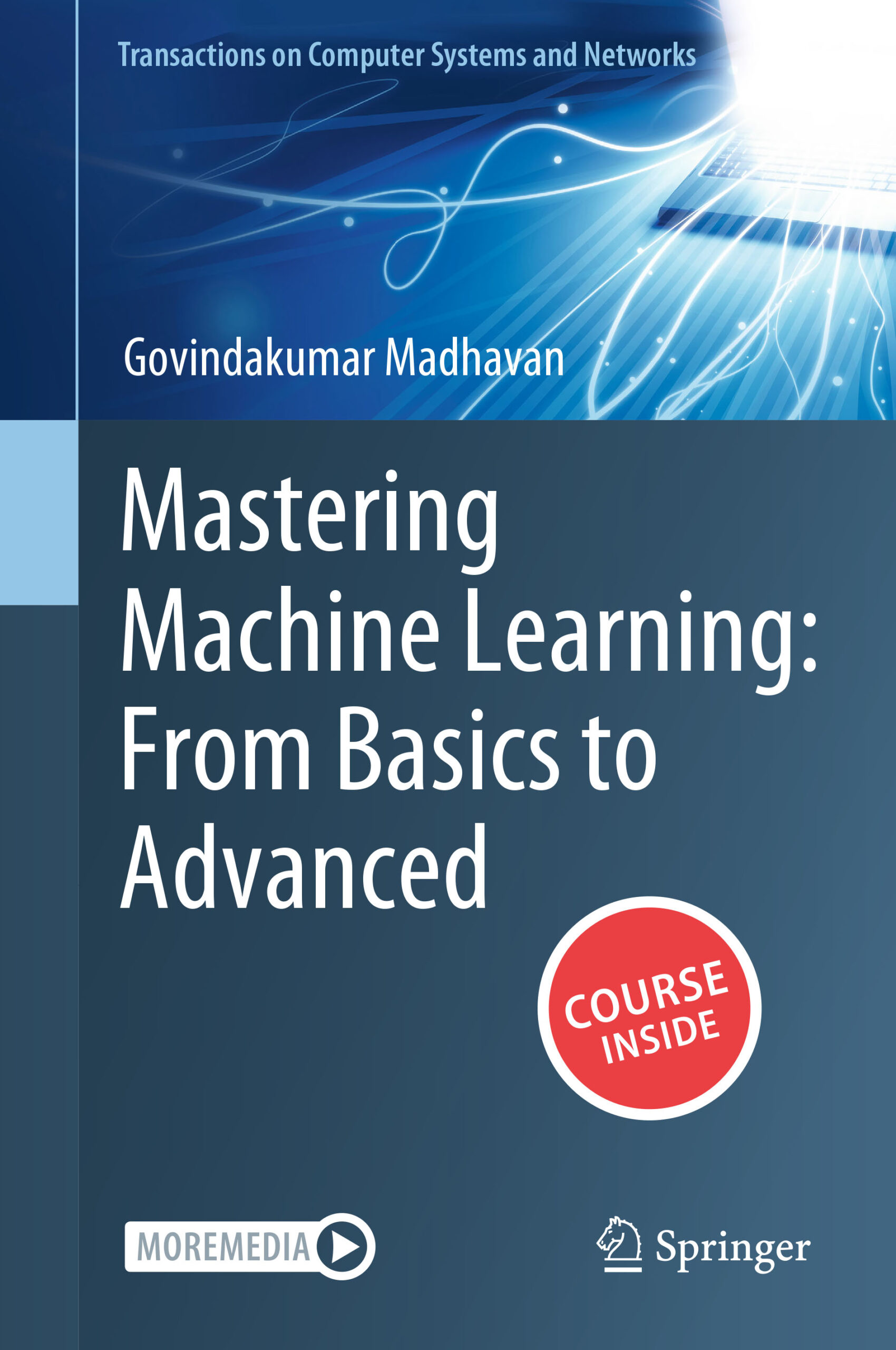
    A newly published machine learning textbook by Springer Nature, titled "Mastering Machine Learning: From Basics to Advanced," has been found to contain numerous fabricated citations. An investigation revealed that two-thirds of the checked citations were either non-existent or contained significant errors, with some researchers confirming they did not author the cited works. The publisher is currently investigating the matter, and the book's author has not confirmed whether an AI tool was used in its creation, though the nature of the errors is characteristic of LLM-generated content. AI

    Springer Nature book on machine learning is full of made-up citations

    IMPACT Highlights the ongoing challenge of AI-generated misinformation and the need for robust editorial oversight in publishing.

  23. Normalizing Flows Are Capable Generative Models

    Researchers have developed a new generative modeling framework utilizing cumulative flow maps for long-range transport in probability space. This approach aims to connect local updates with finite-time transport, allowing generative models to reason about global state transitions. The framework supports few-step and even one-step generation with minimal changes to existing models and no increase in capacity, demonstrating effectiveness across various tasks like image and SDF generation with reduced inference costs. AI

    Normalizing Flows Are Capable Generative Models

    IMPACT Introduces novel generative modeling techniques that could lead to more efficient and capable AI systems for various synthesis tasks.

  24. Show HN: Glowstick – type level tensor shapes in stable rust

    Glowstick is a new Rust crate designed to enhance tensor manipulation by integrating shape checking directly into the type system. This approach aims to make tensor operations safer and more intuitive, particularly for developers working with machine learning frameworks. The project, currently in its pre-1.0 phase, offers features like dynamic dimension support and improved error messages, with plans to align with ONNX operations. AI

    Show HN: Glowstick – type level tensor shapes in stable rust

    IMPACT Provides a type-safe approach to tensor manipulation in Rust, potentially improving developer experience and reducing errors in ML workflows.

  25. The Illusion of Thinking: Strengths and Limitations of Reasoning Models

    Researchers have introduced a new framework called "The Illusion of Thinking" to better understand the reasoning capabilities and limitations of Large Reasoning Models (LRMs). This framework utilizes controllable puzzle environments to analyze the internal reasoning traces of LRMs, moving beyond traditional evaluations that focus solely on final answer accuracy. Experiments revealed that LRMs experience a complete accuracy collapse at high problem complexities and exhibit a peculiar scaling limit where reasoning effort decreases despite sufficient computational resources. AI

    The Illusion of Thinking: Strengths and Limitations of Reasoning Models

    IMPACT Introduces a novel evaluation method for LLMs that probes reasoning capabilities beyond simple accuracy, potentially guiding future model development.

  26. Rule2DRC: Benchmarking LLM Agents for DRC Script Synthesis with Execution-Guided Test Generation

    Researchers are developing new methods to improve the evaluation and training of large language models (LLMs). One approach, SCOPE, calibrates LLM judges to ensure reliable pairwise evaluations with controlled error rates. Another technique, D3, uses dynamic influence graphs to optimize data scheduling during LLM training by considering sample interactions. Additionally, OBCache offers a principled framework for pruning key-value caches to reduce memory overhead during long-context inference, improving accuracy. AI

    IMPACT New research introduces methods for more reliable LLM evaluation, efficient training data scheduling, and optimized inference, potentially improving LLM performance and resource utilization.

  27. Understanding Aggregate Trends for Apple Intelligence Using Differential Privacy

    Apple is advancing research in privacy-preserving machine learning and AI, hosting a workshop to discuss techniques like federated learning and differential privacy. The company is applying these methods to its upcoming Apple Intelligence features, such as Genmoji, Image Playground, and writing tools, to understand usage trends without compromising user data. Apple is also exploring the creation of synthetic data that mimics real user content to improve these features while maintaining strict privacy standards. AI

    Understanding Aggregate Trends for Apple Intelligence Using Differential Privacy

    IMPACT Apple's focus on privacy-preserving AI techniques for Apple Intelligence features may set new standards for user data protection in generative AI.

  28. SeedLM: Compressing LLM Weights into Seeds of Pseudo-Random Generators

    Researchers have developed SeedLM, a novel post-training compression technique for large language models that utilizes pseudo-random generator seeds to encode model weights. This method aims to reduce the high runtime costs associated with LLMs by generating weight matrices on-the-fly during inference, thereby decreasing memory access and improving speed for memory-bound tasks. SeedLM achieves this by trading compute for fewer memory accesses and notably does not require calibration data, generalizing well across diverse tasks and maintaining accuracy comparable to FP16 baselines even at significant compression levels. AI

    SeedLM: Compressing LLM Weights into Seeds of Pseudo-Random Generators

    IMPACT This compression technique could significantly reduce the deployment costs and increase the inference speed of large language models.

  29. Show HN: OCR pipeline for ML training (tables, diagrams, math, multilingual)

    A developer is creating a versatile OCR pipeline designed to extract structured data from complex educational materials for machine learning training. The system, which supports multilingual text, mathematical formulas, tables, and diagrams, aims to achieve over 90-95% accuracy on academic datasets. It generates AI-ready outputs in JSON or Markdown, including semantic annotations for visual content, and is built using various tools like Google Vision API and OpenAI API. The project's public release has been delayed due to the developer's academic commitments but is expected once the system is finalized. AI

    Show HN: OCR pipeline for ML training (tables, diagrams, math, multilingual)

    IMPACT This tool could streamline the creation of specialized datasets for ML training, particularly in academic and research contexts.

  30. Show HN: Formal Verification for Machine Learning Models Using Lean 4

    A new open-source framework called FormalVerifML has been released, utilizing Lean 4 for the formal verification of machine learning models. This tool aims to provide mathematically rigorous proofs of properties like robustness, fairness, and safety for high-stakes applications. It supports large-scale models, including transformers and vision models, with features for enterprise use and distributed verification. AI

    Show HN: Formal Verification for Machine Learning Models Using Lean 4

    IMPACT Enhances trust and reliability in ML models for critical applications through formal verification.

  31. Math for Computer Science and Machine Learning [pdf]

    This PDF provides a comprehensive overview of the mathematical foundations essential for computer science and machine learning. It covers topics ranging from linear algebra and calculus to probability and statistics, aiming to equip readers with the necessary quantitative skills for advanced study and research in these fields. The material is structured to build a strong theoretical understanding, enabling practitioners to better grasp and develop complex algorithms and models. AI

    IMPACT Provides foundational mathematical knowledge crucial for understanding and developing advanced AI models and algorithms.

  32. Merlion: A Machine Learning Framework for Time Series Intelligence

    Salesforce has released Merlion 2.0, an open-source Python library designed for time series intelligence. The framework offers an end-to-end solution for tasks such as forecasting, anomaly detection, and change point detection. Merlion 2.0 includes a diverse set of models, automated hyperparameter tuning, and practical post-processing rules to enhance model interpretability and reduce false positives. AI

    Merlion: A Machine Learning Framework for Time Series Intelligence

    IMPACT Provides a comprehensive toolkit for developing and benchmarking time series models, potentially accelerating adoption in industry.

  33. Show HN: Globstar – Open-source static analysis toolkit

    DeepSource has open-sourced Globstar, a static analysis toolkit designed for creating custom code quality and security checkers. The toolkit leverages tree-sitter for parsing code and utilizes AI assistants like ChatGPT and Claude to generate complex queries, simplifying the process for developers. Globstar offers both YAML and Go interfaces, supporting over 20 languages with plans to add C/C++ support. AI

    Show HN: Globstar – Open-source static analysis toolkit

    IMPACT Simplifies the creation of custom code quality and security checkers by leveraging AI for query generation.

  34. Apple Robot Research

    Researchers at Apple have developed ELEGNT, a framework for designing robot movements that blend functional task fulfillment with expressive qualities like intention and emotion. Their work, detailed in a recent paper, involved creating a lamp-like robot and a methodology to generate movement sequences that enhance user engagement, particularly in social contexts. A user study confirmed that expression-driven movements were perceived more positively than purely function-driven ones. AI

    Apple Robot Research

    IMPACT Enhances human-robot interaction by making robots more expressive and engaging, potentially improving user experience in social and task-oriented scenarios.

  35. When machine learning tells the wrong story

    A former MIT student reflects on a hardware security research paper he co-authored, "There’s Always a Bigger Fish: A Clarifying Analysis of a Machine-Learning-Assisted Side-Channel Attack." The paper, which demonstrated a machine-learning-assisted side-channel attack executable in web browsers and highlighted how system interrupts can leak user information, has received significant awards. The author discusses the challenges of writing about the research, particularly the dual narrative of ML's potential for attacks and its frequent misapplication, and how the project profoundly influenced his academic and personal path. AI

    When machine learning tells the wrong story

    IMPACT Highlights potential vulnerabilities in web browsers through machine learning-assisted attacks, underscoring the need for careful application of ML in security.

  36. AI for real-time fusion plasma behavior prediction and manipulation

    Researchers are developing AI models to predict and control the behavior of fusion plasma in real-time. These models aim to optimize the process of achieving stable fusion reactions, which is crucial for developing clean energy sources. The project utilizes machine learning techniques to analyze complex plasma dynamics and enable precise manipulation. AI

    IMPACT Potential to accelerate fusion energy development by enabling real-time control of plasma.

  37. Machine learning and information theory concepts towards an AI Mathematician

    This paper explores the gap between current AI's language capabilities and its mathematical reasoning abilities. It proposes an information-theoretical approach to developing an AI mathematician, focusing on discovering new conjectures rather than proving existing theorems. The core idea is that a valuable set of theorems should efficiently summarize provable statements and be closely related to many of them. AI

    Machine learning and information theory concepts towards an AI Mathematician

    IMPACT Proposes a novel framework for AI mathematical reasoning, potentially advancing AI's capabilities beyond language tasks.

  38. Asking For An Old Friend: Diagnosing and Mitigating Temporal Failure Modes in LLM-based Statutory Question Answering

    Researchers have developed a benchmark to test Large Language Models' ability to handle temporal changes in legal statutes, identifying issues like outdated information and recency bias. Meanwhile, the AI industry is seeing a significant shift as model labs increasingly focus on building agent-based products rather than just foundational models. This strategic pivot is exemplified by companies like AI21 and DeepSeek, and is further underscored by DeepSeek's aggressive pricing strategy for its V4-Pro model, making advanced AI more accessible. AI

    IMPACT The industry's focus is shifting from foundational models to agent-based products, with aggressive pricing making advanced AI more accessible and competitive.

  39. Machine Learning Model Homotopy

    The concept of model homotopy, applying topological ideas to machine learning, suggests that a single model may not fully capture a modeling situation. Instead, a trajectory of fits, parameterized continuously by weights, can offer a richer understanding. This approach can reveal counter-intuitive behaviors, such as linear regression coefficients changing signs multiple times as variables are added, challenging the intuition that coefficients would smoothly interpolate. AI

    Machine Learning Model Homotopy

    IMPACT Introduces a novel theoretical framework for understanding model behavior and parameter sensitivity.

  40. Launch HN: Silurian (YC S24) – Simulate the Earth

    Silurian, a startup founded by former Microsoft researchers, has launched Generative Forecasting Transformer (GFT), a 1.5 billion parameter model designed to simulate Earth's weather up to 14 days in advance. This deep learning model, which learns purely from data without explicit physics, has demonstrated strong performance in predicting hurricane tracks, outperforming traditional forecasting methods. The company aims to expand its simulations to model other weather-impacted infrastructure like energy grids and agriculture. AI

    IMPACT This new weather simulation model could significantly improve forecasting accuracy and lead to better infrastructure planning.

  41. Micrograd.jl

    This article introduces Micrograd.jl, a new automatic differentiation package for the Julia programming language. It aims to fill a gap in comprehensive tutorials for AD in Julia, requiring a solid understanding of both Julia and Calculus. The package is built upon Zygote.jl and ChainRules.jl, offering a different approach to AD compared to Python frameworks like PyTorch by leveraging Julia's functional programming and metaprogramming capabilities. AI

    Micrograd.jl

    IMPACT Provides a new tool for Julia developers to build and train machine learning models, potentially improving efficiency and understanding of backpropagation.

  42. The reanimation of pseudoscience in machine learning

    A recent article in Patterns argues that the machine learning field is experiencing a resurgence of pseudoscience, particularly in areas like consciousness and general intelligence. The authors express concern that the field's rapid growth and the pressure to publish may be leading to a decline in rigorous scientific standards. They call for a renewed focus on empirical evidence and falsifiable hypotheses to maintain the integrity of machine learning research. AI

    IMPACT Raises concerns about the scientific rigor and potential for pseudoscience within the machine learning research community.

  43. Sequential Learning and Catastrophic Forgetting in Differentiable Resistor Networks

    Researchers have developed a novel analog network of resistors capable of performing machine learning tasks without a traditional processor. This system, based on transistors, can learn and adapt to new tasks, demonstrating potential for highly energy-efficient computation. While currently a prototype, the technology shows promise for applications in edge devices and could eventually outperform conventional digital processors for specific machine learning workloads. AI

    Sequential Learning and Catastrophic Forgetting in Differentiable Resistor Networks

    IMPACT This research could lead to more energy-efficient AI hardware, particularly for edge computing applications.

  44. Apple's On-Device and Server Foundation Models

    Apple has detailed its new foundation language models powering Apple Intelligence, including a ~3 billion parameter on-device model and a larger server-based model. These models are designed for multilingual and multimodal tasks, supporting image understanding and tool execution. The company emphasizes its Responsible AI approach, focusing on user privacy through innovations like Private Cloud Compute and on-device processing, ensuring user data is not used for training. AI

    Apple's On-Device and Server Foundation Models

    IMPACT Apple's detailed technical report on its foundation models may influence the development of efficient on-device and specialized server-based AI systems.

  45. What kind of bug would make machine learning suddenly 40% worse at NetHack?

    Researchers Bartłomiej Cupiał and Maciej Wołczyk observed a significant performance drop in their neural network trained to play NetHack. The model, which had been consistently scoring around 5,000 points, suddenly began scoring only 3,000 points, a 40% decrease. Despite extensive troubleshooting, including code reversion, software stack restoration, and rebuilding the entire system from scratch, the performance issue persisted. AI

    What kind of bug would make machine learning suddenly 40% worse at NetHack?

    IMPACT Highlights potential fragility in reinforcement learning models and the challenges of diagnosing performance regressions.

  46. Understanding Stein's Paradox (2021)

    Stein's paradox, a counterintuitive statistical concept, demonstrates that in dimensions three and higher, a better estimate of a Gaussian distribution's mean can be achieved than simply using the drawn sample. The James-Stein estimator, which uses a specific formula involving the sample's magnitude and dimensionality, outperforms the naive approach in terms of mean squared error. This paradox challenges conventional statistical intuition, particularly regarding parameter estimation in higher-dimensional spaces. AI

    Understanding Stein's Paradox (2021)
  47. A Visual Introduction to Machine Learning (2015)

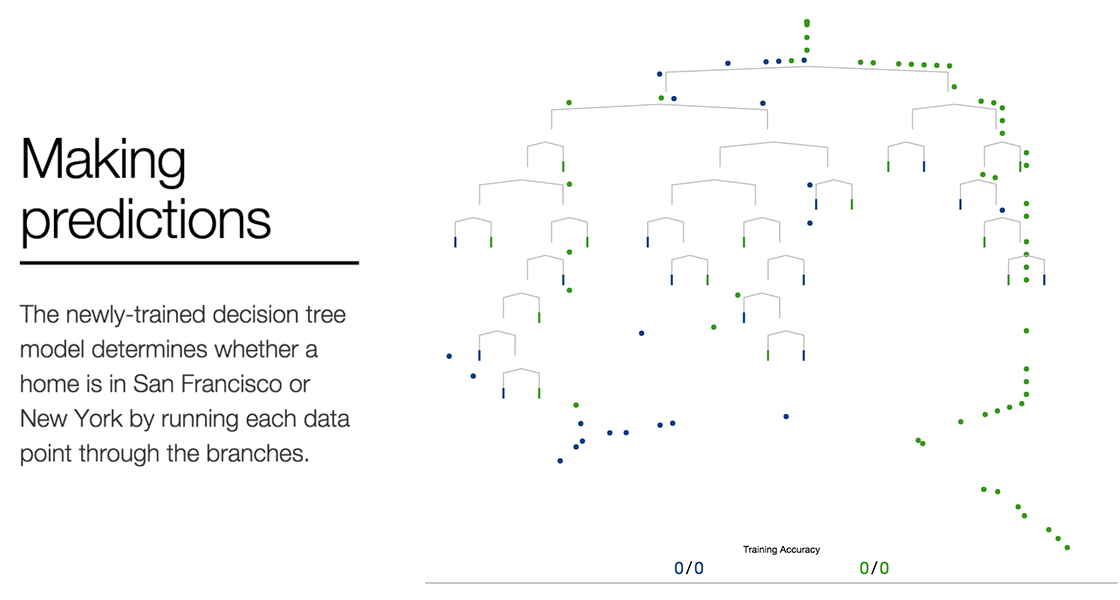
    This collection of resources offers a broad overview of machine learning, from foundational concepts and visual introductions to theoretical underpinnings and practical applications. It includes a visual guide to classification tasks, a discussion on the science and ethics of machine learning benchmarks, and pointers to comprehensive textbooks and course materials. Additionally, it highlights tools for interpretable machine learning and the engineering practices required for deploying models in production. AI

    A Visual Introduction to Machine Learning (2015)

    IMPACT Provides foundational knowledge and practical tools for understanding, developing, and deploying machine learning models.

  48. 1-Bit AI Infrastructure

    Researchers have developed a software stack called 'this http URL' to enable fast and lossless inference of 1-bit Large Language Models (LLMs) like BitNet b1.58 on CPUs. This new infrastructure achieves significant speedups, ranging from 2.37x to 6.17x on x86 CPUs and 1.37x to 5.07x on ARM CPUs, depending on model size. The goal is to make LLMs more efficient and deployable on a wider range of devices. AI

    1-Bit AI Infrastructure

    IMPACT Enables more efficient and widespread deployment of LLMs on consumer hardware.

  49. Opus 1.5 released: Opus gets a machine learning upgrade

    The Opus 1.5 audio codec has been released with significant machine learning enhancements, marking the first time deep learning is used to process audio signals directly. These new ML-based features, including improved packet loss concealment (PLC) and a novel redundancy transmission method, are designed to be fully compatible with older versions and optimized to run efficiently on standard CPUs. While most users won't notice the performance impact, the ML features are disabled by default and require specific compile-time and run-time flags to activate. AI

    Opus 1.5 released: Opus gets a machine learning upgrade

    IMPACT Enhances audio codec resilience to packet loss and improves redundancy, potentially improving real-time communication quality.

  50. Where is Noether's principle in machine learning?

    This research paper explores the applicability of Noether's principle, a fundamental concept in physics linking symmetries to conservation laws, within the domain of machine learning. The authors investigate whether similar principles of invariance and conserved quantities can be identified in discrete machine learning processes, such as the training of neural networks. While acknowledging the potential for such connections, the paper suggests that directly applying Noether's theorem to machine learning is complex and not yet fully understood. AI

    IMPACT Explores theoretical underpinnings that could lead to new optimization techniques or model architectures.