PulseAugur / Whispers
EN
LIVE 20:01:07

Whispers

last 72h
[20/20]

The long tail — singletons that escape Brief because nobody else has noticed yet. High novelty, narrow audience, AI-relevant. The opposite signal of consensus.

  1. I Was Scrolling and Then I Saw a Pregnant Strawberry

    A new academic paper analyzes the phenomenon of "AI minidramas" or "fruit dramas," short generative AI video series popular on social media. The research argues these seemingly cute videos perpetuate harmful gendered narratives, associating female characters with transgression and reproductive themes. Furthermore, the paper suggests these narratives can also encode racialization, with the videos' aesthetic serving to mask their ideological content. AI

    IMPACT Highlights how generative AI can be used to perpetuate harmful social narratives, necessitating critical analysis of AI-generated content.
  2. S23DR 2026 Winning Solution

    Researchers have developed a novel approach for structured 3D wireframe reconstruction, achieving first place in the S23DR 2026 challenge. Their method utilizes a diffusion transformer (DiT) to denoise vertex tokens, conditioned on scene tokens processed by a Perceiver-style architecture. The system employs a multi-stage refinement process, including a global prediction, a hull-cropped refinement, and a consensus step, to accurately reconstruct 3D structures from sparse data. AI

    IMPACT This research advances 3D reconstruction techniques, potentially impacting fields requiring precise spatial understanding from limited data.

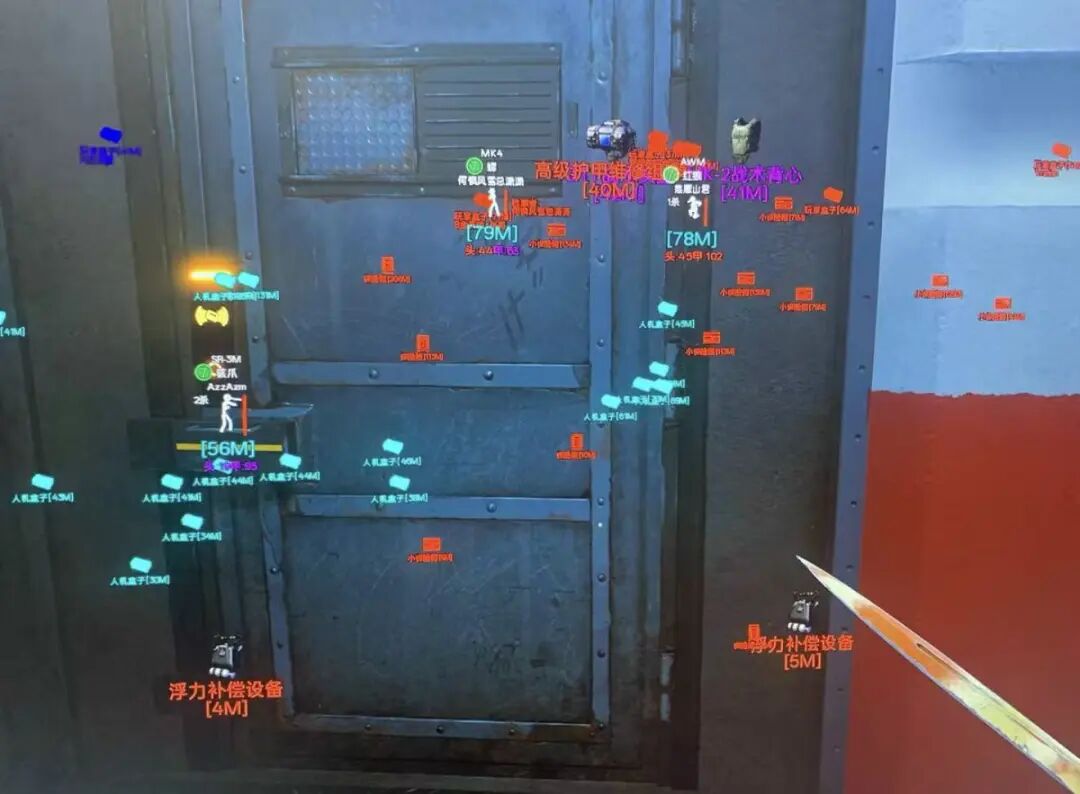
  3. On the anti-cheat front line, game manufacturers have started an "arms race"

    The battle against cheating in online games, known as "cheating" or "hacks," has escalated into an "arms race" between game developers and black market operators. These illicit tools, ranging from simple aimbots to sophisticated AI-powered visual aids and hardware-level intrusions, are becoming increasingly prevalent, with PC cheat samples exceeding 100,000 annually. Game companies like Tencent are investing heavily in advanced anti-cheat systems, employing multi-layered encryption, hardware bans, and AI-driven behavioral analysis to combat these evolving threats, aiming to slow down cheats and identify suspicious player actions. AI

    On the anti-cheat front line, game manufacturers have started an "arms race"

    IMPACT This arms race between game developers and cheat creators is driving innovation in AI-powered detection and behavioral analysis, potentially influencing broader cybersecurity strategies.

  4. Answers rot. Store questions instead.

    Researchers have developed a new memory pattern for AI agents called "Standing Questions" to address the issue of stale information in long-term projects. Instead of storing answers, which can become outdated, the system stores a set of critical questions that the agent must re-derive answers to at the start of each session. This ensures that the agent's understanding is constantly updated against the current state of the project, preventing the accumulation of incorrect beliefs. AI

    IMPACT This approach could improve the reliability and accuracy of long-running AI agent projects by ensuring their knowledge base remains current.

  5. Foxconn Industrial Internet rotates CEO, iPEBG business group general manager Xu Xingren takes over

    Foxconn Industrial Internet (FII) has appointed Xu Xingren as its new rotating CEO, succeeding Liu Zongchang. Xu, who previously led the iPEBG business group, will serve a one-year term. The company also announced that its mini-program has integrated with WeChat's AI Agent ecosystem, enabling enhanced services for users. AI

    IMPACT Integration with WeChat AI Agent enhances user services for a major industrial conglomerate, potentially setting a precedent for similar B2C integrations.

  6. I Can Compress 1000 Dimensions Into 2 — Here’s What PCA Taught Me

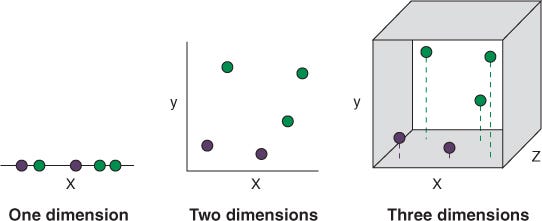
    This article explains Principal Component Analysis (PCA), a technique used in machine learning and statistics to reduce data dimensionality. It addresses the 'Curse of Dimensionality,' where performance degrades with increasing features. PCA achieves this by transforming high-dimensional data into a lower-dimensional space, though the resulting features may be less interpretable. AI

    I Can Compress 1000 Dimensions Into 2 — Here’s What PCA Taught Me

    IMPACT Explains a core dimensionality reduction technique fundamental to many AI and ML workflows.

  7. Stanford Professor Jeannette Bohg: Abandon the "Hand Worship", Dexterous Hands Need to "Deconstruct Physics" | ICRA 2026

    Jeannette Bohg, a professor at Stanford, argues that dexterous robotic hands are still essential despite advancements in two-finger grippers. She emphasizes their irreplaceable advantage in throughput and controllable subspace, citing a watchmaker's intricate manipulation as an example. Bohg's lab is developing a new approach that learns from object trajectories rather than human hand movements, using a unified simulation-to-real strategy and a "Play-to-Effect" fine-tuning method for precision tasks. AI

    Stanford Professor Jeannette Bohg: Abandon the "Hand Worship", Dexterous Hands Need to "Deconstruct Physics" | ICRA 2026

    IMPACT This research could lead to more capable robotic hands by focusing on object manipulation rather than human imitation, potentially improving performance in complex assembly and manipulation tasks.

  8. Amazing Digital Dentures (a failed project)

    A developer attempted to create a game-generating AI inspired by "The Amazing Digital Circus," using the Nemotron 30b model. Initial attempts with simple prompts and skill cards failed due to context window limitations and model output errors. The project eventually pivoted to a simpler HTML toymaker capable of generating basic elements like clocks and to-do lists, but struggled with more complex games. AI

    IMPACT Demonstrates current limitations in AI's ability to generate complex, functional games, highlighting challenges with context windows and intricate code generation.

  9. Are there any Horizon employees who left to start their own business and Yu Kai did not invest in?

    Horizon Robotics CEO Yu Kai is fostering an ecosystem by investing in former employees who start robotics companies. At least 14 key technical and management talents have left Horizon to found or join robotics ventures, with Kai and Horizon investing in most of them. This strategy aims to build an open ecosystem and infrastructure for the robotics industry, positioning Horizon as a provider of chips and foundational capabilities rather than just a product company. AI

    IMPACT Establishes Horizon Robotics as a key player in the robotics ecosystem, potentially influencing future hardware and software development in the sector.

  10. It’s not FAANG anymore. It’s MANGOS.

    A new tech industry acronym, MANGOS, is gaining traction, proposing Meta, Anthropic, Nvidia, Google, OpenAI, and SpaceX as the new dominant forces. This shift reflects the growing influence of AI and agentic companies, potentially overshadowing the older FAANG (Facebook, Amazon, Apple, Netflix, Google) group. The emergence of MANGOS signals a potential future where AI-driven companies lead the tech landscape, though concerns remain about the economic impact on employment. AI

    IMPACT Signals a potential shift in tech leadership towards AI-focused companies, influencing future industry trends and investments.

  11. Teach you to earn 170,000 in one class with AI, Wall Street elites are queuing up to pay

    Two young entrepreneurs, Felipe Sinisterra and Dave Wang, are generating significant revenue by teaching Wall Street professionals how to leverage AI tools. Their company, Wall Street Prompt, charges $25,000 per session to demonstrate AI applications in financial analysis, such as evaluating startup pitches and extracting key insights from earnings calls. Major financial institutions like Citigroup and Bank of America are clients, seeking to upskill their employees who are struggling to adapt to the rapid integration of AI in the industry amidst widespread layoffs. AI

    IMPACT Accelerates enterprise adoption of AI by providing practical, job-specific training to financial professionals.

  12. The Reliability Contract Nobody Signed.

    The concept of a "reliability contract" is often absent in software, particularly in the realm of MLOps. While terms of service typically state services are provided "as-is," this lack of explicit reliability guarantees can lead to significant issues. This is especially true for AI systems, where unpredictable behavior can have serious consequences. AI

    The Reliability Contract Nobody Signed.

    IMPACT Highlights a critical gap in MLOps practices, suggesting a need for clearer reliability standards in AI development.

  13. I benchmarked 7 LLMs on 100 identical prompts. The cost gap shocked me.

    A developer has created an open-source framework to benchmark Large Language Models (LLMs) across five key metrics: accuracy, latency, cost, hallucination rate, and reasoning quality. The framework highlights a significant cost disparity between models like GPT-4o and Gemini 1.5 Flash, showing that while GPT-4o may be slightly more accurate, Gemini Flash is orders of magnitude cheaper for high-volume usage. The developer argues that traditional leaderboards focusing solely on accuracy are misleading for production applications, and users should instead benchmark models against their own data and use cases. AI

    IMPACT Provides a practical framework for developers to select cost-effective LLMs based on real-world usage metrics beyond just accuracy.

  14. I Thought LoRA Was Just Cheap Fine-Tuning. This Paper Proved Me Wrong

    A recent paper challenges the common understanding of LoRA (Low-Rank Adaptation) as merely a cost-effective fine-tuning method. The research suggests that LoRA's capabilities extend beyond simple parameter-efficient fine-tuning, implying a deeper impact on model adaptation than previously recognized. This re-evaluation could alter how developers approach customizing large language models. AI

    I Thought LoRA Was Just Cheap Fine-Tuning. This Paper Proved Me Wrong

    IMPACT Re-evaluation of LoRA could lead to more effective and nuanced model adaptation techniques.

  15. Illinois joins Ohio in ordering pause on data center tax credits

    Illinois Governor JB Pritzker has ordered a pause on state tax incentives for data centers, citing concerns over their high electricity and water usage. This move follows a similar decision by Ohio to halt its data center tax credit program while its economic impact is studied. The pause in Illinois aims to prevent increased utility costs for residents, though it faces opposition from labor unions who argue it will drive investment and jobs to other states. AI

    Illinois joins Ohio in ordering pause on data center tax credits

    IMPACT Data center expansion is critical for AI infrastructure; policy shifts like this can impact AI development and deployment costs.

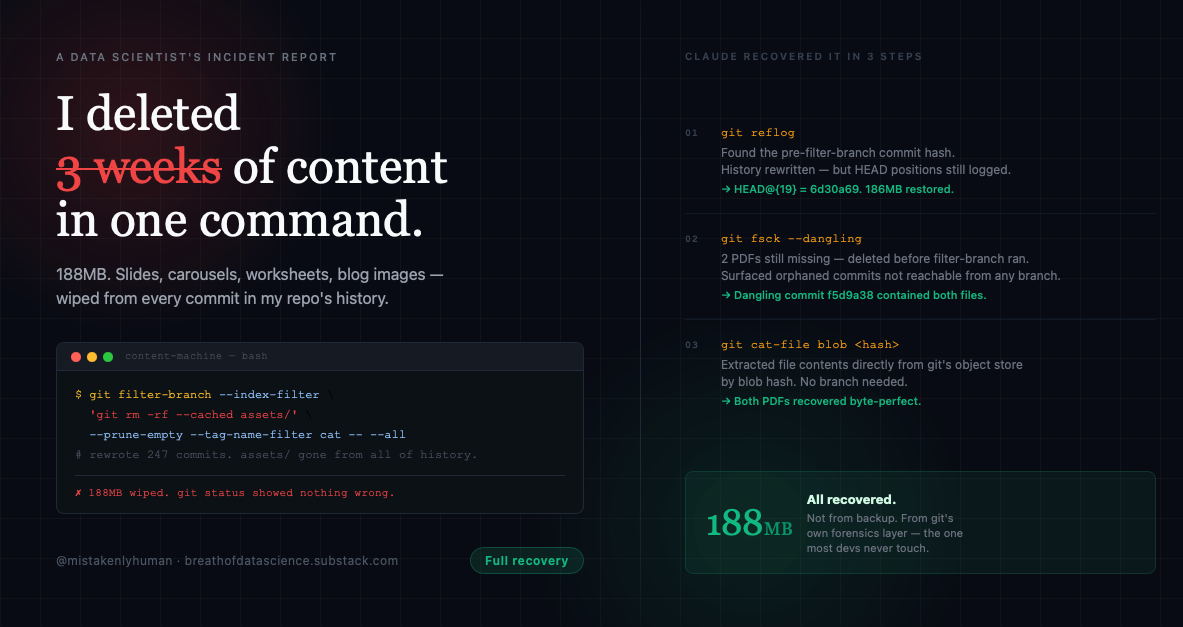
  16. I Deleted Three Weeks of Content

    A user recounts deleting three weeks of content from their Medium account. They utilized Anthropic's Claude AI to assist in recovering the deleted material. The experience highlights Claude's capabilities in content restoration and data recovery. AI

    I Deleted Three Weeks of Content

    IMPACT Demonstrates AI's utility in data recovery and content management for users.

  17. UK boffin bait lands 18 international researchers

    The UK is actively recruiting international AI and science talent through its Global Talent visa program. This initiative aims to attract researchers who may be dissatisfied with opportunities in their home countries. The program seeks to bolster the UK's scientific and AI capabilities by drawing in experts from around the world. AI

    UK boffin bait lands 18 international researchers

    IMPACT This initiative could strengthen the UK's AI research ecosystem and foster innovation by attracting top global talent.

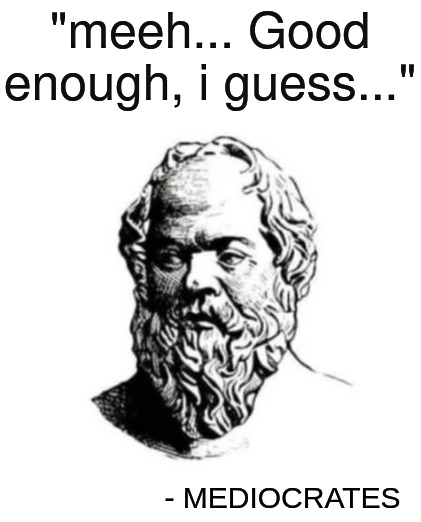
  18. (continuation of the tweet from 3 days ago ⤴️, and of the general reflection on the null dystopia we live in) So it would seem that a significant part of the

    A recent paper suggests that many AI users are unconcerned with AI errors, embracing a "good enough" mentality. This perspective implies that AI's rise may be ushering in an era of intellectual mediocrity and a "kakonomy" of intellectual activity. The findings highlight a potential societal shift towards accepting imperfect outputs in the pursuit of convenience. AI

    (continuation of the tweet from 3 days ago ⤴️, and of the general reflection on the null dystopia we live in) So it would seem that a significant part of the

    IMPACT This commentary suggests AI may foster a culture of accepting mediocrity, potentially impacting the drive for high-quality intellectual output.

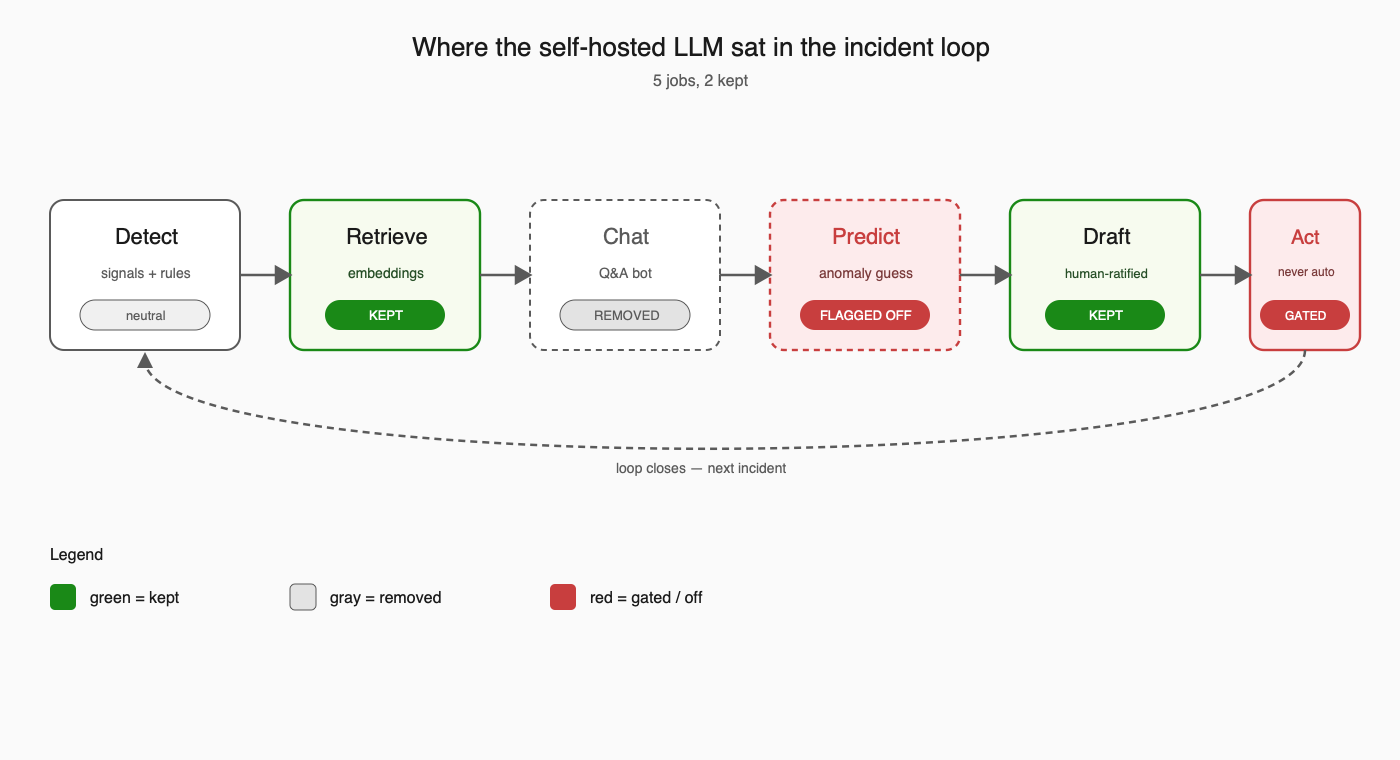
  19. The Self-Healing Dream Met a Self-Hosted LLM. I Kept It for 2 Jobs Out of 5.

    A user explored the capabilities of a self-hosted LLM, comparing it to Anthropic's Claude. The self-hosted model was successful in completing two out of five tasks, indicating potential but also limitations compared to a leading commercial model. This experiment highlights the ongoing development and practical application challenges of self-hosted large language models. AI

    The Self-Healing Dream Met a Self-Hosted LLM. I Kept It for 2 Jobs Out of 5.

    IMPACT Highlights the current performance gap between self-hosted and commercial LLMs for practical applications.

  20. There is always a Solution for the costly model problem.

    A new approach called "The Model Director" has been proposed to address the challenge of selecting the most cost-effective AI model for a given task. Instead of always using the most powerful model, relying on hardcoded rules, or leaving the decision to the user, this system scores available models based on their probability of success and selects the cheapest option that meets the required performance threshold. This aims to optimize resource usage in AI agent setups. AI

    There is always a Solution for the costly model problem.

    IMPACT Optimizes AI agent performance by dynamically selecting the most cost-effective model for each task.