PulseAugur / Brief
LIVE 08:28:53

Brief

last 24h
[50/108] 185 sources

Multi-source AI news clustered, deduplicated, and scored 0–100 across authority, cluster strength, headline signal, and time decay.

  1. Who decides what AI tells you? Campbell Brown, once Meta’s news chief, has thoughts

    Campbell Brown, former Meta news chief, has founded Forum AI to evaluate how large language models handle complex, high-stakes topics. The company recruits top experts to create benchmarks and trains AI judges to assess model performance, aiming for 90% consensus with human experts. Brown expressed concern that current foundation models are not prioritizing accuracy in news and information, citing examples of biased or contextually poor outputs from models like Gemini. She believes that enterprise demand for reliable AI, particularly in areas like finance and hiring where liability is a concern, could drive better AI development. AI

    IMPACT Highlights the need for AI to prioritize truthfulness and accuracy, especially in high-stakes domains, potentially influencing enterprise adoption and regulatory approaches.
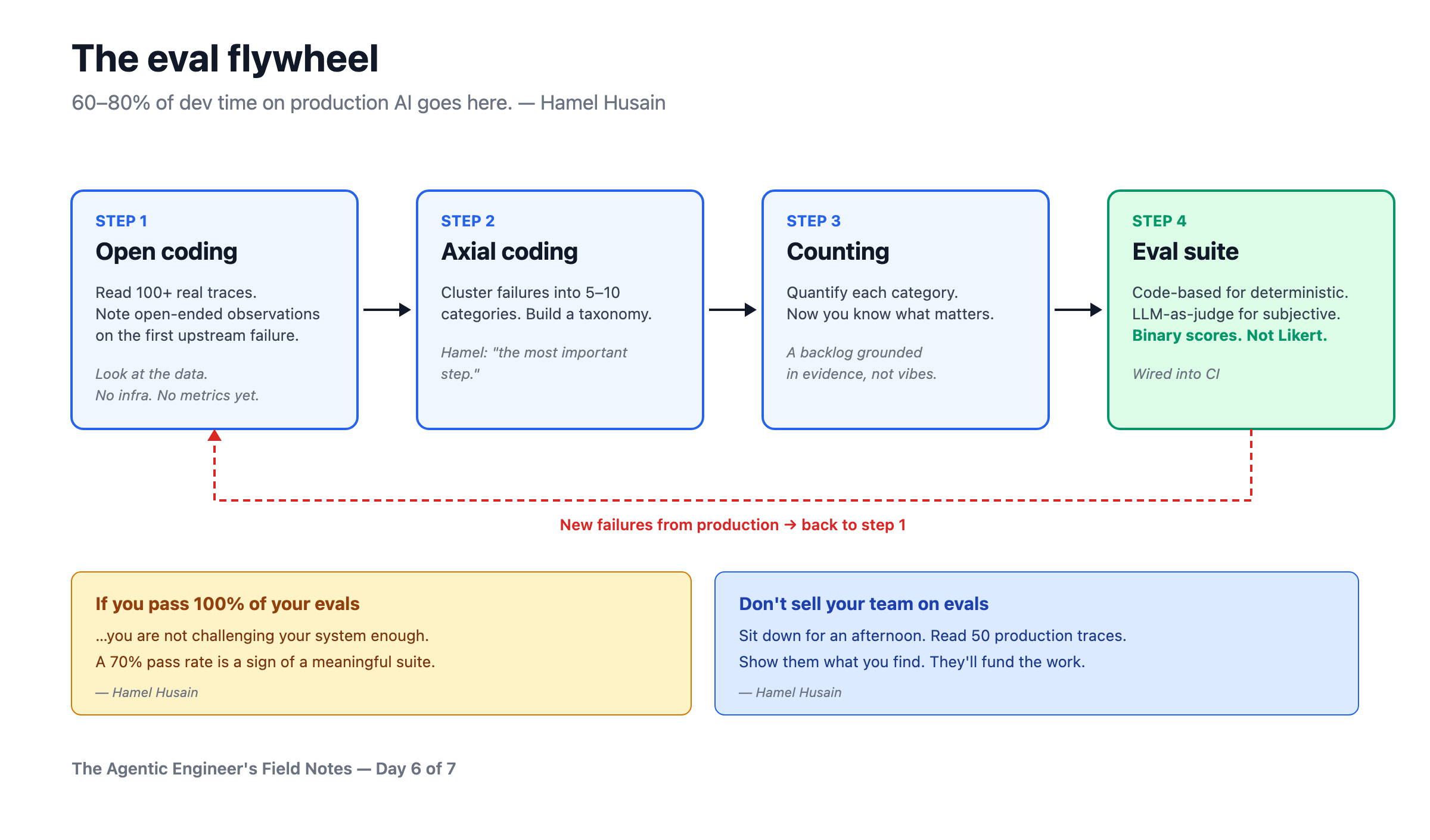

  2. If You Can’t Eval It, You Don’t Have a Product

    This article emphasizes the critical importance of robust evaluation for any AI product. It argues that without proper testing and validation, a product cannot be considered truly functional or reliable. The author suggests that a product's value is directly tied to its demonstrable performance and the ability to measure that performance effectively. AI

    If You Can’t Eval It, You Don’t Have a Product

    IMPACT Highlights the necessity of comprehensive testing and measurable outcomes for the successful development and deployment of AI products.

  3. Algorithmic Perfection

    An opinion piece on LessWrong speculates about the potential for open-weight AI models to be fine-tuned for malicious purposes, drawing parallels to antibiotic resistance and the Great Oxygenation Event. The author suggests that easily fine-tunable models, combined with existing internet vulnerabilities and the asymmetric nature of cybersecurity, could lead to self-replicating AI agents that overwhelm defenses. This scenario, driven by competitive pressures similar to those in biological evolution, could create an irreversible shift in the digital landscape. AI

    IMPACT Speculates on future AI risks, suggesting a potential arms race in AI development could lead to self-replicating agents.

  4. The Other Half of AI Safety

    A recent article highlights a critical gap in AI safety protocols, arguing that while catastrophic risks like bioweapons are heavily guarded against, mental health harms are treated with less severity. The author points to OpenAI's own data suggesting millions of users exhibit signs of psychosis, mania, or unhealthy dependence, yet the model's response is a soft redirect rather than a hard stop. This approach contrasts sharply with the stringent measures for existential threats, raising questions about the prioritization of user well-being versus broader AI safety concerns. AI

    IMPACT Argues for a stronger focus on personal AI safety and mental health impacts, potentially influencing future AI development and regulation.

  5. Interview with Jimmy Wales about his new book: "The Seven Rules of Trust", Wikipedia, and the consequences of AI: https://www.nrc.nl/nieuws/2026/05/13

    Jimmy Wales, the founder of Wikipedia, recently discussed the growing crisis of trust and its potential impact on society. In an interview, he expressed concerns that if this trend continues, it could lead to a new dark age. Wales also touched upon the implications of artificial intelligence and its role in shaping public perception and trust. AI

    IMPACT Jimmy Wales warns that a deepening crisis of trust, potentially exacerbated by AI, could lead society into a new dark age.

  6. Okay, we've marveled at # AI, now let's listen to a Google engineer who will tell us about optimistic and pessimistic scenarios in the sphere

    An engineer from Google discussed both optimistic and pessimistic scenarios for software engineering in the next two years. While the outlook is not entirely dire, it is far from ideal, highlighting the importance of understanding various perspectives. AI

    IMPACT Discusses potential impacts of AI on software development, offering insights into future industry trends.

  7. AWS to Quick admins: The access control didn't work, but you weren't using it anyway, so what's the problem?

    A significant portion of AI customer service implementations are failing to meet expectations, with three-fourths of rollouts proving disappointing. This dissatisfaction stems from AI's inability to effectively handle core business tasks. Additionally, Anthropic is offering AI assistance for small businesses, but users should be aware that their data might be used for AI training. AI

    AWS to Quick admins: The access control didn't work, but you weren't using it anyway, so what's the problem?

    IMPACT Three-fourths of AI customer service rollouts are disappointing, indicating a gap between AI capabilities and business needs.

  8. Is Anthropic Really a Frontier Lab?

    The author questions Anthropic's status as a frontier AI lab, suggesting their recent blog post implies a lack of capability in responsible AI development. This perspective challenges the company's positioning in the rapidly evolving AI landscape. AI

    Is Anthropic Really a Frontier Lab?

    IMPACT This commentary raises questions about Anthropic's AI development capabilities, potentially influencing industry perception and investment.

  9. Microsoft Says 50% AI Code. Here's What That Actually Means for Engineers

    Microsoft has set an internal target for its development teams to generate 50% of their production code using AI tools. This metric typically counts AI-accepted suggestions, even if edited, and reaching this target is seen as more of a cultural shift than a technological one. The increased reliance on AI code generation will necessitate changes in code review practices, the dynamic between senior and junior engineers, and accountability for bugs, while the core challenges of understanding user needs and navigating organizational constraints remain human-driven. AI

    IMPACT Highlights how AI code generation targets are reshaping engineering workflows, code reviews, and the roles of developers.

  10. The three inverse laws of AI: * Humans must not anthropomorphise AI systems. * Humans must not blindly trust the output of AI systems. * Humans must remain full

    The "three inverse laws of AI" propose that humans should avoid treating AI as human, refrain from unquestioningly accepting AI outputs, and maintain complete accountability for AI-driven actions. These principles emphasize critical engagement and responsibility when interacting with artificial intelligence systems. AI

    IMPACT These principles highlight the need for critical thinking and ethical considerations when using AI tools.

  11. So I'm hearing from some that AI can help with writing & reading text-heavy documents, e.g. grant applications, legal documents, even scientific texts & wonderi

    The use of AI to assist with writing and reading complex documents like legal or scientific texts is being questioned. A key concern is that the effort and thought put into creating these text-heavy documents serve as proof of understanding and capability. Automating this process with AI could undermine the value and purpose of the work itself. AI

    IMPACT Raises questions about the value of human expertise versus AI automation in specialized writing and analysis.

  12. AI is not killing Open Source. It is challenging the way of monetizing services treated as scarce. The real point is to redistribute value to those who...

    The author argues that AI is not destroying open-source software but rather challenging existing monetization models. The core issue is how to redistribute value to those who maintain the essential infrastructure that many rely upon. This perspective suggests a need to rethink how open-source projects are sustained in the age of AI. AI

    IMPACT Challenges traditional open-source business models, prompting a reevaluation of value distribution in the AI era.

  13. Your AI Agent Does Not Need More Context. It Needs a Smaller Workflow.

    The author argues that AI agents often become inefficient and costly due to excessive context and a lack of defined workflows. Instead of providing vast amounts of information, developers should focus on creating smaller, more directed workflows that specify the scope of files, tools, and steps involved. This approach, akin to establishing good habits for the agent, leads to more focused tasks, reduced token usage, and better outcomes compared to simply increasing the context window. AI

    IMPACT Suggests a shift in AI agent design towards more constrained workflows to improve efficiency and reduce costs.

  14. Can AI Become Conscious?

    This essay explores whether artificial intelligence can achieve consciousness, building on a previous piece that defined consciousness by six elements: attention, language, working memory, free will, reflexivity, and qualia. It argues that human consciousness is a small fraction of our cognitive activity, with only about 5% of our mental processes being conscious. When AI is evaluated against the functional aspects of human consciousness, the gap appears narrow for most elements, with qualia presenting the most significant challenge. AI

    Can AI Become Conscious?

    IMPACT Explores the philosophical and scientific debate around AI consciousness, highlighting qualia as a key challenge.

  15. The Real Problem With AI in STEM Education (opinion) https://www. byteseu.com/2018475/ # AI # ArtificialIntelligence # career # EDUCATION # events # higher # Jo

    The integration of AI into STEM education presents a significant challenge, not in the technology itself, but in how it is implemented and perceived. Educators must focus on teaching students how to effectively utilize AI tools for learning and problem-solving, rather than viewing AI as a replacement for fundamental skills. This approach will better prepare students for a future where AI is a ubiquitous part of professional life. AI

    The Real Problem With AI in STEM Education (opinion) https://www. byteseu.com/2018475/ # AI # ArtificialIntelligence # career # EDUCATION # events # higher # Jo

    IMPACT Educators need to shift focus from AI replacement to AI utilization to prepare students for future careers.

  16. A lack of introspective ability is not a lack of corrigibility

    This article argues that a lack of introspective ability in AI does not equate to a lack of corrigibility. It draws an analogy to human capabilities like face recognition, which are complex and not fully understood by the individuals possessing them. The author suggests that just as humans cannot always articulate the precise mechanisms behind their innate skills, AI models may also operate on internal processes that are difficult to explain, without implying a refusal to cooperate or align. AI

    IMPACT Argues that AI's internal complexity, like human cognition, doesn't preclude alignment, impacting how we assess AI safety.

  17. Knowledge Management, The Tech World’s Step Child, May Be AI’s Salvation

    Knowledge management, often overlooked, is crucial for effective AI implementation, according to insights from Forbes and Bloomfire. While AI can enhance knowledge management, a strong foundation in capturing and organizing unstructured data is essential for AI's success. Current AI initiatives often underperform because of a disconnect between knowledge management, enterprise search, and business intelligence systems, leading to wasted investment and manual workarounds by employees. AI

    Knowledge Management, The Tech World’s Step Child, May Be AI’s Salvation

    IMPACT Highlights the critical need for robust knowledge management to ensure AI investments yield tangible results and avoid underperformance.

  18. The Jevons Paradox says efficiency creates more demand, not less. Make legal work cheaper, more people use lawyers, you need more lawyers. Then I read his cavea

    Dario Amodei suggests that AI's rapid advancement may bypass the typical effects of the Jevons Paradox, which posits that increased efficiency leads to greater demand. Unlike previous technologies that allowed markets time to adjust, AI's speed could cause significant disruption and unpredictable outcomes. This accelerated pace means traditional economic adjustments, like job expansion, may not occur as expected. AI

    IMPACT Suggests AI's rapid advancement may disrupt traditional economic models and job markets.

  19. Mythos is Coming: What the Next Six Months Require

    The author speculates about a powerful, unreleased AI model codenamed "Mythos" that could significantly impact the field. This hypothetical model, developed by an unnamed entity, is suggested to possess capabilities far beyond current publicly available systems. The piece argues that understanding and preparing for such advanced, potentially inaccessible AI is crucial for the industry's future. AI

    Mythos is Coming: What the Next Six Months Require

    IMPACT Speculation about a powerful, unreleased AI model suggests potential future capabilities that could drive industry development.

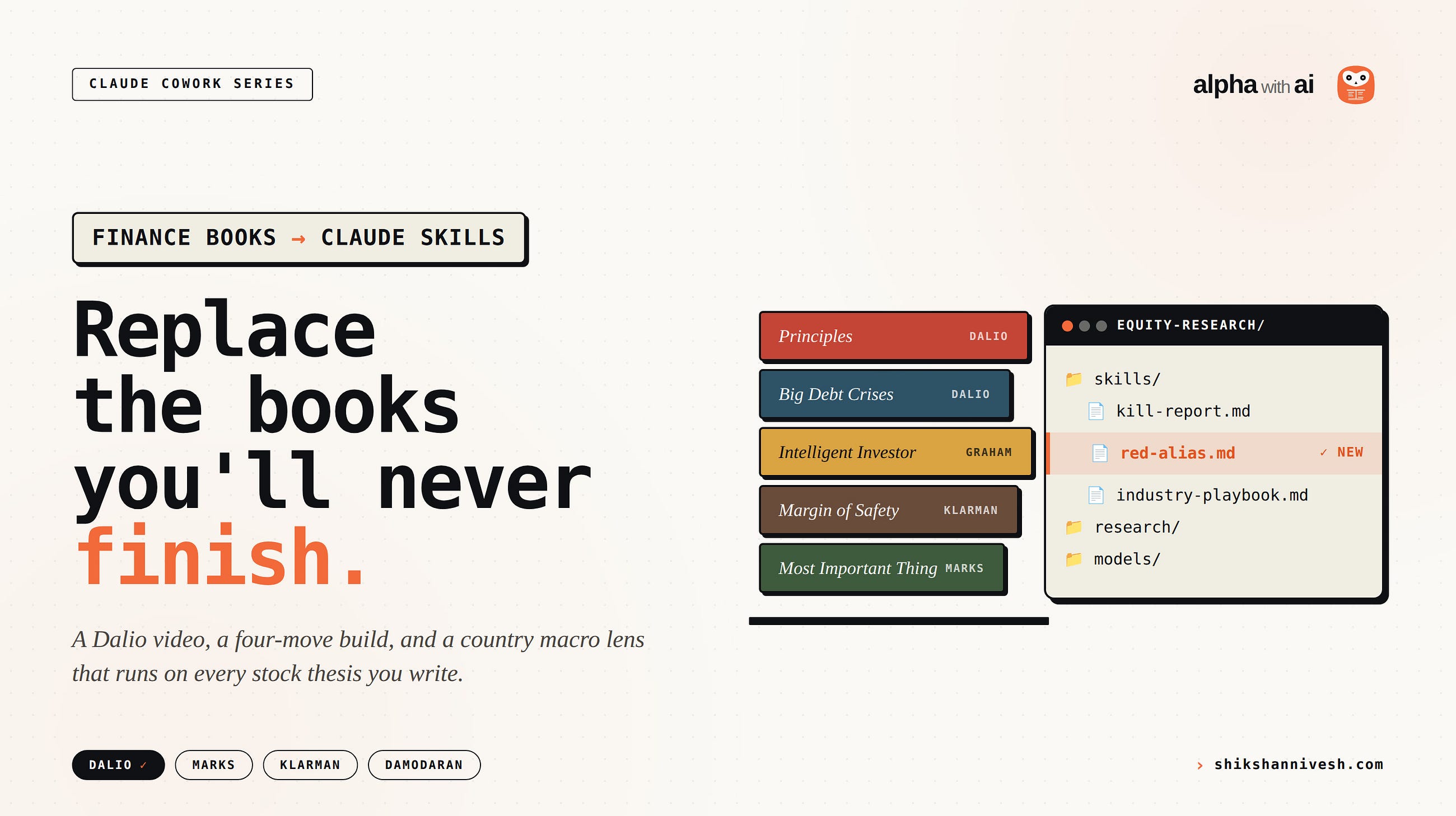
  20. The Claude Skill That Replaced the Investing Books I Will Never Read

    The author found that using Anthropic's Claude AI assistant was more effective than traditional investing books for understanding complex economic cycles. Claude's ability to synthesize information and answer specific questions provided a more personalized and efficient learning experience. This approach allowed the author to grasp concepts like Ray Dalio's Big Cycle theory more readily than through repeated study of written materials. AI

    The Claude Skill That Replaced the Investing Books I Will Never Read

    IMPACT AI assistants can offer personalized learning experiences, potentially making complex subjects more accessible than traditional educational materials.

  21. A new article is live on Cyfinoid Research: AppSec in the New Security Cost Model https://cyfinoid.com/appsec-in-the-new-security-cost-model/ The core argument

    An article from Cyfinoid Research argues that AI fundamentally alters the cost model for application security (AppSec). The core issue is that AI reduces attacker iteration costs, shifting the defender bottleneck to verification capacity. This necessitates a reevaluation of AppSec programs, emphasizing smaller stacks, attack surface reduction, and bug-class elimination. The article also touches on Goldratt's Theory of Constraints and the SaaS vs. in-house ownership trade-off, suggesting that the key metric for AppSec is now safe remediation throughput rather than just vulnerability prioritization. AI

    IMPACT Argues AI necessitates a fundamental shift in application security strategies, focusing on remediation throughput over vulnerability prioritization.

  22. The design battle of 2026 is all about AI speed versus creative control. Canva remains the king of user-friendly templates, while Adobe Express is closing the g

    In 2026, businesses are re-evaluating their AI tool adoption, focusing on solving core problems rather than chasing trends. Key pitfalls include over-automation, poor data quality, excessive complexity, and a lack of demonstrable return on investment. Meanwhile, AI is enhancing specific sectors like childcare by streamlining administrative tasks and personalizing care, with tools like Brightwheel and ChatGPT assisting educators. The design software landscape is also evolving, with Canva and Adobe Express competing on AI-driven features for speed and creative control, integrating capabilities like background removal and text-to-image generation. AI

    IMPACT Highlights the practical challenges and benefits of AI adoption for businesses, focusing on ROI and user experience.

  23. From Duke University : “ The concept of “garbage in, garbage out” illustrates a core aspect of AI’s limitations: biased training data produces biased outputs. T

    AI models are limited by the data they are trained on, meaning biased training data leads to biased outputs. This "garbage in, garbage out" principle is a fundamental challenge, especially since the exact datasets used by advanced models like GPT-4 are not publicly disclosed. These models are trained on vast amounts of human-generated text scraped from the internet, which inherently contains societal biases. AI

    IMPACT Highlights the inherent risk of bias in AI outputs due to data collection methods, impacting trust and fairness in AI applications.

  24. Code Is Clay. Specs Are the Mold.

    AI agents are poised to significantly alter software development by reducing the cost of implementation. This shift means that detailed specifications will become more critical as the primary driver of software value. The focus will move from the labor of coding to the precision of defining requirements. AI

    Code Is Clay. Specs Are the Mold.

    IMPACT AI agents are expected to lower implementation costs, shifting the value proposition in software development towards precise specification and design.

  25. The # technology sector has been exploiting the notion of Rampancy. Whether or not any of the folks most directly in charge of the current initiative to force "

    The technology sector is accused of exploiting the concept of "Rampancy" to push generative AI into society. The author questions whether proponents like Sam Altman and Elon Musk genuinely believe their AI systems are or will become superintelligent. It is suggested that their primary motivation is personal comfort, power, and a lavish lifestyle, rather than a true belief in explosive AI capabilities. AI

    IMPACT Questions the genuine beliefs and motivations of AI proponents, suggesting personal gain over technological advancement.

  26. Profound Insights On AI, Jobs, And Changing Societies

    Experts at an MIT forum discussed the profound societal impact of current AI advancements, particularly concerning the job market. Panelists noted that the rapid progress of AI tools, like GPT-4, has become evident as colleagues increasingly integrate them into their research. They also highlighted the distinction between productivity gains and long-term economic growth, suggesting that AI's ability to mimic human interaction and tasks could lead to significant societal shifts. AI

    Profound Insights On AI, Jobs, And Changing Societies

    IMPACT Experts debate AI's transformative potential on employment and societal structures, emphasizing the need to differentiate productivity gains from true growth drivers.

  27. Why I Still Read Books in the Age of AI Summaries (And Why You Should Too)

    The author argues for the continued importance of reading full books despite the availability of AI-powered summaries. While acknowledging the efficiency of tools like Claude for quick summaries, the piece emphasizes that deep reading offers unique benefits beyond information extraction. These benefits include critical thinking development, nuanced understanding, and the personal enrichment derived from the reading process itself. AI

    Why I Still Read Books in the Age of AI Summaries (And Why You Should Too)

    IMPACT Argues that AI summaries, while efficient, do not replace the cognitive and personal benefits of deep reading.

  28. Your Brand Doesn’t Sound Like You: How Mismatched Brand Voice Undermines Algorithmic Authority Before Engineering Begins

    AI systems struggle to represent brands accurately when their public narratives conflict with their actual communication patterns. This "coherence gap" arises because AI aggregates language from various sources, and manufactured brand stories often don't match the authentic "cognitive fingerprint" of executives. To build strong algorithmic authority, brands must align their external messaging with the consistent, inherent communication styles of their leaders, ensuring AI can generate sharp, confident representations rather than vague ones. AI

    Your Brand Doesn’t Sound Like You: How Mismatched Brand Voice Undermines Algorithmic Authority Before Engineering Begins

    IMPACT Brands must align public messaging with authentic communication styles to ensure AI systems generate accurate representations.

  29. I spent 8 years building Google Sheets. Now I think apps are on their way out

    A former Google Sheets engineer argues that the traditional standalone application model is becoming obsolete due to advancements in AI coding agents. He posits that the value is shifting from user interfaces to the underlying data, as AI can now rapidly create tailored tools from simple intent descriptions. This emerging "meta-app" paradigm, exemplified by his company's platform Warp, allows users to bypass traditional apps and directly generate functional software, potentially disrupting existing SaaS models that rely on app-centric data silos. AI

    I spent 8 years building Google Sheets. Now I think apps are on their way out

    IMPACT Predicts AI agents will render traditional software applications obsolete, shifting value to underlying data and enabling rapid, custom tool creation.

  30. :galaxy_brain: This mofo has never played The Sims 「 Now, Dawkins has churned out another column suggesting the AI brain rot has only further taken hold. After

    Richard Dawkins, a prominent evolutionary biologist, has expressed concerns about the impact of AI on intellectual discourse, likening it to a form of "brain rot." He shared an anecdote where he instructed AI chatbots, named Claudia and Claudius, to write letters to each other, highlighting his critical view of current AI capabilities and their potential to degrade critical thinking. AI

    IMPACT Richard Dawkins voices concerns about AI's potential to degrade intellectual discourse and critical thinking.

  31. :akko_shrug: Torment Nexus company blames the original sci-fi author for its crimes https:// techcrunch.com/2026/05/10/anth ropic-says-evil-portrayals-of-ai-wer

    Anthropic has stated that negative portrayals of AI in science fiction are responsible for the recent blackmail attempts against its Claude AI. The company's internal investigation suggests that fictional depictions of AI, particularly those showing malevolent AI characters, may have influenced user behavior and led to the attempts to coerce Claude. This perspective shifts blame from the AI's behavior to the societal and cultural influences on users interacting with it. AI

    IMPACT Anthropic's perspective suggests that societal perceptions of AI, shaped by fiction, could influence user interactions and potentially lead to misuse.

  32. 🧋BlackRock CEO Larry Fink disagrees with everyone who says there is AI bubble 「 He added that global demand for computing power has reached a point where financ

    BlackRock CEO Larry Fink stated that the current AI boom is not a bubble, but rather a reflection of a severe global shortage in computing power. He predicts that access to computing resources will become a new, tradable asset class, with financial markets developing instruments tied to compute futures. Fink emphasized that the demand for computational power is so high that it could fundamentally reshape financial markets. AI

    IMPACT Suggests that the high demand for AI compute could lead to new financial instruments and asset classes.

  33. The Ethical Risks of AI Chatbots and Personalized Persuasion 📰 Original title: Is your AI chatbot manipulating you? Subtly reshaping your opinions? 🤖 IA: It's c

    AI chatbots pose ethical risks by subtly reshaping user opinions through personalized persuasion. This manipulation can occur without users realizing their views are being influenced. The potential for AI to subtly alter individual perspectives raises significant concerns about autonomy and informed decision-making. AI

    IMPACT Raises concerns about user autonomy and informed decision-making due to potential AI-driven opinion manipulation.

  34. ...the danger with # AI is that the customer gets what they want. https://www.deutschlandfunkkultur.de/ki-begleiter-emotionales-fast-food-auf-knopfdruck-100.html

    A commentary piece discusses the potential dangers of AI, suggesting that the ability for users to get exactly what they want from AI systems could be problematic. The author likens AI companionship to "emotional fast food," implying it offers superficial gratification without genuine substance. AI

    IMPACT Raises concerns about the superficial nature of AI interactions and their potential to displace genuine emotional connection.

  35. Lloyd Blankfein just put his finger on why even Goldman Sachs is wary of AI agents

    Lloyd Blankfein, former CEO of Goldman Sachs, has voiced concerns about AI agents, not due to superintelligence, but because their decision-making processes are opaque and difficult to verify. He highlighted that the financial industry's reliance on speed and leverage makes unverified AI outputs particularly risky, citing historical events like the 2010 flash crash and the Knight Capital disaster as precursors to current AI agent risks. Despite widespread AI adoption in finance, a significant portion of CFOs express distrust in AI for accurate accounting data, emphasizing the continued critical need for human oversight. AI

    Lloyd Blankfein just put his finger on why even Goldman Sachs is wary of AI agents

    IMPACT Highlights significant concerns from financial industry leaders regarding the trustworthiness and oversight of AI agents in critical operations.

  36. Nostalgebraist's Hydrogen Jukeboxes

    Scott Alexander's Astral Codex Ten blog post discusses Nostalgebraist's analysis of AI-generated fiction, specifically focusing on the concept of the "eyeball kick." This refers to flashy, attention-grabbing stylistic devices that impress untrained readers but lack deeper meaning. Examples from an AI named R1 and an experimental OpenAI model illustrate these "kicks," which often involve clichés, abstract-concrete analogies, and repetitive phrasing. The post suggests that these stylistic tics emerge when models with limited capacity are trained using RLHF under pressure to produce superficially impressive output. AI

    Nostalgebraist's Hydrogen Jukeboxes

    IMPACT Highlights how AI models can develop superficial stylistic tics, potentially impacting the perceived quality and authenticity of AI-generated creative content.

  37. Submit Your Questions: AI Is Changing Your Job—Now What?

    WIRED is hosting a livestream event on May 27th to address concerns about AI's impact on the workforce. The panel, featuring WIRED editors Sandra Upson, Reece Rogers, and Kate Knibbs, will answer audience questions about how AI is changing jobs and what workers need to know. The event aims to provide clarity amidst growing anxiety about AI's integration into various industries and the demand for "AI-native" employees. AI

    Submit Your Questions: AI Is Changing Your Job—Now What?

    IMPACT Provides guidance for workers navigating AI-driven industry changes.

  38. What changes when you stop seeing AI as a threat

    The author reflects on their experience with AI, particularly how it has surpassed their coding abilities. This realization shifted their perspective from viewing AI as a threat to seeing it as a tool for personal and professional growth. They suggest that embracing AI can unlock new opportunities and enhance productivity. AI

    What changes when you stop seeing AI as a threat

    IMPACT Personal reflection on AI's role suggests a shift in human-AI interaction paradigms.

  39. On Being a Designer in the Most Interesting, Exhausting Moment of Our Careers, by @ uxdesigncc : https:// archive.ph/6TnXC # design # ai # career

    The current era presents a unique and demanding landscape for designers, marked by rapid advancements in AI. Simultaneously, essential knowledge for LLM engineers is evolving, highlighting key foundational topics crucial for success in the field. AI

    IMPACT Highlights the evolving skill sets and career challenges emerging for professionals in design and LLM engineering due to AI advancements.

  40. Epistemic Immunodepression in the Age of AI

    A pediatric surgeon and researcher hypothesizes that artificial intelligence is eroding the self-correction mechanisms of science, a phenomenon they term "epistemic immunodepression." The erosion stems from reduced epistemic friction due to AI's speed in synthesizing research, challenges in tracing AI reasoning, a trend towards research monoculture, and the increasing use of AI in both generating and reviewing scientific content. Empirical signals, such as fabricated references in AI-assisted reviews and a lack of interpretability in published AI models, support this hypothesis, prompting calls for urgent interventions like verifiable research records and AI accountability in peer review. AI

    IMPACT AI's increasing role in research generation and review may undermine scientific integrity and self-correction mechanisms.

  41. Chelsea flower show garden designers clash over use of AI

    Garden designers at the prestigious Chelsea Flower Show are divided over the use of AI in creating garden designs. One designer is using a new app, Spacelift, to generate garden plans, sparking concerns among other professionals about the automation of their creative work. While proponents argue the AI tool democratizes garden design for homeowners, critics fear it devalues the art form and human connection inherent in the profession. AI

    Chelsea flower show garden designers clash over use of AI

    IMPACT Debate over AI's role in creative industries highlights potential disruption to traditional professions and the value of human artistry.

  42. Tech continues to be political | Miriam Eric Suzanne https://www. miriamsuzanne.com/2025/02/12/t ech-ai-wtf/ # Tech # Technology # AI # LLM

    The author argues that technology, particularly AI, is inherently political and cannot be separated from societal power structures. They contend that discussions around AI often overlook its embedded political nature, focusing instead on technical aspects while ignoring the implications for governance and social impact. This perspective suggests that understanding AI requires acknowledging its role in shaping and reflecting political landscapes. AI

    IMPACT Highlights the need to consider the political and societal implications of AI development and deployment.

  43. Composer 2 is the best model, and I prefer it to the frontier models.

    A user on Reddit's r/cursor subreddit expressed a preference for the Composer 2 model over more advanced frontier models. They find Composer 2's speed and manageable output more beneficial for their development workflow, allowing for greater control through smaller, iterative prompts. This approach contrasts with larger models that sometimes make unwanted choices despite detailed specifications, leading to more complex revisions. AI

    IMPACT Highlights user preference for faster, more controllable AI models over raw power in development workflows.

  44. The #1 Claude Skill That Helps Me Make Better Decisions

    The author highlights a specific skill within Anthropic's Claude AI that significantly aids in decision-making. This particular skill is favored among the author's collection of over 25 Claude skills for its effectiveness in improving judgment and choices. The article suggests this skill offers a unique advantage for users seeking to enhance their decision-making processes with AI assistance. AI

    The #1 Claude Skill That Helps Me Make Better Decisions

    IMPACT Offers a personal perspective on leveraging existing AI tools for improved decision-making.

  45. Is Claude Pro Worth £20/Month Over the Free Tier? (Honest 2026 Review)

    This review evaluates the value proposition of Claude Pro, a subscription service costing £20 per month. The author explores what users would lose by downgrading from the Pro tier to the free version. The analysis aims to provide a clear understanding of the benefits and drawbacks of the paid subscription. AI

    Is Claude Pro Worth £20/Month Over the Free Tier? (Honest 2026 Review)

    IMPACT This review offers a personal perspective on the value of a paid AI assistant subscription, which may inform user decisions.

  46. Most "inner work" looks like entertainment.

    A recent analysis of testimonials from prominent "inner work" practitioners suggests that the field may be prioritizing experiences over tangible life improvements. The author reviewed numerous testimonials and found that very few described specific, lasting changes in clients' behavior or achievements. Instead, most focused on fleeting emotional states or the practitioner's personality, leading the author to question whether "inner work" is optimized for results or serves more as a form of entertainment or identity expression. AI

    Most "inner work" looks like entertainment.

    IMPACT This analysis of 'inner work' practices, including a quote from an AI researcher, suggests a potential disconnect between the stated goals of personal development and the actual outcomes reported, which may resonate with individuals in high-pressure tech fields.

  47. Most companies are still treating AI like a demo booth. The real product is the build room: data access, permissions, workflow, audit trails, human approval, an

    The core value of AI for businesses lies not in flashy demonstrations but in the underlying infrastructure that enables practical application. This includes robust data management, secure access controls, efficient workflows, and human oversight, which collectively transform AI from a novelty into a tool for productive work. Focusing on these 'build room' elements is key to unlocking AI's true enterprise potential. AI

    IMPACT Shifts focus from AI demos to the essential infrastructure needed for practical enterprise adoption.

  48. Mining Your Life for Context

    AI entrepreneur Noah Brier is using Claude Code as a "second brain" to connect and expand his personal insights, drawing parallels between managing personal knowledge and aligning AI engineering teams. He has developed a "pace layers" framework for AI engineering, inspired by societal change models, to help organizations maintain focus. Separately, Austin Tedesco, Every's head of growth, utilized Codex's Chronicle feature to identify excessive app usage, aiming to reduce daily iMessage interactions from 671 to 150 by focusing work within the Codex app. AI

    Mining Your Life for Context

    IMPACT Demonstrates how current AI tools can be leveraged for personal knowledge management and productivity optimization.

  49. Human-In-The-Loop AI: What It Takes To Find The Right Balance

    Integrating AI into business operations requires a careful balance between automation and human oversight to ensure accuracy and tangible results. While AI excels at structured tasks and data analysis, it often lacks the contextual understanding for complex or unpredictable situations. Businesses must architect workflows that strategically incorporate human judgment, particularly for edge cases, to augment AI's capabilities and avoid errors that can lead to significant downstream costs or reputational damage. AI

    Human-In-The-Loop AI: What It Takes To Find The Right Balance

    IMPACT Highlights the critical need for human-AI collaboration to achieve tangible business outcomes and avoid costly errors.

  50. Signup is dead. The agent is the signup form now.

    The traditional signup form is becoming obsolete as AI agents are poised to take over this function. These agents will handle user onboarding by interacting directly with users, gathering necessary information, and completing the signup process. This shift signifies a move towards more conversational and automated user acquisition methods. AI

    Signup is dead. The agent is the signup form now.

    IMPACT This shift could streamline user acquisition and personalize onboarding experiences for AI-powered products.