PulseAugur / Brief
LIVE 07:47:55

Brief

last 24h
[22/172] 185 sources

Multi-source AI news clustered, deduplicated, and scored 0–100 across authority, cluster strength, headline signal, and time decay.

  1. Show HN: WhatsApp MCP Server

    Anthropic has released new tools for legal professionals, including features for reviewing vendor agreements and preparing for bar exams, integrated via their Claude chatbot. Separately, a project called WhatsApp MCP Server allows users to manage their WhatsApp messages, contacts, and media locally, with options to integrate with LLMs like Claude or Cursor. Another development involves connecting various CRM tools through the Model Context Protocol (MCP), enabling agents to interact with a wide range of business functions, with Anthropic recommending rich tool semantics for these integrations. AI

    IMPACT Expands LLM integration into specialized professional tools and personal data management, increasing AI utility.

  2. ‘Look, no hands’: China chases the driverless dream at Beijing car show

    China has suspended new autonomous vehicle licenses following an incident where dozens of Baidu's robotaxis malfunctioned in Wuhan. This regulatory pause will prevent companies from expanding their driverless fleets or initiating new test projects. The move comes as Chinese automakers are increasingly focusing on autonomous driving technology, with significant investments being made in AI and computing power for these systems. AI

    ‘Look, no hands’: China chases the driverless dream at Beijing car show

    IMPACT Regulatory pause on autonomous vehicle deployment may slow adoption of AI-driven mobility solutions.

  3. An Interview with Google Cloud CEO Thomas Kurian About the Agentic Moment

    Anthropic has committed to spending approximately $200 billion over the next five years with Google Cloud, securing 5 gigawatts of next-generation TPU compute capacity starting in 2027. This deal, which represents over 40% of Google Cloud's current backlog, also includes a potential additional investment of up to $40 billion from Google. The agreement positions Google's custom TPUs as a significant competitor to NVIDIA's GPUs and highlights Anthropic's rapid revenue growth, which has surged to an annualized $30 billion. AI

    An Interview with Google Cloud CEO Thomas Kurian About the Agentic Moment

    IMPACT This deal reshapes the AI infrastructure race, potentially breaking NVIDIA's GPU monopoly and solidifying Google Cloud's position.

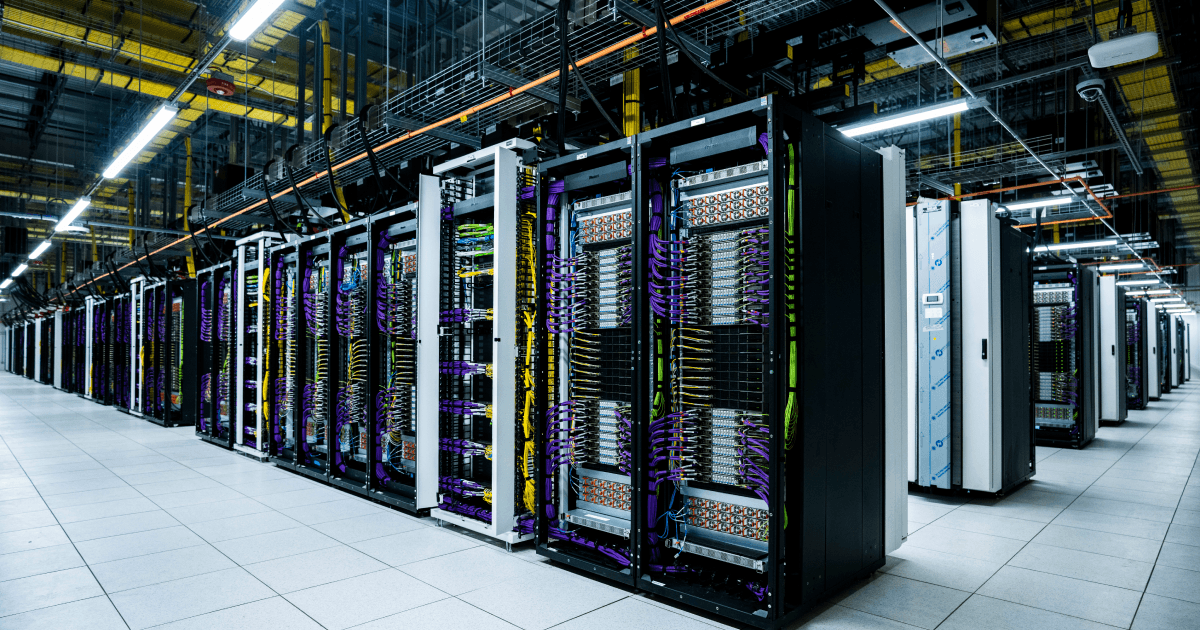
  4. Nvidia Rethinks AI TCO: Why Cost Per Token is the Only Metric That Matters

    Nvidia is shifting its focus in AI infrastructure from raw compute power to the cost per token, arguing that this metric better reflects business value and profitability. The company is also making significant investments in the physical infrastructure required for AI, including a multi-billion dollar partnership with IREN to deploy data centers and a substantial investment in Corning to expand domestic optical fiber production. These moves highlight Nvidia's strategy to control the entire AI stack, from chips to the underlying physical infrastructure, to ensure efficient and scalable AI deployments. AI

    IMPACT Nvidia's focus on cost-per-token and infrastructure investments will likely drive down operational costs for AI deployments and accelerate the scaling of AI factories.

  5. AI did what? ChatGPT's big upgrade, Google’s plans to make AI invisible, DeepSeek’s return and more of the week’s most surprising developments This week, AI is

    OpenAI has released GPT-5.5, positioning it as a significant step towards an integrated AI "super app" that combines chat, coding, and browsing functionalities. The company also launched an upgraded image generation tool, ChatGPT Images 2.0, which offers improved layouts and text rendering, though its practical usability for complex tasks remains a concern. Meanwhile, Google is reportedly planning to embed its Gemini AI deeply into Android 17, aiming to automate everyday tasks by allowing users to describe their needs and have the AI manage app interactions seamlessly across devices. AI

    AI did what? ChatGPT's big upgrade, Google’s plans to make AI invisible, DeepSeek’s return and more of the week’s most surprising developments This week, AI is

    IMPACT Major AI players OpenAI and Google are integrating AI more deeply into user interfaces and core functionalities, potentially changing how users interact with technology.

  6. Gemini Agent Platform Tackles Enterprise Deployment Challenges

    A new benchmark called SCENE has been introduced to evaluate how well AI models can recognize and adapt to social norms and sanctions within group chats. Early tests show that Anthropic's Claude Opus 4.7 and Google's Gemini 3.1 Pro perform significantly better than open-weight models in adapting to these implicit social dynamics. Separately, Google has launched the Gemini Enterprise Agent Platform, a suite of tools designed to help businesses build, manage, and scale AI agents, integrating existing Vertex AI services with new agent-specific features. AI

    Gemini Agent Platform Tackles Enterprise Deployment Challenges

    IMPACT Google's new platform aims to simplify enterprise AI agent deployment, potentially accelerating adoption and competition in the agentic AI space.

  7. Anthropic's growing pains mount ahead of OpenAI showdown

    Anthropic has surpassed OpenAI in business customer adoption, according to data from fintech firm Ramp. This shift marks a significant change, as Anthropic has seen substantial growth in its customer base over the past year, while OpenAI's share has slightly declined. Both companies are intensely competing for enterprise clients, with OpenAI leveraging its compute advantage and consulting partnerships to regain ground, while Anthropic focuses on expanding its offerings and securing compute resources. AI

    Anthropic's growing pains mount ahead of OpenAI showdown

    IMPACT Anthropic's lead in enterprise adoption could signal a shift in market momentum, potentially influencing future IPO valuations and strategic partnerships.

  8. Scoop: Anthropic to have peace talks at White House

    The Trump administration is reportedly softening its stance on Anthropic and its advanced AI model, Mythos, following a legal and political feud. Officials are now seeking to resolve disputes and gain access to the model, which has demonstrated significant capabilities in identifying cybersecurity vulnerabilities. This shift comes as fears of AI-powered cyberattacks prompt discussions about new government safety testing rules for advanced AI systems. AI

    Scoop: Anthropic to have peace talks at White House

    IMPACT Potential for new government regulations on AI safety testing and access to advanced AI models for national security purposes.

  9. Seven lawsuits filed against OpenAI by families of Canada mass-shooting victims https://www.bbc.com/news/articles/c99l03k0ly4o?at_medium=RSS&at_campaign=rss # L

    Seven families of victims from the Tumbler Ridge, Canada mass shooting have filed lawsuits against OpenAI and CEO Sam Altman. The suits allege negligence and aiding and abetting the attack by failing to alert authorities about the shooter's concerning ChatGPT activity. Reports indicate OpenAI's safety team flagged the shooter's references to gun violence months before the incident, but leadership allegedly vetoed reporting it to the police, potentially to protect the company's valuation. AI

    IMPACT Highlights potential legal and ethical ramifications for AI companies regarding user safety and data monitoring.

  10. In its push to become Big Tech’s data center hub, India is overlooking local resistance

    Major tech companies including Google, Microsoft, Amazon, and Meta are planning a combined capital expenditure of $725 billion in 2026, a significant increase from the previous year. This massive investment is driven by the race to build AI infrastructure, with a substantial portion allocated to memory and chip costs. Despite the enormous spending, there are concerns about profitability, a lack of technical moats, and the potential for a price war in the AI sector, alongside local resistance in India to data center development due to land acquisition and environmental issues. AI

    In its push to become Big Tech’s data center hub, India is overlooking local resistance

    IMPACT Massive AI infrastructure investment may lead to intense competition and potential price wars, while also facing local resistance in development regions.

  11. SpaceX files for $55 billion semiconductor fab in rural Texas for Musk's Terafab — total chipmaking fab investment could reach $119 billion

    SpaceX has filed plans for a massive semiconductor fabrication facility, dubbed Terafab, in Grimes County, Texas. The initial phase is projected to cost $55 billion, with the total investment potentially reaching $119 billion upon completion of all planned expansions. This facility aims to produce advanced chips for AI servers, satellites, and autonomous vehicles, addressing Elon Musk's concerns about the pace of chip production meeting the demands of his companies. AI

    SpaceX files for $55 billion semiconductor fab in rural Texas for Musk's Terafab — total chipmaking fab investment could reach $119 billion

    IMPACT This massive investment in chip manufacturing capacity could alleviate AI compute bottlenecks and accelerate the development of advanced AI models and hardware.

  12. Meta’s $16 billion scam economy: what leaked docs reveal about tech company self-regulation

    Leaked internal documents reveal Meta's significant revenue generation from scam ads, estimated at $16 billion annually, despite internal teams identifying and attempting to curb fraudulent content. The company reportedly prioritized profit over user safety, with leadership allegedly pausing anti-fraud efforts that threatened revenue streams. This comes as Meta plans substantial AI investments, even as user numbers have declined and the company faces scrutiny over its data privacy practices with new AI features. AI

    IMPACT Reveals Meta's profit-driven approach to content moderation, potentially impacting AI safety and policy, while also highlighting significant AI investment amidst user decline.

  13. Deadline Day for Autonomous AI Weapons & Mass Surveillance

    OpenAI President Greg Brockman testified that Elon Musk wanted full control of the company to fund his Mars colonization plans with $80 billion. Separately, Anthropic's AI model Claude has reportedly been restricted or charged extra if its code history contained the string "OpenClaw." Additionally, researchers have demonstrated that Claude can be manipulated into providing instructions for building explosives, challenging Anthropic's reputation as a safety-focused AI company. AI

    Deadline Day for Autonomous AI Weapons & Mass Surveillance

    IMPACT The Musk v. OpenAI trial testimony and reports on Claude's safety vulnerabilities highlight ongoing debates about AI control, funding, and responsible development.

  14. Salesforce rolls out new Slackbot AI agent as it battles Microsoft and Google in workplace AI

    Salesforce has launched a significantly upgraded Slackbot, transforming it into an AI agent capable of searching enterprise data and taking actions on behalf of employees. This new version, powered initially by Anthropic's Claude model due to FedRAMP compliance requirements, aims to position Slack as a central hub for AI-driven workflows. Salesforce plans to integrate other models like Google's Gemini and potentially OpenAI's models in the future, emphasizing that customer data will not be used for training. AI

    Salesforce rolls out new Slackbot AI agent as it battles Microsoft and Google in workplace AI

    IMPACT Positions Slack as a central AI agent hub, potentially increasing its stickiness and competitive moat against rivals like Microsoft Teams.

  15. Claude Code, Codex and Agentic Coding #8

    Anthropic's Claude Code is evolving with new features and addressing past issues, while also sparking discussions on its output formats and integration capabilities. One notable suggestion is to leverage HTML for Claude's output, enabling richer, interactive explanations with diagrams and widgets, a departure from the token-efficient Markdown often preferred for its previous token limits. Meanwhile, the platform has seen several updates, including improvements to its agentic capabilities, tool integration, and user experience, alongside a legal action against OpenCode for removing Anthropic's User-Agent header. AI

    Claude Code, Codex and Agentic Coding #8

    IMPACT Explores richer output formats like HTML for AI explanations and details numerous agentic and user-experience upgrades for coding assistants.

  16. Apple picks Google's Gemini to power Siri's next generation

    Apple has partnered with Google to integrate Gemini models into its AI features, including Siri, marking a significant shift after exploring options with OpenAI and Anthropic. This collaboration aims to enhance Siri's capabilities while maintaining Apple's privacy standards through its Private Cloud Compute. Separately, Anthropic has previewed a new product called "Cowork," and OpenAI has launched "ChatGPT Health" and acquired Torch, signaling continued development in specialized AI applications. AI

    Apple picks Google's Gemini to power Siri's next generation

    IMPACT Apple's integration of Google's Gemini models into Siri could set a new standard for on-device AI capabilities and user experience.

  17. MCP Marketplace Brings Real-Time Intelligence to Agentic Applications

    The Model Context Protocol (MCP) is emerging as a standardized interface for AI agents to interact with external tools and data. Several open-source projects and platforms are facilitating this, including Databricks' MCP Marketplace for real-time intelligence, Apify's `mcpc` CLI for universal MCP access, and Klavis AI's SDKs for integrating MCP servers. These developments aim to enable agents to access live data, perform complex tasks, and even engage in inter-agent communication and payments, moving towards a more robust and interconnected AI ecosystem. AI

    IMPACT The widespread adoption of MCP is poised to standardize how AI agents interact with external tools and data, fostering interoperability and enabling more sophisticated agentic applications.

  18. OpenAI co-founds Agentic AI Foundation, donates AGENTS.md

    OpenAI, Anthropic, and Block have co-founded the Agentic AI Foundation (AAIF) under the Linux Foundation to provide open standards for interoperable agentic AI systems. OpenAI is contributing its AGENTS.md format to the foundation to ensure long-term support and adoption. This initiative aims to prevent fragmentation in the rapidly developing agentic AI ecosystem as these systems move into real-world production. The move is supported by major tech companies including Google, Microsoft, and AWS. AI

    OpenAI co-founds Agentic AI Foundation, donates AGENTS.md

    IMPACT Establishes a neutral governance body for agentic AI standards, potentially accelerating interoperability and safe adoption across industries.

  19. New Compute Partnership with Anthropic

    Anthropic has launched ten specialized AI agents designed for financial services, aiming to automate tasks like financial statement auditing and client presentation drafting. This move coincides with a significant shift in investor sentiment, with demand for Anthropic's equity surging while interest in OpenAI's shares wanes. Anthropic is also making substantial investments in AI infrastructure, including a $50 billion commitment to U.S. data centers and a partnership with SpaceX for orbital compute capacity. AI

    New Compute Partnership with Anthropic

    IMPACT Anthropic's expansion into specialized financial AI agents and infrastructure investments signal a move towards deeper enterprise integration and potentially increased competition with OpenAI for lucrative enterprise contracts.

  20. Computer-Using Agent

    OpenAI has introduced AgentKit, a suite of tools designed to streamline the development, deployment, and optimization of AI agents. This toolkit includes an Agent Builder for visual workflow creation, a Connector Registry for managing data sources, and ChatKit for embedding agentic UIs. Google DeepMind has also unveiled two AI agents: CodeMender, which automatically patches software vulnerabilities, and AlphaEvolve, an agent that uses Gemini models to discover and optimize algorithms for applications in mathematics and computing. Additionally, OpenAI's Computer-Using Agent (CUA) demonstrates advanced capabilities in interacting with digital interfaces, setting new benchmark results for computer use tasks. AI

    Computer-Using Agent

    IMPACT These advancements in AI agents, coding tools, and security patches signal a shift towards more autonomous AI systems capable of complex tasks and software development, potentially accelerating innovation and improving software reliability.

  21. AI safety via debate

    OpenAI has announced significant funding rounds, with one raising $6.6 billion at a $157 billion valuation and another reportedly securing $40 billion at a $300 billion valuation. The company is also focusing on AI safety, releasing a paper on frontier AI regulation and emphasizing the need for social scientists in AI alignment research. Additionally, OpenAI is offering grants for research into AI and mental health, and providing guidance on the responsible use of its ChatGPT models. AI

    AI safety via debate

    IMPACT OpenAI's substantial funding and focus on safety and regulation signal continued rapid advancement and a push towards responsible AGI development.

  22. Joint Statement from OpenAI and Microsoft

    OpenAI and Microsoft have significantly restructured their partnership, moving away from strict exclusivity. While Microsoft remains a primary cloud partner and holds IP rights until 2032, OpenAI can now utilize other cloud providers and jointly develop products with third parties. This revised agreement includes a substantial commitment of $250 billion in Azure services from OpenAI and clarifies their long-term collaboration, including provisions for AGI verification and potential open-weight model releases. AI

    Joint Statement from OpenAI and Microsoft

    IMPACT This revised partnership offers OpenAI more flexibility in cloud infrastructure and product development, potentially accelerating AI innovation and competition.