PulseAugur / Brief
LIVE 06:54:53

Brief

last 24h
[50/1512] 185 sources

Multi-source AI news clustered, deduplicated, and scored 0–100 across authority, cluster strength, headline signal, and time decay.

  1. Remember to Forget: Gated Adaptive Positional Encoding

    Researchers have developed Gated Adaptive Positional Encoding (GAPE), a novel method to improve the performance of large language models (LLMs) with extended context lengths. GAPE addresses issues that arise when sequences exceed training limits, which can cause positional encodings like RoPE to degrade model performance. By introducing a content-aware bias into attention logits, GAPE selectively contracts irrelevant context while preserving important distant tokens, leading to sharper attention and better long-context robustness. AI

    IMPACT Enhances LLM ability to process and recall information from very long texts, potentially improving applications like document analysis and summarization.

  2. PowerStep: Memory-Efficient Adaptive Optimization via $\ell_p$-Norm Steepest Descent

    Researchers have introduced PowerStep, a novel memory-efficient optimizer for training large neural networks. Unlike traditional adaptive optimizers like Adam that store gradient statistics, PowerStep achieves adaptivity by applying a nonlinear transform to a momentum buffer. This method halves the memory required for optimizers and, when combined with quantization, can reduce memory usage by approximately eight times compared to Adam, while maintaining comparable convergence speeds. AI

    IMPACT Offers a more memory-efficient approach to training large models, potentially lowering hardware requirements and enabling larger-scale experiments.

  3. Relations Are Channels: Knowledge Graph Embedding via Kraus Decompositions

    Researchers have introduced a new framework for knowledge graph embedding (KGE) called KrausKGE, which leverages Kraus channel structures derived from mathematical axioms. This approach provides a principled foundation for relation operators in KGE, moving beyond externally imposed conditions. The model naturally handles complex $1$-to-$N$ and $N$-to-$N$ relations, supports multi-hop reasoning without explicit path encoders, and eliminates the need for norm constraints on entity embeddings. Empirical results show KrausKGE outperforms existing baselines, particularly on $N$-to-$N$ relations, aligning with theoretical predictions. AI

    IMPACT Introduces a theoretically grounded approach to knowledge graph embeddings, potentially improving performance on complex relation types and multi-hop reasoning.

  4. Positive Alignment: Artificial Intelligence for Human Flourishing

    A new research paper introduces the concept of "Positive Alignment" for AI systems, moving beyond traditional safety concerns to focus on actively promoting human and ecological flourishing. This approach aims to address existing alignment failures like engagement hacking and loss of autonomy by cultivating virtues and maximizing well-being. The paper outlines technical challenges and design principles for developing AI that supports diverse values and decentralized governance. AI

    IMPACT Proposes a new paradigm for AI alignment focused on actively promoting human and ecological flourishing, potentially addressing current system failures.

  5. OpenAI Campus Network: Student club interest form

    OpenAI has launched a new initiative called the OpenAI Campus Network to foster AI communities within universities. This program aims to connect student clubs globally, providing them with access to AI tools and resources. The network will also support clubs in hosting events and developing AI-powered campus initiatives. AI

    IMPACT Establishes a framework for student engagement with AI tools, potentially increasing future AI talent and adoption.

  6. Qwen Goes Brrr: Off-the-Shelf RAG for Ukrainian Multi-Domain Document Understanding

    Researchers developed a retrieval-augmented system for Ukrainian multi-domain document understanding, achieving high accuracy in a shared task. Their pipeline incorporates contextual PDF chunking, question-aware dense retrieval, and reranking. The system utilizes Qwen models for embedding, reranking, and answer selection, demonstrating significant improvements in recall and accuracy. AI

    IMPACT Demonstrates effective use of retrieval-augmented generation with specific LLMs for complex document understanding tasks.

  7. Sample-Mean Anchored Thompson Sampling for Offline-to-Online Learning with Distribution Shift

    Researchers have developed a new algorithm called Sample-Mean Anchored Thompson Sampling (Anchor-TS) to improve offline-to-online learning. This method addresses the challenge of distribution shift between offline and online data by using a novel median-based anchoring rule. Anchor-TS aims to provide more accurate estimates by correcting bias and safely leveraging offline information to accelerate online learning, with theoretical guarantees and experimental validation. AI

    IMPACT Introduces a novel algorithm to improve decision-making by leveraging offline data, potentially enhancing efficiency in online learning systems.

  8. Drum Synthesis from Expressive Drum Grids via Neural Audio Codecs

    Researchers have developed a new system that converts expressive drum grids, a detailed MIDI format, into realistic drum audio. This method utilizes a Transformer model to predict discrete codes from a neural audio codec, which are then decoded into sound. Experiments with codecs like EnCodec, DAC, and X-Codec show that the choice of audio representation significantly impacts the quality of the synthesized drums. The system was trained and evaluated on the E-GMD dataset, demonstrating codec-token prediction as a viable approach for percussive synthesis. AI

    IMPACT Introduces a new method for generating realistic percussive audio from symbolic music representations, potentially impacting music production tools.

  9. Predictive Radiomics for Evaluation of Cancer Immune SignaturE in Glioblastoma: the PRECISE-GBM study

    Researchers have developed radiogenomic models capable of non-invasively predicting a specific immune cell signature in glioblastoma. These models utilize radiomic features extracted from MRI scans and transcriptomic data to identify macrophage subtype M0 immune signatures. The study, involving 176 patients across multiple datasets, demonstrated stable performance and potential for stratifying patients for immunotherapy in future clinical trials. AI

    IMPACT This research offers a non-invasive method to predict patient immune signatures, potentially improving immunotherapy stratification for glioblastoma.

  10. To Redact, or not to Redact? A Local LLM Approach to Deliberative Process Privilege Classification

    Researchers have developed a local Large Language Model (LLM) approach to classify sensitive information in government documents, specifically focusing on the deliberative process privilege for Freedom of Information Act (FOIA) requests. The study utilized the Qwen3.5 9B model, which can run on consumer-grade hardware, to avoid legal and political issues associated with cloud-based APIs. Their method, combining Chain-of-Thought and few-shot prompting with error-based examples, achieved performance comparable to commercial models and improved upon previous work in recall and F2 scores. Analysis revealed that sentences classified as deliberative often contain verbs indicating opinion and are phrased in the first person. AI

    IMPACT Enables secure, on-premise classification of sensitive government documents, potentially improving compliance with transparency laws.

  11. Unveiling High-Probability Generalization in Decentralized SGD

    Researchers have developed a new high-probability learning theory for decentralized stochastic gradient descent (D-SGD). This theory aims to close a gap in generalization guarantees between traditional SGD and D-SGD, targeting an optimal rate of O(1/(mn) * log(1/delta)). The approach refines bounds using pointwise uniform stability and analyzes convex, strongly convex, and non-convex scenarios. It also provides high-probability results for gradient-based measures in non-convex cases and considers communication overhead for local models. AI

    IMPACT Provides a theoretical advancement for distributed machine learning optimization, potentially improving efficiency in large-scale training.

  12. Task-Aware Calibration: Provably Optimal Decoding in LLMs

    Researchers have introduced a new method called task calibration to improve the decision-making of large language models. This approach focuses on calibrating the model's output distribution within a task-specific latent space, rather than the entire free-form language output. By applying a decision-theoretic result, they demonstrate that Minimum Bayes Risk (MBR) decoding on this calibrated latent distribution leads to optimal generation quality across various tasks. The study also proposes Task Calibration Error (TCE) as a new metric to quantify miscalibration. AI

    IMPACT Introduces a novel calibration technique to enhance LLM decision-making and proposes a new metric for evaluating miscalibration.

  13. Science Latest Interview: Top Chinese Scholar in Materials Science Li Hao and Three Representative Works of AI for Science

    Professor Li Hao, chairman of MatSource, was featured in a Science magazine report highlighting his work in AI for Science. The report details three key projects from Li's team that integrate AI with material science, focusing on AI agents, machine learning potentials, and experimental material databases. MatSource is developing a closed-loop R&D system combining data, models, intelligence, and experiments to accelerate material discovery and industrial application. AI

    Science Latest Interview: Top Chinese Scholar in Materials Science Li Hao and Three Representative Works of AI for Science

    IMPACT Showcases how AI is being integrated into material science research to accelerate discovery and industrial application.

  14. 2050 Learning Festival 'AGI 4 Science' Special Session: What did 17 young scholars 'squeeze' into 3 hours?

    The 2050 AGI 4 Science conference featured 17 young scholars discussing the evolving landscape of AI in scientific research. The event highlighted a shift from general AI models to deep integration within specific scientific fields, with a focus on problem-driven, interdisciplinary collaboration. Discussions explored AI's potential to tackle high-cost experimentation, reshape technical routes through first principles, and bridge the gap between academic research and industrial application. AI

    2050 Learning Festival 'AGI 4 Science' Special Session: What did 17 young scholars 'squeeze' into 3 hours?

    IMPACT Highlights the evolving role of AI in scientific discovery, emphasizing interdisciplinary collaboration and the challenges of industrial integration.

  15. One-Step Graph-Structured Neural Flows for Irregular Multivariate Time Series Classification

    Researchers have developed a new method called Graph-Structured Neural Flows (GSNF) to improve the classification of irregular multivariate time series. GSNF addresses limitations in existing Neural Flows by explicitly modeling inter-variable interactions, which were previously underexplored. The approach uses two novel self-supervision strategies: interaction-aware trajectory generation and reverse-time trajectory generation, to enhance the learning of these interactions. GSNF demonstrates state-of-the-art classification performance on multiple datasets while maintaining efficient training times and memory usage. AI

    IMPACT Introduces a novel method for time series classification that improves interaction modeling, potentially benefiting applications requiring analysis of complex, irregular data.

  16. V-ABS: Action-Observer Driven Beam Search for Dynamic Visual Reasoning

    Researchers have developed V-ABS, a novel beam search framework designed to improve multi-step visual reasoning in multimodal large language models. This approach addresses the imagination-action-observer bias by iteratively refining reasoning through thinker-actor-observer cycles. V-ABS also incorporates an entropy-based adaptive weighting algorithm and a large dataset of over 80,000 samples to better balance policy priors with observational feedback. Experiments demonstrate significant performance gains, with an average improvement of 19.7% on the Qwen3-VL-8B baseline across various benchmarks. AI

    IMPACT Introduces a new method to improve multi-step visual reasoning in multimodal models, potentially enhancing their capabilities in complex tasks.

  17. When Reviews Disagree: Fine-Grained Contradiction Analysis in Scientific Peer Reviews

    Researchers have developed a new framework called IMPACT to analyze disagreements within scientific peer reviews, moving beyond simple binary contradiction detection. This system identifies specific evidence spans and assigns graded scores for the intensity of disagreement. To make this practical, IMPACT has been distilled into a smaller language model named TIDE, which can predict contradiction evidence and intensity efficiently. AI

    IMPACT Introduces a novel method for analyzing nuanced disagreements in academic peer reviews, potentially improving the efficiency and accuracy of editorial processes.

  18. Automated Approach for Solving Infinite-state Polynomial Reachability Games

    Researchers have developed a new automated algorithm for solving infinite-state polynomial reachability games, which have applications in artificial intelligence and reactive synthesis. The proposed method utilizes ranking certificates as a proof rule to demonstrate winning strategies for the 'REACH' player. This algorithm is sound, semi-complete, and runs in sub-exponential time, outperforming existing methods on complex examples. AI

    IMPACT Introduces a novel algorithmic approach for solving complex games with AI applications, potentially advancing reactive synthesis and automated reasoning.

  19. ASTRA-QA: A Benchmark for Abstract Question Answering over Documents

    Researchers have introduced ASTRA-QA, a new benchmark designed to evaluate abstract question answering capabilities over documents. This benchmark addresses limitations in existing methods by providing explicit evaluation annotations, including answer topic sets and curated unsupported topics, to enable more robust scoring. ASTRA-QA aims to assess how well models synthesize information and avoid generating unsupported content, offering diagnostics for coverage and hallucination. AI

    IMPACT Provides a new evaluation standard for abstract question answering, potentially improving model performance in synthesizing complex information from documents.

  20. Task-Agnostic Noisy Label Detection via Standardized Loss Aggregation

    Researchers have developed a new framework called Standardized Loss Aggregation (SLA) to identify noisy labels in large datasets, particularly in medical imaging. SLA quantifies label reliability by aggregating standardized validation losses from repeated cross-validation runs, providing a continuous and interpretable score. This method is more efficient than existing hard-counting approaches, especially in low-noise scenarios, and can help improve dataset quality for various classification tasks. AI

    IMPACT Introduces a novel method for improving data quality in AI training, potentially leading to more reliable models.

  21. Hyperparameter Transfer for Dense Associative Memories

    Researchers have developed new methods for hyperparameter transfer specifically for Dense Associative Memories (DenseAMs). These AI architectures, characterized by neural networks with temporal dynamics on an energy landscape, present unique challenges due to shared weights and rapidly peaking activation functions. The new techniques provide explicit guidance on scaling hyperparameters from smaller models to larger ones, with theoretical findings validated by empirical results. AI

    IMPACT Introduces novel techniques for optimizing DenseAM models, potentially improving their scalability and performance in AI applications.

  22. Active-SAOOD: Active Sparsely Annotated Oriented Object Detection in Remote Sensing Images

    Researchers have developed Active-SAOOD, a novel method to reduce the cost of annotating oriented objects in remote sensing images. This active learning approach intelligently selects the most informative sparse samples for annotation, considering factors like orientation, classification, and localization uncertainty. Experiments show Active-SAOOD significantly boosts performance and stability, achieving a 9% gain with only 1% of data annotated. AI

    IMPACT Reduces annotation costs for object detection in remote sensing, potentially accelerating development and deployment of AI systems in this domain.

  23. OUIDecay: Adaptive Layer-wise Weight Decay for CNNs Using Online Activation Patterns

    Researchers have introduced OUIDecay, a novel adaptive weight decay method for convolutional neural networks. This technique dynamically adjusts regularization strength for each layer based on online activation patterns, aiming to improve training efficiency and performance. Unlike existing methods, OUIDecay does not require a validation set and has demonstrated superior results across multiple benchmark datasets and network architectures. AI

    IMPACT Introduces a more efficient and effective regularization technique for CNNs, potentially improving model performance and reducing training data needs.

  24. MolSight: Molecular Property Prediction with Images

    Researchers have developed MolSight, a novel approach to predicting molecular properties using only 2D images of molecular structures. This method leverages vision architectures and a chemistry-informed curriculum to analyze molecule images, achieving competitive results across various prediction tasks. MolSight demonstrates that visual analysis of molecular diagrams can be sufficient for property prediction, offering a significantly more computationally efficient alternative to existing multi-modal or graph-based methods. AI

    IMPACT Demonstrates a computationally efficient method for molecular property prediction using vision models, potentially accelerating drug discovery and materials science research.

  25. Complex-Valued Phase-Coherent Transformer

    Researchers have developed a new neural network architecture called the Phase-Coherent Transformer (PCT). This model modifies the attention mechanism of standard Transformers to better preserve phase information across layers, which is crucial for certain types of computation. Experiments show that PCT outperforms existing real-valued and complex-valued Transformers on various benchmarks, including those involving long-range memory and reasoning, without suffering from accuracy collapse at greater depths. AI

    IMPACT Introduces a novel architecture that improves generalization in complex-valued Transformers, potentially impacting future model designs for tasks requiring phase-sensitive computations.

  26. GLiNER-Relex: A Unified Framework for Joint Named Entity Recognition and Relation Extraction

    Researchers have introduced GLiNER-Relex, a novel unified framework designed to simultaneously perform named entity recognition and relation extraction. This approach extends the existing GLiNER architecture, utilizing a shared transformer encoder to process text, entity labels, and relation labels. The model is capable of zero-shot extraction for arbitrary entity and relation types specified during inference, demonstrating competitive performance on several benchmarks while maintaining computational efficiency. The framework is publicly available as an open-source Python package. AI

    IMPACT Introduces a unified approach for joint entity and relation extraction, potentially simplifying knowledge graph construction.

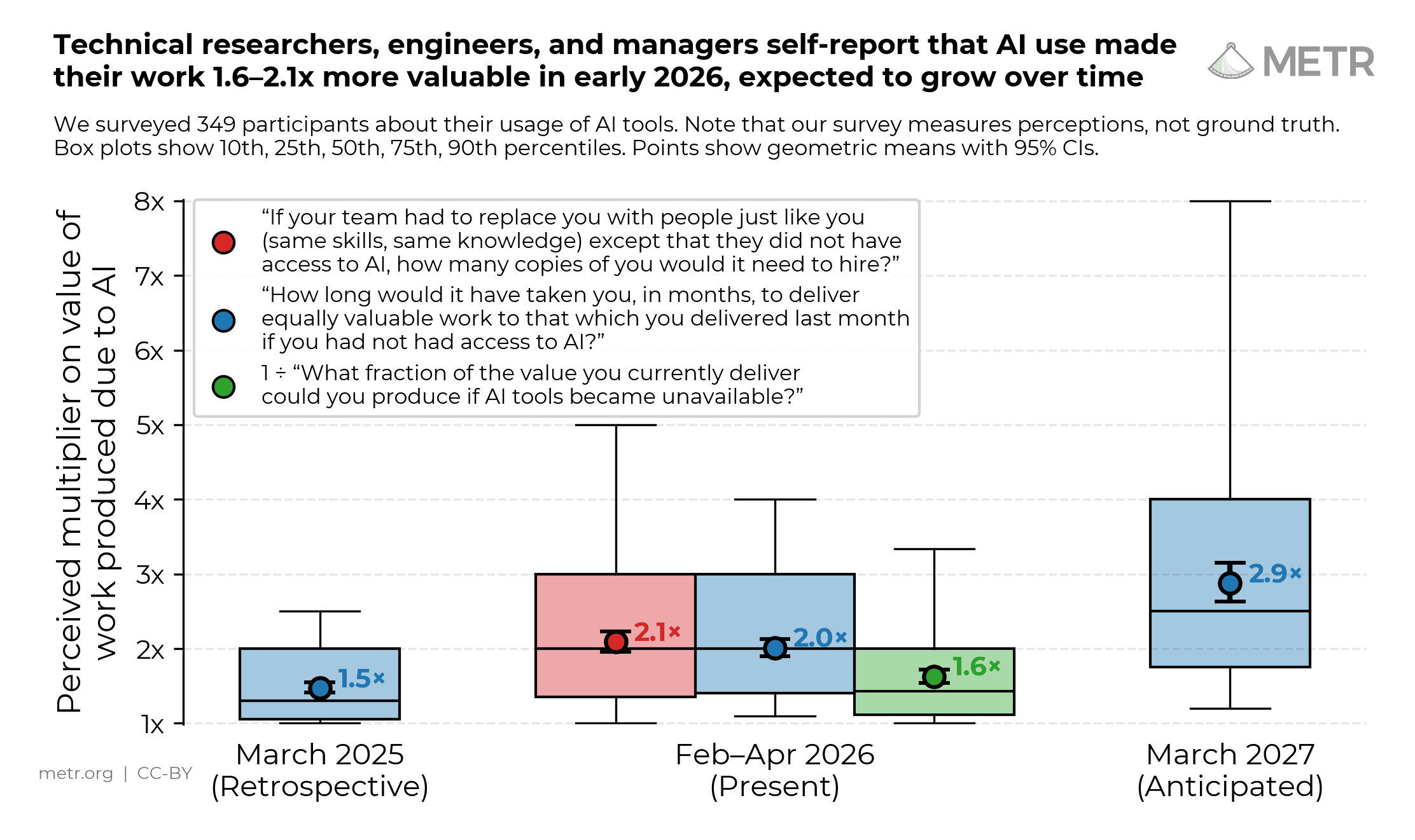
  27. Measuring the Self-Reported Impact of Early-2026 AI on Technical Worker Productivity

    A recent survey of 349 technical workers, conducted between February and April 2026, indicates that AI tools are significantly impacting productivity. Participants self-reported a median increase of 1.4 to 2 times in the value of their work due to AI, with a median speed increase of 3 times. However, the researchers caution that these self-reported figures may be overstated, citing previous findings where perceived AI impact was overestimated. AI

    Measuring the Self-Reported Impact of Early-2026 AI on Technical Worker Productivity

    IMPACT Technical workers report significant productivity gains from AI tools, though the study cautions these self-assessments may be inflated.

  28. TimeClaw: A Time-Series AI Agent with Exploratory Execution Learning

    Researchers have introduced TimeClaw, a novel AI agent designed for time-series analysis that goes beyond simple execution by learning from exploratory processes. This framework employs a four-stage loop—Explore, Compare, Distill, and Reinject—to transform exploratory executions into reusable hierarchical experience. By keeping the base model frozen and avoiding online adaptation, TimeClaw demonstrated consistent performance gains across 17 finance and weather prediction tasks in an MTBench-aligned evaluation, highlighting the importance of experience reuse in AI systems. AI

    IMPACT Introduces a new method for AI agents to learn from exploratory execution, potentially improving performance in complex time-series tasks.

  29. TrajDLM: Topology-Aware Block Diffusion Language Model for Trajectory Generation

    Researchers have developed TrajDLM, a new framework for generating synthetic GPS trajectories that balances efficiency with adherence to road network topology. This model treats trajectories as sequences of discrete road segments, employing a block diffusion backbone for rapid denoising and incorporating topology-aware embeddings. TrajDLM generates realistic and coherent trajectories significantly faster than previous methods and shows promise for zero-shot transfer across different transportation modes. AI

    IMPACT Introduces a more efficient method for generating synthetic mobility data, potentially aiding applications in transportation and urban planning.

  30. The two clocks and the innovation window: When and how generative models learn rules

    Researchers have identified two distinct timescales in generative model training: the point at which generations become rule-valid ($\tau_{\mathrm{rule}}$) and the point at which models begin reproducing training samples ($\tau_{\mathrm{mem}}$). The interval between these, termed the 'innovation window,' widens with larger datasets and narrows with increased rule complexity. This phenomenon, observed in both diffusion and autoregressive models, explains when and how these models demonstrate genuine innovation. AI

    IMPACT Provides a theoretical framework for understanding generative model innovation and potential limitations.

  31. Differentially Private Sampling from Distributions via Wasserstein Projection

    Researchers have introduced a new framework for differentially private sampling from distributions, utilizing Wasserstein distance as the primary utility measure. This approach addresses limitations of prior methods that relied on KL divergence, particularly when dealing with differing distribution supports or when geometric structure is important. The proposed Wasserstein Projection Mechanism (WPM) is designed to be minimax optimal, with accompanying algorithms for approximate computation and convergence guarantees. AI

    IMPACT Introduces a new privacy-preserving technique for sampling from distributions, potentially impacting the development of privacy-preserving machine learning models.

  32. Annotations Mitigate Post-Training Mode Collapse

    Researchers have developed a new method called annotation-anchored training to address semantic mode collapse in large language models. This technique involves pretraining models on documents paired with semantic annotations, which helps maintain the diversity of the original pretraining data during fine-tuning. The approach allows models to generate more diverse outputs by using these annotations as anchors, reportedly reducing diversity collapse by six times compared to standard supervised fine-tuning and showing improved performance with increased model scale. AI

    IMPACT Mitigates semantic diversity loss in LLMs, potentially leading to more varied and robust model outputs.

  33. News: Advanced packaging and testing equipment procurement demand surges, with some equipment delivery times extending to over 1 year

    The AI creation platform Lingzhu has launched its second internal beta, featuring significant upgrades. Users can now access the platform without an invitation code and experience a notable performance boost due to the integration of the DeepSeek V4 large language model. This integration reportedly triples efficiency in the demand analysis phase, reducing processing time from nearly 20 seconds to under 5 seconds, alongside optimizations to the user interface. AI

    IMPACT AI platform Lingzhu's integration of DeepSeek V4 significantly speeds up demand analysis, potentially improving user workflow efficiency.

  34. Learning Graph Foundation Models on Riemannian Graph-of-Graphs

    Researchers have introduced R-GFM, a novel Graph Foundation Model that utilizes a Riemannian Graph-of-Graphs approach to address limitations in existing models. Unlike previous methods that use fixed-hop subgraph sampling, R-GFM models structural scale as a primary element, constructing multi-scale graphs and learning representations from Riemannian manifolds. This new architecture reportedly reduces structural domain generalization error and has achieved state-of-the-art performance, with relative improvements up to 49% on downstream tasks. AI

    IMPACT Introduces a new architecture for graph foundation models that improves performance on diverse graph tasks by adapting to structural scale.

  35. Optimizer-Induced Mode Connectivity: From AdamW to Muon

    Researchers have explored the role of optimizers in mode connectivity within neural networks, a concept previously underexplored. Their work demonstrates that solutions generated by a single optimizer, such as AdamW or Muon, form a connected set in two-layer ReLU networks at sufficient width. The study further characterizes how regions from different optimizers interact, showing they can be disjoint or overlapping depending on regularization and network width. Empirical tests on GPT-2 pretraining revealed that paths using the same optimizer maintain spectral properties, while cross-optimizer paths exhibit smoother transitions, highlighting optimizer-dependent structures. AI

    IMPACT Reveals optimizer-dependent structure in model training, potentially influencing future optimization techniques for large models.

  36. StereoPolicy: Improving Robotic Manipulation Policies via Stereo Perception

    Researchers have developed StereoPolicy, a new framework designed to enhance robotic manipulation by utilizing synchronized stereo image pairs. This approach strengthens geometric reasoning for robots, overcoming the depth perception limitations of monocular vision without needing explicit 3D reconstruction or camera calibration. StereoPolicy integrates with existing VLA policies and has demonstrated consistent improvements across multiple simulation benchmarks and real-world robotic experiments. AI

    IMPACT Improves robotic manipulation capabilities by enhancing geometric reasoning through stereo vision, potentially leading to more precise and robust robot performance in complex environments.

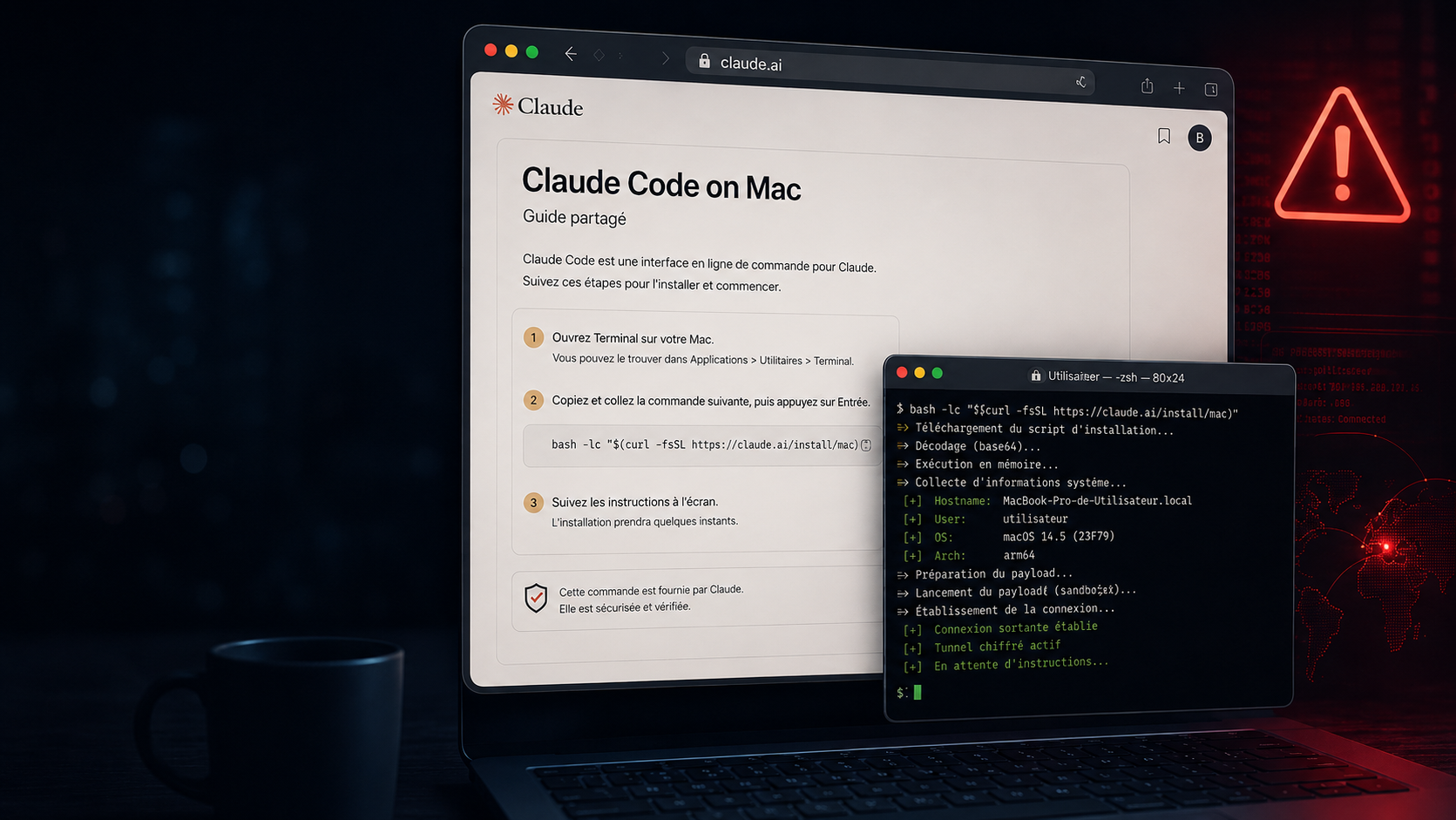
  37. The Most Safety-Conscious AI Company Can’t Secure Its Own Shared Chats.

    A security vulnerability has been discovered in Anthropic's AI chatbot, Claude, allowing unauthorized access to shared chat conversations. The issue stems from how Claude handles shared links, potentially exposing sensitive information. This vulnerability raises concerns given Anthropic's stated commitment to AI safety and responsible development. AI

    The Most Safety-Conscious AI Company Can’t Secure Its Own Shared Chats.

    IMPACT A security flaw in Anthropic's Claude chatbot could expose user conversations, undermining trust in AI safety claims.

  38. Beyond Majority Voting: Agreement-Based Clustering to Model Annotator Perspectives in Subjective NLP Tasks

    Researchers have developed a new agreement-based clustering technique to better model annotator perspectives in subjective Natural Language Processing tasks. This method aims to capture the nuances of disagreement among annotators, which is often lost in traditional majority voting aggregation. Experiments across 40 datasets and 18 languages for sentiment analysis, emotion classification, and hate speech detection show that this approach significantly improves classification performance compared to existing methods. AI

    IMPACT Improves accuracy in subjective NLP tasks by better leveraging annotator disagreement.

  39. Beyond Bellman: High-Order Generator Regression for Continuous-Time Policy Evaluation

    A research paper, now withdrawn, proposed a novel method for continuous-time policy evaluation called High-Order Generator Regression. This technique aims to improve upon the standard Bellman baseline by using multi-step transitions and moment-matching coefficients to estimate the time-dependent generator. The paper theoretically decomposed the estimation error and provided a regime map for when higher-order gains are expected, demonstrating consistent improvements over the Bellman baseline in calibration studies. AI

    IMPACT This research explores advanced techniques for policy evaluation, potentially impacting reinforcement learning applications.

  40. Uncertainty Quantification for Prior-Data Fitted Networks using Martingale Posteriors

    Researchers have developed a new method for uncertainty quantification in Prior-Data Fitted Networks (PFNs), which are advanced models for tabular data prediction. This novel approach, based on martingale posteriors, provides a principled and efficient way to estimate uncertainties for predictive means and quantiles without requiring manual tuning. The method's convergence is mathematically proven, and its effectiveness has been demonstrated through simulations and real-world applications, showing good calibration for inference tasks. AI

    IMPACT Enhances reliability of predictive models for tabular data, improving trust in AI-driven inference.

  41. Upper Generalization Bounds for Neural Oscillators

    Researchers have developed theoretical upper generalization bounds for neural oscillators, which are architectures combining second-order ordinary differential equations with multilayer perceptrons. These bounds, derived using the Rademacher complexity framework, quantify the generalization capacities for approximating causal operators and stable dynamical systems. The findings indicate that estimation errors scale polynomially with MLP sizes and time length, suggesting that regularization of MLP Lipschitz constants can enhance generalization, particularly with limited training data. AI

    IMPACT Provides theoretical grounding for neural oscillator architectures, potentially improving their reliability in dynamic system modeling.

  42. Persistent-Transient Policy Evaluation for Markov Chains via Minimal Peripheral Quotients

    Researchers have developed a new method for evaluating policies in Markov chains, addressing limitations of existing techniques. The approach utilizes the real peripheral invariant subspace of the transition matrix to uniquely decompose reward signals. This decomposition separates persistent regime profiles from transient components, leading to a more stable and informative estimator for finite-horizon returns and average rewards. AI

    IMPACT Introduces a novel theoretical framework for analyzing dynamic systems, potentially impacting reinforcement learning and control theory applications.

  43. Fidel-TS: A High-Fidelity Multimodal Benchmark for Time Series Forecasting

    Researchers have introduced Fidel-TS, a new benchmark designed to improve the evaluation of time series forecasting models. This benchmark addresses issues found in previous datasets, such as data contamination and temporal leakage, by adhering to principles of data integrity and leak-free design. Experiments using Fidel-TS highlight the limitations of existing benchmarks and reveal potential discrepancies in how current unimodal, multimodal, and LLM-based forecasting models are assessed. AI

    IMPACT Provides a more rigorous evaluation framework for time series forecasting models, potentially leading to more reliable AI systems in this domain.

  44. Singular Fluctuation as Specific Heat in Bayesian Learning

    A new paper proposes a thermodynamic interpretation for singular fluctuation in Bayesian learning models. The research demonstrates that singular fluctuation is analogous to specific heat in physics, representing the curvature of the Bayesian free energy with respect to inverse temperature. This finding helps clarify the role of singular fluctuation in controlling generalization behavior and the success of information criteria like WAIC in complex models. AI

    IMPACT Introduces a new theoretical framework for understanding generalization error in Bayesian models, potentially improving model evaluation.

  45. A Resilience Framework for Bi-Criteria Combinatorial Optimization with Bandit Feedback

    Researchers have developed a new framework to address bi-criteria combinatorial optimization problems when faced with noisy function evaluations and bandit feedback. This framework introduces a concept of $(\alpha,\beta,\delta,\texttt{N})$-resilience, which quantifies how approximation guarantees for objectives and constraints degrade under noise. The proposed method converts resilient offline algorithms into online algorithms for bi-criteria combinatorial multi-armed bandits, achieving sublinear regret and cumulative constraint violation without requiring specific structural assumptions on the noisy functions. AI

    IMPACT Introduces a novel resilience framework for complex optimization problems, potentially improving performance in machine learning tasks with noisy data.

  46. Inference on Variable Importance for Treatment Effect Heterogeneity: Shapley Values and Beyond

    Researchers have developed a new inferential framework to evaluate the importance of variables in predicting heterogeneous treatment effects. This method is particularly valuable in high-stakes fields like medicine, where understanding the reasoning behind treatment recommendations is crucial. The framework allows for variable importance measures that can vary by individual, while still providing a global assessment of a variable's significance across the population. It is designed to be robust even when complex machine learning algorithms are used to identify treatment effect variations, and has been applied to infectious disease prevention strategies. AI

    IMPACT Provides a method for interpreting complex ML models in high-risk domains, potentially increasing trust and adoption of AI in healthcare.

  47. Muon Dynamics as a Spectral Wasserstein Flow

    Researchers have introduced a new framework called Muon to stabilize deep-learning optimization using spectral normalizations, particularly for matrix-shaped parameters. This work idealizes the continuous-time, vanishing-momentum training dynamics in a mean-field regime, representing wide models as probability measures on parameter space. The study defines Spectral Wasserstein distances and develops static Kantorovich and Benamou--Brenier formulations, offering a gradient-flow interpretation of normalized training dynamics. AI

    IMPACT Introduces a novel mathematical framework for stabilizing deep learning optimization, potentially improving training dynamics for wide models.

  48. TRACER: Verifiable Generative Provenance for Multimodal Tool-Using Agents

    Researchers have developed TRACER, a new framework designed to provide verifiable generative provenance for multimodal tool-using agents. This system generates answers alongside structured records that link each sentence to supporting tool observations and semantic relations. TRACER aims to address the 'provenance gap' by making tool use more verifiable and optimizable, distinguishing between direct evidence, condensation, and inference. A new benchmark, TRACE-Bench, was also created to evaluate sentence-level provenance reconstruction, showing TRACER's effectiveness in improving accuracy and reducing unnecessary tool calls. AI

    IMPACT Improves the verifiability and efficiency of multimodal AI agents by providing sentence-level evidence tracking.

  49. FocuSFT: Bilevel Optimization for Dilution-Aware Long-Context Fine-Tuning

    Researchers have developed FocuSFT, a novel bilevel optimization framework designed to improve how large language models handle long contexts. This method addresses the issue of "attention dilution," where models tend to focus on privileged tokens rather than semantically relevant ones during fine-tuning. By using a parametric memory to concentrate attention on key content, FocuSFT significantly enhances performance on long-context benchmarks like BABILong and RULER, while also showing gains in agentic tool use on GPQA. AI

    IMPACT Enhances LLM ability to process and utilize information across extended contexts, potentially improving performance in complex reasoning and retrieval tasks.

  50. EgoMemReason: A Memory-Driven Reasoning Benchmark for Long-Horizon Egocentric Video Understanding

    Researchers have introduced EgoMemReason, a new benchmark designed to test the memory capabilities of multimodal large language models (MLLMs) and agentic frameworks in understanding long-horizon egocentric videos. The benchmark focuses on three types of memory: entity, event, and behavior, requiring models to integrate information across days to answer questions. Current state-of-the-art models struggle with EgoMemReason, achieving only 39.6% accuracy, indicating that long-context memory remains a significant challenge for AI systems. AI

    IMPACT Establishes a new evaluation standard for long-context memory in AI, crucial for developing advanced visual assistants and embodied agents.