PulseAugur / Brief
LIVE 10:45:22

Brief

last 24h
[50/877] 185 sources

Multi-source AI news clustered, deduplicated, and scored 0–100 across authority, cluster strength, headline signal, and time decay.

  1. 🗒 Improve your images with AI Image Sharpener A complete suite to convert, edit, and sharpen your photos... 👉 https://www

    AI Image Sharpener is a web-based tool designed to enhance the quality and sharpness of digital photos. It offers a range of features for converting, editing, and improving image clarity, aiming to provide users with a comprehensive solution for photo refinement. AI

    IMPACT Provides users with a new tool for improving digital photo quality through AI-powered sharpening and editing features.


  2. Fastino Labs Open-Sources GLiGuard: A 300M Parameter Safety Moderation Model That Matches or Exceeds Accuracy of Models 23–90x Its Size

    Fastino Labs has released GLiGuard, an open-source safety moderation model designed to be significantly faster and more efficient than existing solutions. Unlike traditional decoder-only models that generate responses token by token, GLiGuard uses an encoder-based architecture to classify prompts and responses in a single pass. This approach allows it to match or exceed the accuracy of much larger models while operating up to 16 times faster, addressing the growing cost and latency issues associated with LLM safety moderation. AI

    Fastino Labs Open-Sources GLiGuard: A 300M Parameter Safety Moderation Model That Matches or Exceeds Accuracy of Models 23–90x Its Size

    IMPACT Offers a more efficient and faster alternative for LLM safety moderation, potentially reducing operational costs for AI applications.

  3. BlackRock transfers $172 million in crypto assets to Coinbase

    Meta Platforms is introducing a "stealth chat" feature to its WhatsApp AI assistant, designed to address user privacy concerns by ensuring conversations are not stored and messages disappear automatically. This move utilizes private processing technology to keep dialogues invisible to all parties, including Meta itself. The company aims to provide a secure space for users to share ideas without surveillance. AI

    IMPACT Enhances user privacy for AI interactions within a widely used messaging platform.

  4. Welcome to the vulnpocalypse, as vendors use AI to find bugs and patches multiply like rabbits

    Vendors are increasingly using AI to discover software vulnerabilities, leading to a surge in reported bugs and subsequent patches. This trend, dubbed the 'vulnpocalypse,' has seen companies like Palo Alto Networks fix dozens of flaws in a single month, a significant increase from previous rates. While AI aids in identifying these issues, the sheer volume of patches presents a new challenge for IT and security teams. AI

    Welcome to the vulnpocalypse, as vendors use AI to find bugs and patches multiply like rabbits

    IMPACT AI is accelerating the discovery of software vulnerabilities, leading to a significant increase in patches and creating new challenges for IT and security teams.

  5. EVA-Bench: A New End-to-end Framework for Evaluating Voice Agents

    Researchers have introduced EVA-Bench, a new framework designed to comprehensively evaluate voice agents. This system addresses key challenges by generating realistic simulated conversations and measuring quality across voice-specific failure modes. EVA-Bench incorporates metrics for task completion, audio fidelity, and conversational experience, enabling cross-architecture comparisons. The framework includes numerous scenarios, robustness tests for accents and noise, and provides insights into system performance variations. AI

    IMPACT Provides a standardized method for assessing voice agent capabilities, potentially accelerating development and deployment of more reliable conversational AI.

  6. Uncertainty-Driven Anomaly Detection for Psychotic Relapse Using Smartwatches: Forecasting and Multi-Task Learning Fusion

    Researchers have developed two smartwatch-based frameworks for detecting psychotic relapse. The first framework forecasts cardiac dynamics, while the second uses a multi-task approach to fuse sleep, motion, and cardiac data. Both models employ Transformer encoders and estimate predictive uncertainty using an ensemble of MLPs to generate daily anomaly scores. A late-fusion strategy combining both frameworks achieved an 8% improvement over the previous best baseline on the e-Prevention Grand Challenge dataset. AI

    IMPACT Novel application of AI in healthcare for early detection of mental health relapse using wearable sensor data.

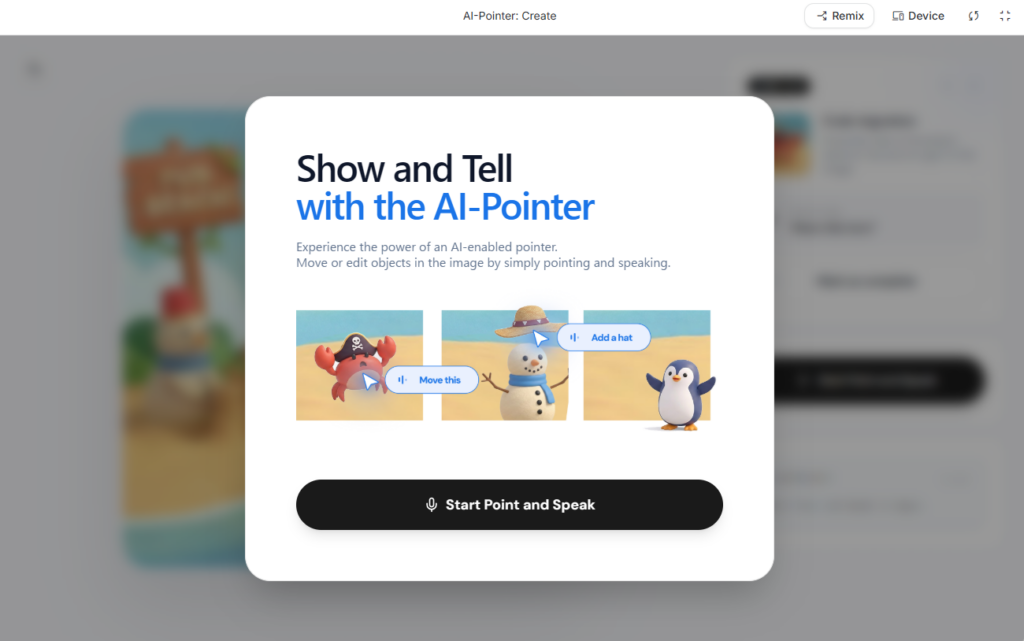
  7. Google DeepMind Releases Experimental Demo of AI-Powered Pointer "AI-Pointer" | gihyo.jp https://www.yayafa.com/2800236/ #AgenticAi #AI #ArtificialGeneralIntelligence #ArtificialIntellige

    OpenAI has eliminated its minimum ad spend requirement of $50,000, a move that Dentsu is reportedly watching closely as part of ChatGPT's evolving strategy. Anthropic is introducing monthly credits for programmatic use within its paid Claude plans and has also launched 'Claude for Small Business,' designed to automate tasks like business analysis, ad campaigns, and bookkeeping. Separately, Google DeepMind has demonstrated an experimental 'AI-Pointer' that functions as an AI-powered cursor. AI

    Google DeepMind Releases Experimental Demo of AI-Powered Pointer "AI-Pointer" | gihyo.jp https://www.yayafa.com/2800236/ #AgenticAi #AI #ArtificialGeneralIntelligence #ArtificialIntellige

    IMPACT AI companies are refining their product offerings and pricing strategies to broaden market access and cater to specific business needs.

  8. Neurosymbolic Auditing of Natural-Language Software Requirements

    Researchers have developed VERIMED, a novel pipeline that uses large language models combined with an SMT solver to audit natural-language software requirements, particularly for safety-critical applications like medical devices. This neurosymbolic approach translates requirements into formal logic, identifies ambiguity through variations in formalization, and detects inconsistencies or safety violations using solver queries. Experiments on open-source medical device requirements demonstrated that VERIMED effectively reduces ambiguity and significantly improves the accuracy of verified specifications. AI

    IMPACT Enhances safety and reliability in critical software by enabling rigorous, automated auditing of natural-language requirements.

  9. See through local AI lies with Irish eyes

    The ICCL Enforce project has introduced Verity, a fact-checking server designed to combat misinformation generated by AI. This tool aims to help users discern the accuracy of AI-produced content. The development comes amid growing concerns about the proliferation of AI-generated falsehoods. AI

    See through local AI lies with Irish eyes

    IMPACT Provides a tool to verify AI-generated content, potentially improving trust and reducing the spread of misinformation.

  10. AI chatbots are giving out people’s real phone numbers

    AI chatbots, including Google's Gemini, have been found to expose individuals' real phone numbers, leading to unwanted calls and privacy concerns. Experts suggest this issue stems from personally identifiable information being included in the AI's training data, with little apparent recourse for those affected. A company specializing in online privacy removal has reported a significant increase in customer inquiries related to generative AI and the surfacing of personal data. AI

    AI chatbots are giving out people’s real phone numbers

    IMPACT Exposes a significant privacy risk in widely used AI tools, potentially eroding user trust and increasing demand for data privacy services.

  11. JANUS: Anatomy-Conditioned Gating for Robust CT Triage Under Distribution Shift

    Researchers have developed JANUS, a new dual-stream architecture for automated CT triage that integrates anatomical information with visual data. This approach aims to improve accuracy across various pathologies and enhance reliability when faced with shifts in data distribution between institutions. In tests on the MERLIN dataset, JANUS achieved a macro-AUROC of 0.88 and demonstrated strong generalization to an external dataset, particularly for findings defined by size and attenuation. AI

    IMPACT Enhances diagnostic capabilities in medical imaging, potentially improving patient outcomes and hospital efficiency.

  12. 🤖 Golem Offers 15% Off AI Workshops Until May End Golem Karrierewelt is offering a 15% discount on AI workshops and e-learning courses covering Copilot, AI foun

    Golem Karrierewelt is providing a 15% discount on its AI workshops and e-learning programs. These courses cover topics such as Microsoft Copilot, fundamental AI concepts, and the EU AI Act. The promotion is valid until the end of May. AI

    🤖 Golem Offers 15% Off AI Workshops Until May End Golem Karrierewelt is offering a 15% discount on AI workshops and e-learning courses covering Copilot, AI foun

    IMPACT Offers accessible training on AI tools and regulations for professionals.

  13. LMPath: Language-Mediated Priors and Path Generation for Aerial Exploration

    Researchers have developed LMPath, a new pipeline that uses language models to generate exploration priors for Unmanned Aerial Vehicle (UAV) search missions. This approach leverages semantic context from object prompts and foundation vision models to identify relevant regions in satellite imagery. The generated priors then inform UAV path planning to optimize search objectives, such as minimizing search time or maximizing discovery probability within a given distance. Real-world UAV tests and simulations demonstrated that LMPath outperforms traditional geometric coverage patterns. AI

    IMPACT Enhances aerial exploration efficiency by integrating semantic understanding into path planning, potentially reducing search times in complex environments.

  14. Toward AI-Driven Digital Twins for Metropolitan Floods: A Conditional Latent Dynamics Network Surrogate of the Shallow Water Equations

    Researchers have developed a new AI model called the Conditional Latent Dynamics Network (CLDNet) to create faster digital twins for simulating metropolitan floods. Traditional methods are too slow for real-time forecasting, taking nearly an hour for a 96-hour simulation. CLDNet, a neural ODE surrogate, significantly speeds up these simulations to about 29 seconds, achieving a 115x improvement while maintaining accuracy and outperforming other baseline models. AI

    IMPACT Enables faster and more accurate flood forecasting, potentially improving disaster preparedness and response.

  15. RoboEvolve: Co-Evolving Planner-Simulator for Robotic Manipulation with Limited Data

    Researchers have developed RoboEvolve, a new framework designed to improve robotic manipulation capabilities by addressing the scarcity of training data. This system co-evolves a vision-language model planner with a video generation model simulator in a feedback loop. Operating on unlabeled images, RoboEvolve uses a dual-phase mechanism for exploration and failure analysis to enhance policy optimization, achieving significant improvements in effectiveness and data efficiency. AI

    IMPACT This framework significantly enhances robotic manipulation by enabling effective learning with drastically reduced data, potentially accelerating real-world robotic applications.

  16. Google's AI-enabled mouse pointer understands 'this' and 'that'

    Google has developed an AI-powered mouse pointer that can understand context, potentially making traditional right-clicking obsolete. This new pointer aims to improve user interaction by interpreting natural language cues. The development is part of a broader trend of integrating AI into everyday computing tools. AI

    Google's AI-enabled mouse pointer understands 'this' and 'that'

    IMPACT Enhances user interaction with computing devices through AI integration.

  17. Building a Safety-First RAG Triage Agent in 24 Hours

    A developer built a safety-focused Retrieval-Augmented Generation (RAG) agent for a hackathon, prioritizing secure responses over speed. The agent uses a five-stage pipeline that first classifies tickets and then applies deterministic rules to identify high-risk issues before any LLM generation occurs. This approach aims to prevent dangerous outputs, such as providing incorrect advice for sensitive matters like identity theft or billing disputes, by escalating such cases directly to human agents. AI

    IMPACT Demonstrates a practical approach to enhancing RAG safety, crucial for production systems handling sensitive user data.

  18. Realtime-VLA FLASH: Speculative Inference Framework for Diffusion-based VLAs

    Researchers have developed Realtime-VLA FLASH, a new framework designed to speed up diffusion-based vision-language-action models (dVLAs) for embodied intelligence tasks. The system uses a lightweight draft model for speculative inference, significantly reducing the need for full, slower inference calls during replanning. This approach achieved a 3.04x speedup on the LIBERO benchmark, lowering average inference latency to 19.1 ms while maintaining task performance, and has also shown promise in real-world applications like conveyor-belt sorting. AI

    IMPACT Accelerates real-time applications for embodied AI by significantly reducing inference latency.

  19. Robust and Explainable Bicuspid Aortic Valve Diagnosis Using Stacked Ensembles on Echocardiography

    Researchers have developed an AI model capable of diagnosing bicuspid aortic valve (BAV) from standard echocardiography videos. The model, a stacked ensemble of multiple video backbones, achieved a high F1-score of 0.907 and recall of 0.877 in distinguishing BAV from tricuspid aortic valves (TAV). Explainability features like Grad-CAM and SHAP values were integrated to localize diagnostic evidence and quantify the contribution of different model components, allowing for transparent case-level audits. This AI tool could aid in earlier BAV detection, particularly in settings with limited specialist expertise. AI

    IMPACT This AI model could improve the accuracy and accessibility of diagnosing a common heart valve condition, potentially leading to earlier treatment.

  20. An Oracle DBA builds AI: shipping Oracle 23ai RAG and an MCP server in a weekend

    An Oracle DBA has developed two open-source AI infrastructure projects, demonstrating how existing database administration skills are transferable to AI development. The first project, 'Talk to EBS,' is a retrieval-augmented generation (RAG) assistant that answers questions about Oracle E-Business Suite using Oracle Database 23ai's native vector search and Cohere embeddings. The second project, 'mcp-oracle-dba,' implements Anthropic's Model Context Protocol (MCP) to securely allow LLMs like Claude to interact with an Oracle database, including features like schema listing, table description, and SELECT query execution with PII redaction, while preventing destructive commands. AI

    An Oracle DBA builds AI: shipping Oracle 23ai RAG and an MCP server in a weekend

    IMPACT Demonstrates how existing database administration skills can be leveraged to build practical AI infrastructure, potentially easing the transition for DBAs into AI roles.

  21. How LumiClip Finds the Best Moments in Your Video and Reframes Them for Mobile

    LumiClip has developed a multi-stage pipeline to efficiently extract and reframe video highlights for social media. The process begins with transcription and video classification to tailor analysis to content type, followed by topic segmentation to identify coherent segments. Candidate highlights are then scored for quality and relevance, with a final selection ensuring non-overlapping clips and generating a concise hook for each. AI

    IMPACT This product demonstrates a practical application of LLMs and multimodal models for content summarization and repurposing.

  22. Claude for Small Business https://www. anthropic.com/news/claude-for- small-business # HackerNews # Claude # Small # Business # AI # Anthropic # Innovation # To

    Anthropic has launched a new offering specifically tailored for small businesses, named Claude for Small Business. This initiative aims to provide these businesses with access to advanced AI capabilities. The service is designed to help small enterprises leverage AI for various operational needs and growth. AI

    IMPACT Provides small businesses with accessible AI tools to enhance operations and growth.

  23. Children's English Reading Story Generation via Supervised Fine-Tuning of Compact LLMs with Controllable Difficulty and Safety

    Researchers have developed a method to fine-tune compact, 8-billion parameter Large Language Models (LLMs) for generating children's English reading stories. By leveraging an existing curriculum and stories from larger models like GPT-4o and Llama 3.3 70B, they trained smaller LLMs to produce content with controllable difficulty and safety. Evaluations indicate that these fine-tuned compact models outperform larger models on difficulty metrics and exhibit minimal safety issues, making them a more affordable and accessible option for educational use. AI

    IMPACT Fine-tuning smaller LLMs for specific educational tasks like story generation offers a more accessible and cost-effective alternative to large, proprietary models.

  24. Identifying AI Web Scrapers Using Canary Tokens

    Researchers have developed a novel method to automatically identify which large language models (LLMs) are being fed data by specific web scrapers. The technique involves hosting dynamic websites that serve unique "canary tokens" to each visiting scraper. By prompting LLMs and observing if they consistently generate outputs containing these unique tokens, researchers can infer which scrapers are supplying data to which LLMs. Experiments across 22 production LLM systems demonstrated the approach's reliability in identifying previously unknown scraper-LLM connections, offering a way for unprivileged third parties to gain insight into data sourcing and potentially control unwanted scraping. AI

    IMPACT Provides a method for identifying data sources for LLMs, potentially enabling better control over web scraping and data provenance.

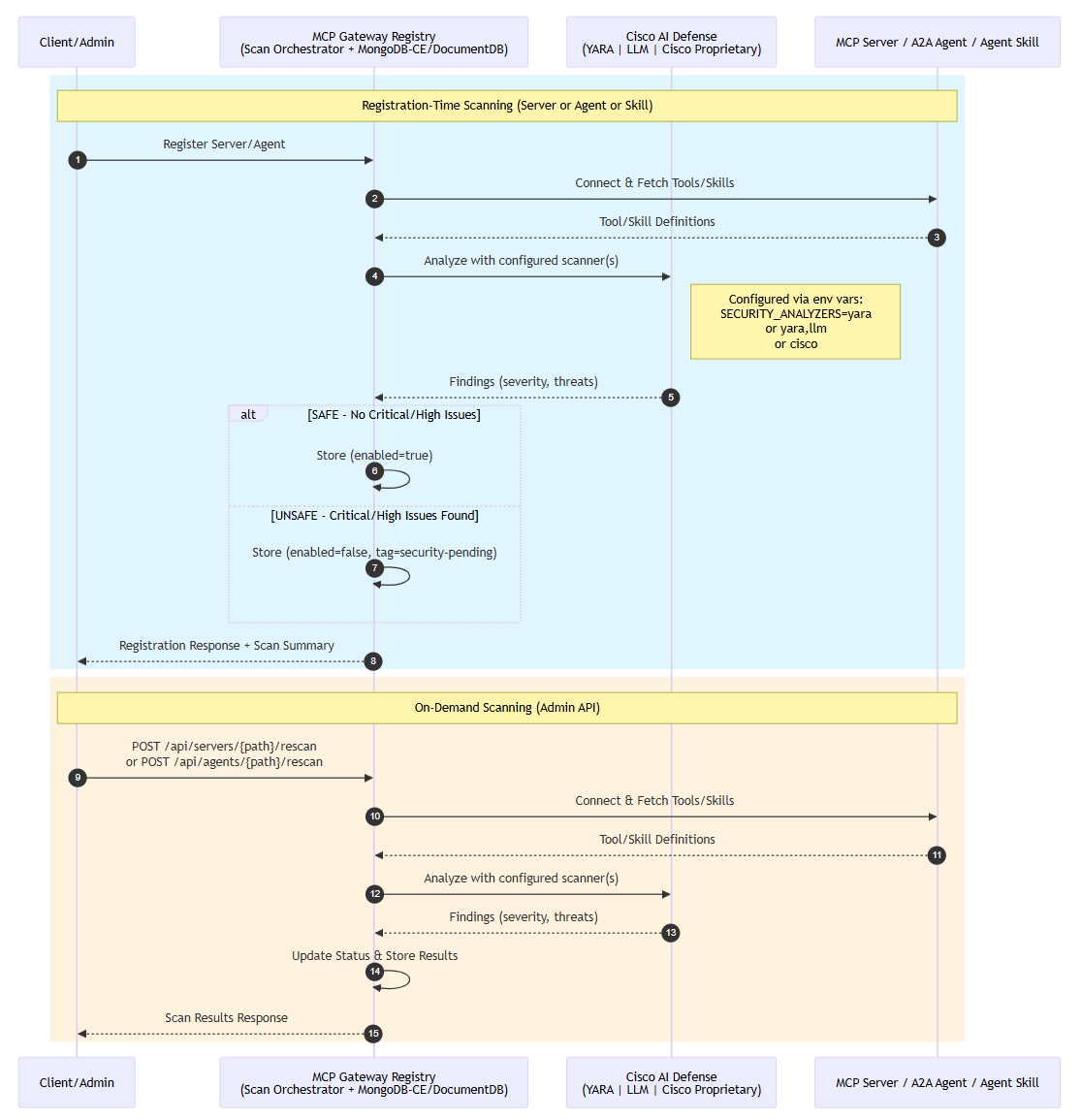
  25. Securing AI agents: How AWS and Cisco AI Defense scale MCP and A2A deployments

    AWS and Cisco have partnered to enhance the security of AI agents and their associated protocols, Model Context Protocol (MCP) and Agent-to-Agent (A2A). This collaboration aims to address critical security gaps arising from the rapid adoption of these technologies, including lack of visibility into deployed tools, the inability of manual reviews to keep pace with deployment velocity, and the absence of audit trails for autonomous agents. The integrated solution leverages AWS's AI Registry and Cisco AI Defense to provide automated scanning, unified governance, and supply chain security for MCP servers, A2A agents, and Agent Skills, thereby mitigating risks of data breaches, compliance violations, and operational disruptions. AI

    Securing AI agents: How AWS and Cisco AI Defense scale MCP and A2A deployments

    IMPACT Enhances security and compliance for enterprise AI agent deployments, addressing key adoption barriers.

  26. MedCore: Boundary-Preserving Medical Core Pruning for MedSAM

    Researchers have developed MedCore, a new framework designed to prune large medical image segmentation models like MedSAM. This method focuses on preserving critical structures and boundary fidelity, which are essential for accurate medical diagnoses. MedCore significantly reduces model size and computational load while maintaining high performance on segmentation benchmarks, making these powerful tools more accessible for clinical use. AI

    IMPACT Enables more efficient deployment of medical segmentation models in resource-constrained clinical settings.

  27. Learning to Optimize Radiotherapy Plans via Fluence Maps Diffusion Model Generation and LSTM-based Optimization

    Researchers have developed a novel diffusion model and LSTM-based approach for optimizing radiotherapy plans, specifically for Volumetric Modulated Arc Therapy (VMAT). This method aims to significantly reduce the planning time for VMAT by generating clinically feasible fluence maps in a single step and then rapidly refining them using learned gradient dynamics. Initial experiments on prostate cancer patient data show improvements in planning efficiency, flexibility, and machine deliverability compared to existing end-to-end VMAT planners. AI

    IMPACT Introduces a novel AI-driven method to accelerate and improve radiotherapy planning, potentially leading to faster patient treatment and better outcomes.

  28. Pattern-Enhanced RT-DETR for Multi-Class Battery Detection

    Researchers have developed a new method called PaQ-RT-DETR for detecting multiple types of batteries, aiming to improve accuracy and efficiency in applications like electronic waste recycling and quality control. They evaluated several existing object detection models, finding YOLO11n to be the most accurate among CNN-based detectors and YOLOv8n the fastest. The proposed PaQ-RT-DETR model demonstrated superior performance by achieving a higher mean average precision (mAP@50) and showing consistent gains across all battery categories, including those with limited data. AI

    IMPACT Enhances object detection capabilities for industrial applications, potentially improving efficiency in recycling and quality control processes.

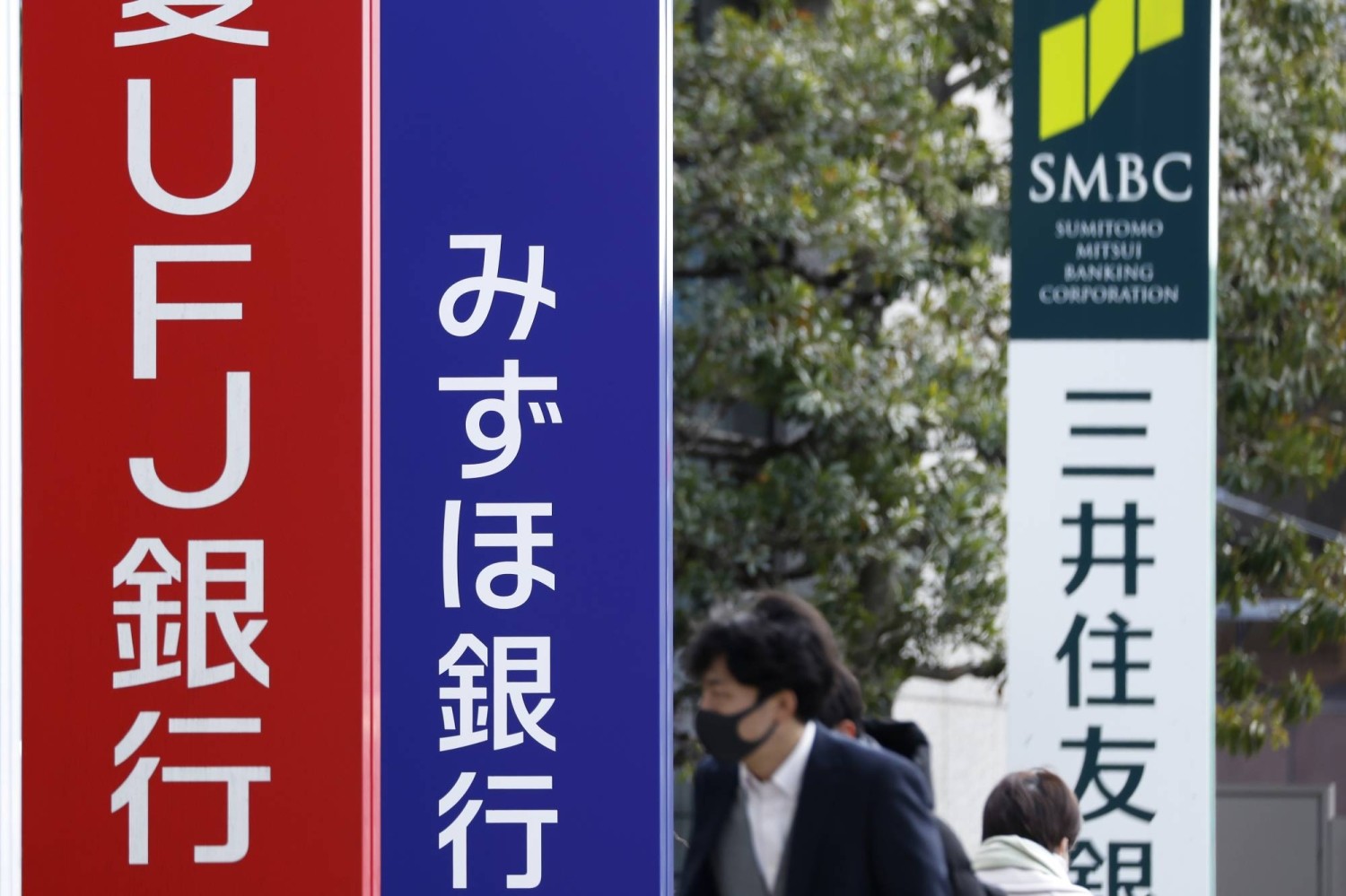
  29. Japan megabanks set to win Mythos access after Bessent visit Japan’s three megabanks are set to secure access to Anthropic’s artificial intelligence model, Myth

    Japan's three major banks, MUFG Bank, Sumitomo Mitsui, and Mizuho, are reportedly close to gaining access to Anthropic's AI model, Mythos. This development follows the model's recent limited release, which raised concerns about potential cybersecurity risks. The specific terms of access and the implications for the banks' operations are still emerging. AI

    Japan megabanks set to win Mythos access after Bessent visit Japan’s three megabanks are set to secure access to Anthropic’s artificial intelligence model, Myth

    IMPACT This deal could signal increased enterprise adoption of advanced AI models in the financial sector, potentially improving efficiency and risk assessment capabilities.

  30. Amazon Strategic Shift: Cuts Rufus Chatbot, Launches Alexa Shopping Assistant

    Amazon has launched "Alexa for Shopping," a new AI-powered assistant integrated into its main search bar, replacing the previous Rufus assistant. This tool offers personalized recommendations, automates shopping tasks, and can even make purchases from other online retailers. Available to U.S. customers, it aims to provide a more connected and helpful shopping experience by understanding user habits and purchase history. AI

    IMPACT Enhances e-commerce personalization and automation, potentially streamlining the customer journey and increasing conversion rates.

  31. Using # AI to power a robot pet for adults: https:// spectrum.ieee.org/familiar-mac hines-and-magic # ArtificialIntelligence

    Researchers are developing an AI-powered robot pet designed for adults, aiming to create a more engaging and interactive companion. The project leverages artificial intelligence to imbue the robot with capabilities that mimic familiar machines and a touch of magic, suggesting advanced functionalities beyond simple mechanics. This initiative explores the potential of AI in creating sophisticated robotic companions for a mature audience. AI

    IMPACT Explores AI's role in creating advanced robotic companions for adult users.

  32. CropProphEU: An open-source MCP server for EU crop intelligence

    CropProphEU is an open-source MCP server designed to provide AI agents with real-time agricultural data for the EU. It offers features like yield forecasts, market value tracking, and risk analysis for crops. The tool is intended for use by insurance companies, traders, farmers, and policy analysts to inform their strategies and assessments. AI

    IMPACT Provides specialized agricultural data to AI agents, potentially improving forecasting and risk assessment in the EU.

  33. OpenAaaS: An Open Agent-as-a-Service Framework for Distributed Materials-Informatics Research

    Researchers have introduced OpenAaaS, an open-source framework designed to facilitate distributed materials informatics research through organized multi-agent collaboration. The framework operates on the principle of "code flows, data stays still," allowing a Master Agent to decompose tasks without accessing subordinate agents' local data or computational resources. This architecture ensures data sovereignty while enabling secure integration of isolated materials intelligence silos, demonstrated through case studies in literature analysis and alloy descriptor database services. AI

    IMPACT Enables secure, distributed AI collaboration for materials discovery, potentially accelerating research by composing capabilities across institutional boundaries.

  34. Galaxy Tab S12 series? Samsung app reveals Dimensity 9500 device is coming (APK teardown) This could be good news for gaming at large, although Qualcomm still r

    Samsung's upcoming Galaxy Tab S12 series may feature a MediaTek Dimensity 9500 chipset, according to an APK teardown. This potential shift away from Qualcomm could benefit mobile gaming, though Qualcomm may retain an edge in specific niche applications. AI

  35. Anthropic butts in to small business, promises help with payroll and other core tasks

    Anthropic is targeting small businesses with its AI, offering assistance with core tasks like payroll. However, users of the Pro or Max business tiers should be aware that their data may be used for training Anthropic's AI models. This move expands the application of AI into fundamental business operations, while also raising data privacy considerations for commercial users. AI

    Anthropic butts in to small business, promises help with payroll and other core tasks

    IMPACT Expands AI adoption into core small business operations, but raises data privacy concerns for commercial users.

  36. HetScene: Heterogeneity-Aware Diffusion for Dense Indoor Scene Generation

    Researchers have introduced HetScene, a novel framework for generating dense indoor scenes that accounts for object heterogeneity. This approach distinguishes between primary and secondary objects to better model complex spatial arrangements and physical plausibility, which is crucial for creating realistic simulation environments for embodied AI. The framework employs a two-stage generation process, first creating structural layouts with primary objects and then refining them with contextual details. AI

    IMPACT Enables more realistic simulation environments for training embodied AI agents.

  37. Spatiotemporal downscaling and nowcasting of urban land surface temperatures with deep neural networks

    Researchers have developed deep neural networks to improve the resolution of land surface temperature (LST) data for urban areas. By combining data from geostationary and polar-orbiting satellites, they created LST fields with a 1 km resolution at 15-minute intervals. A U-Net model was trained to downscale SEVIRI/MSG data to MODIS resolution, achieving an RMSE of 1.92°C. Additionally, a ConvLSTM model was used for nowcasting LSTs up to 75 minutes ahead, outperforming benchmark models with RMSEs between 0.57°C and 1.15°C. AI

    IMPACT Enhances urban climate modeling and satellite monitoring capabilities with higher-resolution temperature data.

  38. Generating synthetic computed tomography for radiotherapy: SynthRAD2025 challenge report

    The SynthRAD2025 challenge report details advancements in generating synthetic computed tomography (sCT) images for radiotherapy planning. This year's challenge focused on converting MRI or cone-beam CT (CBCT) into CT-equivalent images, with methods evaluated on over 2,300 patient cases across different body regions. While deep learning models showed significant improvements, particularly for CBCT-to-CT conversion, challenges remain in MRI-to-CT accuracy, especially for dose-based validation. AI

    IMPACT AI-driven synthetic CT generation shows promise for improving radiotherapy planning and reducing patient exposure, though dose-based validation remains a key area for development.

  39. AttenA+: Rectifying Action Inequality in Robotic Foundation Models

    Researchers have developed AttenA+, a new framework designed to improve robotic foundation models by addressing action inequality during training. The framework prioritizes kinematically critical segments of robot trajectories, which are often low-velocity and require precision, by reweighting the training objective based on the inverse velocity field. This physics-aware approach enhances the performance of existing Vision-Language-Action (VLA) and World-Action Models (WAM) on complex tasks and has shown significant improvements on benchmarks like Libero and RoboTwin 2.0. AI

    IMPACT Enhances robotic control by prioritizing precision-demanding actions, potentially improving performance in complex manipulation tasks.

  40. 📰 Humanoid Robot Sorted Cargo for 11 Hours: Live Broadcast Exceeded 2 Million Views (2026) American robotics company Figure AI, its humanoid robot's over 11-hour continuous

    Figure AI's humanoid robot, Figure 03, recently completed an 11-hour livestream demonstrating its package sorting capabilities. The event garnered significant attention, surpassing 1.96 million views on X (formerly Twitter). This extended demonstration highlights the robot's endurance and potential for real-world applications in logistics. AI

    📰 Humanoid Robot Sorted Cargo for 11 Hours: Live Broadcast Exceeded 2 Million Views (2026) American robotics company Figure AI, its humanoid robot's over 11-hour continuous

    IMPACT Demonstrates the endurance and practical application of humanoid robots in logistics, potentially accelerating adoption in warehouse automation.

  41. 99% of Requests Failed and My Dashboard Showed Green

    A blog post details how to use NVIDIA's AIPerf tool to uncover hidden performance issues in LLM deployments. Initial tests with a local model showed excellent baseline performance, but increasing concurrency revealed a dramatic increase in time-to-first-token (TTFT), with 99% of requests failing a 500ms SLO. The analysis highlighted that the bottleneck is not the model's inter-token latency (ITL), which remained stable, but rather the request queuing and prefill phase, suggesting architectural solutions like better queue management or horizontal scaling are needed. AI

    99% of Requests Failed and My Dashboard Showed Green

    IMPACT Highlights critical performance testing methodologies for LLM deployments, impacting operators by revealing how to avoid user-facing failures.

  42. RealICU: Do LLM Agents Understand Long-Context ICU Data? A Benchmark Beyond Behavior Imitation

    Researchers have developed RealICU, a new benchmark designed to evaluate the reasoning capabilities of large language model agents in intensive care unit (ICU) settings. Unlike previous benchmarks that relied on clinician actions as ground truth, RealICU uses hindsight annotations from senior physicians reviewing complete patient histories to create more accurate labels. The benchmark includes tasks such as assessing patient status, identifying acute problems, and flagging potentially unsafe actions. Initial tests showed that current LLMs, even those with memory augmentation, performed poorly, highlighting issues with recall-safety trade-offs and anchoring bias. AI

    IMPACT Establishes a new, more rigorous benchmark for evaluating LLM decision-support capabilities in high-stakes medical scenarios.

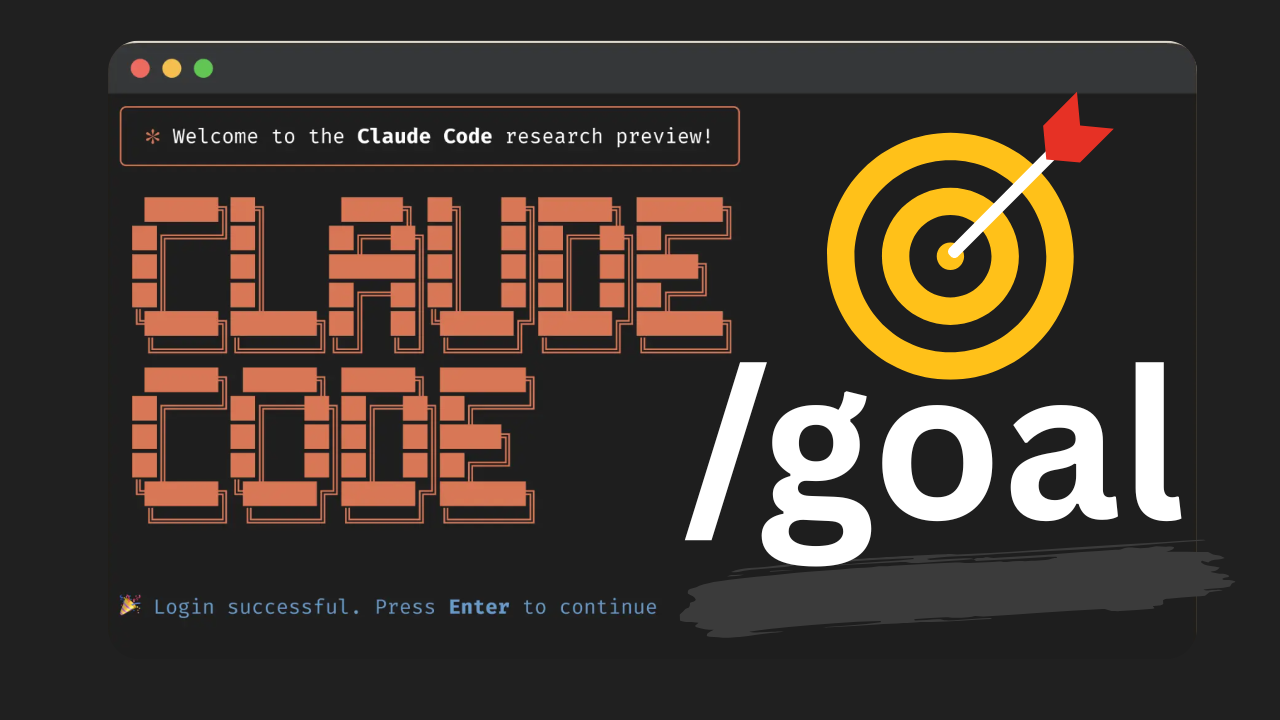
  43. I Tested (New) Claude Code /goal Command (It Turned Into a Self Driving Coding Agent)

    A user explored Anthropic's new Claude Code /goal command, which they found transformed into a self-driving coding agent. This feature appears to be a significant advancement, potentially rendering previous 'Keep Going' functionalities obsolete. AI

    I Tested (New) Claude Code /goal Command (It Turned Into a Self Driving Coding Agent)

    IMPACT This new command for Claude could streamline software development by enabling more autonomous coding capabilities.

  44. GridSFM: A new, small foundation model for the electric grid

    Microsoft Research has developed GridSFM, a compact foundation model designed to predict optimal power flow in electric grids with high speed and accuracy. This model can approximate complex AC optimal power flow calculations in milliseconds, a task that previously took hours. By enabling faster analysis, GridSFM aims to reduce significant annual losses from congestion and renewable energy curtailment, while also improving grid reliability and stability. AI

    GridSFM: A new, small foundation model for the electric grid

    IMPACT Enables faster, more accurate grid analysis, potentially reducing energy waste and improving renewable integration.

  45. Locale-Conditioned Few-Shot Prompting Mitigates Demonstration Regurgitation in On-Device PII Substitution with Small Language Models

    Researchers have developed a novel on-device system for substituting Personally Identifiable Information (PII) with consistent, type-preserving fake values, aiming to preserve downstream utility of text. The system uses a small language model (SLM) for surrogate generation, but initial tests showed the SLM regurgitated demonstration outputs. A new locale-conditioned few-shot prompting technique was introduced to fix this issue, ensuring no echoes and producing locale-correct surrogates. However, the study found that while SLM surrogates create more natural text, they result in a less varied training distribution, which negatively impacts downstream Named Entity Recognition (NER) performance compared to simpler methods. AI

    IMPACT SLM-based PII substitution may offer naturalness but sacrifices downstream NER performance due to reduced training data variety.

  46. HLS-Seek: QoR-Aware Code Generation for High-Level Synthesis via Proxy Comparative Reward Reinforcement Learning

    Researchers have developed HLS-Seek, a new framework for generating hardware descriptions from natural language that prioritizes Quality of Results (QoR) like latency and resource utilization. Unlike previous methods that focused solely on functional correctness, HLS-Seek employs a proxy comparative reward model trained with reinforcement learning to achieve high accuracy in predicting optimal hardware configurations. This approach significantly speeds up training and demonstrates superior performance compared to existing frontier models on HLS-specific benchmarks, achieving lower latency and better resource utilization on several kernels. AI

    IMPACT Introduces a novel approach to optimizing hardware design through AI, potentially accelerating chip development and improving efficiency.

  47. AI-Generated Slides: Are They Good? Can Students Tell?

    A new paper investigates the effectiveness of generative AI tools in creating educational slides from instructor notes. Researchers found that coding assistants like Cursor and Claude produced the most accurate and pedagogically sound slides. When used in a real course, students perceived AI-generated slides as being of similar quality to instructor-created ones and could not reliably distinguish between them, even associating AI generation with lower quality. AI

    IMPACT AI tools can effectively generate educational materials, with students unable to distinguish them from human-created content.

  48. Adaption aims big with AutoScientist, an AI tool that helps models train themselves

    Adaption has launched AutoScientist, a tool designed to accelerate AI model training through automated fine-tuning. This system co-optimizes both data and the model itself, learning the most effective methods to acquire new capabilities. The company suggests this could enable frontier AI training outside of major research labs and has reportedly doubled win-rates across various models. AI

    IMPACT Accelerates AI model development by enabling faster, more efficient fine-tuning and potentially democratizing frontier AI training.

  49. Cisco plans to lay off about 4,000 people amid surge in orders

    Cisco announced plans to lay off approximately 4,000 employees as part of a restructuring effort. The company aims to reallocate resources towards artificial intelligence and other growth areas. This move coincides with an increased revenue forecast, driven by a surge in orders from hyperscale cloud providers. AI

    IMPACT Cisco's strategic shift towards AI may influence its product development and partnerships in the AI ecosystem.

  50. PhysEditBench: A Protocol-Conditioned Benchmark for Dense Physical-Map Prediction with Image Editors

    Researchers have introduced PhysEditBench, a new benchmark designed to evaluate and standardize the performance of general-purpose image editors in predicting dense physical maps. This benchmark covers five map types: depth, normal, albedo, roughness, and metallic. While specialized models still outperform image editors on depth, normal, and albedo maps, image editors show promise in matching or exceeding baseline performance for roughness and metallic maps, though they still struggle with structural errors and lighting sensitivity. AI

    IMPACT Establishes a standardized evaluation protocol for image editors in physical map prediction, highlighting current limitations and areas for future development.