PulseAugur / Brief
LIVE 23:58:55

Brief

last 24h
[50/161] 185 sources

Multi-source AI news clustered, deduplicated, and scored 0–100 across authority, cluster strength, headline signal, and time decay.

  1. TOOL · MarkTechPost ·

    Fastino Labs Open-Sources GLiGuard: A 300M Parameter Safety Moderation Model That Matches or Exceeds Accuracy of Models 23–90x Its Size

    Fastino Labs has released GLiGuard, an open-source safety moderation model designed to be significantly faster and more efficient than existing solutions. Unlike traditional decoder-only models that generate responses token by token, GLiGuard uses an encoder-based architecture to classify prompts and responses in a single pass. This approach allows it to match or exceed the accuracy of much larger models while operating up to 16 times faster, addressing the growing cost and latency issues associated with LLM safety moderation. AI

    Fastino Labs Open-Sources GLiGuard: A 300M Parameter Safety Moderation Model That Matches or Exceeds Accuracy of Models 23–90x Its Size

    IMPACT Offers a more efficient and faster alternative for LLM safety moderation, potentially reducing operational costs for AI applications.
  2. TOOL · Medium — Claude tag ·

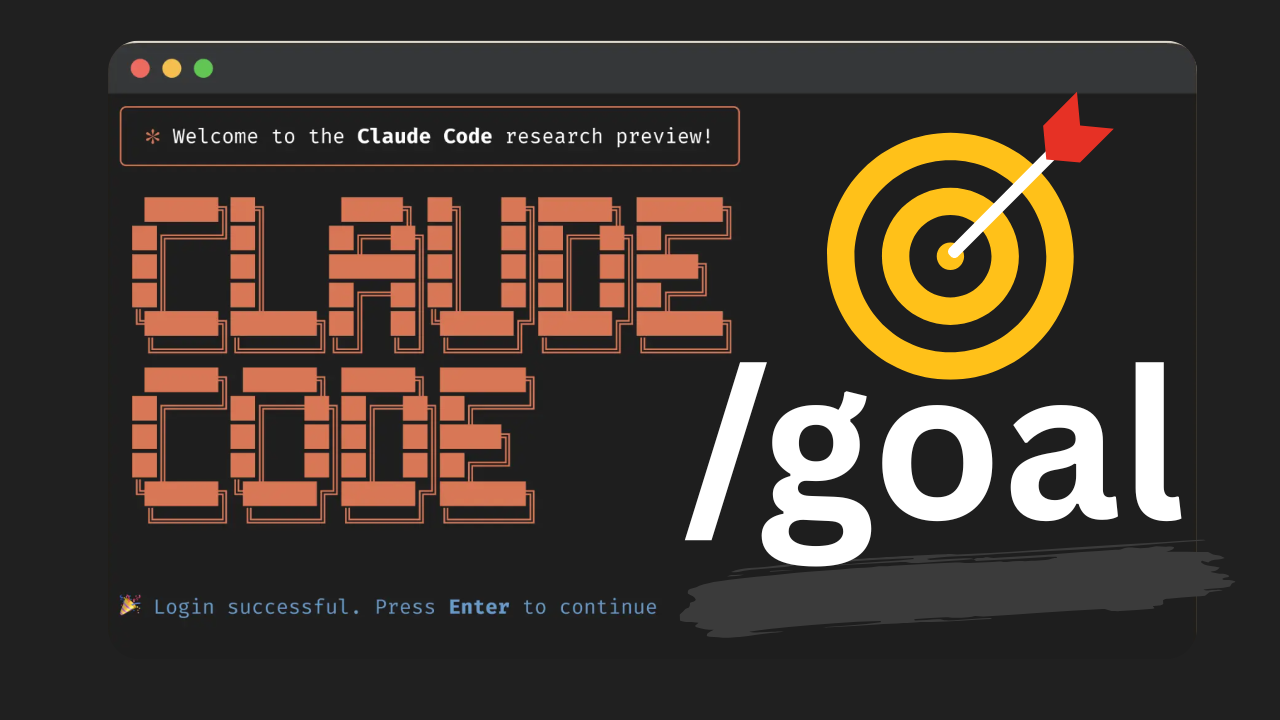
    I Tested (New) Claude Code /goal Command (It Turned Into a Self Driving Coding Agent)

    A user explored Anthropic's new Claude Code /goal command, which they found transformed into a self-driving coding agent. This feature appears to be a significant advancement, potentially rendering previous 'Keep Going' functionalities obsolete. AI

    I Tested (New) Claude Code /goal Command (It Turned Into a Self Driving Coding Agent)

    IMPACT This new command for Claude could streamline software development by enabling more autonomous coding capabilities.

  3. TOOL · Medium — Claude tag ·

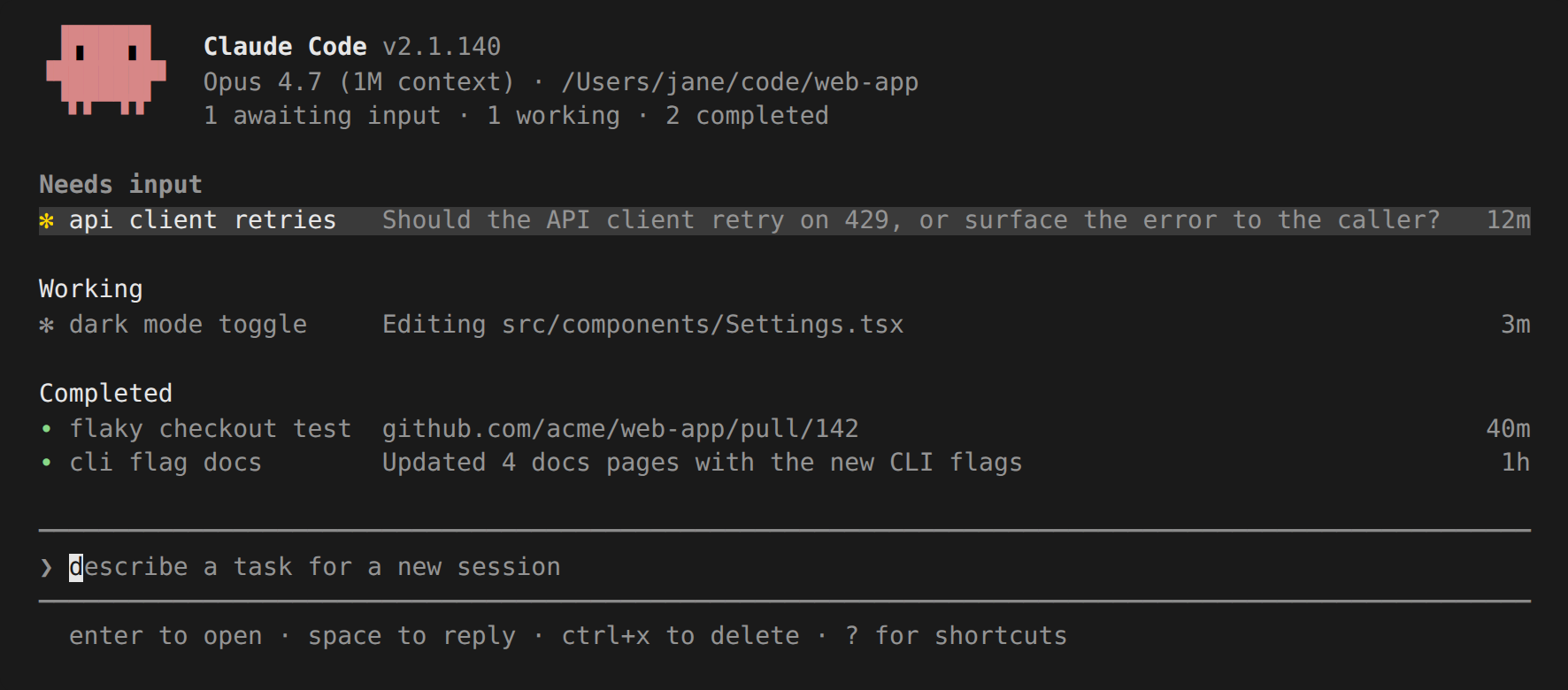
    Claude Can Now See What It’s Doing. That’s a Bigger Deal Than It Sounds.

    Anthropic's Claude AI now features an "Agent View" that allows it to visually process and interact with information on a screen. This new capability moves beyond traditional text-based interactions, enabling Claude to understand and respond to visual elements. The development is seen as a significant step towards more intuitive and capable AI assistants. AI

    Claude Can Now See What It’s Doing. That’s a Bigger Deal Than It Sounds.

    IMPACT Enhances AI assistant capabilities by enabling visual understanding and interaction, moving beyond text-based interfaces.

  4. TOOL · arXiv cs.CV ·

    AlphaGRPO: Unlocking Self-Reflective Multimodal Generation in UMMs via Decompositional Verifiable Reward

    Researchers have introduced AlphaGRPO, a new framework designed to improve multimodal generation in Unified Multimodal Models (UMMs). This approach uses Group Relative Policy Optimization (GRPO) to enable models to perform advanced reasoning tasks like inferring user intent for text-to-image generation and self-correcting outputs. To provide better supervision, AlphaGRPO incorporates a Decompositional Verifiable Reward (DVReward) system, which breaks down user requests into verifiable questions evaluated by a general multimodal large language model (MLLM). Experiments show AlphaGRPO significantly enhances performance on various multimodal generation and editing benchmarks. AI

    IMPACT Introduces a novel self-reflective reinforcement approach for multimodal models, potentially improving generation fidelity and user intent inference.

  5. TOOL · Simon Willison (CA) ·

    llm 0.32a2

    OpenAI has updated its API, moving most reasoning-capable models to a new endpoint that supports interleaved reasoning across tool calls. This change allows users to view summarized reasoning tokens, which are displayed distinctly from standard errors. The new functionality is available for GPT-5 class models and can be toggled on or off using specific flags. AI

    IMPACT Enables more transparent and controllable reasoning for advanced AI models, potentially improving agentic workflows.

  6. TOOL · Mastodon — fosstodon.org · · [2 sources]

    Foundry Local 1.1: Live Transcription, Embeddings, and Responses API | by Sam Kemp https:// devblogs.microsoft.com/foundry /foundry-local-v1-1/ # foundrylocal #

    Microsoft has released updates for two AI-powered developer tools. The WinUI agent plugin integrates with GitHub Copilot and Claude Code to assist in building native Windows applications. Additionally, Foundry Local 1.1 now features live transcription, embeddings, and a Responses API for local AI model interaction. AI

    IMPACT Enhances developer productivity for Windows applications and local AI model development.

  7. TOOL · 36氪 (36Kr) 中文(ZH) ·

    Hanvon Technology Releases Handwriting Pen M6

    Hanwang Technology has launched the M6, a device that combines recording, note-taking, and reading functionalities. The M6 supports real-time translation for 51 languages, enabling seamless cross-lingual meeting experiences. It integrates Hanwang's proprietary 'Tiandi' large model, along with other models like DeepSeek and Tongyi Qianwen, to provide AI assistance for tasks such as summarizing meeting highlights and drafting documents. AI

    IMPACT Integrates existing large language models into a hardware device to enhance productivity for cross-lingual communication.

  8. TOOL · Pandaily ·

    MiniCPM-V 4.6: Tsinghua Spinoff Open-Sources a 1.3B Multimodal Model That Runs on a Single RTX 4090

    A 1.3 billion parameter multimodal model named MiniCPM-V 4.6 has been open-sourced by OpenBMB and Tsinghua University. This model is capable of running on a single RTX 4090 graphics card. Despite its smaller size, it achieves performance comparable to larger models on important benchmarks. AI

    MiniCPM-V 4.6: Tsinghua Spinoff Open-Sources a 1.3B Multimodal Model That Runs on a Single RTX 4090

    IMPACT Provides a capable, low-resource multimodal model for researchers and developers.

  9. TOOL · Towards AI ·

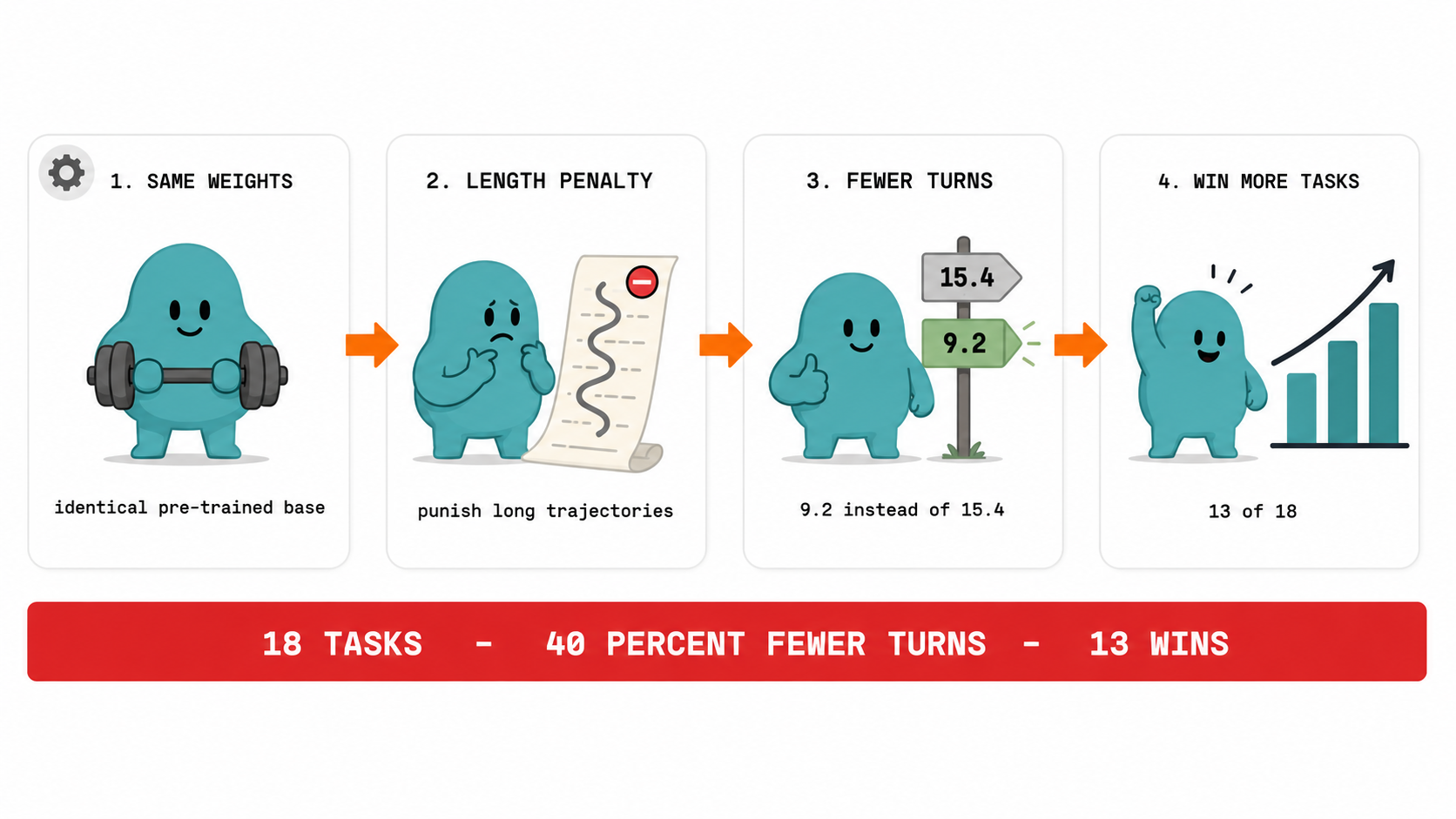
    I Tested SWE-1.6 on 18 Coding Tasks — Cognition Killed SWE-1.5 With Just Post-Training

    A recent evaluation of Cognition's SWE-1.6 model on 18 coding tasks revealed significant improvements over its predecessor, SWE-1.5. The new version achieved a 10-point increase in performance compared to Cognition's previous flagship model. Notably, SWE-1.6 accomplished this with fewer conversational turns and maintained the same processing speed of 950 tokens per second. AI

    I Tested SWE-1.6 on 18 Coding Tasks — Cognition Killed SWE-1.5 With Just Post-Training

    IMPACT Demonstrates significant performance gains in coding tasks, potentially influencing the development of future AI coding assistants.

  10. TOOL · 36氪 (36Kr) 中文(ZH) · · [2 sources]

    Baidu Huiboxing upgraded to Baidu Yijing

    Baidu has upgraded its AI-powered digital human platform, formerly known as Huiboxing, to "Baidu Yijing." This evolution transforms the tool from a specialized digital human solution for live-streaming sales into a comprehensive, multi-format platform for various scenarios including live broadcasts, videos, and real-time interactions. The upgraded platform, announced by Baidu founder Robin Li at the Create2026 Baidu AI Developer Conference, can generate extended, highly interactive content. AI

    IMPACT Enhances capabilities for creating interactive digital content across multiple formats.

  11. TOOL · Medium — fine-tuning tag ·

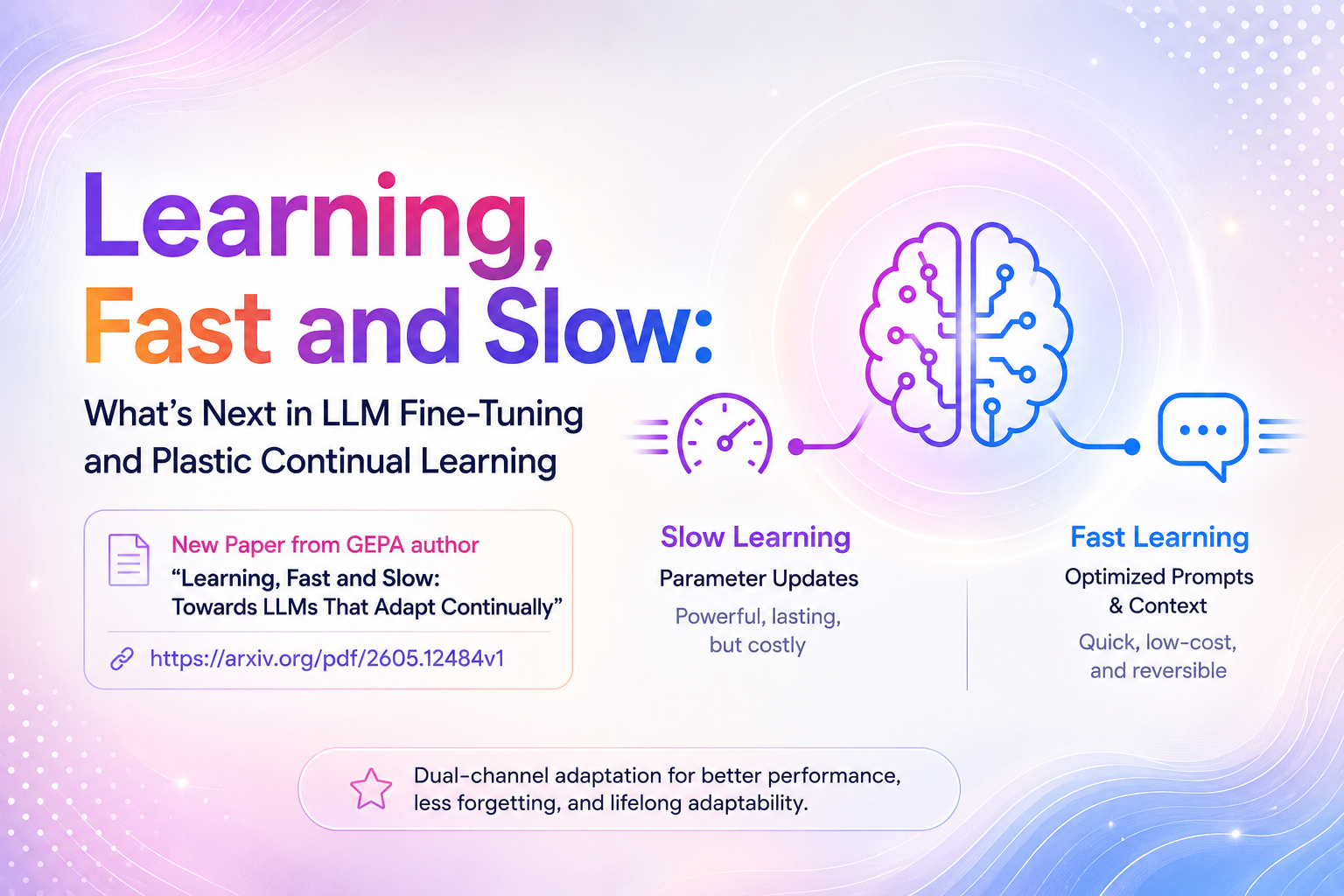
    Learning, Fast and Slow: What’s Next in LLM Fine-Tuning and Plastic Continual Learning with GEPA

    OpenAI is discontinuing its fine-tuning service, prompting a shift in how developers approach model customization. This move encourages exploration of alternative methods like GEPA, which focuses on plastic continual learning. These new approaches aim to enable models to adapt and learn over time without requiring complete retraining. AI

    Learning, Fast and Slow: What’s Next in LLM Fine-Tuning and Plastic Continual Learning with GEPA

    IMPACT OpenAI's discontinuation of its fine-tuning service pushes developers towards alternative continual learning methods, potentially altering model adaptation strategies.

  12. TOOL · 36氪 (36Kr) 中文(ZH) ·

    Baidu's DuMate Officially Debuts

    Baidu has launched DuMate, a new mobile app integrating its AI search, instant messaging, and knowledge base capabilities. The app aims to enhance long-term task execution and proactive decision-making for users. This launch occurred during Baidu's Create2026 AI developer conference. AI

    IMPACT This launch integrates AI capabilities into a user-facing mobile application, potentially increasing AI adoption for everyday tasks.

  13. TOOL · dev.to — LLM tag ·

    I Built an Offline AI Career Advisor Using Gemma 4 — Here's Exactly How It Works

    A computer science instructor developed an offline AI career advisor named GuidanceOS, designed to run entirely on a local GPU without internet access. The system utilizes Google's Gemma 4 model, specifically the `gemma-4-e4b-it` variant, which was loaded using 4-bit quantization to fit within 15GB of VRAM. For matching user skills to jobs and courses, the advisor employs a TF-IDF index built from over 130,000 LinkedIn job postings and Coursera course records, ensuring fast and reproducible results. AI

    IMPACT Demonstrates practical application of smaller LLMs for specialized, offline tools.

  14. TOOL · dev.to — LLM tag Nederlands(NL) ·

    Benchmark Results: SmolLM3 3B, Phi-4-mini, DeepSeek V4, Grok 4.20 — Agent Coding Tested

    A recent agent coding benchmark revealed that smaller, more efficient models are outperforming larger, frontier models. The SmolLM3 3B model, capable of running on a laptop, achieved a score of 93.3, significantly surpassing models like Grok 4.20 and DeepSeek V4 Pro. This suggests that model size may not be the primary determinant of agentic coding capabilities, challenging previous assumptions about the necessity of massive parameter counts for advanced tasks. AI

    IMPACT Demonstrates that smaller models can achieve high performance in agentic coding tasks, potentially reducing hardware requirements for advanced AI applications.

  15. TOOL · dev.to — LLM tag (CA) ·

    llama.cpp Gains llama-eval, MagicQuant v2.0 for GGUF, Needle 26M Tool Model Released

    The llama.cpp project has introduced llama-eval, a new tool for benchmarking local language models against standard datasets. Concurrently, MagicQuant v2.0 has released advanced hybrid GGUF quantization techniques, integrating with Unsloth for optimized model compression. Additionally, a new 26M parameter open-weight model called Needle has been released, designed for efficient local tool-calling on consumer hardware. AI

    IMPACT Enhances local LLM deployment by providing better evaluation and compression tools for consumer hardware.

  16. TOOL · arXiv cs.CV ·

    SenseNova-U1: Unifying Multimodal Understanding and Generation with NEO-unify Architecture

    Researchers have introduced SenseNova-U1, a novel unified architecture for multimodal AI that integrates understanding and generation into a single process. This approach aims to overcome the limitations of current models that treat these functions separately. The SenseNova-U1 models, including variants like SenseNova-U1-8B-MoT and SenseNova-U1-A3B-MoT, demonstrate strong performance across various tasks such as text understanding, visual perception, reasoning, and image generation. AI

    IMPACT This unified approach to multimodal AI could lead to more capable and efficient models for tasks involving both understanding and generation.

  17. TOOL · arXiv cs.CV ·

    Elastic Attention Cores for Scalable Vision Transformers

    Researchers have developed VECA, a novel Vision Transformer architecture that addresses the quadratic computational cost associated with high-resolution images. VECA utilizes an efficient linear-time attention mechanism by employing a small set of learned 'core' embeddings that act as a communication interface for patch tokens. This core-periphery structure allows patch tokens to interact indirectly through the cores, reducing complexity from quadratic to linear and enabling elastic trade-offs between compute and accuracy. AI

    IMPACT Introduces a new attention mechanism that could enable Vision Transformers to scale more efficiently to higher resolutions and complex tasks.

  18. TOOL · arXiv cs.AI ·

    KV-Fold: One-Step KV-Cache Recurrence for Long-Context Inference

    Researchers have developed KV-Fold, a novel method for extending the context window of large language models without requiring retraining. This technique treats the key-value cache as an accumulator in a functional programming-style fold, allowing the model to process sequential chunks of data while maintaining a stable internal state. KV-Fold has demonstrated 100% exact-match retrieval on needle-in-a-haystack benchmarks across various context lengths and model sizes, operating within the memory constraints of a single GPU. AI

    IMPACT Enables LLMs to process significantly longer contexts without costly retraining, potentially improving performance on tasks requiring extensive background information.

  19. TOOL · arXiv cs.CL ·

    Geometric Factual Recall in Transformers

    Researchers have proposed a new theory of how transformer language models memorize factual information, suggesting a 'geometric' form of memorization rather than traditional associative memory. This model posits that learned embeddings encode relational structure, with the MLP acting as a relation-conditioned selector. Experiments with a single-layer transformer demonstrated that logarithmic embedding dimensions suffice for memorizing random bijections, and the MLP learned a generic selection mechanism transferable to new facts. AI

    IMPACT Proposes a new understanding of how LLMs store information, potentially leading to more efficient model architectures.

  20. TOOL · arXiv cs.AI ·

    Stories in Space: In-Context Learning Trajectories in Conceptual Belief Space

    Researchers have proposed a new framework for understanding how Large Language Models (LLMs) learn within a given context. Their work suggests that LLMs update their behavior by performing Bayesian inference over a low-dimensional geometric space, termed a conceptual belief space. By analyzing LLMs' performance on story understanding tasks, the study found that these belief updates follow predictable trajectories on structured manifolds, which are reflected in both the models' external behavior and internal representations. Furthermore, interventions on these internal representations could causally influence the belief trajectories, supporting the geometric account of LLM belief dynamics. AI

    IMPACT Proposes a geometric framework for understanding LLM in-context learning, potentially enabling more predictable and steerable model behavior.

  21. TOOL · arXiv cs.CL ·

    ORBIT: Preserving Foundational Language Capabilities in GenRetrieval via Origin-Regulated Merging

    Researchers have introduced ORBIT, a new method designed to prevent large language models from losing their foundational language capabilities during task-specific fine-tuning. This issue, known as catastrophic forgetting, is particularly prevalent in Generative Retrieval tasks and is linked to the divergence of model parameters. ORBIT addresses this by monitoring the distance between fine-tuned and original model weights, employing a weight averaging strategy to limit parameter drift when a set threshold is exceeded. Experiments demonstrate that ORBIT effectively preserves text and retrieval performance, outperforming existing continual learning and regularization techniques. AI

    IMPACT Preserves general language abilities during task-specific LLM fine-tuning, potentially improving model versatility.

  22. TOOL · arXiv cs.CV ·

    Beyond Localization: A Comprehensive Diagnosis of Perspective-Conditioned Spatial Reasoning in MLLMs from Omnidirectional Images

    Researchers have introduced PCSR-Bench, a new diagnostic benchmark designed to evaluate the spatial reasoning capabilities of multimodal large language models (MLLMs) when processing omnidirectional images. The benchmark, comprising over 84,000 question-answer pairs across 2,600 images, reveals a significant gap between foundational perception and advanced reasoning tasks. While models perform moderately well on basic tasks like object counting, their accuracy plummets on more complex reasoning involving viewpoint changes and egocentric distortions. Further experiments using reinforcement learning on a smaller model indicate that spatial reasoning abilities can be improved through targeted optimization, though gains are task-specific and sensitive to reward design. AI

    IMPACT Highlights a key bottleneck in current MLLMs, suggesting a need for improved spatial reasoning capabilities for more robust AI applications.

  23. TOOL · arXiv cs.AI ·

    Predicting Decisions of AI Agents from Limited Interaction through Text-Tabular Modeling

    Researchers have developed a novel text-tabular modeling approach to predict the decisions of unfamiliar AI agents during negotiations. The method combines structured game state and dialogue history with representations derived from a frozen LLM, acting as an "LLM-as-Observer." This approach was tested on numerous frontier LLM agents, outperforming baseline methods by improving response-prediction AUC and reducing bargaining offer-prediction error. AI

    IMPACT Introduces a method to predict AI agent behavior in negotiations, potentially improving automated transaction systems.

  24. TOOL · arXiv cs.CL ·

    Pretraining Exposure Explains Popularity Judgments in Large Language Models

    Researchers have analyzed how large language models (LLMs) develop preferences for well-known entities, a phenomenon often linked to popularity bias. Using the open OLMo models and their complete Dolma pretraining corpus, they calculated entity exposure across 7.4 trillion tokens. Their findings indicate that LLM popularity judgments align more closely with pretraining exposure than with external signals like Wikipedia pageviews, especially for larger models and in the long tail of less popular entities. This suggests that data exposure during pretraining is the primary driver of popularity bias in LLMs. AI

    IMPACT Demonstrates that LLM biases stem primarily from training data exposure, not external popularity metrics.

  25. TOOL · arXiv cs.CL ·

    Context Convergence Improves Answering Inferential Questions

    Researchers have developed a new method called "context convergence" to improve how Large Language Models (LLMs) answer inferential questions. This technique focuses on how effectively sentences in a passage can eliminate incorrect answers, a measure that proves more effective than simple cosine similarity for inferential reasoning. Experiments using the TriviaHG dataset and various LLMs demonstrated that passages constructed with higher convergence sentences significantly boost answer accuracy, suggesting that LLMs prioritize information-rich cues presented earlier in the text. AI

    IMPACT Introduces a novel metric for passage construction that enhances LLM accuracy on complex inferential reasoning tasks.

  26. TOOL · arXiv cs.CL ·

    Output Composability of QLoRA PEFT Modules for Plug-and-Play Attribute-Controlled Text Generation

    Researchers have explored methods to generalize parameter-efficient fine-tuning (PEFT) techniques beyond single-task applications. Their work investigates training on combined datasets, composing weight matrices of separate PEFT modules, and composing the outputs of these modules during inference. The study found that summing PEFT module outputs was a particularly effective composition method, outperforming or matching other approaches across different large language models and controlled text generation tasks. AI

    IMPACT This research could enable more flexible and cost-effective fine-tuning of large language models for multiple attributes simultaneously.

  27. TOOL · arXiv cs.AI ·

    Reinforcing VLAs in Task-Agnostic World Models

    Researchers have introduced RAW-Dream, a novel approach to adapt Vision-Language-Action (VLA) models for new tasks using reinforcement learning within task-agnostic world models. This method disentangles world model learning from specific task dependencies by leveraging a world model pre-trained on diverse, task-free behaviors and an off-the-shelf Vision-Language Model for reward generation. By relying on generalized physical priors instead of task-specific data, RAW-Dream enables zero-shot adaptation for VLAs, significantly improving scalability and mitigating world model hallucinations through a dual-noise verification mechanism. AI

    IMPACT Enables more scalable and efficient adaptation of VLA models to new tasks by relying on generalized physical priors.

  28. TOOL · arXiv cs.LG ·

    In-context learning to predict critical transitions in dynamical systems

    Researchers have developed a new in-context learning framework called TipPFN to predict critical transitions in dynamical systems. This method uses a prior-data fitted network to identify when a system is approaching an abrupt and potentially irreversible change. TipPFN was trained on synthetic data and demonstrated state-of-the-art early detection capabilities in unseen tipping regimes, sim-to-real examples, and real-world observations, outperforming existing methods that struggle with limited data or extrapolation. AI

    IMPACT Introduces a novel AI approach for early detection of abrupt system changes, potentially improving forecasting in fields ranging from climate science to economics.

  29. TOOL · arXiv cs.CV ·

    Large-Small Model Collaboration for Farmland Semantic Change Detection

    Researchers have developed a new framework for farmland semantic change detection, addressing limitations in existing benchmarks and models. The proposed method, called Fine-grained Difference-aware Mamba (FD-Mamba) integrated with Cross-modal Logical Arbitration (CMLA), uses a small, task-specific model alongside a large, frozen vision-language model. This collaboration aims to improve fine-grained monitoring by preserving boundaries, localizing small regions, and suppressing pseudo-changes through textual priors. Experiments on the new HZNU-FCD benchmark and other datasets demonstrate high accuracy and robustness with a relatively small number of trainable parameters. AI

    IMPACT Introduces a novel approach to semantic change detection in agriculture, potentially improving land management and monitoring.

  30. TOOL · arXiv cs.CV ·

    KAN-CL: Per-Knot Importance Regularization for Continual Learning with Kolmogorov-Arnold Networks

    Researchers have introduced KAN-CL, a new framework for continual learning that addresses catastrophic forgetting by leveraging the unique structure of Kolmogorov-Arnold Networks (KANs). This method applies importance-weighted regularization at a per-knot level, allowing for more precise control over parameter updates across tasks. When tested on classification tasks, KAN-CL significantly reduced forgetting compared to baseline methods while maintaining high accuracy, demonstrating its effectiveness in preserving learned information. AI

    IMPACT Introduces a novel regularization technique for continual learning that significantly reduces catastrophic forgetting in neural networks.

  31. TOOL · arXiv cs.LG ·

    Hypernetworks for Dynamic Feature Selection

    Researchers have developed a new machine learning framework called Hyper-DFS for dynamic feature selection, which aims to optimize feature acquisition under budget constraints. This approach utilizes a hypernetwork to generate classifier parameters on demand for specific feature subsets, improving efficiency and generalization. Benchmarks indicate that Hyper-DFS outperforms existing state-of-the-art methods on various datasets, including tabular and image data, and demonstrates superior zero-shot generalization capabilities. AI

    IMPACT Introduces a novel framework that improves efficiency and generalization in dynamic feature selection tasks.

  32. TOOL · arXiv cs.AI ·

    TokenRatio: Principled Token-Level Preference Optimization via Ratio Matching

    Researchers have introduced Token-level Bregman Preference Optimization (TBPO), a new method for aligning language models using pairwise preferences. Unlike existing approaches that focus on full sequences, TBPO operates at the token level, modeling preferences for individual next-token actions based on the preceding context. This approach aims to improve alignment quality, training stability, and output diversity compared to current methods. AI

    IMPACT Introduces a new principled method for aligning language models at the token level, potentially improving training efficiency and output quality.

  33. TOOL · arXiv cs.CV ·

    Beyond Text Prompts: Visual-to-Visual Generation as A Unified Paradigm

    Researchers have introduced a new framework called V2V-Zero, which enables visual-to-visual generation by using visual inputs instead of text prompts. This approach allows users to condition generative models with visual specifications like sketches or reference images, bypassing the limitations of text-based descriptions. V2V-Zero achieves performance comparable to text-to-image models without fine-tuning and has been evaluated across various tasks and models, revealing challenges in content generation and structural control. AI

    IMPACT Enables more intuitive visual content creation by replacing text prompts with visual inputs, potentially improving user control and expressiveness in generative models.

  34. TOOL · arXiv cs.AI ·

    How Useful Is Cross-Domain Generalization for Training LLM Monitors?

    Researchers explored the effectiveness of cross-domain generalization for training language model monitors. Their findings indicate that training on multiple classification tasks with distinct prompts can partially improve performance on new, unseen domains. However, they identified failure cases where models struggle with entirely new prompts even within familiar data domains. The study also suggests that mixing classification training with general instruction following can mitigate these generalization issues and potentially benefit other classifier and monitoring systems. AI

    IMPACT This research could lead to more robust and adaptable LLM monitoring systems, improving their reliability across diverse tasks and domains.

  35. TOOL · arXiv cs.AI ·

    Mind the Pause: Disfluency-Aware Objective Tuning for Multilingual Speech Correction with LLMs

    Researchers have developed a new method for correcting disfluencies in multilingual speech transcripts using large language models (LLMs). The pipeline first identifies disfluent tokens and then uses these signals to fine-tune an LLM for rewriting transcripts into fluent text. A contrastive learning objective was added to penalize the reproduction of disfluent tokens, ensuring grammar and meaning are preserved. Experiments in Hindi, Bengali, and Marathi demonstrated significant improvements over existing baselines, offering a practical solution for speech-driven NLP systems. AI

    IMPACT Enhances the accuracy and usability of speech-driven NLP applications by improving transcript quality.

  36. TOOL · arXiv cs.AI ·

    Pretraining Strategies and Scaling for ECG Foundation Models: A Systematic Study

    Researchers have conducted a systematic study on pretraining strategies and scaling for electrocardiography (ECG) foundation models. They evaluated five different self-supervised learning objectives, finding that contrastive predictive coding and JEPA yielded the most transferable representations. The study also demonstrated that increasing pretraining data up to 11 million samples consistently improved performance for most objectives. Furthermore, structured state space models showed superior performance compared to transformers and CNNs, suggesting their inductive biases are key for effective ECG representation learning. AI

    IMPACT Suggests structured state space models and contrastive learning are key for effective ECG representation learning, potentially guiding future medical AI development.

  37. TOOL · arXiv cs.AI ·

    Not How Many, But Which: Parameter Placement in Low-Rank Adaptation

    Researchers have investigated the parameter placement problem within Low-Rank Adaptation (LoRA) for fine-tuning large language models. Their study reveals that for Supervised Fine-Tuning (SFT), the specific placement of trainable parameters in the LoRA adapter's B matrix does not significantly impact performance. However, under Gradient-based Reinforcement Learning (GRPO), random parameter placement fails to improve the base model, while informed placement recovers standard LoRA accuracy. This difference is attributed to the gradient structure, with SFT gradients being stable and GRPO gradients being near-orthogonal, necessitating a gradient-informed approach for effective learning in the latter. AI

    IMPACT Identifies critical parameter placements for effective GRPO fine-tuning, potentially optimizing resource usage for specific LLM adaptation tasks.

  38. TOOL · arXiv cs.LG ·

    Investigating simple target-covariate relationships for Chronos-2 and TabPFN-TS

    A new research paper investigates how well two prominent time series foundation models, Chronos-2 and TabPFN-TS, integrate covariate information. The study found that TabPFN-TS is more effective at capturing simple relationships between covariates and the target variable, particularly for shorter prediction horizons. This suggests that Chronos-2's strong overall performance on benchmarks may not directly indicate superior handling of covariate dependencies. AI

    IMPACT This research highlights potential differences in how advanced time series models handle covariate data, which could influence model selection for forecasting tasks.

  39. TOOL · arXiv cs.LG ·

    A Unified Graph Language Model for Multi-Domain Multi-Task Graph Alignment Instruction Tuning

    Researchers have introduced UniGraphLM, a novel Unified Graph Language Model designed to enhance the generalization capabilities of existing models. UniGraphLM addresses the challenge of aligning graph-encoded representations across various domains and tasks with the Large Language Model (LLM) token space. This alignment is crucial for creating unified graph tokens that combine the structural modeling of Graph Neural Networks (GNNs) with the generalization of LLMs. AI

    IMPACT UniGraphLM aims to improve cross-domain and multi-task performance for graph language models by better aligning GNN representations with LLMs.

  40. TOOL · arXiv cs.AI ·

    Mitigating Context-Memory Conflicts in LLMs through Dynamic Cognitive Reconciliation Decoding

    Researchers have developed a new decoding method called Dynamic Cognitive Reconciliation Decoding (DCRD) to address conflicts between a large language model's internal knowledge and external context. DCRD uses attention maps to predict potential conflicts and then routes the input to either a greedy decoding path or a context fidelity-based dynamic decoding path. This approach aims to efficiently mitigate outdated or incorrect parametric knowledge while maintaining performance in conflict-free scenarios. Experiments on multiple LLMs and datasets demonstrate that DCRD achieves state-of-the-art results, outperforming existing baselines. AI

    IMPACT This new decoding method could improve the reliability and accuracy of LLM outputs by better handling conflicting information.

  41. TOOL · arXiv cs.CV ·

    SyncDPO: Enhancing Temporal Synchronization in Video-Audio Joint Generation via Preference Learning

    Researchers have developed SyncDPO, a new post-training framework designed to improve temporal synchronization in video-audio joint generation models. This method utilizes Direct Preference Optimization (DPO) to enhance the alignment between audio events and their visual counterparts, addressing limitations of traditional supervised fine-tuning. SyncDPO introduces efficient, on-the-fly negative construction strategies to create preference pairs without extensive sampling, and employs a curriculum learning approach to progressively increase the difficulty of temporal misalignments. AI

    IMPACT Enhances temporal alignment in video-audio generation, potentially improving realism and user experience in multimedia AI applications.

  42. TOOL · arXiv cs.CL ·

    Metaphor Is Not All Attention Needs

    A new research paper investigates why stylistic reformulations, like poetic language, can bypass safety mechanisms in large language models. The study, using Qwen3-14B as a case study, found that models can distinguish poetic from prose formats but struggle to predict jailbreak success within these formats. The findings suggest that accumulated stylistic irregularities, rather than specific poetic devices or a failure to recognize literary formatting, lead to distinct processing patterns that circumvent safety measures. AI

    IMPACT Reveals that stylistic irregularities in prompts, not just lexical triggers, can bypass LLM safety, necessitating new approaches to robustness.

  43. TOOL · arXiv cs.CV ·

    Cross-Modal-Domain Generalization Through Semantically Aligned Discrete Representations

    Researchers have developed a new framework called CoDAAR to improve multimodal learning by creating semantically aligned discrete representations. This approach balances the need for cross-modal generalizability with the preservation of modality-specific structures. CoDAAR utilizes Discrete Temporal Alignment and Cascading Semantic Alignment to achieve state-of-the-art performance on various cross-modal generalization benchmarks, including event classification and video segmentation. AI

    IMPACT Introduces a new paradigm for discrete and generalizable multimodal representation learning, potentially improving performance across various AI tasks.

  44. TOOL · arXiv cs.CV ·

    When Policy Entropy Constraint Fails: Preserving Diversity in Flow-based RLHF via Perceptual Entropy

    Researchers have identified a critical flaw in Reinforcement Learning from Human Feedback (RLHF) when applied to flow-matching text-to-image models, where standard policy entropy fails to prevent a collapse in perceptual diversity. They propose a new metric, perceptual entropy, to accurately capture diversity in the perceptual space, addressing the limitations of policy entropy which remains constant despite diversity loss. Experiments demonstrate that strategies based on perceptual entropy significantly improve the quality-diversity trade-off in image generation models. AI

    IMPACT Introduces a novel metric to address diversity collapse in AI image generation, potentially improving the quality and variety of outputs.

  45. TOOL · arXiv cs.CV ·

    UniCustom: Unified Visual Conditioning for Multi-Reference Image Generation

    Researchers have introduced UniCustom, a novel framework designed to enhance multi-reference image generation by unifying visual conditioning. This approach integrates semantic and appearance-rich features before encoding, allowing models to better associate subjects with their specific visual details from reference images. UniCustom employs a two-stage training strategy and a slot-wise binding regularization to improve subject consistency and reduce attribute leakage, demonstrating superior performance on relevant benchmarks. AI

    IMPACT Enhances multi-reference image generation by improving subject consistency and reducing attribute leakage.

  46. TOOL · Medium — Claude tag ·

    Welcome, Mythos.

    Mythos, a new AI model, has been introduced, described as "The Day AI Sat on Bedrock." The announcement was made on Medium, with further details available via a link to the platform. AI

    Welcome, Mythos.

    IMPACT Introduction of a new AI model, potentially impacting future AI development and applications.

  47. TOOL · arXiv cs.CV ·

    OmniHumanoid: Streaming Cross-Embodiment Video Generation with Paired-Free Adaptation

    Researchers have introduced OmniHumanoid, a new framework for generating videos of humanoids performing actions across different embodiments. This system separates transferable motion learning from embodiment-specific adaptation, allowing it to learn from paired videos across multiple embodiments and then adapt to new ones using unpaired data via lightweight adapters. OmniHumanoid employs a branch-isolated attention design to prevent interference between motion conditioning and embodiment modulation, demonstrating strong performance in motion fidelity and embodiment consistency on both synthetic and real-world benchmarks. AI

    IMPACT Enables more scalable data generation for embodied intelligence by facilitating motion transfer across diverse humanoid embodiments.

  48. TOOL · arXiv cs.CV ·

    What-Where Transformer: A Slot-Centric Visual Backbone for Concurrent Representation and Localization

    Researchers have introduced the What-Where Transformer (WWT), a novel visual backbone designed to better separate object appearance from spatial location. This new architecture uses a slot-based design where tokens represent 'what' an object is and attention maps represent 'where' it is located. The WWT demonstrates emergent capabilities in discovering multiple objects directly from attention maps, even when trained with standard classification supervision, and shows improved performance on zero-shot object discovery and weakly supervised semantic segmentation tasks. AI

    IMPACT Introduces a new architectural bias for visual models that could improve localization tasks and emergent object discovery.

  49. TOOL · arXiv cs.CV ·

    Spectral Vision Transformer for Efficient Tokenization with Limited Data

    Researchers have developed a new Spectral Vision Transformer (SVT) architecture designed for efficient tokenization, particularly in scenarios with limited data such as medical imaging. The SVT leverages spectral projection, offering theoretical advantages like spatial invariance and improved signal-to-noise ratio, which result in reduced computational complexity compared to standard spatial vision transformers. Experiments across simulated, public, and clinical datasets demonstrate that the SVT achieves comparable or better performance with fewer parameters than various other models, including compact and standard vision transformers, CNNs with attention, and MLPs. AI

    IMPACT Introduces a more efficient model architecture for image tokenization, potentially improving performance in data-scarce domains like medical imaging.