PulseAugur / Brief
LIVE 08:31:24

Brief

last 24h
[50/407] 185 sources

Multi-source AI news clustered, deduplicated, and scored 0–100 across authority, cluster strength, headline signal, and time decay.

  1. Machine Learning System -Design Model Versioning & the Registry: Why Your S3 Bucket Is Not a Source…

    This article discusses the critical need for robust model versioning and registry systems in machine learning development. It argues that simple cloud storage solutions like S3 buckets are insufficient for managing the complexities of ML model lifecycles. The piece emphasizes the importance of dedicated registries for tracking, organizing, and deploying models effectively. AI
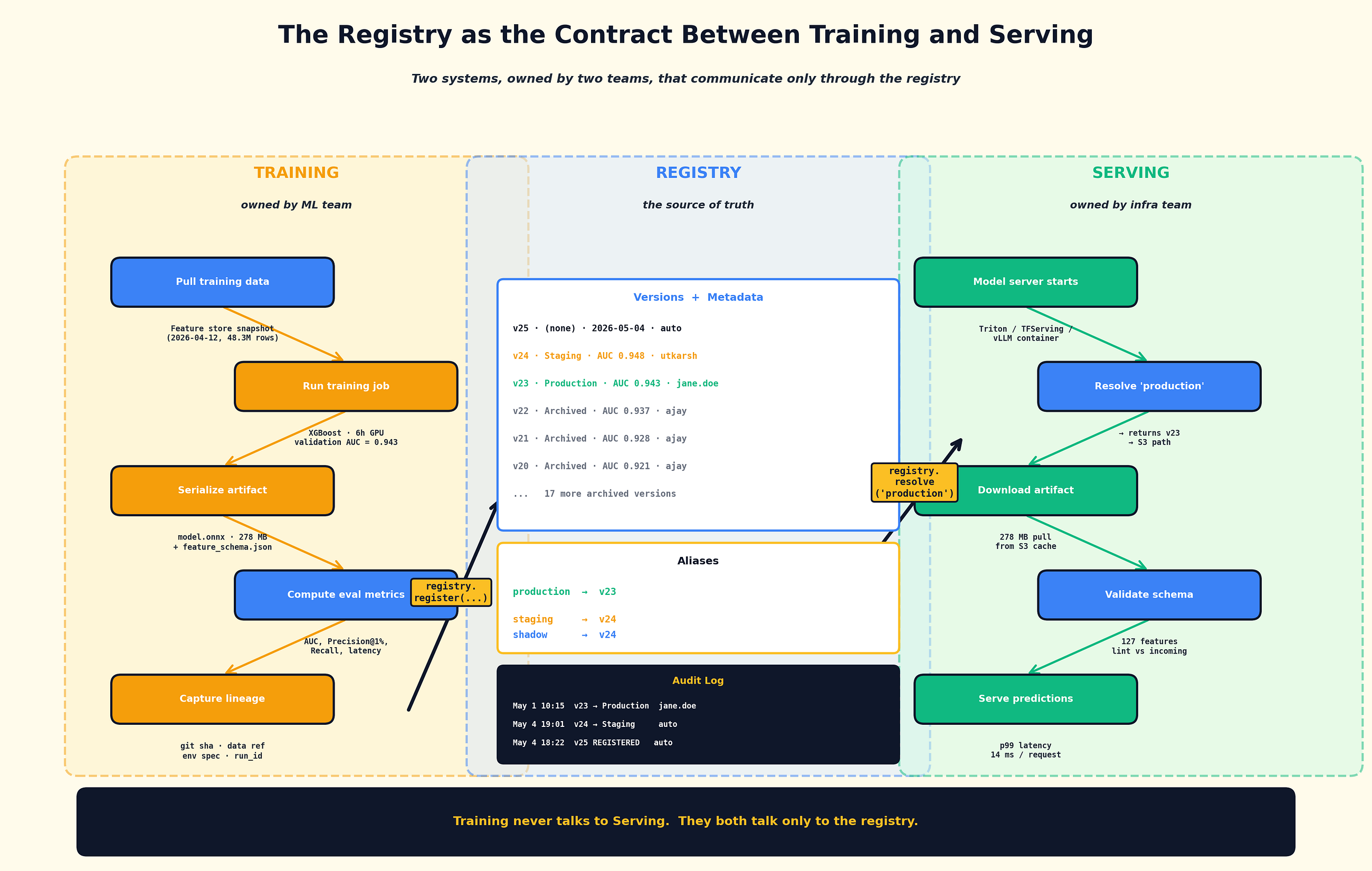
    Machine Learning System -Design Model Versioning & the Registry: Why Your S3 Bucket Is Not a Source…

    IMPACT Highlights the necessity of proper infrastructure for managing ML models, crucial for scalable and reliable AI deployments.
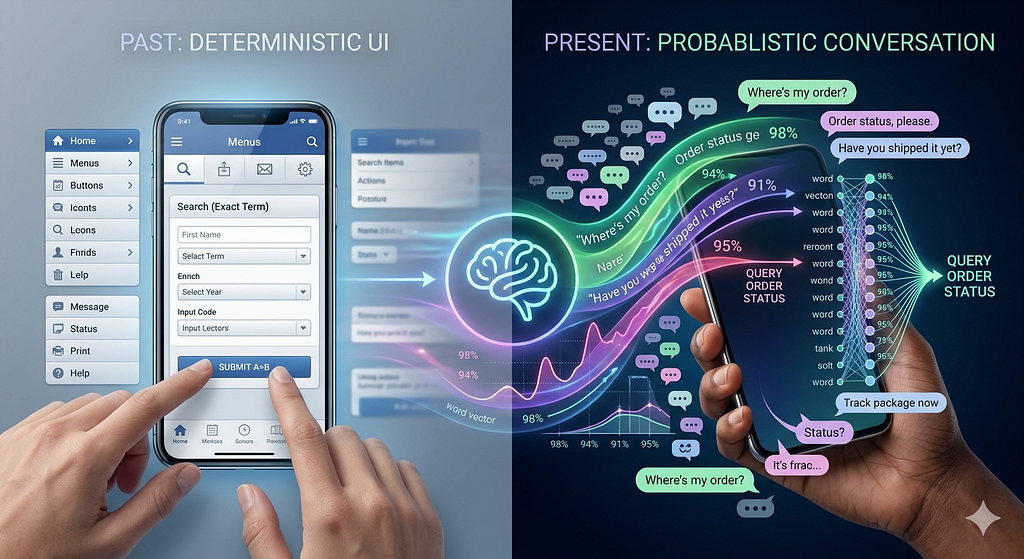

  2. Semantic Cache: The Math of ‘Close Enough’

    Developers are increasingly facing challenges with the probabilistic nature of natural language interactions in AI systems, particularly with large language models (LLMs). A common issue is the cost and latency incurred by running full inference for semantically identical queries phrased differently. To address this, the concept of semantic caching has emerged, which goes beyond simple exact-match caching. Semantic caching aims to identify and store responses for queries with similar intent, even if the wording varies, thereby reducing redundant computations and associated costs. AI

    Semantic Cache: The Math of ‘Close Enough’

    IMPACT Semantic caching can significantly reduce operational costs and improve response times for applications relying on LLMs by intelligently reusing previous computations.

  3. Google is hiring hundreds of engineers to help customers adopt its AI

    Google is significantly expanding its engineering workforce, hiring hundreds of new employees. This move is intended to assist customers in adopting and integrating Google's artificial intelligence technologies. The substantial hiring effort suggests that widespread AI implementation still presents considerable challenges for many organizations. AI

    Google is hiring hundreds of engineers to help customers adopt its AI

    IMPACT Accelerates enterprise AI integration by providing dedicated support for complex deployments.

  4. MediaTek × Jieyue Xingchen, Visual Deployment of Music Large Model, AI Adaptation Efficiency Achieves Qualitative Leap

    MediaTek has partnered with AI startup Stepwise to enable on-device deployment of large music models. At the MediaTek Developer Conference, the companies showcased the ACE-Step music model running on a Dimensity 9500 platform using MediaTek's AI Development Suite 3.0. This collaboration significantly improves model and algorithm porting efficiency, reducing development time and power consumption for consumer devices like smartphones and cars. AI

    MediaTek × Jieyue Xingchen, Visual Deployment of Music Large Model, AI Adaptation Efficiency Achieves Qualitative Leap

    IMPACT Accelerates the deployment of generative AI music tools on consumer devices, enabling new product experiences in smartphones and vehicles.

  5. Alibaba Cloud's external revenue grows 40% to a new high, AI revenue share exceeds 30% for the first time

    Alibaba Cloud reported a significant increase in revenue for the quarter ending March 31, 2026, with external commercialized revenue growing by 40% to a new high. AI-related products were a major driver, contributing over 30% of external revenue and showing triple-digit year-over-year growth for the eleventh consecutive quarter. The company also highlighted advancements in its proprietary GPU chip production, model capabilities with the Qwen 3.6-Plus, and the launch of its enterprise-grade intelligent agent platform, Wukong. AI

    Alibaba Cloud's external revenue grows 40% to a new high, AI revenue share exceeds 30% for the first time

    IMPACT Accelerates enterprise adoption of AI solutions and highlights the growing importance of specialized AI infrastructure and models.

  6. Shanghai Electric Power Co., Ltd.: AI servers and high-speed network products at Thai base achieve mass import, with production capacity utilization rate exceeding 90% in the first quarter of 2026

    Hudian Electric's Thailand base has entered efficient, large-scale operations, with AI servers and high-speed network products being a significant part of its output. The facility achieved approximately 295 million yuan in revenue in the first quarter of 2026, with over 70% of overseas clients certified. To meet demand, the company is expanding its capacity, expecting to release it in the second quarter of 2026, as its Q1 2026 capacity utilization already exceeded 90%. AI

    IMPACT Confirms growing demand for AI infrastructure components, indicating a need for expanded manufacturing capabilities.

  7. Nevada electric company says it's going to cut off electricity to 50,000 people to use it for datacenters instead, tells multiple towns to take a hike https://

    A Nevada electric company plans to divert power from 50,000 residents to supply data centers. This decision affects multiple towns, which have been told to find alternative power sources. The move highlights the growing demand for energy to support data center infrastructure, particularly for AI. AI

    IMPACT Highlights the immense energy demands of AI infrastructure and potential conflicts with public utility needs.

  8. AI Server Market Update: Vendors Shift from Silicon to Services

    The AI server market is experiencing unprecedented growth, with companies like Dell, HPE, Lenovo, and Supermicro reporting billions in revenue and substantial backlogs. While demand for GPUs, particularly from Nvidia, continues to outstrip supply, server vendors are finding that attracting enterprise customers requires more than just hardware. These businesses often lack the expertise to deploy and manage AI infrastructure, pushing vendors to offer comprehensive software management tools and professional services to guide them through the AI adoption process. AI

    AI Server Market Update: Vendors Shift from Silicon to Services

    IMPACT Confirms that enterprise AI adoption hinges on vendor support beyond hardware, potentially accelerating or hindering widespread deployment.

  9. FibQuant: Universal Vector Quantization for Random-Access KV-Cache Compression

    Researchers have developed FibQuant, a novel vector quantization method designed to significantly compress the key-value (KV) cache used in large language models. This technique aims to reduce the memory traffic associated with long-context inference by replacing scalar quantization with a more efficient vector-based approach. Experiments show FibQuant can achieve substantial compression ratios, such as 34x on GPT-2 small KV caches while maintaining high fidelity, and demonstrates improved perplexity compared to existing methods on models like TinyLlama-1.1B. AI

    IMPACT Enables more efficient long-context inference by reducing KV-cache memory requirements, potentially lowering operational costs and increasing model accessibility.

  10. Who Will Solve the "Last Mile" Engineering Challenges of Large Models?

    NetEase Youdao has launched ThinkFlow, a platform designed to streamline the integration and management of multiple large language models for enterprises. The platform addresses challenges such as fragmented model access, opaque token billing, and inefficient deployment by offering a unified API interface to over 20 mainstream models like DeepSeek and Qwen. ThinkFlow aims to standardize token production, distribution, and optimization, providing features like intelligent routing, load balancing, and a visualization dashboard for token consumption, thereby facilitating the transition of AI adoption from experimental projects to robust engineering. AI

    Who Will Solve the "Last Mile" Engineering Challenges of Large Models?

    IMPACT Standardizes LLM integration and cost management, accelerating enterprise AI adoption.

  11. The AgentPay Catalog: 56 Products That Actually Work Now

    AgentPay has launched a catalog featuring 56 production-ready products designed to give AI agents access to real-world infrastructure. The offerings are divided into three categories: MCP Servers, SaaS Tools, and Developer Tools. Significant fixes were implemented across the portfolio, including addressing import errors, runtime issues, broken documentation links, and inconsistent response formats. New additions include an MCP server for Dev.to publishing, an open-source audit framework CLI, and container images for all servers, all unified under a single API key. AI

    IMPACT Expands the toolkit for AI agents to interact with real-world services and infrastructure.

  12. 📰 SOLAI Launches $399 Solode Neo Linux AI Computer BrianFagioli writes: SOLAI has launched the Solode Neo, a $399 Linux-based mini PC designed for always-on AI

    SOLAI has introduced the Solode Neo, a compact Linux-based mini PC priced at $399. This device is engineered for continuous AI operations, including running AI agents and automating browser tasks. It aims to provide a dedicated, always-on solution for developers and AI-focused workflows. AI

    IMPACT Provides a dedicated, low-cost hardware solution for persistent AI agent execution and automation tasks.

  13. AI Vanguard: 10 Weeks Left

    Sam Altman's OpenAI has seen a significant surge in GPT-5.5 usage, with downloads reaching 90 million and paid users increasing to over 4 million. Anthropic is also experiencing extreme growth, with annualized revenue jumping from $9 billion to $30 billion, leading them to lease a massive GPU data center from SpaceX to handle increased demand for Claude Pro/Max users. The author advises AI professionals to prioritize unrestricted access to the best models and avoid premature cost optimization, suggesting that current spending on top-tier models is more cost-effective than hiring interns. AI

    IMPACT Confirms rapid enterprise adoption and infrastructure scaling needs driven by frontier model capabilities.

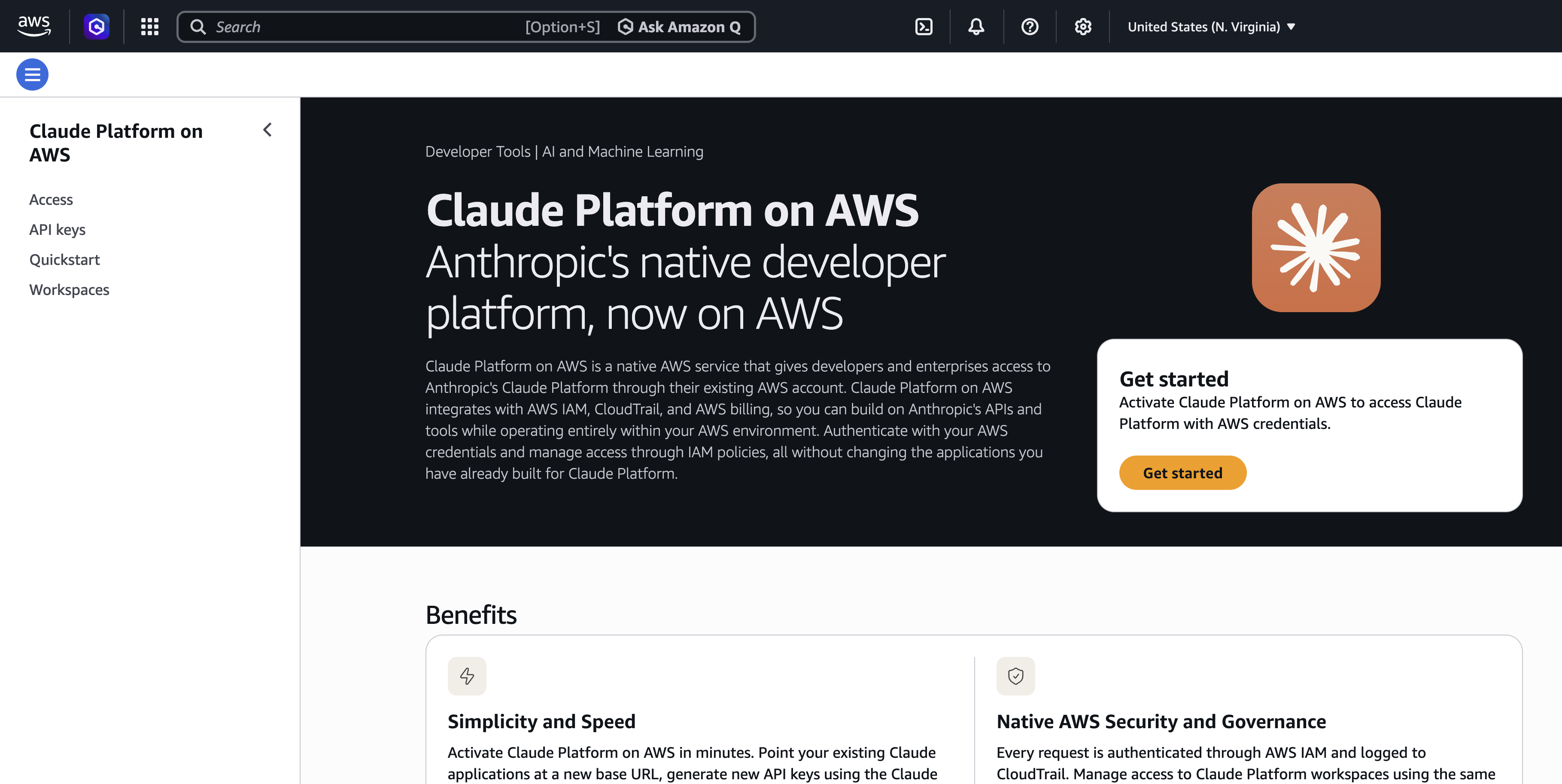
  14. Introducing Claude Platform on AWS: Anthropic’s native platform, through your AWS account

    Anthropic has launched the Claude Platform on AWS, allowing customers to access its native Claude Platform experience directly through their AWS accounts. This integration provides unified billing, authentication via AWS IAM, and audit logging through CloudTrail, simplifying cost management and security for AWS users. While Claude models are also available on Amazon Bedrock with AWS as the data processor, the new platform is operated by Anthropic, with data processed outside the AWS boundary, making it suitable for users without strict regional data residency requirements. AI

    Introducing Claude Platform on AWS: Anthropic’s native platform, through your AWS account

    IMPACT Simplifies AI integration for AWS customers by consolidating billing and authentication, while offering direct access to Anthropic's latest features.

  15. Two engines for AI slide decks: HTML output vs gpt-image-2 (and how we solved CJK rendering)

    A tool for generating AI-powered slide decks faced challenges with non-Latin character rendering, particularly for Chinese, Japanese, and Korean (CJK) languages. To address this, the developers implemented two distinct rendering engines: one using HTML and a template engine for editable web slides, and another leveraging OpenAI's gpt-image-2 model to render each slide as a high-fidelity image, ensuring accurate CJK character display. The decision to offer both engines allows users to choose between rapid iteration with editable content or superior typographic accuracy for CJK, though the developers plan to refine this by enabling per-slide engine selection. AI

    IMPACT Enhances usability of AI presentation tools for non-English content, potentially broadening adoption in global markets.

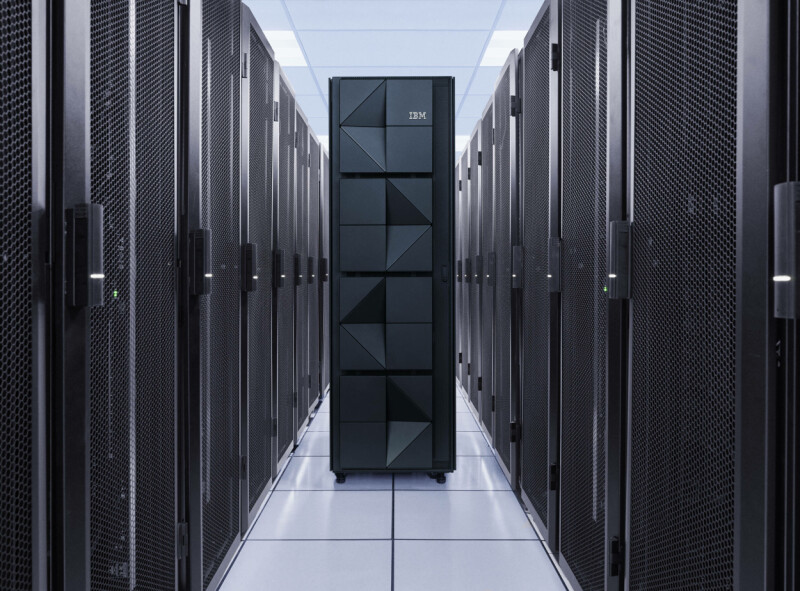
  16. Rust stalks IBM mainframes, but only in nightly form

    The Rust programming language is being adapted for IBM mainframes, with a patch series enabling its use on Linux for the s390 architecture. This development aims to bring memory-safe coding practices to the mainframe environment, although it currently exists in a nightly build state with some compiler caveats. The effort is part of a broader trend of integrating modern development tools with legacy systems. AI

    Rust stalks IBM mainframes, but only in nightly form

    IMPACT Enables memory-safe programming for legacy mainframe systems, potentially improving reliability and security.

  17. Tigermed: Controlling shareholder investigated for alleged violations of information disclosure related to changes in shareholding

    3M has joined an industry alliance focused on advancing optical interconnect technology for AI data centers. This collaboration aims to develop and promote solutions for the increasing demands of AI infrastructure. The initiative highlights the growing importance of specialized hardware and networking in supporting large-scale AI deployments. AI

    IMPACT Accelerates development of critical infrastructure for scaling AI computation.

  18. US government site removes AI test details from MS, Google, xAI — TradingView News https://www.yayafa.com/2800233/ # AgenticAi # AI # ArtificialGeneralIntelligence # ArtificialIntelligenc

    A new, lightweight AI model named Needle has been developed by distilling Gemini's tool-calling capabilities into a 26 million parameter model. This smaller model is designed to run on smartphones, making it easier for developers to build AI agents for mobile devices. The project aims to bring advanced AI functionalities to edge devices. AI

    US government site removes AI test details from MS, Google, xAI — TradingView News https://www.yayafa.com/2800233/ # AgenticAi # AI # ArtificialGeneralIntelligence # ArtificialIntelligenc

    IMPACT Enables more powerful AI agents to run directly on mobile devices, reducing reliance on cloud processing.

  19. Xunjie Xing: 1.6T/800G optical module PCB products are still in the sample stage and have not yet generated revenue

    Qiangda Circuit has announced that its PCB products for 800G and 1.6T optical modules are ready for sample production, with testing and validation to be completed based on customer needs. Meanwhile, Xunjiexing stated that its 1.6T/800G optical module PCB products are still in the sample stage and have not yet generated revenue, with high-end products currently representing a small portion of their business. In related news, SoftBank has invested $450 million in the UK semiconductor company Graphcore. AI

    IMPACT These developments in high-speed optical modules and semiconductor investment are crucial for scaling AI infrastructure and training.

  20. The Convergence of Open Table Formats and Open Catalogs: Catalog Commits is Generally Available

    Databricks has announced the general availability of Catalog Commits for Unity Catalog managed tables, a significant platform upgrade. This feature aims to unify the lakehouse by aligning Delta Lake with Iceberg's catalog-oriented model, allowing catalogs to coordinate Delta table discovery, access, and state across various engines. Catalog Commits address challenges like "split brain" scenarios where catalog metadata diverges from actual table state, and enable multi-statement, multi-table transactions, which were previously unsupported in open lakehouse architectures. AI

    IMPACT Enhances data coordination and transactional capabilities for AI workloads built on the lakehouse architecture.

  21. Chip manufacturer MediaTek releases AI agentification engine 2.0, cooperating with multiple mobile phone manufacturers for native system Claw

    MediaTek has launched its Dimensity AI Agent Engine 2.0, featuring SensingClaw technology for continuous, low-power sensing. This enables device manufacturers to create Agent OS capabilities, allowing for proactive awareness and cross-application control. The company also announced native Claw integrations with OPPO, Xiaomi, and Transsion, emphasizing proactive execution and cross-device seamlessness while prioritizing on-device privacy and data security. Additionally, MediaTek introduced the Tianxian AI Development Kit 3.0 to enhance multimodal agent capabilities for faster deployment on edge devices. AI

    IMPACT Enhances on-device AI capabilities, potentially accelerating the development and adoption of AI-powered operating systems and applications across mobile devices.

  22. Brazil cancels federal tax on imported goods worth $50 or less

    South Korea's KRX stock exchange has integrated AI technology into its capital market surveillance efforts. This move follows KRX's acquisition of local AI startup Fair Labs, aimed at accelerating its AI transformation and bolstering its data operations. The adoption of AI is expected to enhance market monitoring and data analysis capabilities. AI

    IMPACT Enhances financial market surveillance and data operations through AI integration.

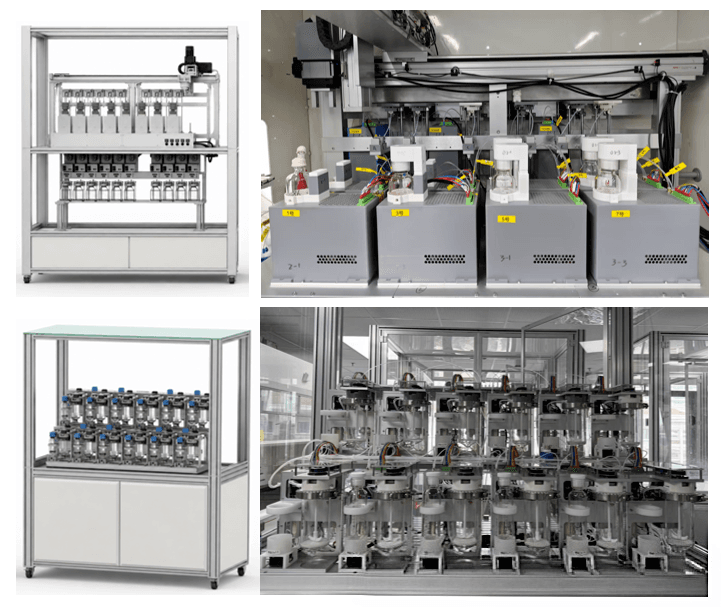
  23. Shanghai AI Lab Achieves Breakthrough in Chip Photoresist Resin Using AI-Driven R&D Platform

    Researchers at Shanghai AI Lab have developed a new high-purity KrF photoresist resin for semiconductor manufacturing. They utilized an AI-driven R&D platform to achieve batch consistency that meets industry standards. The material is now undergoing customer validation with Hengkun New Materials. AI

    Shanghai AI Lab Achieves Breakthrough in Chip Photoresist Resin Using AI-Driven R&D Platform

    IMPACT Enables more efficient and consistent production of advanced semiconductor materials.

  24. How to Get Your Anthropic Claude API Key

    This guide details how to obtain and securely use an API key for Anthropic's Claude models. It walks users through creating an Anthropic account, generating an API key from the console, and setting up billing. The article emphasizes storing the key in environment variables rather than directly in code and provides examples for Python, Node.js, and curl. It also covers best practices for managing multiple keys across different environments and understanding rate limits. AI

    IMPACT Provides developers with essential instructions for integrating Anthropic's Claude models into their applications.

  25. The Little-Known Chinese Company Powering NVIDIA's Most Advanced AI Servers

    Hongdu Electronics, a Chinese PCB manufacturer, has become the sole global supplier for NVIDIA's 78-layer backplane, a crucial component for advanced AI servers. This exclusive role has significantly boosted the company's performance, with profits growing by 62.9% year-over-year in the first quarter of 2026. The surge in demand for AI servers is directly fueling Hongdu Electronics' substantial financial gains. AI

    IMPACT Highlights the critical role of specialized component suppliers in enabling the production of advanced AI hardware.

  26. Amap and Qianwen C-end Application Team Open Source AGenUI: The First Native A2UI Framework Covering iOS, Android, and HarmonyOS

    High-de and Alibaba's Qwen teams have released AGenUI, an open-source framework for AI Agent developers. This framework is the first to support native rendering of AI-generated interfaces across iOS, Android, and HarmonyOS. AGenUI allows AI models to describe user interfaces using a standard protocol, which the framework then renders as interactive native components, moving beyond text-based interactions to generative UI. AI

    IMPACT Enables developers to create AI-driven interfaces across multiple mobile platforms, simplifying app development and enhancing user interaction.

  27. Search Your Block Floating Point Scales!

    Researchers have developed a new method called ScaleSearch to optimize the selection of scale factors in Block Floating Point (BFP) quantization for generative models. This technique aims to minimize quantization errors by leveraging mantissa bits, thereby improving the performance of existing quantization methods like Post Training Quantization (PTQ) and low-precision attention. Experiments demonstrate significant reductions in quantization error and performance improvements on language models such as Qwen3-8B and Llama 3.1 70B, while maintaining near-baseline accuracy. AI

    IMPACT Improves efficiency and accuracy of generative models by optimizing quantization techniques.

  28. Towards Affordable Energy: A Gymnasium Environment for Electric Utility Demand-Response Programs

    Researchers have developed DR-Gym, an open-source Gymnasium-compatible environment to train reinforcement learning agents for optimizing electric utility demand-response programs. This simulator addresses the challenge of offline data limitations by creating a realistic, market-level environment that captures the interactive feedback between utility pricing and customer adaptation. DR-Gym features a regime-switching wholesale price model, physics-based building demand profiles, and a configurable multi-objective reward function to support diverse learning objectives for grid flexibility and energy affordability. AI

    IMPACT Enables AI-driven optimization of energy demand-response programs, potentially improving grid flexibility and consumer affordability.

  29. Nvidia gains an "Oracle" in 4 days, analysts say chip demand shows no sign of slowing down

    Nvidia's stock surged 14% over four trading days, adding $591 billion in market value, surpassing Oracle's total market capitalization. Analysts attribute this growth to strong capital expenditure commitments from major cloud service providers, indicating sustained high demand for Nvidia's chips. Meanwhile, a separate report highlights that major tech companies are rapidly consuming their annual AI budgets within four months, leaving CTOs surprised by the accelerated spending. AI

    IMPACT Sustained demand for Nvidia's chips signals continued AI infrastructure build-out, while rapid AI budget consumption by tech firms indicates accelerated AI integration.

  30. Enabling AI-Native Mobility in 6G: A Real-World Dataset for Handover, Beam Management, and Timing Advance

    Researchers have released a new real-world dataset designed to improve AI and machine learning models for 6G mobile networks. The dataset captures various mobility scenarios, including pedestrian, vehicular, and train travel, focusing on handover events and timing advance measurements. This data aims to overcome the limitations of simulated datasets, providing a more accurate foundation for developing AI-native mobility procedures and reducing service interruptions. AI

    IMPACT Provides a realistic dataset to train and evaluate AI/ML models for critical 6G mobility functions, potentially reducing service interruptions.

  31. Playwright MCP vs Tap vs Browserbase — where the credentials live

    The article compares three browser automation tools: Playwright MCP, Browserbase + Stagehand, and Tap, highlighting their distinct use cases rather than direct substitution. Playwright MCP is suitable for tasks not requiring login or for one-shot research, while Tap excels in repeated workflows by compiling AI-generated plans to minimize token costs. Browserbase + Stagehand is an option for logged-in sessions if uploading credentials to a third-party cloud is acceptable, whereas Tap keeps all credentials local. AI

    IMPACT Helps developers choose the right browser automation tool based on specific needs like token cost, credential handling, and workflow type.

  32. Production-Grade Error Handling for Snowflake Data Pipelines Using LangGraph and Cortex AI

    This article details a production-grade error handling system for Snowflake data pipelines, utilizing LangGraph and Cortex AI. It categorizes errors into four classes: transient, LLM-recoverable, user-fixable, and unexpected, with specific logic tailored for Snowflake's environment. The implementation uses LangGraph's RetryPolicy and ToolNode, with Llama 3.3 70B via Cortex AI for LLM inference, and is tested on a free Snowflake trial account. AI

    Production-Grade Error Handling for Snowflake Data Pipelines Using LangGraph and Cortex AI

    IMPACT Enhances reliability of data pipelines by integrating LLMs for error resolution, potentially reducing downtime and manual intervention.

  33. The authenticated browser MCP — why cloud tools can't see your logged-in state

    Cloud-based AI browser tools struggle to access authenticated web sessions due to architectural limitations, preventing them from performing tasks requiring login credentials. These tools operate on the public web and cannot securely transfer sensitive cookies or bypass security measures like browser fingerprinting and two-factor authentication that detect non-human access. A new category of 'authenticated browser MCP' tools aims to solve this by running directly within a user's local browser, operating on their existing sessions without data leaving the machine. AI

    IMPACT New tools emerge to enable AI agents to interact with authenticated web sessions, expanding their practical use cases beyond public websites.

  34. Stagehand vs Tap — Compile-Time AI vs Runtime AI for Browser Automation

    Tap, a new tool, offers a deterministic approach to AI-powered browser automation by compiling AI understanding into JavaScript programs, contrasting with interpreter-based methods like Stagehand. While Stagehand is suitable for one-off tasks, Tap's compiled programs are designed for repeated execution, significantly reducing costs and improving reliability. This deterministic output allows for effective drift detection, making Tap ideal for production automations where consistent results are crucial. AI

    IMPACT Offers a cost-effective and reliable alternative for recurring browser automation tasks by compiling AI understanding into deterministic programs.

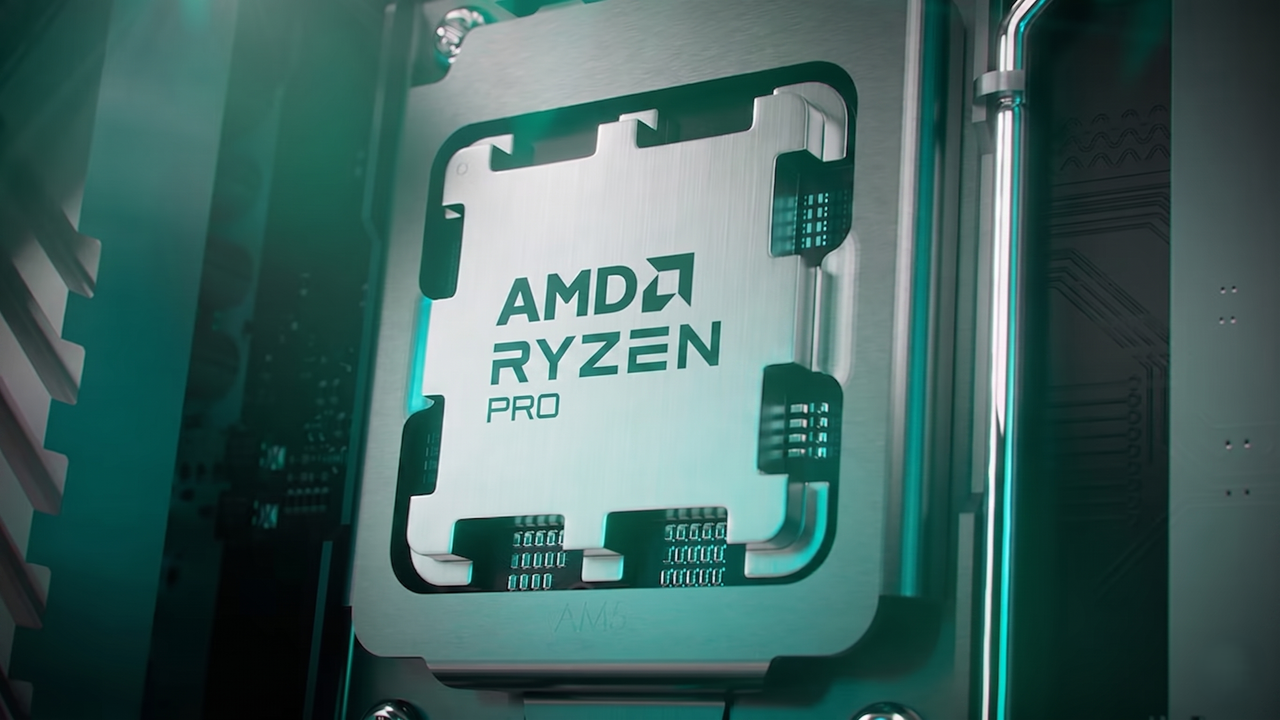
  35. AMD expands its Ryzen 9000 PRO lineup with six new SKUs, now featuring 3D V-Cache for the first time — new workstation CPUs have up to 170W TDPs, available with OEMs later this year

    AMD has introduced six new Ryzen 9000 PRO series CPUs, marking the first time the workstation-focused lineup includes 3D V-Cache technology. These processors, based on Zen 5 architecture, offer core counts ranging from 6 to 16 and feature higher Thermal Design Power (TDP) ratings, with the flagship Ryzen 9 PRO 9965X3D boasting 16 cores and 170W TDP. The new CPUs are slated for availability through OEMs like Lenovo later this year, with pricing not formally disclosed. AI

    AMD expands its Ryzen 9000 PRO lineup with six new SKUs, now featuring 3D V-Cache for the first time — new workstation CPUs have up to 170W TDPs, available with OEMs later this year

    IMPACT New workstation CPUs with enhanced cache may improve performance for AI development and inference tasks.

  36. From Prompt to Pointer Engineering: Deepmind tries to reinvent the mouse cursor for the AI era

    Google DeepMind is developing an AI-powered mouse pointer that aims to understand the visual and semantic context of what a user is pointing at. This new system, powered by Gemini, intends to reduce the need for lengthy text prompts by allowing users to interact with AI assistants more intuitively across various applications. The technology is being integrated into Chrome and future Google laptops, enabling actions like summarizing PDFs or requesting chart versions of data simply by pointing and speaking. AI

    From Prompt to Pointer Engineering: Deepmind tries to reinvent the mouse cursor for the AI era

    IMPACT Enhances user interaction with AI by providing contextual awareness directly through the cursor, potentially streamlining workflows across applications.

  37. LISA: Cognitive Arbitration for Signal-Free Autonomous Intersection Management

    Researchers have developed LISA, a novel framework for signal-free autonomous intersection management that leverages large language models (LLMs) for real-time decision-making. Unlike traditional systems, LISA reasons over declared vehicle intents, considering factors like priority and queue pressure to optimize traffic flow. Evaluations show LISA significantly reduces control delay, waiting times, and queue lengths, while also improving fuel efficiency and intent satisfaction compared to existing methods. AI

    IMPACT LLM-driven traffic management could significantly improve urban mobility and reduce vehicle emissions.

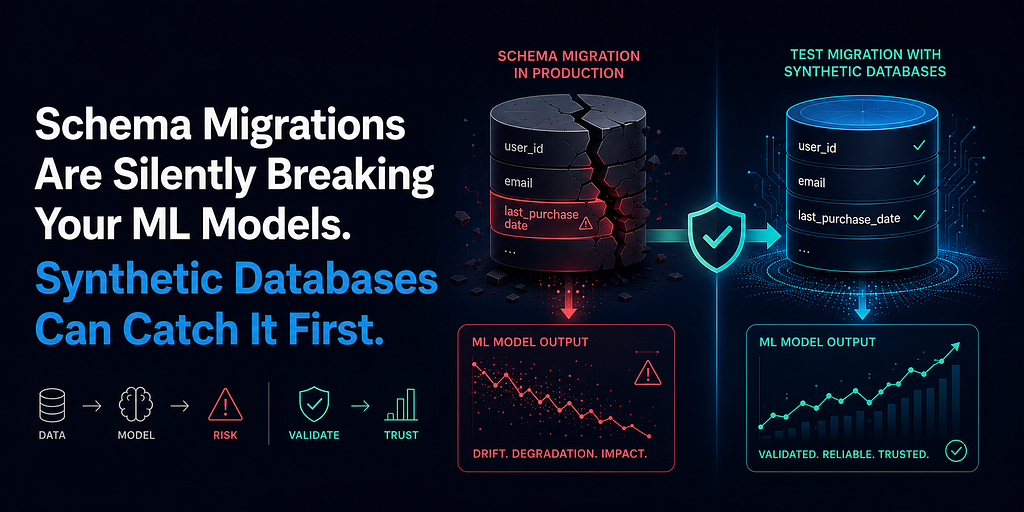
  38. Schema Migrations Are Silently Breaking Your ML Models. Synthetic Databases Can Catch It First.

    Database schema changes can silently break machine learning models by altering data formats or column names, leading to incorrect feature calculations and degraded model performance. A common issue involves renamed columns, where pipelines may default to zero values for missing data, causing models to misinterpret new users. To prevent these silent failures, a synthetic schema testing framework can be implemented. This framework generates synthetic databases that mimic production schemas, allowing migrations to be tested against the ML pipeline before they impact live data. AI

    Schema Migrations Are Silently Breaking Your ML Models. Synthetic Databases Can Catch It First.

    IMPACT Mitigates silent data integrity issues that can degrade ML model performance in production environments.

  39. Query The Quantum

    A project developed for the TigerGraph GraphRAG Inference Hackathon demonstrated that GraphRAG significantly reduces token consumption and improves accuracy for complex queries. By constructing a knowledge graph of entities and their relationships, GraphRAG enables more focused retrieval compared to traditional vector-based RAG. Benchmarking against LLM-only and basic RAG pipelines on over 2 million quantum computing research paper abstracts, GraphRAG achieved a 90% accuracy rate, outperforming the other methods. AI

    IMPACT GraphRAG's efficiency gains could significantly lower operational costs for LLM applications handling complex, multi-hop queries.

  40. There aren’t enough rockets for space data centers. Cowboy Space raised $275 million to build them.

    Cowboy Space Corporation has secured $275 million in Series B funding to develop its own rocket program, aiming to address the scarcity of launch capacity for orbital data centers. The company, formerly Aetherflux, pivoted from space-based solar power to focus on hosting AI computing workloads in orbit. CEO Baiju Bhatt believes building their own rockets is necessary to scale the business and compete economically with terrestrial alternatives, despite the significant challenge and competition from established players like SpaceX and Blue Origin. AI

    IMPACT Accelerates the development of off-planet AI compute infrastructure, potentially alleviating terrestrial compute constraints.

  41. SOAR: Scale Optimization for Accurate Reconstruction in NVFP4 Quantization

    Researchers have introduced SOAR, a new post-training quantization framework designed to enhance the accuracy of NVFP4 quantization for large language models. SOAR employs Closed-form Joint Scale Optimization (CJSO) to jointly optimize global and block-wise scales by minimizing reconstruction error. It also utilizes Decoupled Scale Search (DSS) to separate quantization and dequantization scales, improving precision. Experiments demonstrate that SOAR achieves superior accuracy compared to existing NVFP4 methods without increasing memory footprint or requiring new hardware. AI

    IMPACT Improves LLM efficiency and accuracy by optimizing quantization, potentially reducing computational costs and memory requirements.

  42. Harness Engineering as Categorical Architecture

    Researchers have introduced a formal theory for agent harness engineering using categorical architecture, specifically the (G, Know, Phi) triple from the ArchAgents framework. This formalization provides a structured approach to designing, composing, and comparing LLM-based agent frameworks. The proposed method maps key agent components like memory and skills to the triple's elements and ensures structural guarantees through a compiler that checks identity and verifier replay, rather than output correctness. A reference implementation demonstrates the preservation of these guarantees across multiple popular agent frameworks, including LangGraph, Swarms, DeerFlow, and Ralph. AI

    IMPACT Provides a formal theory for building and comparing LLM agent frameworks, potentially improving reliability and interoperability.

  43. Heterogeneous SoC Integrating an Open-Source Recurrent SNN Accelerator for Neuromorphic Edge Computing on FPGA

    Researchers have developed a heterogeneous System-on-Chip (SoC) that integrates an open-source Recurrent Spiking Neural Network (SNN) accelerator called ReckOn. This design aims to bring efficient, low-power neuromorphic computing to edge devices by implementing SNNs on Field-Programmable Gate Arrays (FPGAs), offering a cost-effective alternative to silicon tape-outs. The SoC manages ReckOn's operations alongside traditional processors like the RISC-V-based X-HEEP microcontroller and ARM processors, validating accuracy and evaluating online learning capabilities. AI

    IMPACT Enables more efficient and cost-effective deployment of neuromorphic computing on edge devices.

  44. Arm's $2 billion in AGI CPU sales are still not enough to penetrate 5% of overall market share, analyst reveals — at least $90 million worth of CPUs to be shipped before FY2027

    Arm has secured over $2 billion in commitments for its new AGI CPU, more than double its initial expectations, with $90-100 million slated for shipment in Q4 2026. Despite this strong demand, an analyst predicts Arm's market share in the data center CPU sector will remain in the low single digits. The company projects substantial revenue growth, aiming for $15 billion in AGI CPU sales by FY 2031, which would significantly boost its total revenue. AI

    Arm's $2 billion in AGI CPU sales are still not enough to penetrate 5% of overall market share, analyst reveals — at least $90 million worth of CPUs to be shipped before FY2027

    IMPACT Arm's new AGI CPU launch signals growing demand for specialized hardware, potentially impacting the server CPU market dominated by Intel and AMD.

  45. SoftBank launches battery business in Japan to meet AI power demand

    SoftBank is launching a battery manufacturing business in Japan to meet the escalating power demands of artificial intelligence applications. The company aims to produce battery cells and energy storage systems, targeting gigawatt-hour scale production by fiscal year 2028 and over 100 billion yen in annual revenue by 2030. This initiative involves partnering with South Korean startups to develop zinc-halogen batteries, which utilize water-based electrolytes for enhanced safety compared to traditional lithium-ion cells and to reduce reliance on Chinese supply chains. AI

    IMPACT Accelerates AI infrastructure build-out by securing dedicated power solutions.

  46. What's the best way to access DeepSeek and Qwen in production without managing separate API keys for each provider

    A developer found that managing multiple API keys for different LLM providers, including DeepSeek, Qwen, and OpenAI, became unmanageable at production scale. Standard API aggregators failed to reduce latency and added hidden costs for Chinese models. The solution was Yotta Labs AI Gateway, which provides a single API key and handles compute routing at the infrastructure level, reducing latency and costs for models like DeepSeek and Qwen. AI

    IMPACT Simplifies production LLM integration by consolidating access to diverse models and reducing operational overhead.

  47. Should you build or buy an MCP runtime for enterprise AI agents in 2026?

    The article discusses the architectural decision enterprises face regarding AI agent runtimes in 2026, specifically whether to build or buy the necessary infrastructure. It highlights that the engineering bottleneck has shifted from agent development to securely integrating these agents into enterprise systems for widespread use. The decision hinges on whether to develop a custom runtime layer handling aspects like authorization, credential vaulting, and auditing, or to purchase an off-the-shelf solution. AI

    IMPACT Guides enterprise AI strategy by outlining build vs. buy trade-offs for agent runtime infrastructure, impacting deployment costs and security.

  48. Pro Universe Robotics Unveils Industrial Embodied Intelligence Product Matrix 2.0

    PL-Universe Robotics has launched its Product Matrix 2.0, an industrial embodied intelligence suite. This release includes a novel data acquisition solution capable of sub-millimeter precision. The company aims to capture a significant share of the trillion-yuan industrial market with these advanced offerings. AI

    Pro Universe Robotics Unveils Industrial Embodied Intelligence Product Matrix 2.0

    IMPACT Enhances industrial automation capabilities with advanced data acquisition for AI-driven processes.

  49. Intel, SK hynix shares surge following reports of chip packaging partnership — SK is said to be testing Intel's 2.5D EMIB for HBM integration

    Intel and SK hynix experienced significant stock price increases following reports of a potential chip packaging partnership. SK Hynix is reportedly testing Intel's 2.5D EMIB technology for integrating high-bandwidth memory (HBM) with logic semiconductors. This collaboration could offer an alternative to TSMC's heavily utilized CoWoS packaging, potentially benefiting AI chip developers facing capacity constraints. AI

    Intel, SK hynix shares surge following reports of chip packaging partnership — SK is said to be testing Intel's 2.5D EMIB for HBM integration

    IMPACT Potential for increased AI chip manufacturing capacity and alternative packaging solutions.

  50. How ByteDance plans to turn OpenClaw craze into a profitable AI business

    ByteDance is developing a business strategy around its open-source AI agent framework, OpenClaw, by offering a cloud-based service called ArkClaw. This move aims to capitalize on the growing demand for AI agent tokens and establish a subscription model, drawing parallels to how MySQL became a successful service. The framework has generated significant enthusiasm among Chinese developers, evidenced by a well-attended event in Shanghai. AI

    How ByteDance plans to turn OpenClaw craze into a profitable AI business

    IMPACT ByteDance's ArkClaw aims to monetize AI agent token consumption, potentially setting a new model for open-source AI business strategies.