PulseAugur
LIVE 09:45:59
research · [3 sources] ·
0
research

Contrastive learning advances model robustness and transparency in AI

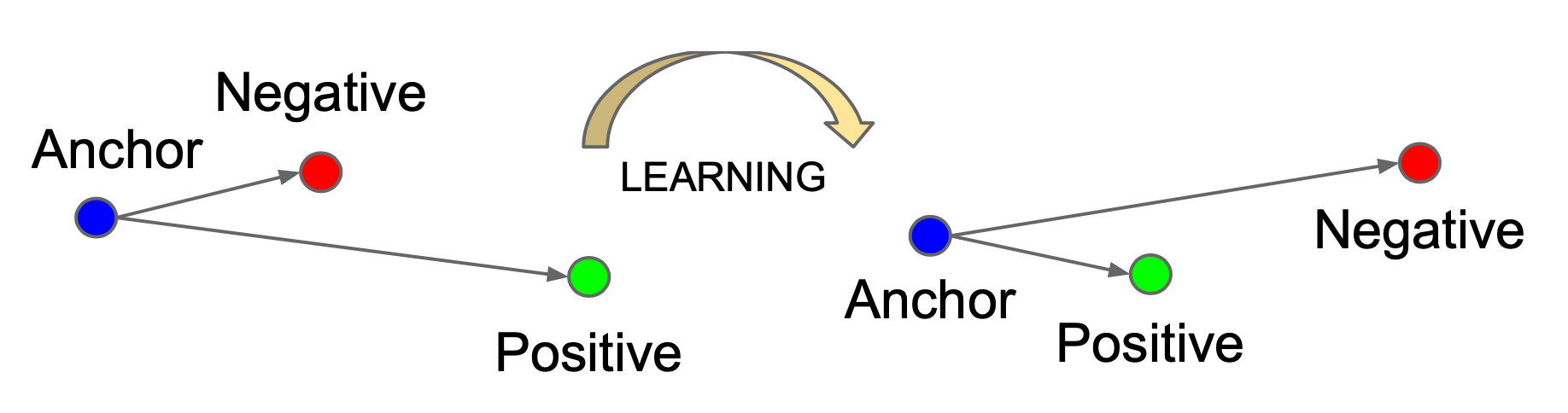
Contrastive learning is a machine learning technique that creates an embedding space where similar data points are grouped together and dissimilar ones are separated. This method can be applied in both supervised and unsupervised settings, offering advantages over traditional cross-entropy loss functions, particularly in safety-critical applications. Research indicates that supervised contrastive learning can lead to more trustworthy and transparent neural networks by improving feature attribution explanations. AI

Summary written by gemini-2.5-flash-lite from 3 sources. How we write summaries →

RANK_REASON The cluster contains two arXiv papers discussing contrastive learning techniques and their properties.
Read on Lil'Log (Lilian Weng) →

Contrastive learning advances model robustness and transparency in AI

COVERAGE [3]

  1. Lil'Log (Lilian Weng) TIER_1 ·

    Contrastive Representation Learning

    <!-- The main idea of contrastive learning is to learn representations such that similar samples stay close to each other, while dissimilar ones are far apart. Contrastive learning can be applied to both supervised and unsupervised data and has been shown to achieve good performa…

  2. arXiv cs.LG TIER_1 · Leonardo Arrighi, Julia Eva Belloni, Aur\'elie Gallet, Ivan Gentile, Matteo Lippi, Marco Zullich ·

    On the Properties of Feature Attribution for Supervised Contrastive Learning

    arXiv:2604.22540v1 Announce Type: new Abstract: Most Neural Networks (NNs) for classification are trained using Cross-Entropy as a loss function. This approach requires the model to have an explicit classification layer. However, there exist alternative approaches, such as Contra…

  3. arXiv cs.AI TIER_1 · Marco Zullich ·

    On the Properties of Feature Attribution for Supervised Contrastive Learning

    Most Neural Networks (NNs) for classification are trained using Cross-Entropy as a loss function. This approach requires the model to have an explicit classification layer. However, there exist alternative approaches, such as Contrastive Learning (CL). Instead of explicitly opera…