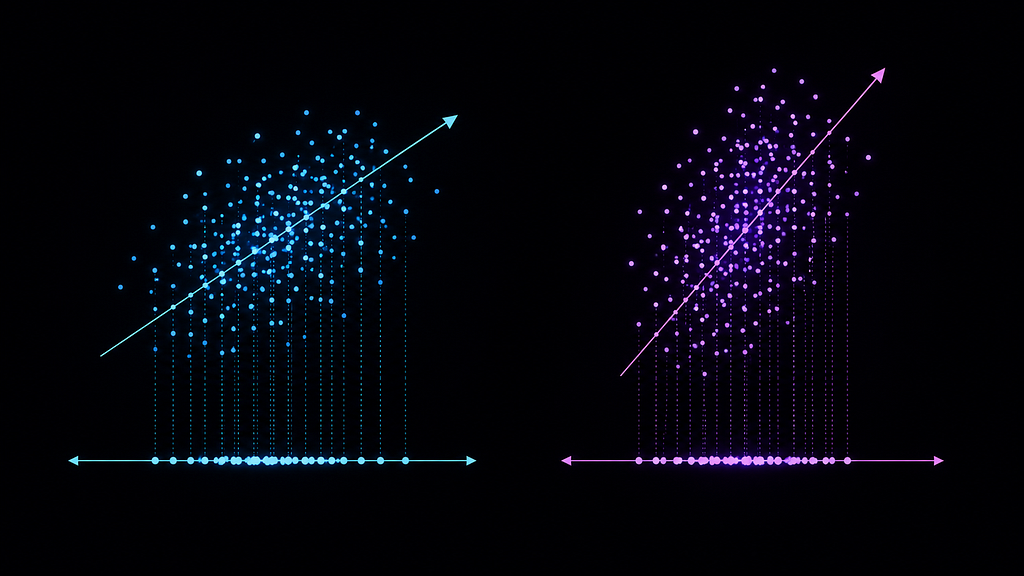
The author encountered issues with L2 distance when comparing audio fingerprints, as it incorrectly identified dissimilar distributions as similar. This metric failed to capture the structural differences in energy distribution across wavelet scales. To address this, the author proposes using Sliced-Wasserstein distance, which measures the work required to transform one distribution into another. This method offers a more accurate comparison for complex audio data and is computationally feasible for practical applications. AI
Summary written by gemini-2.5-flash-lite from 1 source. How we write summaries →
IMPACT Introduces a more accurate metric for comparing complex data distributions, potentially improving AI model performance in areas like audio analysis.
RANK_REASON The article details a novel metric for comparing data distributions, which is a research-oriented topic. [lever_c_demoted from research: ic=1 ai=1.0]