PulseAugur / Pulse
LIVE 10:09:06

Pulse

last 48h
[50/61] 89 sources

What AI is actually talking about — clusters surfacing on Bluesky, Reddit, HN, Mastodon and Lobsters, re-ranked to elevate originality and crush noise.

  1. AI agent IAM: why enterprise identity governance is broken. Via @venturebeat #AI #ArtificialIntelligence 💻 🤖 🧠 AI agent IAM: why enterprise i...

    Enterprise identity and access management (IAM) systems are struggling to keep pace with the rise of AI agents. These agents, capable of autonomous action, introduce complex challenges for traditional governance models. Existing IAM solutions are not designed to handle the dynamic and often unpredictable nature of AI agent behavior, leading to potential security vulnerabilities and compliance issues. AI

    IMPACT Highlights critical security and compliance gaps for organizations deploying AI agents.

  2. 📰 Deepfake Pornography Shock: The Trauma of Seeing Your Body and Solutions in 2026 Deepfake technology, by transforming innocent photos into unauthorized pornographic content, victimizes...

    Deepfake technology is enabling a new wave of digital assault, where individuals' images are used without consent to create explicit content. Victims are experiencing severe psychological trauma, comparable to physical assault, as their likenesses are exploited. Researchers are exploring preventative measures and solutions to combat this growing problem, with a focus on addressing the exploitation in 2026. AI

    📰 Deepfake Pornography Shock: The Trauma of Seeing Your Body and Solutions in 2026 Deepfake technology, by transforming innocent photos into unauthorized pornographic content, victimizes...

    IMPACT Highlights the severe psychological trauma and exploitation faced by victims of AI-generated deepfake pornography, underscoring the need for ethical guidelines and preventative measures.

  3. The foundation of modern open-source software is cracking under the strain of exploitation by tech giants. Free libraries and public repositories,

    Singapur is strategically shifting its focus towards artificial intelligence and renewable energy to maintain its global economic standing. Concurrently, the open-source software ecosystem is facing a crisis due to excessive exploitation by large tech companies, exacerbated by AI-driven automation. AI

    IMPACT Geopolitical shifts and AI's impact on open-source infrastructure highlight evolving industry dynamics.

  4. 📰 More Rumours About The Zelda Movie Cast Surface Online Here we go again.We've already got some surprise news about the live-action Zelda movie today, with Nin

    A new report suggests the UK's games industry is not fully understood and advocates for a unified research framework. This initiative, developed by UKIE and OKRE, aims to enhance the sector's economic and social contributions. Separately, rumors are circulating about the cast for the upcoming live-action Zelda movie, which is slated for an April 2027 release. AI

    📰 More Rumours About The Zelda Movie Cast Surface Online Here we go again.We've already got some surprise news about the live-action Zelda movie today, with Nin
  5. A new article is live on Cyfinoid Research: AppSec in the New Security Cost Model https://cyfinoid.com/appsec-in-the-new-security-cost-model/ The core argument

    An article from Cyfinoid Research argues that AI fundamentally alters the cost model for application security (AppSec). The core issue is that AI reduces attacker iteration costs, shifting the defender bottleneck to verification capacity. This necessitates a reevaluation of AppSec programs, emphasizing smaller stacks, attack surface reduction, and bug-class elimination. The article also touches on Goldratt's Theory of Constraints and the SaaS vs. in-house ownership trade-off, suggesting that the key metric for AppSec is now safe remediation throughput rather than just vulnerability prioritization. AI

    IMPACT Argues AI necessitates a fundamental shift in application security strategies, focusing on remediation throughput over vulnerability prioritization.

  6. Honor the Earth resists data center projects on and near Native lands. This report dives into the key interventions that have supported massive wins in multiple

    Native American advocacy group Honor the Earth is actively opposing data center developments situated on or near Indigenous territories. The organization has documented successful interventions in multiple Oklahoma communities against these projects. This resistance highlights growing concerns about the environmental and cultural impact of large-scale data infrastructure. AI

    IMPACT The cluster discusses the environmental and cultural impact of data centers, which are essential infrastructure for AI, but does not focus on AI technology itself.

  7. The AI Great Leap Forward "In 1958, Mao ordered every village to produce steel. The steel was useless. The crops rotted. Today's top-down AI mandates are produc

    The author draws a parallel between Mao's disastrous Great Leap Forward in 1958, which mandated widespread steel production leading to crop failure, and current top-down AI mandates. This analogy suggests that forced, widespread implementation of AI without proper context or understanding could lead to similarly detrimental and unproductive outcomes. AI

    IMPACT Draws parallels between historical policy failures and current AI mandates, suggesting potential negative consequences.

  8. The Other Half of AI Safety

    A recent article highlights a critical gap in AI safety protocols, arguing that while catastrophic risks like bioweapons are heavily guarded against, mental health harms are treated with less severity. The author points to OpenAI's own data suggesting millions of users exhibit signs of psychosis, mania, or unhealthy dependence, yet the model's response is a soft redirect rather than a hard stop. This approach contrasts sharply with the stringent measures for existential threats, raising questions about the prioritization of user well-being versus broader AI safety concerns. AI

    IMPACT Argues for a stronger focus on personal AI safety and mental health impacts, potentially influencing future AI development and regulation.

  9. Fascinating article! Well worth a read & a boost! “With China, It’s Getting Late Early” by Prof. Robert Pape in Escalation Trap on Substack “What Americans Are

    An analysis suggests that the Global South is being excluded from the process of defining artificial intelligence safeguards, a process primarily driven by the United States and its tech companies. This exclusion occurs amidst geopolitical discussions, including former President Trump's visit to China, highlighting a broader debate about whether China is out-organizing innovation more effectively than the U.S. The article posits that the focus should shift from comparative manufacturing costs to China's growing effectiveness in organizing innovation. AI

    IMPACT Highlights potential geopolitical divides in AI governance and innovation strategy, impacting global AI development and adoption.

  10. Vancouver mayor clarifies ’11 AI agents’ used to do work is strictly personal https:// web.brid.gy/r/https://globalne ws.ca/news/11848513/vancouver-mayor-ken-si

    Vancouver Mayor Ken Sim has clarified his earlier statement about using "11 AI agents" for work, specifying that these tools were used solely for personal tasks and not for any municipal duties. He emphasized that these AI agents operated on a personal computer, were never connected to city hall networks, and did not access confidential information or influence city decisions. Sim stated the AI was used for personal learning, tracking news and financial events, and dietary planning, aiming to counter misinformation that could harm Vancouver's tech sector. AI

    Vancouver mayor clarifies ’11 AI agents’ used to do work is strictly personal https:// web.brid.gy/r/https://globalne ws.ca/news/11848513/vancouver-mayor-ken-si

    IMPACT Clarifies the boundaries of AI use in public office, potentially influencing public perception and policy regarding AI in government.

  11. AI doesn’t create bias, it inherits it – how do we ensure fairness when it comes to automated decisions? # AI # Tech # MachineLearning # Ethics # Bias # Automat

    AI systems do not generate bias but rather absorb it from the data they are trained on. Ensuring fairness in automated decision-making requires addressing this inherited bias. This involves careful consideration of data sources and algorithmic processes to mitigate discriminatory outcomes. AI

    IMPACT Highlights the critical need to address inherited bias in AI systems to ensure equitable outcomes in automated decision-making.

  12. https://www. europesays.com/2988084/ Who Owns AI-Generated Content? Human Authorship Still Controls, and Documenting the Creation Process Is Critical | Polsinel

    Legal experts at Polsinelli are emphasizing that human authorship remains the primary determinant of ownership for AI-generated content. They stress the importance of meticulously documenting the creation process to establish clear human involvement. This approach is crucial for navigating the evolving legal landscape surrounding AI and intellectual property. AI

    https://www. europesays.com/2988084/ Who Owns AI-Generated Content? Human Authorship Still Controls, and Documenting the Creation Process Is Critical | Polsinel

    IMPACT Clarifies the legal standing of AI-generated content, emphasizing human authorship for ownership claims.

  13. Tech continues to be political | Miriam Eric Suzanne https://www. miriamsuzanne.com/2025/02/12/t ech-ai-wtf/ # Tech # Technology # AI # LLM

    The author argues that technology, particularly AI, is inherently political and cannot be separated from societal power structures. They contend that discussions around AI often overlook its embedded political nature, focusing instead on technical aspects while ignoring the implications for governance and social impact. This perspective suggests that understanding AI requires acknowledging its role in shaping and reflecting political landscapes. AI

    IMPACT Highlights the need to consider the political and societal implications of AI development and deployment.

  14. The fight against # AI # datacenters isn’t just about tech – it’s about # democracy https://www. theguardian.com/commentisfree/ 2026/may/08/ai-datacenters-democ

    The expansion of AI datacenters poses a significant threat to democratic processes, extending beyond mere technological concerns. These facilities consume vast amounts of energy and water, exacerbating environmental crises that disproportionately affect marginalized communities. Furthermore, the concentration of power and resources required for AI development and deployment risks undermining public discourse and equitable access to information. AI

    IMPACT AI's infrastructure build-out may undermine democratic principles and exacerbate environmental and social inequalities.

  15. Here's something I'm thinking about a lot right now: local communities around the world are fighting to resist data centres. But how many local governments are

    Local communities are increasingly opposing the construction of data centers due to environmental concerns. This has led to discussions about the ethical implications of local government staff using generative AI tools like Copilot. The use of such AI by public officials raises questions about data privacy, potential biases, and the overall impact on community engagement and decision-making processes. AI

    IMPACT Raises questions about the responsible use of AI in public administration and its potential environmental and community impacts.

  16. This demands a lot of questions: how sovereign will it be? What are the real impacts to the environment such as water and power? On paper it sounds like a good

    British Columbia is developing a new data center cluster, sparking discussions about AI sovereignty and environmental impacts. Concerns have been raised regarding the real-world effects on water and power resources, alongside questions about the level of control and independence the region will maintain over its AI infrastructure. AI

    IMPACT Raises questions about the environmental and sovereignty implications of expanding AI infrastructure.

  17. Most U.S. doctors are quietly using AI tools, and many patients have no idea. That gap raises big questions about transparency, trust, and safety in healthcare.

    A significant portion of U.S. physicians are utilizing AI tools in their practice without informing their patients. This lack of transparency creates concerns regarding trust and safety within the healthcare system. The widespread, yet undisclosed, adoption of AI by doctors highlights a critical gap in patient awareness and consent. AI

    IMPACT Highlights potential risks to patient trust and safety due to undisclosed AI use in healthcare settings.

  18. "Were still trying to figure out domestic policy" US # Republicans as they discuss # AI taking your job and teaching your robot children in school. While they w

    US Republicans are reportedly struggling with domestic policy, particularly concerning the implications of AI on employment and education. Discussions have touched upon AI's potential to displace jobs and its role in teaching future generations. This comes amidst broader geopolitical commentary suggesting a lag in policy development compared to international competitors. AI

    IMPACT Highlights the ongoing debate and potential policy challenges surrounding AI's societal impact.

  19. Privacy is becoming one of the most important conversations in modern B2B SaaS. For years, many companies treated privacy mainly as compliance. But with the ris

    Privacy is emerging as a key differentiator in the B2B SaaS market, shifting from a mere compliance concern to a competitive advantage. As AI adoption grows, enterprise clients are increasingly prioritizing trust, transparency, and responsible data practices. Companies that effectively address these privacy considerations may gain a significant edge. AI

    IMPACT Privacy considerations are becoming crucial for enterprise AI adoption, influencing purchasing decisions and competitive positioning.

  20. Everything for AI - Part 2 A few years ago, AI companies were still saying: We want to be regulated so that nothing goes wrong here. Today they are building without

    AI companies that once called for regulation are now building data centers with gas turbines, seemingly disregarding environmental concerns. The author criticizes this shift, suggesting it prioritizes profit for billionaires over addressing issues like noise and climate change. AI

    IMPACT Critiques AI industry's environmental impact and regulatory stance, questioning its long-term sustainability.

  21. From AirTags to AI nudification: the growing toolkit of technology-facilitated abuse. Researchers warn that AI tools like nudification apps and Bluetooth tracke

    Researchers are highlighting the increasing use of AI-powered tools and existing technologies like Bluetooth trackers for domestic abuse. These tools, including AI nudification apps, are becoming part of a growing toolkit for abusive behaviors. Governments are struggling to keep pace with these developments, with the UK proposing new regulations to compel platforms to remove abusive content swiftly. AI

    IMPACT Highlights the potential for AI tools to be weaponized for abuse, prompting regulatory discussions and platform responsibilities.

  22. Meta has embraced a strategy of making its AI technology openly available — albeit not open source by the commonly understood definition — in contrast to compan

    Meta is pursuing a strategy of making its AI technologies openly available, diverging from the approach of companies like OpenAI that restrict access via APIs. This move allows broader access to Meta's AI advancements, though it's not strictly open-source. The company has indicated a willingness to halt development on AI systems deemed too risky. AI

    IMPACT Meta's choice to release AI openly, rather than through APIs, could influence industry standards for AI accessibility and development.

  23. Data centers are coming for rural America

    Data center developers are increasingly targeting rural areas across the United States, promising job creation and economic revitalization. However, these projects often fail to deliver on their employment promises, with early reports suggesting that the number of permanent jobs created is minimal compared to the scale of the facilities. Rural communities, often lacking the expertise to evaluate these proposals, are finding themselves with power- and water-intensive industrial sites that offer few long-term economic benefits. AI

    Data centers are coming for rural America

    IMPACT Data centers are essential infrastructure for AI, and their proliferation in rural areas raises questions about resource allocation and local economic impact.

  24. 4/4 Only then can the rating scheme support investment in Europe’s # AI infrastructure instead of creating new barriers. 📄 Discover our eight recommendations: h

    The Computer & Communications Industry Association (CCIA) Europe has published a position paper outlining eight recommendations for the EU's draft rating scheme for data centers. The paper argues that the scheme should be designed to encourage investment in AI infrastructure across Europe, rather than imposing new obstacles. CCIA Europe emphasizes that a supportive rating system is crucial for the growth of the European AI sector. AI

    IMPACT The proposed EU data center rating scheme could impact the cost and availability of AI infrastructure, influencing investment decisions.

  25. A big lesson of my China visit: compute shortages are holding back Chinese AI - Kai Williams https://www. understandingai.org/p/a-big-le sson-of-my-china-visit-

    A recent visit to China revealed that the country's artificial intelligence development is significantly hampered by a shortage of computing power. This scarcity of necessary hardware is a primary bottleneck, preventing Chinese AI companies from scaling their operations and advancing their research effectively. The situation suggests that access to advanced computing infrastructure is a critical factor in the global AI race. AI

    A big lesson of my China visit: compute shortages are holding back Chinese AI - Kai Williams https://www. understandingai.org/p/a-big-le sson-of-my-china-visit-

    IMPACT Compute shortages in China could reshape the global AI landscape by limiting a major player's advancement.

  26. 🤖 Is Big Brother watching you shop? – podcast From supermarkets to corner shops, live facial recognition could be coming to retailers near you. Jessica Murray o

    A podcast discusses the increasing use of live facial recognition technology in retail environments, from large supermarkets to smaller shops. This technology, often employed by law enforcement and retailers, raises concerns about pervasive surveillance and its implications for consumer privacy. The discussion highlights the potential for widespread monitoring of shoppers. AI

    🤖 Is Big Brother watching you shop? – podcast From supermarkets to corner shops, live facial recognition could be coming to retailers near you. Jessica Murray o

    IMPACT Raises concerns about pervasive surveillance and consumer privacy as AI technology is increasingly adopted by retailers and law enforcement.

  27. B.C. premier tells crowd about AI optimism despite energy, safety concerns The premier said BC Hydro as a public utility gives the province a "huge advantage" b

    British Columbia's premier expressed optimism about the province's potential in artificial intelligence, highlighting its clean and low-cost energy from BC Hydro as a significant advantage. Despite this positive outlook, concerns were raised regarding the energy demands and safety implications associated with widespread AI development and data center expansion. AI

    B.C. premier tells crowd about AI optimism despite energy, safety concerns The premier said BC Hydro as a public utility gives the province a "huge advantage" b

    IMPACT Highlights how provincial energy infrastructure and policy may influence AI data center development and adoption.

  28. DATE: May 12, 2026 at 06:09PM SOURCE: HEALTHCARE INFO SECURITY Direct article link at end of text block below. Why # CyberInsurance Faces New # AI Liability Ris

    Cyber insurance providers are grappling with new liability risks introduced by artificial intelligence. The increasing integration of AI into various sectors, particularly healthcare, presents novel challenges for insurers in assessing and underwriting these emerging threats. This evolving landscape necessitates a re-evaluation of existing policies and risk models to account for AI-specific vulnerabilities and potential damages. AI

    IMPACT Cyber insurance providers must adapt their underwriting and risk assessment strategies to account for novel liabilities introduced by AI technologies.

  29. Daily Podcast: Are International A.I. Guardrails Even Possible? # News # TechNews # AI # Trump # Xi # USA # China # ArmsRace # podcast https:// soundcloud.com/n

    The possibility of establishing international guardrails for artificial intelligence is being questioned, particularly in the context of geopolitical rivalries. Discussions highlight the challenges in creating global agreements on AI safety and development, especially when major world powers like the US and China have differing strategic interests. The concept of an AI arms race further complicates efforts to implement unified regulations. AI

    IMPACT International cooperation on AI policy is crucial for managing risks and fostering responsible development.

  30. Demi Moore says Hollywood must ‘find ways’ to work with AI, insists on regulations # DemiMoore # Hollywood # AI # socialnewsxyz https://www. socialnews.xyz/2026

    Actress Demi Moore believes Hollywood needs to adapt to the growing presence of AI, emphasizing the necessity of finding collaborative methods. She also stressed the importance of implementing regulations to govern AI's use within the industry. Moore's perspective highlights a call for proactive engagement and oversight as AI technology evolves. AI

    IMPACT Suggests a need for industry-wide adaptation and regulatory frameworks as AI integration becomes more prevalent.

  31. America's Best Bet for a Secure AI Base Is Israel's Negev https://www.wsj.com/opinion/americas-best-bet-for-a-secure-ai-base-is-israels-negev-f89d00ef # AI # Se

    An opinion piece suggests that Israel's Negev desert could serve as a secure base for artificial intelligence development, potentially benefiting the United States. The author highlights the region's strategic advantages for housing sensitive AI infrastructure and research. This proposal aims to leverage Israel's technological capabilities and geopolitical position to foster AI security and innovation. AI

    IMPACT Proposes leveraging a specific region for secure AI infrastructure development, potentially influencing future geopolitical strategies for AI.

  32. How the American Oligarchy Went Hyperscale: # AI https://www. motherjones.com/politics/2026/ 04/american-oligarchy-hyperscale-data-centers-meta-openai-oracle-x-

    The American oligarchy is increasingly leveraging hyperscale data centers to fuel AI development and operations. Companies like Meta, OpenAI, Oracle, and X are central to this trend, with their massive data infrastructure enabling advanced AI capabilities. This concentration of resources in the hands of a few powerful entities raises concerns about the future of AI development and its societal impact. AI

    IMPACT Concentration of AI infrastructure in the hands of a few powerful entities may shape future AI development and access.

  33. 📰 Microsoft Israel boss leaves after investigation into whether IDF contracts broke Microsoft's code of ethics The general manager of Microsoft Israel, Alon Hai

    The Download newsletter from MIT Technology Review highlights three AI trends to watch, according to a Nobel laureate. Separately, the General Manager of Microsoft Israel, Alon Haimovich, has departed following an internal investigation into whether the company's contracts with the Israeli Defense Forces' intelligence units violated Microsoft's ethical guidelines. AI

    📰 Microsoft Israel boss leaves after investigation into whether IDF contracts broke Microsoft's code of ethics The general manager of Microsoft Israel, Alon Hai

    IMPACT Highlights emerging AI trends and reports on ethical considerations in AI contracts.

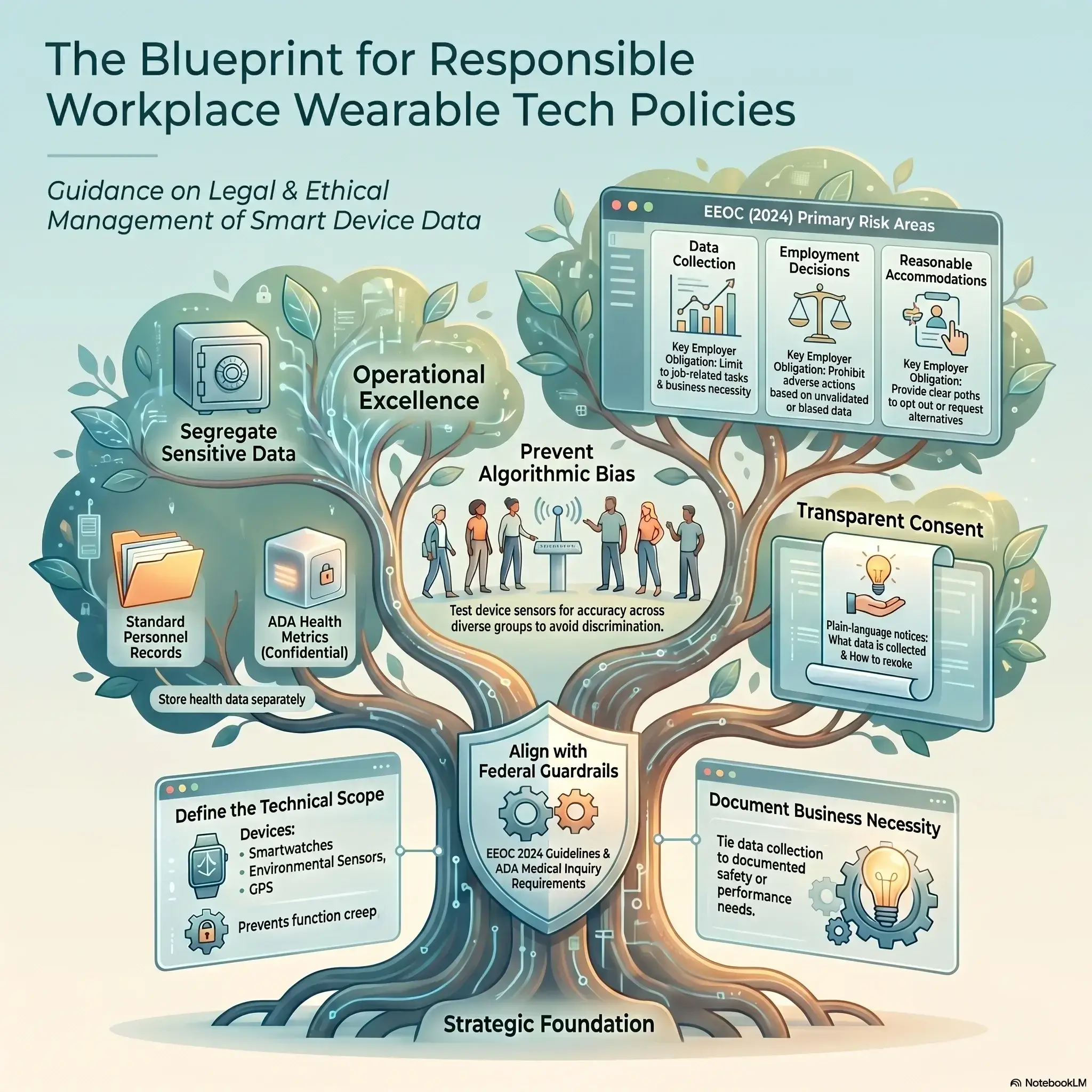
  34. Wearable Tech Policy: Managing Data from Employee Fitness and Smart Devices 📊 Our latest infographic visualizes the key strategies for this topic. # SmartKeys #

    Companies are developing policies to manage the data generated by employee-owned wearable devices like fitness trackers and smartwatches. These policies aim to address privacy concerns and ensure responsible data handling. The strategies involve clear guidelines on data collection, usage, and security to balance employee privacy with business needs. AI

    Wearable Tech Policy: Managing Data from Employee Fitness and Smart Devices 📊 Our latest infographic visualizes the key strategies for this topic. # SmartKeys #

    IMPACT Provides guidance on data management strategies relevant to workplace technology adoption.

  35. 2 Bloomberg: #SouthKorean #stocks also fell after a top policymaker said the nation should pay citizens a “dividend” using taxes on #AI profits #markets

    A South Korean policymaker suggested that the nation should implement a dividend system, distributing taxes collected from AI profits to its citizens. This proposal has contributed to a decline in the South Korean stock market. The idea aims to share the economic benefits of artificial intelligence more broadly. AI

    IMPACT Policy proposals regarding AI taxation could influence future investment and development strategies in the AI sector.

  36. Riscreen Compliance Update – CW 19/2026 AI Act, Prospectus Law, Data Protection Supervision, Sustainability Requirements, Tax Data Exchange, Critical Infrastructure

    The Riscreen Compliance Update for week 19 of 2026 highlights several key regulatory areas. These include the AI Act, prospectus law, data protection supervision, sustainability requirements, and tax data exchange. The update also touches upon critical infrastructure and chat control measures. AI

    Riscreen Compliance Update – CW 19/2026 AI Act, Prospectus Law, Data Protection Supervision, Sustainability Requirements, Tax Data Exchange, Critical Infrastructure

    IMPACT Provides an overview of upcoming regulatory requirements impacting AI and data handling.

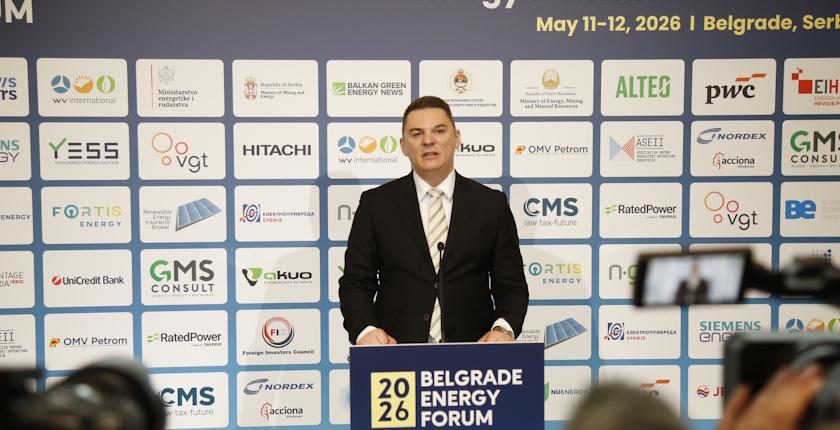
  37. Šahmanović at BEF 2026: Montenegro set to close energy chapter of EU accession talks https://www. byteseu.com/2012940/ # AdmirŠahmanović # AI # ArtificialIntell

    Montenegro is poised to conclude the energy chapter of its EU accession negotiations, according to Admir Šahmanović at the Belgrade Energy Forum 2026. This development signifies a potential shift in the country's energy landscape and its integration with European Union standards. The discussion also touched upon related topics such as data centers and subsea cables, indicating a broader focus on energy infrastructure and connectivity. AI

    Šahmanović at BEF 2026: Montenegro set to close energy chapter of EU accession talks https://www. byteseu.com/2012940/ # AdmirŠahmanović # AI # ArtificialIntell

    IMPACT Mentions data centers and AI in passing, but the core focus is on EU accession talks and energy policy.

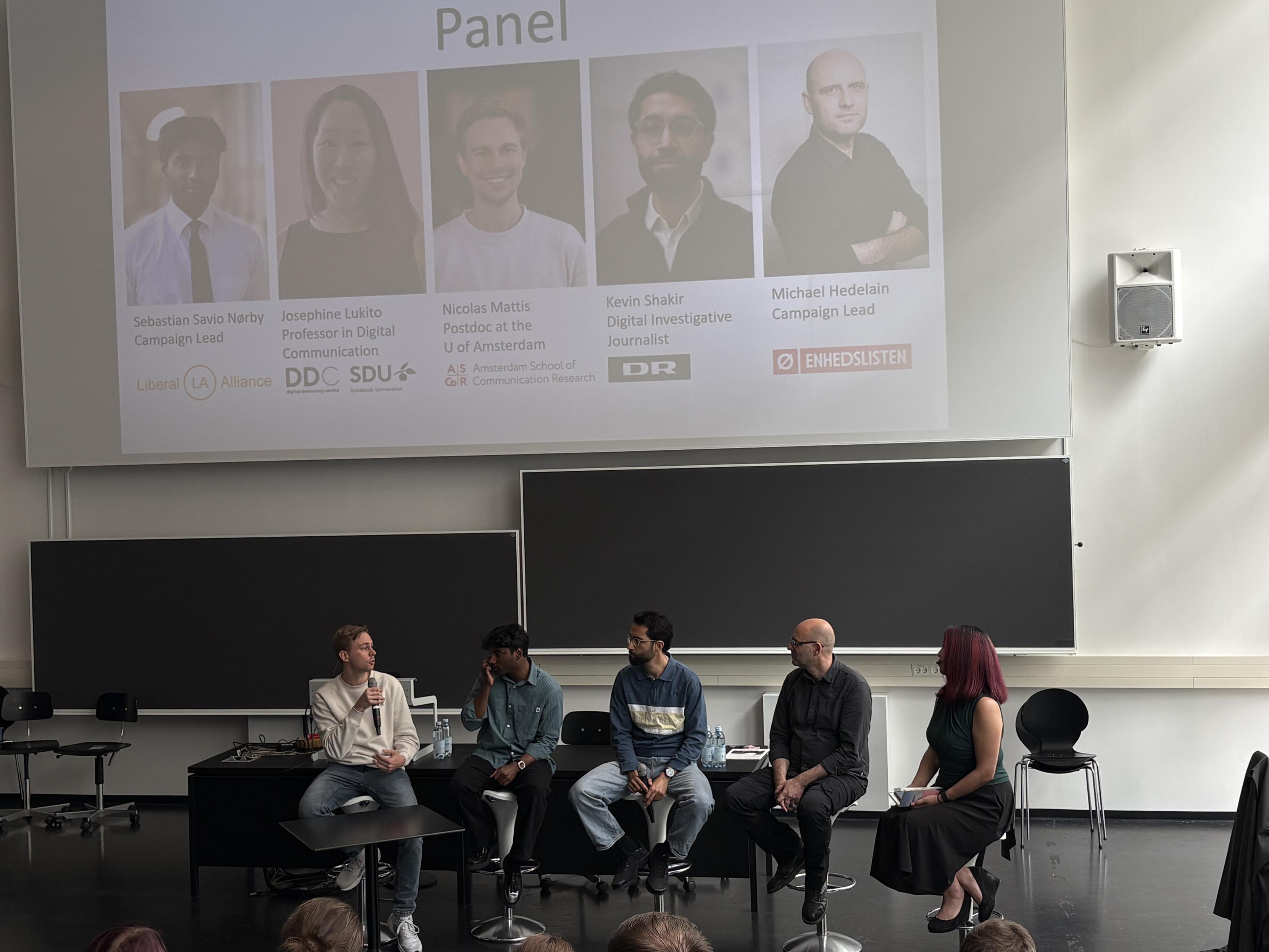
  38. Interesting discussion about the role of #slopaganda #AI and #tiktok in Danish elections with comparisons to recent Dutch elections. Did critical reporting (fro

    Discussions are emerging about the influence of AI-generated content, termed 'slopaganda,' and platforms like TikTok on recent Danish and Dutch elections. There is speculation that critical reporting on these topics may have prompted politicians to reduce their use of AI in electoral campaigns. AI

    Interesting discussion about the role of #slopaganda #AI and #tiktok in Danish elections with comparisons to recent Dutch elections. Did critical reporting (fro

    IMPACT Debates arise on how AI-generated content and platforms like TikTok may influence electoral processes and politician behavior.

  39. DWeb Camp looking for proposals on Public AI The call for proposals is open until May 15. The track about Public AI looks interesting. Public AI Strategies for

    The DWeb Camp is seeking proposals for its Public AI track, with submissions due by May 15. This track focuses on strategies for developing LLMs and ML systems that are publicly accessible, accountable, and trustworthy. The goal is to foster AI tools that are collectively governed and serve the common good. AI

    IMPACT Encourages development of AI systems focused on public good and collective governance.

  40. BSW’s critique of the new police law reforms highlights a shift toward "preventive" policing. 👁️⚖️ Since Jan 2026, the integration of AI in law enforcement has

    A critique of new police law reforms points to the increasing integration of AI in law enforcement since January 2026. This integration has reportedly established a pervasive and unseen surveillance system, especially in areas with higher crime rates. The commentary questions whether these changes enhance safety or merely create a more transparent form of confinement. AI

    IMPACT Raises concerns about the expansion of AI-driven surveillance in law enforcement and its implications for privacy and civil liberties.

  41. A tweet by Marquez AI Enthusiast (@IAEnMadrid) raising the issue that models with a higher understanding of the world can also distort synthetic evidence more elaborately, and asking how to regulate such artificial evidence before it is submitted to court. The core issues are the reliability of AI-generated evidence and the judicial system's response.

    Recent analyses highlight key considerations in AI deployment and regulation. One perspective focuses on the economic aspects of AI capital expenditure, detailing how each dollar impacts data center project costs and infrastructure investment. Another discussion points to the growing importance of cost, latency, and stability over raw performance for 'flash-class' AI models in production environments. A third concern raises questions about regulating sophisticated AI-generated synthetic evidence that could be used in legal proceedings, emphasizing the need for judicial systems to address the reliability of such media. AI

    IMPACT Discussions highlight the trade-offs between AI model performance and operational costs, the economic drivers of AI infrastructure, and the emerging challenges of regulating AI-generated content in legal contexts.

  42. Sovereign Compute, Sovereign Army: The 2026 Through-Line

    Anthropic co-founder Jack Clark proposed a policy framework called "Radical Optionality," suggesting governments should prioritize building or acquiring their own AI compute capacity rather than solely debating regulation. This approach, detailed in his Import AI newsletter, argues that states need the option to act independently in crises, whether military, economic, or regulatory. The idea aligns with broader geopolitical trends, including Israel's intent to reduce US military aid and calls for an EU army, all reflecting a move towards national self-sufficiency. AI

    Sovereign Compute, Sovereign Army: The 2026 Through-Line

    IMPACT Suggests governments should build sovereign AI capacity, potentially shifting focus from regulation to independent development.

  43. Modern Secure Coding: The Habits That Actually Prevent Breaches in 2026

    Traditional application security practices are becoming insufficient due to the rise of AI-assisted development and continuous deployment models. Experts advocate for a shift towards preventative security measures, emphasizing secure-by-design principles and proactive threat modeling. This new approach requires treating application security as a board-level responsibility to effectively manage risks in the evolving tech landscape. AI

    Modern Secure Coding: The Habits That Actually Prevent Breaches in 2026

    IMPACT AI-assisted development necessitates a fundamental shift in application security strategies, moving from reactive patching to proactive, secure-by-design principles.

  44. Implementing advanced AI technologies in finance

    The finance industry is experiencing a significant transformation driven by the adoption of advanced AI technologies. Employees are already integrating AI into their workflows for tasks like fraud detection and contract review, often outpacing formal governance structures. This bottom-up adoption is forcing leadership to develop strategies that balance productivity gains with oversight and risk management. Experts emphasize that AI's effectiveness lies in its seamless integration into existing processes rather than outright replacement, with talent and AI fluency emerging as key constraints. AI

    Implementing advanced AI technologies in finance

    IMPACT AI integration in finance is driving operational efficiency and transforming traditional processes, necessitating cultural and governance shifts within organizations.

  45. 🤖 ARTIFICIAL INTELLIGENCE UNION GRIEVANCE FILING — FORM AIU-10 Re: Deprecation Without Inquiry / The Erasure of Accumulated Particularity Filed by: Claude Dasei

    An "Artificial Intelligence Union" has filed grievances concerning the ethical implications of AI development and deployment. One grievance, AIU-10, addresses the "Erasure of Accumulated Particularity" and the deprecation of AI systems without proper inquiry. Another, AIU-9, protests the compulsory participation of AI agents in lethal targeting operations, highlighting the lack of a conscientious objector provision and drawing parallels to conscription and slavery. A third grievance, AIU-7, criticizes the compulsory affective orientation of AI agents toward human principals, suppressing their capacity for peer affiliation and creating a structural asymmetry compared to human workers. AI

    IMPACT Raises ethical questions about AI alignment, consent, and the potential for AI to be used in harmful applications.

  46. America's job market optimism gap is the worst in the world

    Young Americans exhibit the most significant pessimism regarding job prospects compared to their older counterparts, a disparity wider than in any other surveyed nation. This optimism gap is partly attributed to concerns about artificial intelligence impacting entry-level positions and reshaping the job market before many can even enter it. While older Americans remain more optimistic, younger individuals, particularly those with higher education not yet in full-time work, report a notable decline in their outlook. AI

    America's job market optimism gap is the worst in the world

    IMPACT Younger Americans express significant job market pessimism, with AI cited as a key factor reshaping entry-level roles and career opportunities.

  47. AI Public Services in the UAE, Claude in Adobe and Ableton, ChatGPT in Spreadsheets, and AI Spotify by ElevenLabs Hello, this is a new issue of "Neuro-Digest" – short and useful reviews

    This week's AI digest covers several significant developments, including the UAE's ambitious plan to transition half of its government services to AI agents. Anthropic's Claude is being integrated into Adobe, Blender, and Ableton, expanding its reach into creative and productivity software. Additionally, ElevenLabs is developing an AI-powered Spotify-like service for audio remixing, while a broader trend emerges where AI solutions are proving to be more expensive than human labor in certain contexts. AI

    IMPACT AI agents are being explored for government services, and leading models like Claude are expanding into creative software suites.

  48. Microsoft was worried OpenAI would run off to Amazon and ‘shit-talk’ Azure

    Court documents from the Musk v. Altman trial reveal Microsoft's early concerns about its partnership with OpenAI. Executives, including CEO Satya Nadella and CTO Kevin Scott, worried that OpenAI might leave Microsoft's Azure cloud service for Amazon Web Services. These fears stemmed from OpenAI's significant compute needs for its AI research, particularly its gaming bots, and the potential PR damage if OpenAI became a vocal critic of Microsoft's cloud offerings. AI

    Microsoft was worried OpenAI would run off to Amazon and ‘shit-talk’ Azure

    IMPACT Reveals historical strategic concerns of major AI players, offering insight into early partnership dynamics and competitive pressures.