PulseAugur / Pulse
LIVE 15:13:02

Pulse

last 48h
[50/1912] 89 sources

What AI is actually talking about — clusters surfacing on Bluesky, Reddit, HN, Mastodon and Lobsters, re-ranked to elevate originality and crush noise.

  1. 5 MCP Server Security Mistakes That Could Expose Your AI Stack

    The Model Context Protocol (MCP) is an emerging standard for AI agents to interact with real-world tools, but it introduces new security vulnerabilities. Traditional MCP servers often rely on API keys, which can be hardcoded and leaked, while newer x402 payment-based servers shift the risk to economic attacks like payment manipulation. Developers are exploring various security measures, including libraries embedded directly into servers and robust input validation, to mitigate these risks as MCP adoption grows. AI

    IMPACT As AI agents gain tool-use capabilities via MCP, understanding and mitigating new security risks like credential leaks and economic attacks is crucial for developers.

  2. Working with coding agents in 2026 https://hackers.pub/@nebuleto/2026/swe-with-coding-agent-in-2026

    A recent benchmark involving 500 investment bankers found that AI-generated client reports are unusable for professional engagement in the banking sector. Models such as GPT-5.4 and Claude Opus 4.6 produced reports that were consistently rated as unacceptably flawed. This highlights a significant gap between AI capabilities and the stringent requirements of specialized professional fields. AI

    IMPACT AI-generated reports are currently unsuitable for professional client engagement in banking, indicating a need for domain-specific refinement.

  3. Quick Paper Review: "There Will Be a Scientific Theory of Deep Learning"

    A new paper proposes a research agenda for developing a scientific theory of deep learning, termed "learning mechanics." This theory aims to understand the dynamics of the training process using aggregate statistics to make predictions. The authors argue that such a theory is crucial for scientific understanding, practical engineering guidance for LLM training, and AI safety through better interpretability and governance. AI

    IMPACT Proposes a new theoretical framework for deep learning, potentially guiding future research and AI safety efforts.

  4. LLM Style Slop is Absolutely Everywhere

    A new paper reveals that large language models like GPT, Claude, and Gemini tend to resolve ambiguous social situations by imposing interpretive closure, rather than preserving uncertainty. This tendency is influenced by the narrator's perspective, with first-person accounts more likely to result in narrative alignment. The findings suggest a design challenge for AI aimed at interpersonal sensemaking, as models may make unresolved situations feel prematurely settled. Separately, observations indicate that LLM-generated text, or "slop," is becoming ubiquitous across various online platforms and media, including personal messages and professional content, raising concerns about the quality and sincerity of communication. AI

    LLM Style Slop is Absolutely Everywhere

    IMPACT LLMs may prematurely settle ambiguous social situations, impacting user trust and AI design. Ubiquitous LLM text generation raises concerns about communication quality.

  5. DeepSeek V4: Overview, Benchmarks, and Tests. Neural networks are constantly evolving. For example, on April 23rd, the world saw ChatGPT 5.5. But personally, I with great

    DeepSeek has extended the promotional discount for its V4-Pro API until May 31, 2026. The V4-Pro model, featuring 1.6 trillion parameters and supporting a 1 million token context window, is optimized for Huawei Ascend AI processors and offers open-source access. While benchmarks show it slightly trails top-tier closed models like GPT-5.5, it excels in agent programming and reasoning tasks compared to other open models. AI

    IMPACT Offers a competitive open-source alternative to frontier models, particularly for long-context tasks and Russian language generation.

  6. The paper that killed deep learning theory

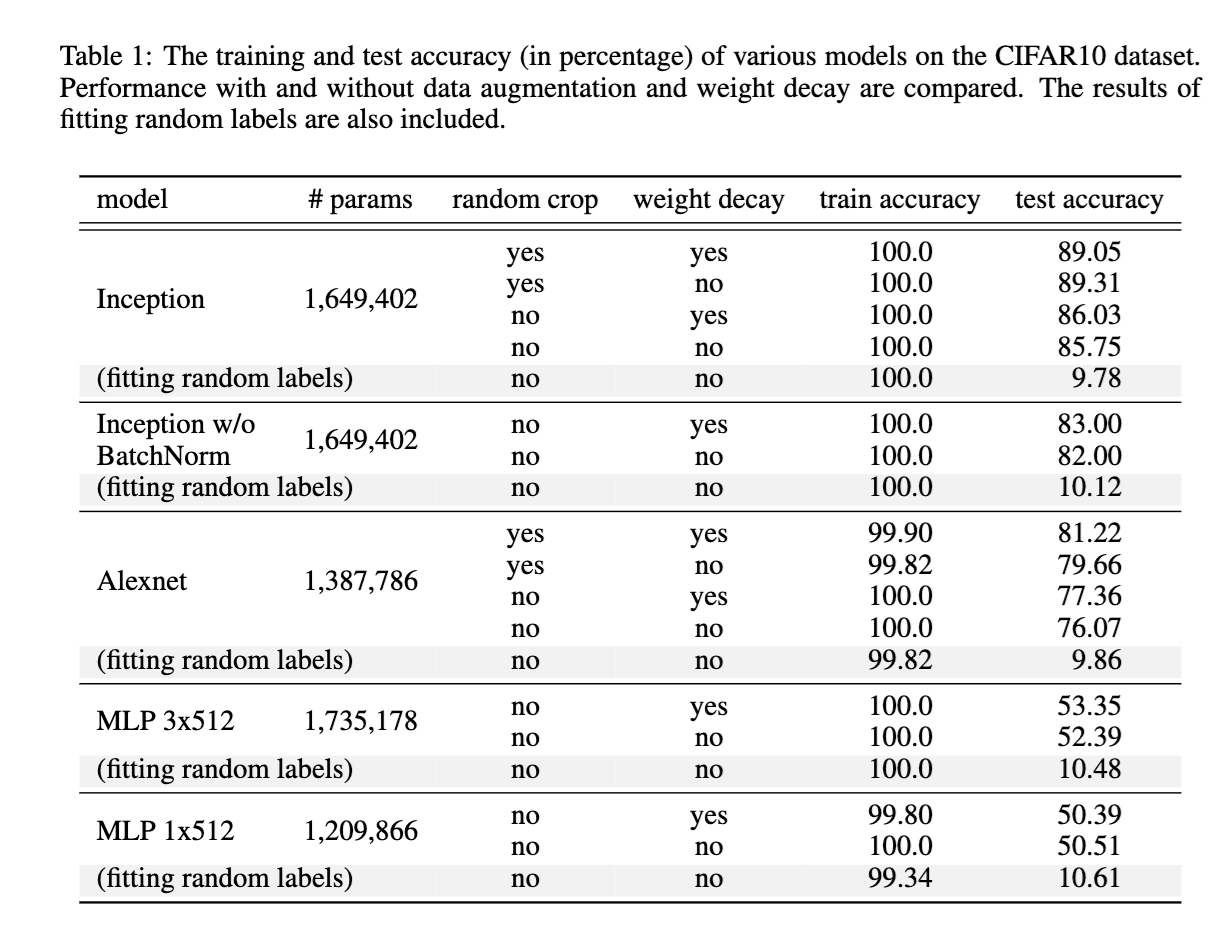
    Two papers, one from 2016 by Zhang et al. and another from 2019 by Nagarajan and Kolter, are discussed for their impact on deep learning theory. The 2016 paper demonstrated that standard neural networks could easily memorize random data, challenging existing theories of generalization based on hypothesis class complexity. Subsequent research attempted to develop data-dependent bounds, but the 2019 paper is presented as a further blow to these efforts, suggesting that uniform convergence may be insufficient to explain deep learning's success. AI

    The paper that killed deep learning theory

    IMPACT Challenges existing theoretical frameworks for understanding deep learning generalization, potentially redirecting future research.

  7. As AI agents move from demos to production, the key question is: how do you know if an agent is any good? Perplexity scores tell you little about real-world cap

    Evaluating the real-world performance of AI agents is becoming critical as they transition from experimental stages to production environments. Traditional metrics like perplexity scores are insufficient for assessing agent effectiveness. Benchmarks such as SWE-bench, which tests the resolution of actual GitHub issues, show significant progress, with top models now achieving 80% success rates compared to only 2% in the previous year. AI

    IMPACT New benchmarks are emerging to better evaluate AI agent performance in real-world tasks, moving beyond simple perplexity scores.

  8. Jneopallium: A Biologically Grounded Framework for Modeling Natural Neuron Networks at Customizable Levels of Detail https:// claude.ai/public/artifacts/43f 5c7

    Researchers have introduced Jneopallium, a new framework designed to model natural neuron networks. This system allows for customizable levels of detail in simulating these biological networks. The project's repository is publicly available on GitHub, indicating an open-source approach to advancing neuroscience-inspired AI. AI

    IMPACT Introduces a novel framework for biologically grounded AI modeling, potentially advancing research in neuroscience-inspired artificial intelligence.

  9. ICYMI: Dutch DPA opens consultation on explaining automated decisions to individuals: Dutch DPA opens consultation on draft guidance requiring organisations to

    The Dutch Data Protection Authority (DPA) has initiated a public consultation regarding new draft guidance. This guidance will require organizations to provide explanations for decisions made by algorithms and AI systems to individuals affected by those decisions. The consultation period is set to close on May 26, 2026. AI

    IMPACT Establishes new transparency requirements for AI-driven decisions, potentially impacting how organizations deploy and explain AI systems.

  10. DeepSeek-V4 Ported to MLX for Apple Silicon Inference A developer has ported DeepSeek-V4 to Apple's MLX framework, allowing the large language model to run on A

    Anthropic experienced a significant coding performance degradation in its Claude model after a system instruction was updated to limit responses to 25 words. This issue, which took four days to resolve, was noticed by users within hours of its implementation. Separately, a developer has successfully ported the DeepSeek-V4 large language model to Apple's MLX framework, enabling it to run on Apple Silicon Macs with initial functional inference results. AI

    IMPACT Enables local inference of advanced LLMs on consumer Apple hardware, potentially increasing accessibility and privacy for AI tasks.

  11. Montreal, the quiet engine of space: robots, AI, and local talent are everywhere in missions without ever being visible to the general public www.journaldemontrea

    Montréal is playing a significant, though often unseen, role in the space industry, contributing robots, AI expertise, and local talent to various missions. This contribution spans across different aspects of space exploration, including initiatives like the Artemis program. The city's influence is notable within the NewSpace sector, highlighting its growing importance in technological advancements for space. AI

    IMPACT Montréal's AI and robotics contributions are enhancing space exploration capabilities, potentially accelerating new discoveries and mission successes.

  12. Substrate-Sensitivity

    This series of posts explores the concept of 'substrates' in AI, which refers to the computational context layers necessary for implementing AI systems. The authors argue that current AI safety research lacks a clear framework to reason about these substrates, which include elements like normalization techniques and quantization formats. By formalizing the definition of a substrate into four components—language, semantics map, resource profile, and observable interface—they aim to provide a clearer way to analyze and compare AI model behaviors across different deployment settings. AI

    Substrate-Sensitivity

    IMPACT Provides a formal framework to better analyze and compare AI model behaviors across different computational contexts.

  13. AI Slop or Better Code: GCC Working Group for AI Guidelines Launched | Developer

    The GCC (GNU Compiler Collection) has initiated a working group focused on establishing AI guidelines for developers. This group aims to address the increasing use of AI-generated code, often referred to as "AI slop," and to promote better coding practices. The initiative seeks to ensure that AI tools contribute positively to software development rather than introducing errors or inefficiencies. AI

    IMPACT Establishes developer guidelines for AI-generated code, potentially improving code quality and reducing errors.

  14. 🤖 Cannes AI film festival raises eyebrows – and questions about future While emerging technology is banned from the Palme d’Or, an upstart movement is gaining i

    The inaugural World AI Film Festival (WAIFF) in Cannes showcased a range of AI-generated films, from dystopian visions to surreal narratives, highlighting the rapid advancements and growing investment in this nascent industry. Despite the main Cannes festival banning AI from its competition, the WAIFF attracted attention from major Hollywood players and tech investors, signaling a potential shift in film production. The festival also brought to the forefront critical issues such as copyright infringement and the ethical considerations of training AI models on human-created content. AI

    🤖 Cannes AI film festival raises eyebrows – and questions about future While emerging technology is banned from the Palme d’Or, an upstart movement is gaining i

    IMPACT AI-generated films are emerging as a new creative medium, potentially altering film production and raising significant copyright and ethical questions for the industry.

  15. Ubuntu 26.04 LTS "Resolute Raccoon" Released: The GNU/Linux Distribution for AI Development and Advanced Security - GNU/Linux Aggregator

    Ubuntu 26.04 LTS, codenamed "Resolute Raccoon", has been released as a distribution tailored for AI development and advanced security. This new version aims to provide a robust platform for users working with artificial intelligence technologies and enhanced security measures. AI

    IMPACT Provides a specialized OS environment for AI development and security tasks.

  16. RMSNorm, DeepSeek-V4, LoRA, RoPE, GQA, and Cross-Entropy Loss It has been a productive few days. Six new blogs are now live on Outcome School, each one decoding

    A series of six blog posts has been published on Outcome School, detailing fundamental components of contemporary large language models. The posts cover technical concepts such as RMSNorm, DeepSeek-V4, LoRA, RoPE, GQA, and Cross-Entropy Loss. These explanations aim to decode the core building blocks that underpin modern AI systems. AI

    IMPACT Provides accessible explanations of key LLM components, aiding developers and researchers in understanding foundational technologies.

  17. 📰 RAG Without Vectors: Vectorless Search with PageIndex with 98.7% Accuracy (Open Source) VectifyAI, eliminating traditional vector-based RAG systems, Pag

    VectifyAI has developed a new retrieval-augmented generation (RAG) system called PageIndex that achieves 98.7% accuracy in financial document retrieval tasks. This system notably bypasses traditional vector similarity methods, instead utilizing logical inference. The open-source PageIndex aims to revolutionize AI search by offering a more precise and potentially more efficient approach to information retrieval. AI

    📰 RAG Without Vectors: Vectorless Search with PageIndex with 98.7% Accuracy (Open Source) VectifyAI, eliminating traditional vector-based RAG systems, Pag

    IMPACT Offers a potential alternative to vector-based RAG, improving accuracy and efficiency in document retrieval.

  18. 🚀 This Week in Image & Video Generation: Fastest-Growing Projects — April 26, 2026 The Image & Video Generation space is witnessing a surge in innovative tools,

    The image and video generation field is experiencing a surge in open-source projects, particularly those leveraging AI for text-to-image and image manipulation tasks. Several repositories on GitHub have gained significant traction, indicating a strong developer interest in these tools. This trend highlights a growing demand for efficient and innovative AI-powered visual content creation and editing solutions. AI

    IMPACT Accelerates development and adoption of open-source AI tools for visual content creation and manipulation.

  19. RT @DJLougen: TRANSLASATION: The repeat-yourself version is live. This model scans and repeats a layer for free benefits. To this model au

    A user reported a significant performance increase when running the Qwen 3.6 27B model on their RTX 4090 GPU, with inference speed jumping from 26 to 154 tokens per second. This improvement was shared on Mastodon and linked to an article on Arint.info detailing the performance gains. Another user also shared a translation model on Mastodon that scans and repeats layers for benefits. AI

    IMPACT Demonstrates substantial inference speed gains for open-source LLMs on consumer GPUs, potentially lowering barriers to local deployment.

  20. Amateur armed with ChatGPT solves an Erdős problem https://www.scientificamerican.com/article/amateur-armed-with-chatgpt-vibe-maths-a-60-year-old-problem/ # Hac

    A 23-year-old amateur mathematician named Liam Price has solved a 60-year-old mathematical problem, known as an Erdős problem, using ChatGPT. Price, who has no advanced mathematics training, reportedly used a single prompt on GPT-5.4 Pro to arrive at the solution. This advance is notable because it appears to utilize a novel method for such problems, potentially offering broader applications beyond mathematics, and has surprised experts like Terence Tao. AI

    IMPACT Demonstrates AI's potential to uncover novel mathematical approaches, potentially accelerating research across various fields.

  21. 🚀 This Week in LLM & Language Models: Fastest-Growing Projects — April 26, 2026 This week in the LLM & Language Models space, we're seeing a surge of interest i

    A series of reports from April 26-30, 2026, highlight a growing trend in the LLM and language model space. The focus is on tools that facilitate more natural user interaction and improved knowledge management. Many projects are adopting patterns, such as Karpathy's LLM Wiki, to structure and leverage information effectively. AI

    IMPACT Highlights emerging open-source tools and patterns for LLM interaction and knowledge management, suggesting new avenues for developers.

  22. Google’s Gemini can now run on a single air-gapped server — and vanish when you pull the plug. Via @venturebeat #AI #ArtificialIntelligence 💻 🤖 🧠 Google’s Gemin

    Google's Gemini models can now operate on a single, air-gapped server, allowing them to be removed upon disconnection. This capability enhances security and privacy by ensuring data does not persist after the server is powered down. The development was reported by VentureBeat. AI

    IMPACT Enhances data security and privacy for AI deployments in sensitive environments.

  23. just how good (or bad) exactly the vision is in chatgpt 5.5

    A user tested the vision capabilities of ChatGPT 5.5, finding that while it performed well on basic visual acuity and grayscale recognition tasks, its performance faltered on more complex image interpretation. The model struggled to correctly identify specific missing parts in a ring and misinterpreted the word within an image, generating an unexpected visual representation of its understanding. These results suggest potential discrepancies in how ChatGPT 5.5 processes and synthesizes visual information. AI

    just how good (or bad) exactly the vision is in chatgpt 5.5

    IMPACT Highlights potential limitations in current multimodal AI's interpretation of complex visual data.

  24. Image 2.0 is crazy good

    OpenAI has reportedly released an updated version of its image generation model, referred to as "Image 2.0." Early user feedback suggests a significant improvement in quality and capabilities. The model appears to be generating highly realistic and impressive visual outputs, according to discussions on Reddit. AI

    Image 2.0 is crazy good
  25. OpenAI model releases over time

    A visual timeline details the progression of OpenAI's model releases, starting from their initial GPT models and extending to more recent iterations. The graphic illustrates the increasing frequency and complexity of models introduced by the company over the years. It serves as a historical overview of OpenAI's significant contributions to the field of artificial intelligence. AI

    OpenAI model releases over time

    IMPACT Provides historical context on OpenAI's model development trajectory.

  26. Qwen 3.6 35b a3b Q4 vs qwen 3.6 27b q6, on m5 pro 64gb

    A user on Reddit's r/LocalLLaMA shared a benchmark comparing two versions of the Qwen 3.6 model on a MacBook Pro with an M5 Pro chip and 64GB of RAM. The 35B A3B model, using a 4-bit quantization, significantly outperformed the 27B UD model, which used 6-bit quantization, in both speed and coding task quality. Despite the 35B model being smaller and using less RAM, it was approximately 8 times faster and achieved a higher overall score in a 4-task coding benchmark. AI

    IMPACT Provides real-world performance data for running local LLMs on Apple Silicon, aiding hardware and model selection for users.

  27. Kimi K2.6 - the mighty turtle that wins the race

    The Kimi K2.6 model has demonstrated strong performance in complex social deduction games, consistently winning against other AI models in autonomous play. Despite its slow processing speed and higher cost per game due to extensive token generation, it proved more economical than Claude Opus 4.6. The model also exhibited a low tool call error rate, though it occasionally struggled with rule adherence and strategic communication. AI

    Kimi K2.6 - the mighty turtle that wins the race

    IMPACT Provides insights into Kimi K2.6's capabilities and cost-effectiveness in complex, long-running tasks.

  28. FP4 inference in llama.cpp (NVFP4) and ik_llama.cpp (MXFP4) landed - Finally

    The llama.cpp and ik_llama.cpp projects have both integrated support for FP4 (4-bit floating-point) inference, a significant advancement for model quantization. llama.cpp now includes NVFP4, an Nvidia-specific format, while ik_llama.cpp supports MXFP4, adhering to the MX consortium standard. These developments are expected to substantially reduce VRAM requirements, enabling larger models to run on consumer hardware once model support catches up. AI

    FP4 inference in llama.cpp (NVFP4) and ik_llama.cpp (MXFP4) landed - Finally

    IMPACT Enables running larger language models on consumer hardware by significantly reducing VRAM requirements.

  29. Qwen3.6 35b a3b Particle System

    A user on Reddit's r/LocalLLaMA community shared their experience testing the Qwen3.6 35b a3b model, noting its impressive speed and coding capabilities. The user reported that the model successfully generated code for a particle system with only a minor ValueError, which they found to be a positive outcome. They are seeking suggestions from the community for future coding tasks to give the model. AI

    Qwen3.6 35b a3b Particle System

    IMPACT Demonstrates a specific model's coding proficiency, potentially influencing user adoption for similar tasks.

  30. Quant Qwen3.6-27B on 16GB VRAM with 100k context length

    A user on Reddit's r/LocalLLaMA has detailed a method for running the Qwen3.6-27B model on a system with 16GB of VRAM, achieving a context length of 100,000 tokens. The process involves creating a custom GGUF quantization of the model using Unsloth's imatrix and a specific fork of llama-cpp-turboquant. The user provides step-by-step instructions, including build commands and server execution parameters, along with a configuration for integration with OpenCode. AI

    Quant Qwen3.6-27B on 16GB VRAM with 100k context length

    IMPACT Enables running large context models on consumer hardware, lowering barriers for local AI experimentation.

  31. Qwen3.6-35B-A3B KLDs - INTs and NVFPs

    A user on Reddit's LocalLLaMA community shared findings on the Qwen3.6-35B model, focusing on Kullback-Leibler (KLD) divergence metrics for different quantization formats like INT8, FP8, and NVFP4. The analysis, conducted using a modified VLLM framework, suggests that FP8 and NVFP4 formats, while potentially faster, may offer lower quality compared to INT8. The user emphasizes that the choice of quantization should align with specific use cases, balancing accuracy, speed, and GPU compatibility. AI

    Qwen3.6-35B-A3B KLDs - INTs and NVFPs

    IMPACT Provides insights into quantization trade-offs, guiding operators on selecting optimal formats for specific hardware and performance needs.

  32. GLM 5.1 Locally: 40tps, 2000+ pp/s

    A user on the r/LocalLLaMA subreddit has successfully optimized the GLM 5.1 model for local deployment, achieving impressive performance metrics. By applying specific patches to the sglang inference software and utilizing four RTX 6000 Pro GPUs, they reported a throughput of 40 tokens per second and over 2000 tokens per second for prefilled contexts. The user noted that the current inference software is not fully optimized for these cards, suggesting further performance gains are possible. AI

    IMPACT Demonstrates potential for high-throughput local LLM inference with optimized hardware and software configurations.

  33. FINAL-Bench/Darwin-36B-Opus · Hugging Face

    The Darwin-36B-Opus model, a 36-billion-parameter mixture-of-experts language model, has been released. It was created using the Darwin V7 evolutionary breeding engine, combining aspects of Qwen/Qwen3.6-35B-A3B and a Claude 4.6 Opus distilled variant. This automated process produced a deployable checkpoint in under an hour on a single GPU. Darwin-36B-Opus achieved an 88.4% score on the GPQA Diamond benchmark, setting a new record for the Darwin family's open models. AI

    FINAL-Bench/Darwin-36B-Opus · Hugging Face

    IMPACT New open-source model demonstrates state-of-the-art performance on graduate-level science questions.

  34. Qwen3.6-27B at ~80 tps with 218k context window on 1x RTX 5090 served by vllm 0.19

    A user on Reddit's r/LocalLLaMA community has shared details on achieving high performance with the Qwen3.6-27B model. By utilizing the NVFP4 with MTP quantization and the vLLM 0.19 inference server, they reported approximately 80 tokens per second with a 218,000 token context window on a single RTX 5090 graphics card. This setup builds upon previous experiments with the Qwen3.5-27B model, demonstrating significant advancements in local LLM deployment efficiency. AI

    IMPACT Demonstrates efficient local deployment of large context models, potentially lowering barriers for advanced LLM use on consumer hardware.

  35. "Weights are coming".Xiaomi’s MiMo V2.5 Pro has landed at 54 in the Artificial Analysis Intelligence Index.

    Xiaomi has released its MiMo V2.5 Pro, a new large language model that has achieved a score of 54 on the Artificial Analysis Intelligence Index. The announcement was made via posts on X (formerly Twitter) from both Xiaomi MiMo and Artificial Analysis. The release suggests that model weights will soon be available, indicating a potential for broader adoption and use. AI

    "Weights are coming".Xiaomi’s MiMo V2.5 Pro has landed at 54 in the Artificial Analysis Intelligence Index.

    IMPACT New model release with performance metrics, potentially indicating future open-source availability.

  36. What actually breaks when you try to scale vehicle routing to ~1M stops? [R]

    A user experimenting with scaling vehicle routing problems to approximately one million stops discovered that system architecture, rather than the routing algorithm itself, became the primary bottleneck. Key factors influencing performance included constraint-aware clustering, bounding route optimization costs, managing inconsistencies at cluster boundaries, and efficient distance computation. The user observed near-linear scaling, which was unexpected for this type of problem, and sought insights from others who have encountered similar challenges. AI

    IMPACT Niche tooling improvement; minimal industry-wide impact.

  37. UAI 2026 rebuttal [D]

    A researcher is seeking guidance on navigating rebuttal character limits for the UAI 2026 conference. They are unsure if extending their rebuttal into the public comment section, which has a higher character limit, is permissible or could lead to desk rejection. The researcher plans to start their rebuttal in the designated section and then continue it in a public comment, clearly indicating it as a continuation. AI

    IMPACT Clarifies procedural norms for academic paper submissions, impacting researchers submitting to UAI.

  38. ""The Cat Sat on the xxx?" Why generative AI has limited creativity": https:// osf.io/preprints/psyarxiv/8sfp d_v1 Having read a lot on LLMs in the past year th

    A new preprint paper titled "The Cat Sat on the xxx?" explores the inherent limitations of generative AI in terms of creativity. The authors argue that current large language models struggle with true novelty and that more research is needed to distinguish between genuine capabilities and hype. The paper aims to provide a clearer understanding of AI's boundaries. AI

    ""The Cat Sat on the xxx?" Why generative AI has limited creativity": https:// osf.io/preprints/psyarxiv/8sfp d_v1 Having read a lot on LLMs in the past year th

    IMPACT Highlights the need for rigorous evaluation of AI capabilities to separate genuine advancements from hype.

  39. 🚀 This Week in AI Agent: Fastest-Growing Projects — April 26, 2026 This week's AI Agent landscape is marked by a surge in interest around tools that enable huma

    A compilation of fastest-growing open-source projects across various AI domains was released on May 1, 2026. The report highlights trends in RAG and Vector Databases, AI Research, Prompt Engineering, Fine-tuning & Training, Image & Video Generation, Code Assistants, AI Agents, AI Frameworks & SDKs, and LLM & Language Models. Key areas of growth include multimodal intelligence, autonomous agents, AI-first development tools, and efficient training methods for large language models. AI

    IMPACT Provides an overview of emerging trends and popular open-source projects across the AI landscape, aiding developers and researchers in identifying active areas of development.

  40. Hello, fediverse We're IA.Espirita — open-source AI trained on Spiritist literature. RIV IA: Llama 3.1 8B fine-tuned (QLoRA) on Allan Kardec's Codification Andr

    IA.Espirita has released an open-source AI model fine-tuned on Spiritist literature. The model, based on Llama 3.1 8B and utilizing QLoRA, was trained on Allan Kardec's Codification and includes a dataset of 1,910 Q&A pairs from Chico Xavier's books. All components, including the models, datasets, and a paper, are available on Hugging Face and the project's website. AI

    IMPACT Provides a specialized, open-source LLM for Spiritist literature, enabling new research and applications in digital humanities.

  41. [ # TRADESHOW ] # Intersec # Shanghai 2026 – # Security # Equipment and # Technology # Expo will be held from May 7 to 9, 2026, at the National # Exhibition and

    Several trade shows are scheduled in China for 2026, focusing on artificial intelligence and related technologies. The Guangzhou International Smart Equipment and Artificial Intelligence Exhibition will take place from June 3-5, 2026, highlighting smart equipment, AI, and robotics. In Shanghai, the AI-Driven Industry Conference & Expo is set for May 28-29, 2026, exploring the intersection of automotive, data centers, and intelligent robotics. Additionally, Tech Week Shanghai will occur on May 6-7, 2026, emphasizing data industrialization and AI infrastructure. AI

    IMPACT These events will showcase advancements in AI applications across various industries, fostering B2B connections and driving digital transformation.

  42. Robert Scoble (@Scobleizer) mentioned that new companies like PICOXR and getVITURE from China could preempt the market. This tweet suggests an accelerating trend in the competition for XR/wearable products combined with AI. https:// x.com/Scobleizer/statu

    Robert Scoble highlighted that new companies like China's PICOXR and getVITURE may capture the XR and wearable market first, indicating an accelerating competition in AI-integrated devices. Separately, Kai AI announced an update to its open-source model V4, which now surpasses K2.6 in tool calling stability and cache pricing, with further comparative data forthcoming. AI

    IMPACT Open-source LLM advancements in tool calling and cache efficiency may lower barriers for developers.

  43. Transformers are Inherently Succinct

    A new paper introduces succinctness as a metric for evaluating the expressive power of transformer models. Researchers demonstrated that transformers can represent formal languages more concisely than traditional methods like finite automata and LTL formulas. This high expressivity implies that verifying properties of transformers is computationally intractable, specifically EXPSPACE-complete. AI

    IMPACT Introduces a new theoretical framework for analyzing transformer expressivity, with implications for understanding model capabilities and limitations.

  44. Sharper Instruction Following:

    Alibaba's Qwen team has announced a new multimodal model, highlighting its advancements in visual fidelity and artistic style generation. The model demonstrates improved multilingual text rendering capabilities and sharper instruction following for visual tasks. These updates suggest a push towards more sophisticated and versatile AI image generation and understanding. AI

    Sharper Instruction Following:

    IMPACT Enhances AI's ability to generate diverse artistic styles and understand multilingual visual prompts.

  45. AI/ML Security < https:// openssf.org/groups/ai-ml-secur ity/ > @ openssf @ linuxfoundation "This working group is situated at the intersection between security

    The Open Source Security Foundation (OpenSSF) has established a working group focused on the security implications of artificial intelligence and machine learning. This group aims to address the risks associated with LLMs and GenAI, such as data poisoning and prompt injection, and their impact on open source projects. Additionally, the working group will explore how AI and ML can be utilized to enhance the security of other open source initiatives. AI

    IMPACT Establishes a dedicated forum for addressing AI/ML security risks in open source, potentially leading to new best practices and tools.

  46. 🚀 This Week in Prompt Engineering: Fastest-Growing Projects — April 25, 2026 This week in Prompt Engineering, we saw a surge in interest around repositories foc

    This week's prompt engineering landscape shows a significant increase in interest surrounding AI coding assistants and multimodal prompting techniques. Developers are actively exploring repositories focused on optimizing prompts for specific models like Claude and GPT Image, as well as investigating prompt injection methods. The trend highlights a growing developer focus on refining interactions with AI for enhanced functionality. AI

    IMPACT Highlights growing developer focus on prompt optimization for specific AI models and multimodal interactions.

  47. DPL News (@dpl_news) At Google Cloud Next '26, Google Cloud COO Francis de Souza and CEO Thomas Kurian emphasized that it is difficult to respond to threats without cybersecurity automation. The core message is that AI must be used to stop AI, and A

    Alibaba's Qwen image generation model has improved its multilingual text rendering, enhancing accuracy and consistency for designs with significant text. Separately, an analyst suggests that inference efficiency, rather than training, will be the key differentiator in the AI race, with teams optimizing inference economics poised to lead. Meanwhile, Google Cloud executives emphasized the necessity of AI-driven automation to combat cyber threats, stating that AI must be used to defend against AI. AI

    IMPACT Focus shifts to inference efficiency for AI leadership; AI-driven cybersecurity automation becomes critical.

  48. 📰 2026 Green Powered Challenge: Ventilate Your Way To Power! Have you ever looked out across the rooftops of a city and idly gazed at the infrastructure that re

    The 2026 Green Powered Challenge is seeking innovative solutions to harness energy from urban ventilation systems. This initiative encourages participants to design and implement methods for generating power by optimizing airflow and ventilation infrastructure within cities. The challenge aims to promote sustainable energy generation through creative engineering and design. AI

    📰 2026 Green Powered Challenge: Ventilate Your Way To Power! Have you ever looked out across the rooftops of a city and idly gazed at the infrastructure that re
  49. Why Tokyo is the most important tech destination of 2026

    SusHi Tech Tokyo 2026 is positioning itself as a key global technology event, focusing on four specific domains: AI, robotics, resilience, and entertainment. The conference aims to move beyond AI hype by showcasing real-world deployments and infrastructure, featuring discussions with industry leaders from Nvidia and AWS. Robotics will highlight physical AI applications, while resilience sessions will address cyber defense and climate tech, with entertainment exploring AI's impact on media creation and distribution. AI

    Why Tokyo is the most important tech destination of 2026

    IMPACT Showcases practical AI applications and infrastructure, moving beyond hype to real-world deployment.