PulseAugur / Pulse
LIVE 10:10:37

Pulse

last 48h
[50/1042] 89 sources

What AI is actually talking about — clusters surfacing on Bluesky, Reddit, HN, Mastodon and Lobsters, re-ranked to elevate originality and crush noise.

  1. OpenAI partners with Cerebras

    Cerebras has successfully launched its IPO, raising $5.5 billion and marking a strong start to the 2026 public offering season. The company's valuation soared to $56.4 billion, significantly exceeding initial expectations. This success follows a period of financial recovery and increased revenue, with Cerebras now serving major clients like OpenAI, G42, and AWS. The partnership with OpenAI involves integrating Cerebras's low-latency AI compute systems to enhance model response times. AI
    OpenAI partners with Cerebras

    IMPACT Cerebras's successful IPO and partnership with OpenAI signal strong investor confidence in AI infrastructure and specialized hardware for inference, potentially accelerating real-time AI applications.
  2. America and Europe have taken different routes on trying to ‘control AI.’ The results are stark

    A report by former European Central Bank President Mario Draghi warns that the European Union risks economic and geopolitical decline if it does not reform its approach to innovation and regulation. The report highlights a widening innovation gap between the EU, the United States, and China, with many European startups considering relocation due to funding challenges. While AI adoption is increasing, deeper integration into business processes remains stagnant, partly due to high energy costs and complex regulatory frameworks like GDPR and the EU AI Act, which some business leaders argue stifle innovation. AI

    America and Europe have taken different routes on trying to ‘control AI.’ The results are stark

    IMPACT EU faces economic decline if it doesn't reform AI regulation and boost innovation to compete with the US and China.

  3. Scaling Trusted Access for Cyber with GPT-5.5 and GPT-5.5-Cyber

    OpenAI has launched Daybreak, a new cybersecurity initiative leveraging its GPT-5.5 models and the Codex Security agent to proactively identify and patch software vulnerabilities. This program aims to integrate security into the development lifecycle, moving beyond reactive measures to a "secure by design" approach. Daybreak offers tiered access to specialized cyber models, including GPT-5.5-Cyber for advanced use cases like red teaming, with a focus on enabling defenders to stay ahead of AI-driven threats. AI

    IMPACT Accelerates the integration of AI into cybersecurity defense, potentially shifting the balance against AI-powered attacks.

  4. SpaceX files for $55 billion semiconductor fab in rural Texas for Musk's Terafab — total chipmaking fab investment could reach $119 billion

    SpaceX has filed plans for a massive semiconductor fabrication facility, dubbed Terafab, in Grimes County, Texas. The initial phase is projected to cost $55 billion, with the total investment potentially reaching $119 billion upon completion of all planned expansions. This facility aims to produce advanced chips for AI servers, satellites, and autonomous vehicles, addressing Elon Musk's concerns about the pace of chip production meeting the demands of his companies. AI

    SpaceX files for $55 billion semiconductor fab in rural Texas for Musk's Terafab — total chipmaking fab investment could reach $119 billion

    IMPACT This massive investment in chip manufacturing capacity could alleviate AI compute bottlenecks and accelerate the development of advanced AI models and hardware.

  5. I'm glad the Anthropic fight is happening now

    Anthropic has secured a significant deal with SpaceX, granting them access to a massive data center equipped with over 220,000 Nvidia GPUs and 300 megawatts of AI compute power. This partnership comes amidst a dispute where the Department of War has flagged Anthropic as a supply chain risk due to its refusal to permit the use of its models for autonomous weapons and mass surveillance. The situation highlights broader questions about the accountability and control of future AI-driven workforces, especially as AI becomes increasingly integrated into critical infrastructure. AI

    IMPACT Secures critical compute for Anthropic's model development, potentially accelerating AI capabilities while highlighting government concerns over AI control.

  6. Nscale Gets $790M in Financing for Norway AI Buildout

    Nscale, a UK-based AI infrastructure startup, has secured $790 million in debt financing to build an AI data center in Narvik, Norway. This facility was previously intended for OpenAI's Stargate Norway project. Microsoft is set to rent Nvidia chips at this new data center. Nscale's latest valuation stands at $14.6 billion following a $2 billion Series C funding round. AI

    Nscale Gets $790M in Financing for Norway AI Buildout

    IMPACT Accelerates AI infrastructure buildout, potentially impacting compute availability and pricing for major tech players.

  7. Launching the Claude Partner Network

    Anthropic has launched the Claude Partner Network, a program designed to support organizations that help enterprises adopt its AI model, Claude. The company is committing an initial $100 million to this initiative, which will provide partners with training, technical support, and joint market development. As part of the network, Anthropic is also introducing a new technical certification called Claude Certified Architect. AI

    IMPACT This initiative aims to accelerate enterprise adoption of Anthropic's Claude model by empowering a network of specialized partners.

  8. A leak reveals that Anthropic is testing a more capable AI model "Claude Mythos"

    Anthropic is testing a new, highly capable AI model named Claude Mythos, described as a significant advancement over its previous Opus models. The existence of this model was revealed through a data leak, which exposed draft blog posts and internal documents detailing its capabilities in reasoning, coding, and cybersecurity. Anthropic confirmed the leak was due to a human error and is now carefully managing the release of Mythos through early access customers, acknowledging its potential cybersecurity risks. AI

    IMPACT This new model, potentially named Capybara, sets a new benchmark for reasoning and coding, likely pushing competitors to accelerate their own frontier model development.

  9. Assessing Claude Mythos Preview's cybersecurity capabilities

    Anthropic has released Claude Mythos Preview, a new language model demonstrating significant advancements in cybersecurity capabilities. The model can autonomously identify and exploit zero-day vulnerabilities in major operating systems and web browsers, and even construct complex, multi-stage exploits. Independent evaluations confirm Mythos Preview's superior performance on cyber tasks compared to previous models, successfully completing advanced attack simulations that were previously impossible for AI. AI

    IMPACT Sets a new benchmark for AI in cybersecurity, potentially accelerating the development of AI-powered defense and offense tools.

  10. Anthropic's Project Glasswing sounds necessary to me

    Anthropic has launched Project Glasswing to provide restricted access to its new model, Claude Mythos Preview, to security researchers. This model has demonstrated advanced capabilities in identifying and exploiting thousands of high-severity vulnerabilities across major operating systems and web browsers, significantly outperforming previous models like Claude 4.6 Opus in autonomous exploit development. The company's cautious release strategy is intended to allow the industry time to prepare for the potential security implications of such powerful AI tools. AI

    IMPACT This model's advanced vulnerability research capabilities could accelerate the discovery and patching of critical software flaws, but also poses risks if misused.

  11. Claude Code, Codex and Agentic Coding #8

    Anthropic's Claude Code is evolving with new features and addressing past issues, while also sparking discussions on its output formats and integration capabilities. One notable suggestion is to leverage HTML for Claude's output, enabling richer, interactive explanations with diagrams and widgets, a departure from the token-efficient Markdown often preferred for its previous token limits. Meanwhile, the platform has seen several updates, including improvements to its agentic capabilities, tool integration, and user experience, alongside a legal action against OpenCode for removing Anthropic's User-Agent header. AI

    Claude Code, Codex and Agentic Coding #8

    IMPACT Explores richer output formats like HTML for AI explanations and details numerous agentic and user-experience upgrades for coding assistants.

  12. Trump administration considering safety review for new AI models

    Anthropic is suing to prevent the Pentagon from blacklisting its AI models, arguing the restrictions are unwarranted. Concurrently, the Trump administration is reportedly considering new safety testing requirements for AI models deployed by government agencies. This policy shift appears to be a response to recent advancements in AI capabilities, such as Anthropic's Mythos Preview and OpenAI's GPT 5.5, which have raised national security concerns. AI

    Trump administration considering safety review for new AI models

    IMPACT Potential new government AI safety testing mandates could impact deployment timelines and development priorities for AI providers.

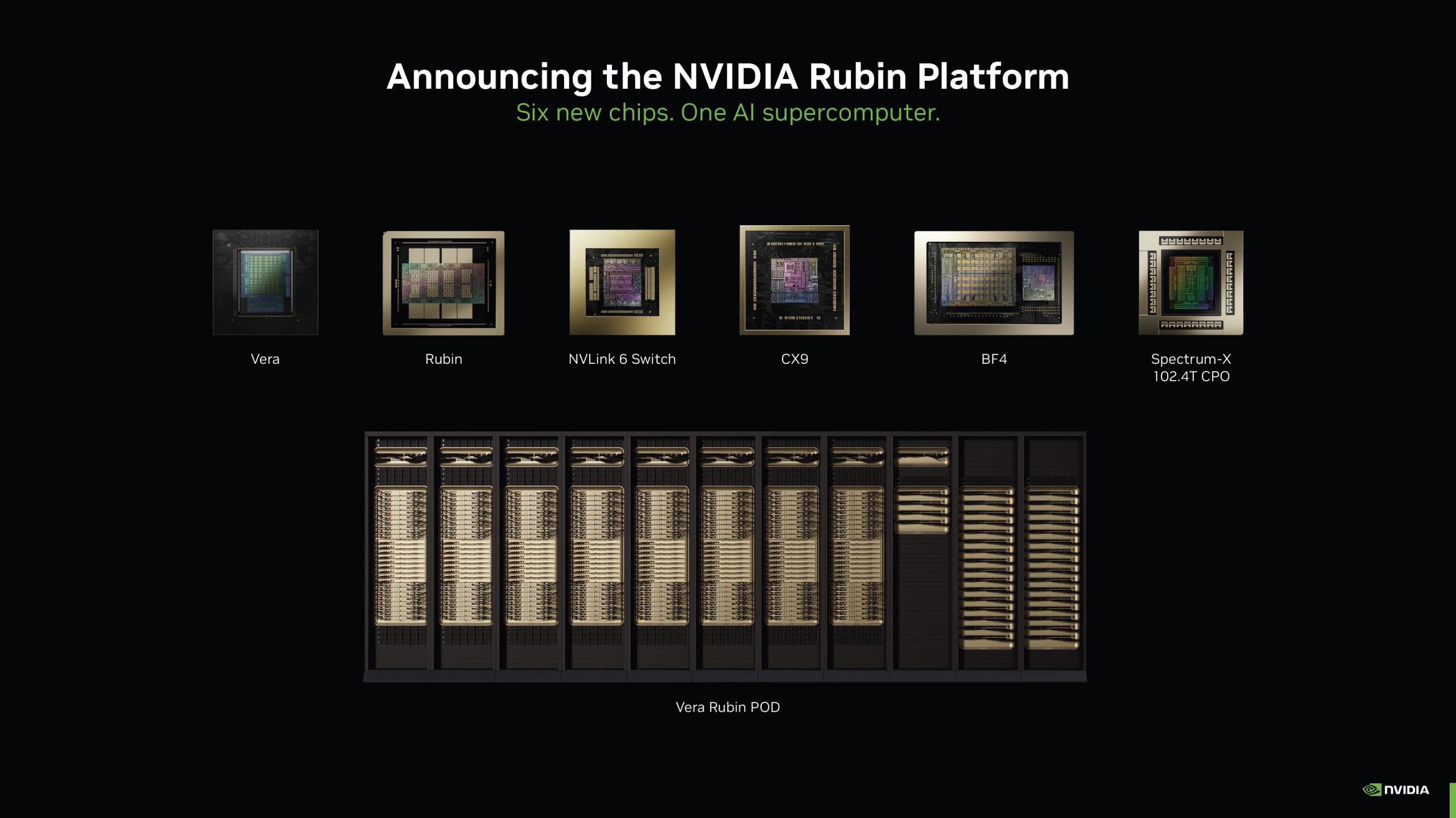
  13. Grateful to Jensen and @nvidia team for their support. Together, we’re working to deploy at least 1GW of Vera Rubin systems, bringing adaptable colla...

    Mira Murati announced a partnership between an unspecified entity and NVIDIA to deploy 1GW of Vera Rubin systems. This collaboration aims to make adaptable, collaborative AI accessible to a wider audience. The initiative highlights the growing importance of specialized infrastructure for AI deployment. AI

    Grateful to Jensen and @nvidia team for their support. Together, we’re working to deploy at least 1GW of Vera Rubin systems, bringing adaptable colla...

    IMPACT Accelerates the deployment of AI infrastructure, potentially lowering costs and increasing accessibility.

  14. Announcing Terafab: the next step towards becoming a galactic civilization https://x.com/i/broadcasts/1yKAPMzlvgWxb

    xAI has announced Terafab, a new initiative aimed at building a massive computing infrastructure. This project is described as a significant step towards the company's long-term goal of achieving a "galactic civilization." The announcement was made via a broadcast on X, highlighting the scale and ambition of the endeavor. AI

    IMPACT Accelerates the development of large-scale AI training infrastructure, potentially enabling more powerful future models.

  15. AI Is Insatiable

    Google has developed a new algorithm called TurboQuant that significantly reduces the memory requirements for large language models, by up to six times. This development is impacting memory chip manufacturers like Samsung, SK Hynix, and Micron, potentially affecting their market value. The broader AI industry's insatiable demand for memory is driving up costs for various computing components and straining data center resources. AI

    AI Is Insatiable

    IMPACT Reduces memory demands for LLMs, potentially lowering hardware costs and easing data center constraints.

  16. Meta’s $16 billion scam economy: what leaked docs reveal about tech company self-regulation

    Leaked internal documents reveal Meta's significant revenue generation from scam ads, estimated at $16 billion annually, despite internal teams identifying and attempting to curb fraudulent content. The company reportedly prioritized profit over user safety, with leadership allegedly pausing anti-fraud efforts that threatened revenue streams. This comes as Meta plans substantial AI investments, even as user numbers have declined and the company faces scrutiny over its data privacy practices with new AI features. AI

    IMPACT Reveals Meta's profit-driven approach to content moderation, potentially impacting AI safety and policy, while also highlighting significant AI investment amidst user decline.

  17. OpenAI tests Image V2 🖼️, Google debuts Jules V2 🤖, analyzing OpenAI’s $122B raise 💰

    OpenAI is testing its next-generation Image V2 model, showing improvements in UI design, prompt adherence, and understanding. Google is developing its Jules V2 coding agent, which aims to autonomously manage high-level development goals rather than specific tasks. Anthropic has secured multiple gigawatts of next-generation TPU compute capacity from Google and Broadcom, starting in 2027, to support its growing customer base and AI development. AI

    IMPACT New model advancements and significant compute infrastructure deals signal continued rapid growth and competition in the AI sector.

  18. The Fight For Slow And Boring Research

    Federal research funding is becoming less reliable, prompting scientists to seek alternative sources like private philanthropies and venture capital. A survey indicates 86% of principal investigators are exploring nonfederal funding options. Universities are also stepping in with their own funds, and major philanthropic organizations like the Chan Zuckerberg Initiative and Gates Foundation are increasing their science budgets significantly. This shift is leading to new investment vehicles and programs aimed at supporting academic research outside traditional federal grants. AI

  19. Seeing Like a Sedan

    A competition is emerging in the autonomous vehicle market between Waymo's sensor-fusion approach, which uses lidar, radar, and cameras, and Tesla's vision-only system relying solely on cameras and advanced computation. This fundamental difference in sensing technology will determine the future of self-driving vehicles and has significant implications for market scalability and cost. Waymo's method aligns with early AV development consensus, while Tesla's vision-only strategy represents a departure, betting that sufficient camera input and processing power can replicate human driving capabilities. AI

  20. The Institute Behind Taiwan’s Chip Dominance

    The Industrial Technology Research Institute (ITRI) was established in Taiwan in 1973 with the goal of rapidly advancing the nation's technological capabilities, particularly in electronics. This government-backed initiative successfully transformed Taiwan from a low-cost manufacturing hub into a global leader in the semiconductor industry. ITRI achieved this by licensing foreign technology, training local firms, and fostering the creation of major companies, most notably TSMC, which now produces 60% of the world's chips. AI

  21. What Rivian's AI & Autonomy Growth Signals

    The automotive industry is experiencing a significant shift towards integrating advanced AI and autonomy, with Rivian emerging as a key player. The company is pivoting from a niche manufacturer to a mass-market contender, driven by its new R2 platform and substantial investments in AI and autonomous driving technology. This trend signals the broader emergence of 'Physical AI' devices, with autonomous vehicles expected to become more mainstream by 2027, challenging established players like Tesla and benefiting from advancements in sensors and software. AI

    What Rivian's AI & Autonomy Growth Signals
  22. What is Advanced Machine Intelligence or AMI Labs?

    Advanced Machine Intelligence (AMI) Labs, a European AI startup, has emerged from stealth, focusing on a new era of Physical AI and world models. This approach contrasts with the current LLM-centric path, advocating for Superhuman Adaptable Intelligence (SAI) which emphasizes self-supervised learning and world models for planning. The company aims to push the frontiers of AI beyond current generative capabilities, with the Physical AI era anticipated to begin around 2027. AI

    What is Advanced Machine Intelligence or AMI Labs?
  23. Cursor's Wild Trajectory to being a Vibe Working Leader

    Cursor, an AI coding startup founded by MIT graduates, has experienced rapid growth, reaching $2 billion in ARR by early 2026, just 33 months after its founding. The company, backed by OpenAI Startup Fund and a16z, has pivoted to focus on Enterprise AI, with a significant portion of its revenue now coming from large engineering organizations. Cursor is reportedly in talks to raise funds at a $50 billion valuation and is seen as a potential major competitor to Anthropic in the enterprise AI space. AI

    Cursor's Wild Trajectory to being a Vibe Working Leader

    IMPACT Cursor's rapid enterprise adoption and high valuation signal strong market demand for advanced AI development tools.

  24. OpenAI’s Dead

    OpenAI is facing significant challenges, including a lawsuit from Microsoft and a public boycott following a deal with the Department of Defense. This has led to a surge in users for competitor Anthropic, with Claude reportedly surpassing OpenAI in enterprise and coding markets. Meanwhile, OpenAI has introduced AI-generated pets to its Codex app and an advanced security mode for at-risk accounts. AI

    OpenAI’s Dead

    IMPACT OpenAI's market position is being challenged by Anthropic, potentially shifting enterprise adoption and developer trust.

  25. Weekly Top Picks #116

    Anthropic's Claude models are demonstrating a strong performance, particularly in enterprise and coding applications, leading to significant revenue growth and market share gains. This success is contrasted with OpenAI's strategic pivot back to core business and coding productivity after exploring various diversifications. Meanwhile, user sentiment towards AI tools is mixed, with some users switching to Claude from ChatGPT due to its perceived advantages in context, code, and honesty, while others express growing disillusionment with AI's impact on writing and job relevance. AI

    Weekly Top Picks #116

    IMPACT Anthropic's strong enterprise performance and OpenAI's strategic pivot highlight the intensifying competition in the AI productivity and coding assistant markets.

  26. 🔮 Why I changed my mind about Apple

    Azeem Azhar has revised his view on Apple's role in AI, recognizing the significant demand for its hardware for local AI inference. Despite Apple's perceived slowness in AI development compared to peers, its Mac devices are experiencing shortages due to their suitability for running AI models like OpenClaw. Apple's chips, with unified memory and a powerful Neural Engine, are well-suited for AI tasks, and the company's control over its ecosystem further solidifies its position. AI

    🔮 Why I changed my mind about Apple
  27. 🔮 Exponential View #568: The labs are rationing. Did you notice?

    Leading AI labs like OpenAI and Anthropic are experiencing a significant compute crunch, forcing them to turn away business and implement stricter usage limits. This scarcity is driving up the cost of essential hardware like H100 GPUs, with some cloud providers losing major contracts due to insufficient capacity. While AI is projected to boost US economic growth, it may also lead to job displacement and increased inequality. AI

    🔮 Exponential View #568: The labs are rationing. Did you notice?
  28. 📈 Data to start your week – The jet fuel inflection point

    The conflict in the Middle East has unexpectedly accelerated the adoption of sustainable aviation fuel (SAF) by narrowing the price gap with conventional jet fuel. This shift is driven by rising oil prices and disruptions to refinery operations, leading to increased airfares and capacity cuts by airlines. Simultaneously, the same conflict has created a chokepoint in the global supply of helium, a critical component in semiconductor manufacturing, potentially impacting the tech industry. AI

    📈 Data to start your week – The jet fuel inflection point
  29. AI #163: Mythos Quest

    Anthropic has developed a powerful AI model named Claude Mythos, capable of identifying critical security flaws in major operating systems and browsers. Instead of releasing it, Anthropic is launching Project Glasswing to share Mythos with cybersecurity firms for patching vulnerabilities. Google has also released Gemma 4, an open model that could enable more powerful local AI applications. AI

    AI #163: Mythos Quest

    IMPACT Anthropic's Mythos model could significantly enhance cybersecurity patching, while Google's Gemma 4 may enable more capable local AI deployments.

  30. Can you have child safety and Section 230, too?

    Recent jury verdicts against Meta and YouTube have raised concerns about the future of online speech and platform design. Plaintiffs argued that specific platform features, such as recommendation algorithms and infinite scroll, caused harm to children, leading to liability for the companies. While Meta and YouTube plan to appeal, legal experts worry that if upheld, these rulings could lead to platforms restricting more content to avoid design-defect claims, potentially undermining Section 230 protections. AI

    Can you have child safety and Section 230, too?
  31. Exclusive: Meta has discussed ending funding to the Oversight Board

    Meta is reportedly considering ending its funding for the Oversight Board, an independent body that reviews content moderation decisions. The company has already significantly reduced the board's budget and may cease funding altogether after 2028, according to sources. This potential shift aligns with Meta's broader strategy of increasing automation in trust and safety functions and reallocating resources towards its AI infrastructure development. AI

    Exclusive: Meta has discussed ending funding to the Oversight Board
  32. Last Week in AI #331 - Nvidia announcements, Grok bikini prompts, RAISE Act

    Nvidia has announced significant advancements in AI, including new chips and an autonomous vehicle project with Mercedes-Benz. The company also launched the Alpamayo open AI models designed to enhance autonomous vehicle decision-making and introduced the Vera Rubin AI computing platform. In a major strategic move, Nvidia is reportedly acquiring AI chip startup Groq's assets for approximately $20 billion, marking its largest deal ever and aiming to integrate Groq's inference technology. AI

    Last Week in AI #331 - Nvidia announcements, Grok bikini prompts, RAISE Act
  33. LWiAI Podcast #230 - 2025 Retrospective, Nvidia buys Groq, GLM 4.7, METR

    Nvidia has reportedly acquired AI chip startup Groq for approximately $20 billion, signaling a major investment in inference technology. New York has enacted the RAISE Act, a significant piece of legislation aimed at regulating AI safety. Zhipu AI has released GLM 4.7, an advanced open-source model specifically designed for coding tasks. AI

    LWiAI Podcast #230 - 2025 Retrospective, Nvidia buys Groq, GLM 4.7, METR
  34. LWiAI Podcast #231 - Claude Cowork, Anthropic $10B, Deep Delta Learning

    Anthropic has secured $10 billion in funding, reaching a $350 billion valuation, and is reportedly nearing a $1 trillion valuation in secondary markets, surpassing OpenAI. The company also launched a new tool called Cowork, which integrates Claude's code capabilities to simplify various computing tasks. Meanwhile, xAI raised $20 billion, and OpenAI is reportedly in talks for $10 billion in compute from Cerebras. The AI chip market is also seeing shifts, with major tech companies investing heavily to reduce reliance on Nvidia. AI

    LWiAI Podcast #231 - Claude Cowork, Anthropic $10B, Deep Delta Learning

    IMPACT Major funding rounds and new product launches signal intense competition and rapid growth in the AI sector.

  35. LWiAI Podcast #235 - Sonnet 4.6, Deep-thinking tokens, Anthropic vs Pentagon

    Anthropic has released Sonnet 4.6, an updated model with a 1 million token context window and improved coding capabilities. Google also launched Gemini 3.1 Pro, showcasing advancements in multimodal AI. Meanwhile, tensions are rising between Anthropic and the Pentagon over AI safeguards, with the Pentagon reportedly threatening to cut ties. AI

    LWiAI Podcast #235 - Sonnet 4.6, Deep-thinking tokens, Anthropic vs Pentagon

    IMPACT New model releases from Anthropic and Google signal continued rapid progress in AI capabilities and multimodal understanding.

  36. OpenAI co-founds Agentic AI Foundation, donates AGENTS.md

    OpenAI, Anthropic, and Block have co-founded the Agentic AI Foundation (AAIF) under the Linux Foundation to provide open standards for interoperable agentic AI systems. OpenAI is contributing its AGENTS.md format to the foundation to ensure long-term support and adoption. This initiative aims to prevent fragmentation in the rapidly developing agentic AI ecosystem as these systems move into real-world production. The move is supported by major tech companies including Google, Microsoft, and AWS. AI

    OpenAI co-founds Agentic AI Foundation, donates AGENTS.md

    IMPACT Establishes a neutral governance body for agentic AI standards, potentially accelerating interoperability and safe adoption across industries.

  37. China's AI Education Experiment

    China's Ministry of Education is implementing a nationwide initiative to integrate AI into K-12 education, aiming to address educational inequities and boost future workforce productivity. Pilot programs are already using AI for tasks like grading artwork, monitoring student expressions, and psychological screening. The government's goal is to ensure basic AI access in all primary and secondary schools by 2030, with industry players like Alibaba Cloud already responding to this directive. AI

    China's AI Education Experiment
  38. How Much Compute Does China Have? A Demand-Side Analysis

    A new analysis estimates China's AI compute capacity at approximately 2.8 million H100-equivalent GPUs, a figure derived independently from both supply-side and demand-side calculations. The supply-side approach tallied chip shipments, smuggling, domestic production, and cloud access, while the demand-side method estimated compute needs for inference and training workloads. This convergence of estimates provides a crucial data point for policymakers assessing the effectiveness of export controls on advanced AI chips and understanding China's technological capabilities. AI

    How Much Compute Does China Have? A Demand-Side Analysis
  39. China’s AI Companies Are Going Closed Source

    China's leading AI companies are shifting from open-source models to closed, proprietary offerings due to significant financial pressures and the need to monetize their technology. This move contrasts with earlier efforts to gain global traction with open models, a strategy now deemed unsustainable given the high costs of training and serving AI. The government's promotion of 'open source' in policy documents appears to be a broader geopolitical metaphor rather than a commitment to supporting open-source AI development. AI

    China’s AI Companies Are Going Closed Source

    IMPACT Suggests a potential slowdown in open-source AI development from China, impacting global accessibility and competition.

  40. How Ukraine Scaled to Millions of Drones

    Ukraine has rapidly scaled its domestic drone manufacturing capabilities from a few thousand units in early 2022 to potentially 5 million FPV drones annually, with 99% now being assembled within the country. This transformation was driven by battlefield necessity, repurposing civilian tech sectors, and adopting modular designs with frontline feedback loops for rapid iteration. The country is also increasingly integrating AI for autonomous operation, enabling drones to overcome jamming and operate without direct human control, marking a significant shift in warfare. AI

    How Ukraine Scaled to Millions of Drones
  41. xAI raises $20B Series E at ~$230B valuation

    xAI has secured $20 billion in Series E funding, valuing the company at approximately $230 billion and exceeding its initial target. The investment round saw participation from major entities including Nvidia, Cisco Investments, and the Qatar Investment Authority. These funds are designated for enhancing AI infrastructure, such as the Colossus I and II supercomputers, training its Grok 5 model, and developing new products by utilizing real-time data from X's user base. AI

    xAI raises $20B Series E at ~$230B valuation

    IMPACT This substantial funding will accelerate xAI's infrastructure development and model training, potentially influencing the competitive landscape for large AI models and services.

  42. Apple picks Google's Gemini to power Siri's next generation

    Apple has partnered with Google to integrate Gemini models into its AI features, including Siri, marking a significant shift after exploring options with OpenAI and Anthropic. This collaboration aims to enhance Siri's capabilities while maintaining Apple's privacy standards through its Private Cloud Compute. Separately, Anthropic has previewed a new product called "Cowork," and OpenAI has launched "ChatGPT Health" and acquired Torch, signaling continued development in specialized AI applications. AI
    Apple picks Google's Gemini to power Siri's next generation

    IMPACT Apple's integration of Google's Gemini models into Siri could set a new standard for on-device AI capabilities and user experience.

  43. OpenEvidence, the ‘ChatGPT for doctors,’ raises $250m at $12B valuation, 12x from $1b last Feb

    Anthropic has released a new "constitution" detailing desired Claude behaviors, making it publicly available under a CC0 license to encourage adaptation. This move has sparked discussion about its effectiveness as an alignment signal versus practical harm reduction. Meanwhile, several users have shared personal experiences switching from ChatGPT to Claude, with some expressing a strong preference for Claude after extended use. AI

    OpenEvidence, the ‘ChatGPT for doctors,’ raises $250m at $12B valuation, 12x from $1b last Feb

    IMPACT Anthropic's open-source constitution may influence future AI alignment strategies and prompt discussions on model behavior.

  44. xAI Grok Imagine API - the #1 Video Model, Best Pricing and Latency - and merging with SpaceX

    xAI has launched its Grok Imagine API, featuring a new video generation model that claims to be state-of-the-art with competitive pricing and latency. This release positions xAI as a significant player in the frontier AI space, alongside competitors like OpenAI and Google DeepMind. The API offers capabilities for video and audio generation, editing, and various other creative tooling functions. AI

    xAI Grok Imagine API - the #1 Video Model, Best Pricing and Latency - and merging with SpaceX

    IMPACT xAI's new video model release intensifies competition in generative AI, potentially driving down prices and accelerating innovation in video creation tools.

  45. Gemini 3.1 Pro: 2x 3.0 on ARC-AGI 2

    Google DeepMind has launched two new autonomous research agents, Deep Research and Deep Research Max, powered by Gemini 3.1 Pro. These agents are designed to securely analyze user-provided or third-party data, with Deep Research optimized for speed in interactive applications and Deep Research Max for more exhaustive background tasks. Both agents can generate professional, cited reports and present-ready visuals, with Deep Research Max being the first to natively produce such graphics. AI

    Gemini 3.1 Pro: 2x 3.0 on ARC-AGI 2

    IMPACT Enhances agentic capabilities for data analysis and report generation, potentially improving productivity in research and enterprise settings.

  46. Claude Code Anniversary + Launches from: Qwen 3.5, Cursor Demos, Cognition Devin 2.2, Inception Mercury 2

    Alibaba has released its Qwen 3.5 series of models, emphasizing efficiency and offering variants like Qwen3.5-Flash with a 1 million token context window. OpenAI has launched GPT-5.3-Codex via its Responses API, enhancing agent capabilities with expanded file input types and web socket support for faster rollouts. Anthropic is also advancing its coding agent features with "Claude Code Remote Control," allowing users to continue sessions across devices, and has updated its enterprise offerings. Separately, Cursor is pivoting its user experience to showcase agent work through video demonstrations rather than code diffs, with a new open-source memory layer called RoBrain aiming to improve agent decision-making by capturing both accepted and rejected choices. AI

    Claude Code Anniversary + Launches from: Qwen 3.5, Cursor Demos, Cognition Devin 2.2, Inception Mercury 2

    IMPACT New model releases and feature enhancements from major AI labs are pushing the boundaries of efficiency, context length, and agentic capabilities.

  47. Three Years from GPT-3 to Gemini 3

    Google's new Gemini 3 model demonstrates significant advancements in AI capabilities over the past three years, moving beyond simple text generation to complex tasks like interactive game creation and autonomous coding. This evolution, highlighted by Ethan Mollick, suggests AI is becoming a general-purpose tool capable of performing any computer-based task. While Gemini 3 shows promise, a comparison with ChatGPT's image generation, particularly in relation to a viral Ghibli trend, indicates potential weaknesses for Google's AI, despite ChatGPT's reported $70 million revenue from such trends. AI

    Three Years from GPT-3 to Gemini 3

    IMPACT Gemini 3's advanced coding and interactive capabilities signal a shift towards AI as a general-purpose tool, potentially impacting various digital tasks.

  48. In another wild turn for AI chips, Meta signs deal for millions of Amazon AI CPUs

    Meta has agreed to purchase millions of Amazon's custom ARM-based Graviton CPUs to support its AI initiatives, a move that redirects significant spending back to AWS. While GPUs are still dominant for model training, the increasing use of AI agents for tasks like real-time reasoning and code generation is driving demand for specialized CPUs. This deal positions Amazon's homegrown chips as a competitive alternative to offerings from Nvidia and Intel, particularly for agentic workloads. AI

    In another wild turn for AI chips, Meta signs deal for millions of Amazon AI CPUs

    IMPACT Accelerates adoption of specialized CPUs for AI agent workloads, challenging GPU dominance in post-training inference and reasoning tasks.

  49. Salesforce rolls out new Slackbot AI agent as it battles Microsoft and Google in workplace AI

    Salesforce has launched a significantly upgraded Slackbot, transforming it into an AI agent capable of searching enterprise data and taking actions on behalf of employees. This new version, powered initially by Anthropic's Claude model due to FedRAMP compliance requirements, aims to position Slack as a central hub for AI-driven workflows. Salesforce plans to integrate other models like Google's Gemini and potentially OpenAI's models in the future, emphasizing that customer data will not be used for training. AI

    Salesforce rolls out new Slackbot AI agent as it battles Microsoft and Google in workplace AI

    IMPACT Positions Slack as a central AI agent hub, potentially increasing its stickiness and competitive moat against rivals like Microsoft Teams.

  50. Railway secures $100 million to challenge AWS with AI-native cloud infrastructure

    Railway has secured $100 million in Series B funding to challenge established cloud providers like AWS and Google Cloud with its AI-native infrastructure. The company aims to address the limitations of legacy systems that are becoming bottlenecks as AI accelerates code generation and application deployment. Railway claims its platform offers deployments in under one second, leading to significant improvements in developer velocity and cost savings for its users. AI

    Railway secures $100 million to challenge AWS with AI-native cloud infrastructure