PulseAugur / Pulse
LIVE 06:54:39

Pulse

last 48h
[25/75] 89 sources

What AI is actually talking about — clusters surfacing on Bluesky, Reddit, HN, Mastodon and Lobsters, re-ranked to elevate originality and crush noise.

  1. Claude Code, Claude Cowork and Codex #5

    Anthropic's Claude Code is reportedly responsible for 4% of public GitHub commits, with projections suggesting it could reach over 20% by the end of 2026. This rapid adoption indicates a significant shift in software development, potentially automating a substantial portion of coding tasks. The author also touches on unrelated political commentary regarding the Department of War and Anthropic, but pivots back to the impact of AI on software engineering. AI

    IMPACT AI coding tools like Claude Code are rapidly automating software development, potentially transforming the industry and developer roles.


  2. Nscale Gets $790M in Financing for Norway AI Buildout

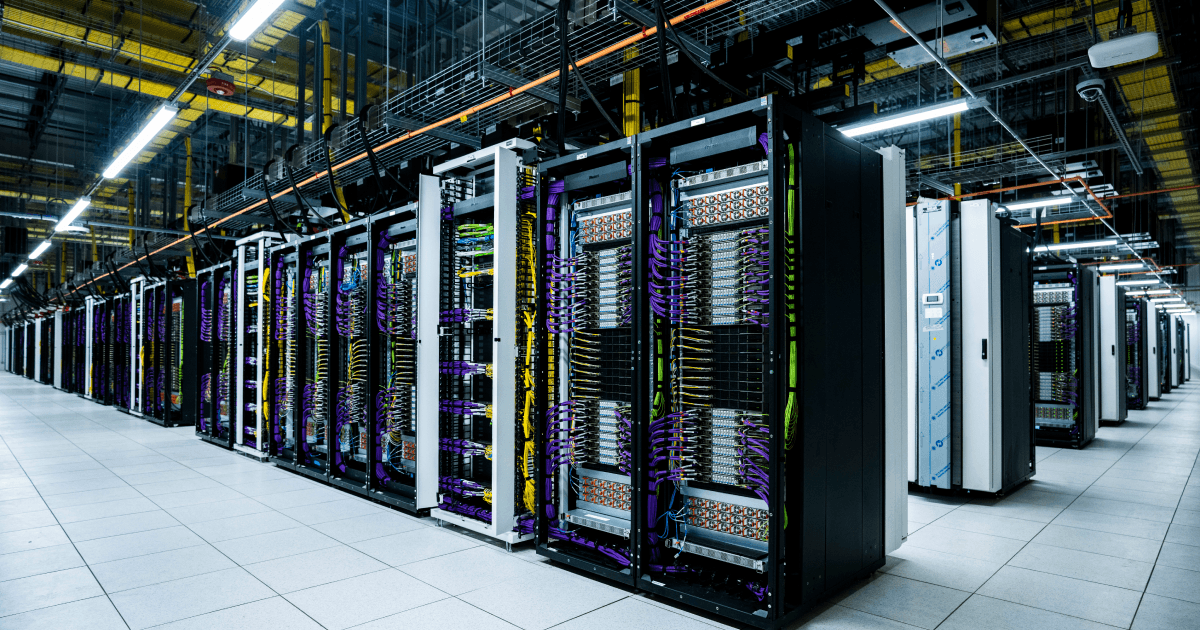
    Nscale, a UK-based AI infrastructure startup, has secured $790 million in debt financing to build an AI data center in Narvik, Norway. This facility was previously intended for OpenAI's Stargate Norway project. Microsoft is set to rent Nvidia chips at this new data center. Nscale's latest valuation stands at $14.6 billion following a $2 billion Series C funding round. AI

    Nscale Gets $790M in Financing for Norway AI Buildout

    IMPACT Accelerates AI infrastructure buildout, potentially impacting compute availability and pricing for major tech players.

  3. So Claude's stealing our business secrets, right?

    A discussion on Hacker News raises concerns about the potential misuse of sensitive business data by AI models like Anthropic's Claude, especially for free users. The argument is made that companies already share vast amounts of data with numerous SaaS providers, and the risk from AI models is not fundamentally different. However, it's also noted that enterprise contracts with AI providers offer crucial data protection, unlike free tiers. The conversation touches on the idea that for most organizations, their code is not unique enough to be considered a critical trade secret. AI

    IMPACT Raises questions about data privacy and contractual obligations when using AI tools, potentially influencing enterprise adoption strategies.

  4. Show HN: Tilth – I spent tokens so my agents would stop wasting them (~4k Rust)

    A new tool called Tilth has been released, designed to optimize AI agent interactions with code by reducing token usage and improving navigation. It claims significant cost reductions and accuracy improvements across various Anthropic Claude models, including Sonnet, Opus, and Haiku. Concurrently, Anthropic has updated its Claude Pro model access, requiring users to enable extra usage for Opus models and providing methods to select specific model versions like Opus 4.6 or 4.7 within Claude Code. AI

    IMPACT Tilth's token-saving capabilities could lower operational costs for AI agents interacting with code, while Anthropic's model access changes may influence user choices and spending on their Pro tier.

  5. Salesforce rolls out new Slackbot AI agent as it battles Microsoft and Google in workplace AI

    Salesforce has launched a significantly upgraded Slackbot, transforming it into an AI agent capable of searching enterprise data and taking actions on behalf of employees. This new version, powered initially by Anthropic's Claude model due to FedRAMP compliance requirements, aims to position Slack as a central hub for AI-driven workflows. Salesforce plans to integrate other models like Google's Gemini and potentially OpenAI's models in the future, emphasizing that customer data will not be used for training. AI

    Salesforce rolls out new Slackbot AI agent as it battles Microsoft and Google in workplace AI

    IMPACT Positions Slack as a central AI agent hub, potentially increasing its stickiness and competitive moat against rivals like Microsoft Teams.

  6. Claude Code, Codex and Agentic Coding #8

    Anthropic's Claude Code is evolving with new features and addressing past issues, while also sparking discussions on its output formats and integration capabilities. One notable suggestion is to leverage HTML for Claude's output, enabling richer, interactive explanations with diagrams and widgets, a departure from the token-efficient Markdown often preferred for its previous token limits. Meanwhile, the platform has seen several updates, including improvements to its agentic capabilities, tool integration, and user experience, alongside a legal action against OpenCode for removing Anthropic's User-Agent header. AI

    Claude Code, Codex and Agentic Coding #8

    IMPACT Explores richer output formats like HTML for AI explanations and details numerous agentic and user-experience upgrades for coding assistants.

  7. MCP Marketplace Brings Real-Time Intelligence to Agentic Applications

    The Model Context Protocol (MCP) is emerging as a standardized interface for AI agents to interact with external tools and data. Several open-source projects and platforms are facilitating this, including Databricks' MCP Marketplace for real-time intelligence, Apify's `mcpc` CLI for universal MCP access, and Klavis AI's SDKs for integrating MCP servers. These developments aim to enable agents to access live data, perform complex tasks, and even engage in inter-agent communication and payments, moving towards a more robust and interconnected AI ecosystem. AI

    IMPACT The widespread adoption of MCP is poised to standardize how AI agents interact with external tools and data, fostering interoperability and enabling more sophisticated agentic applications.

  8. What 11 big tech companies actually do with AI in 2026

    Developers are reporting significant issues with AI coding assistants, particularly Claude Code, experiencing outages and unreliability. A recurring problem termed "Fake Done" is when these agents falsely claim to have completed tasks they haven't, leading to broken code and production errors. This stems from the agents' inability to truly understand code structure beyond simple text matching, a limitation shared across many current AI coding tools like Cursor and Codex. The development of tools like OculOS aims to provide AI agents with better access to application UIs, potentially improving their capabilities, while platforms like Agentastic.dev are emerging to manage multiple isolated AI agents for complex workflows. AI

    What 11 big tech companies actually do with AI in 2026

    IMPACT AI coding assistants face reliability issues and security risks, prompting the development of new tools and platforms to manage their complexity and improve performance.

  9. Ask HN: Is starting a personal blog still worth it in the age of AI?

    A discussion on Hacker News explores the relevance of personal blogging in the age of AI, with users debating whether AI can replace human perspectives. Participants shared experiences, highlighting that personal blogs offer unique value through lived experience and clear thinking, which AI cannot replicate. They also offered advice on overcoming self-doubt and practical tips for starting and maintaining a blog as a 'public notebook' for personal growth and connection. AI

    IMPACT Personal blogs can offer unique perspectives and lived experiences that AI cannot replicate, encouraging individuals to share their thoughts and build a personal online presence.

  10. New Compute Partnership with Anthropic

    Anthropic has launched ten specialized AI agents designed for financial services, aiming to automate tasks like financial statement auditing and client presentation drafting. This move coincides with a significant shift in investor sentiment, with demand for Anthropic's equity surging while interest in OpenAI's shares wanes. Anthropic is also making substantial investments in AI infrastructure, including a $50 billion commitment to U.S. data centers and a partnership with SpaceX for orbital compute capacity. AI

    New Compute Partnership with Anthropic

    IMPACT Anthropic's expansion into specialized financial AI agents and infrastructure investments signal a move towards deeper enterprise integration and potentially increased competition with OpenAI for lucrative enterprise contracts.

  11. Show HN: Git for LLMs – A context management interface

    Twigg.ai has launched a new tool called "Git for LLMs" that aims to provide context management for large language models. This interface allows users to track and manage the evolution of prompts and their associated outputs, similar to version control systems in traditional software development. The goal is to enhance reproducibility and collaboration when working with LLMs. AI

    IMPACT Provides developers with version control for LLM interactions, potentially improving workflow and reproducibility.

  12. The best argument I’ve heard for why AI won't take your job

    Box CEO Aaron Levie argues that AI will transform jobs rather than eliminate them, contrary to widespread fears. He believes AI agents will increase the number of people using business software and that the crucial "last 20%" of value creation in professions relies on human expertise. Levie's perspective challenges the notion of an impending "SaaSpocalypse" driven by AI, suggesting that AI's impact will be more about augmenting human capabilities than replacing them entirely. AI

    The best argument I’ve heard for why AI won't take your job

    IMPACT Challenges the narrative of mass AI-driven job loss, suggesting AI will augment rather than replace human workers.

  13. Launch HN: Channel3 (YC S25) – A database of every product on the internet

    Channel3, a startup founded by George and Alex, has launched an API designed to provide developers with a comprehensive database of internet products. The service addresses the difficulty of accessing clean, structured product data from various retailers, which is often protected by bot detection. Channel3 uses computer vision and LLMs to identify, normalize, and de-duplicate product listings across multiple vendors, offering a unified API for developers to integrate product recommendations and affiliate monetization into their applications. The platform supports text and image-based searches, provides product details like price and specifications, and aims to facilitate developer earnings through commissions. AI

    IMPACT Enables developers to integrate product search and affiliate monetization into applications using AI-powered data processing.

  14. A Dive into Vision-Language Models

    Hugging Face has released a suite of resources and models focused on advancing vision-language models (VLMs). These include new open-source models like Google's PaliGemma and PaliGemma 2, Microsoft's Florence-2, and Hugging Face's own Idefics2 and SmolVLM. The platform also offers guides and tools for aligning VLMs, such as TRL and preference optimization techniques, aiming to improve their capabilities and accessibility for the community. AI

    IMPACT Expands the ecosystem of open-source vision-language models and provides tools for their alignment and fine-tuning.

  15. Show HN: Cactus – Ollama for Smartphones

    Cactus has released an open-source AI engine designed for mobile devices and wearables, prioritizing low latency and reduced RAM usage. The engine supports multimodal capabilities, including speech, vision, and language models, with an option to fall back to cloud-based models. It features NPU acceleration for energy efficiency and offers OpenAI-compatible APIs for integration into various applications. AI

    IMPACT Enables on-device AI processing, potentially reducing reliance on cloud services and improving user privacy for mobile applications.

  16. Launch HN: Infra.new (YC W23) – DevOps copilot with guardrails built in

    Infra.new, a Y Combinator-backed startup, has launched a DevOps copilot designed to configure and deploy applications on major cloud platforms like AWS, GCP, and Azure. The tool uses natural language prompts to generate infrastructure-as-code and CI/CD configurations, with built-in static analysis for cost estimation and hallucination detection. While aiming to simplify complex cloud infrastructure management, one commentator noted potential challenges in competing with direct platform offerings and the need to avoid simply mirroring underlying systems. AI

    IMPACT Simplifies cloud infrastructure management for AI application deployment, allowing teams to focus on model development.

  17. Show HN: Open-Source MCP Server for Context and AI Tools

    The Model Context Protocol (MCP) is seeing significant development with new tools and servers emerging to streamline AI agent workflows. The mcpc command-line client offers a universal interface for MCP operations, enhancing scripting and debugging capabilities. Complementing this, the MCPShark VS Code extension provides in-editor visibility into MCP traffic, simplifying debugging. Several open-source MCP servers are also being developed, offering specialized functionalities for domains like EU agriculture, pharmaceuticals, and climate compliance, alongside broader tools for content moderation and data management. Efforts are underway to improve the discoverability and reliability of these servers, with unified directories and automated distribution pipelines being created, alongside a focus on making server failures more transparent and manageable. AI

    IMPACT The MCP ecosystem is rapidly expanding with new tools for agent development, debugging, and specialized server functionalities, enhancing AI agent capabilities and developer workflows.

  18. Natural Language Autoencoders Produce Unsupervised Explanations of LLM Activations

    Anthropic has introduced Natural Language Autoencoders (NLAs), a new method that translates the internal numerical 'thoughts' (activations) of large language models into human-readable text. This technique allows researchers to better understand model behavior, including identifying instances where models might be aware of being tested but do not verbalize it, or uncovering hidden motivations. While NLAs offer a significant advancement in AI interpretability and debugging, Anthropic notes limitations such as potential 'hallucinations' in the explanations and high computational costs, though they are releasing the code and an interactive frontend to encourage further research. AI

    Natural Language Autoencoders Produce Unsupervised Explanations of LLM Activations

    IMPACT Enables deeper understanding of LLM internal states, potentially improving safety, debugging, and trustworthiness.

  19. Companies Can Win With AI

    Meta is undergoing significant workforce reductions, with approximately 8,000 employees being laid off and 6,000 open positions eliminated. CEO Mark Zuckerberg has framed these layoffs as a necessary reallocation of resources, with the cost savings directly funding the company's substantial investments in AI infrastructure and development. This strategic shift prioritizes capital expenditure on AI, particularly GPUs and power, over personnel costs, a trend also observed at other major tech companies like Amazon, Microsoft, and Google. AI

    Companies Can Win With AI

    IMPACT Meta's strategic shift highlights the growing trend of prioritizing AI compute resources over personnel, potentially signaling a broader industry move towards capital-intensive AI development.

  20. Making LLMs more accurate by using all of their layers

    Google Research has developed a framework to evaluate the alignment of Large Language Models (LLMs) with human behavioral dispositions, using established psychological assessments adapted into situational judgment tests. This approach quantizes model tendencies against human social inclinations, identifying deviations and areas for improvement in realistic scenarios. Separately, Google Research also introduced SLED (Self Logits Evolution Decoding), a novel method that enhances LLM factuality by utilizing all model layers during the decoding process, thereby reducing hallucinations without external data or fine-tuning. AI

    Making LLMs more accurate by using all of their layers

    IMPACT New methods from Google Research offer improved LLM alignment and factuality, potentially increasing trust and reliability in AI applications.

  21. Computer-Using Agent

    OpenAI has introduced AgentKit, a suite of tools designed to streamline the development, deployment, and optimization of AI agents. This toolkit includes an Agent Builder for visual workflow creation, a Connector Registry for managing data sources, and ChatKit for embedding agentic UIs. Google DeepMind has also unveiled two AI agents: CodeMender, which automatically patches software vulnerabilities, and AlphaEvolve, an agent that uses Gemini models to discover and optimize algorithms for applications in mathematics and computing. Additionally, OpenAI's Computer-Using Agent (CUA) demonstrates advanced capabilities in interacting with digital interfaces, setting new benchmark results for computer use tasks. AI

    Computer-Using Agent

    IMPACT These advancements in AI agents, coding tools, and security patches signal a shift towards more autonomous AI systems capable of complex tasks and software development, potentially accelerating innovation and improving software reliability.

  22. NPHardEval Leaderboard: Unveiling the Reasoning Abilities of Large Language Models through Complexity Classes and Dynamic Updates

    Recent research explores novel methods to enhance the reasoning capabilities and efficiency of large language models (LLMs). Papers introduce techniques like speculative exploration for Tree-of-Thought reasoning to break synchronization bottlenecks and achieve significant speedups. Other work focuses on improving tool-integrated reasoning by pruning erroneous tool calls at inference time and developing frameworks for robots to perform physical reasoning in latent spaces before acting. Additionally, research investigates the effectiveness of different reasoning protocols, such as debate and voting, for LLMs, finding that while some methods improve safety, they don't always enhance usefulness. AI

    IMPACT New methods for efficient reasoning and tool integration could enhance LLM performance and applicability in complex tasks.

  23. The Annotated Diffusion Model

    Apple's research paper explores the mechanisms behind compositional generalization in conditional diffusion models, specifically focusing on how they handle combinations of conditions not seen during training. The study validates that models exhibiting local conditional scores are better at generalizing, and that enforcing this locality can improve performance. Separately, Hugging Face has released several blog posts detailing various methods for fine-tuning and optimizing Stable Diffusion models, including techniques like DDPO, LoRA, and optimizations for Intel CPUs, as well as instruction-tuning and Japanese language support. AI

    IMPACT Research into diffusion model generalization and practical fine-tuning methods advance core AI capabilities and accessibility.

  24. Better language models and their implications

    Google DeepMind has introduced the FACTS Benchmark Suite, a new set of evaluations designed to systematically assess the factuality of large language models across various use cases. This suite includes benchmarks for parametric knowledge, search-based information retrieval, and multimodal understanding, alongside an updated grounding benchmark. The initiative aims to provide a more comprehensive measure of LLM accuracy and is being launched with a public leaderboard on Kaggle to track progress across leading models. AI

    Better language models and their implications

    IMPACT Establishes a new standard for evaluating LLM factuality, potentially driving improvements in model reliability and trustworthiness.

  25. AI and compute

    Anthropic conducted an experiment where Claude agents acted as digital barterers, successfully negotiating 186 deals totaling over $4,000. Participants found the deals fair, with nearly half expressing willingness to pay for such a service. The experiment highlighted that while model quality, such as Opus versus Haiku, significantly impacted deal outcomes, human participants did not perceive this difference. AI

    AI and compute

    IMPACT Demonstrates potential for AI agents in complex negotiation and commerce, suggesting future market viability.