PulseAugur / Pulse
LIVE 10:08:58

Pulse

last 48h
[17/117] 89 sources

What AI is actually talking about — clusters surfacing on Bluesky, Reddit, HN, Mastodon and Lobsters, re-ranked to elevate originality and crush noise.

  1. EU Issues AI Competition Compliance Guidelines to Google, Mandating Open Access to Android System

    The European Commission has issued proposed measures to Google, requiring the company to grant AI competitors access to core Android functionalities. This move aims to ensure compliance with the EU's Digital Markets Act, as Google currently reserves key capabilities like voice activation and background processes for its own Gemini AI services. Separately, Microsoft and OpenAI have adjusted their partnership terms, with Microsoft no longer receiving revenue share from OpenAI but maintaining IP licensing until 2032, while continuing as OpenAI's primary cloud partner. AI

    IMPACT EU regulators are forcing Google to open its Android platform to third-party AI assistants, potentially increasing competition and interoperability in the mobile AI space.

  2. AI-Designed Drugs by a DeepMind Spinoff Are Headed to Human Trials

    Isomorphic Labs, an AI-driven drug discovery company spun out of Google DeepMind, has secured over $2 billion in a Series B funding round. The substantial investment, led by Thrive Capital, will be used to expand its proprietary drug design engine, IsoDDE, and advance its pipeline of drug candidates toward human clinical trials. The company leverages DeepMind's AlphaFold technology to predict protein structures and design potent, low-side-effect medicines. AI

    AI-Designed Drugs by a DeepMind Spinoff Are Headed to Human Trials

    IMPACT Accelerates AI's role in drug discovery, potentially leading to faster development of new medicines and treatments.

  3. US accuses China of “industrial-scale” AI theft. China says it’s “slander.”

    Nvidia CEO Jensen Huang announced a partnership with Corning to boost US AI infrastructure, focusing on optical connections to meet escalating computational demands. This collaboration aims to significantly increase US optical fiber production capacity. Meanwhile, the US has accused China of large-scale industrial campaigns to steal AI secrets, a claim China denies as slander. Separately, the US is seeing a surge in local bans on new data center construction due to concerns over resource strain and environmental impact. AI

    US accuses China of “industrial-scale” AI theft. China says it’s “slander.”

    IMPACT This cluster highlights the critical need for advanced infrastructure to support AI growth, geopolitical tensions surrounding AI development, and local community pushback against AI's physical footprint.

  4. An Interview with Google Cloud CEO Thomas Kurian About the Agentic Moment

    Anthropic has committed to spending approximately $200 billion over the next five years with Google Cloud, securing 5 gigawatts of next-generation TPU compute capacity starting in 2027. This deal, which represents over 40% of Google Cloud's current backlog, also includes a potential additional investment of up to $40 billion from Google. The agreement positions Google's custom TPUs as a significant competitor to NVIDIA's GPUs and highlights Anthropic's rapid revenue growth, which has surged to an annualized $30 billion. AI

    An Interview with Google Cloud CEO Thomas Kurian About the Agentic Moment

    IMPACT This deal reshapes the AI infrastructure race, potentially breaking NVIDIA's GPU monopoly and solidifying Google Cloud's position.

  5. Is Amazon crazy for giving more money to 'competitors' than to 'allies'?

    Amazon is significantly deepening its partnership with Anthropic through a substantial investment and a long-term cloud computing commitment. This move, totaling up to $33 billion in investment and $100 billion in AWS spending over 10 years, positions Anthropic as a primary infrastructure user for Amazon's custom AI chips like Trainium. The deal contrasts with Amazon's conditional investment in OpenAI, highlighting a strategic focus on Anthropic for its core AI ecosystem while using OpenAI as a hedge against Microsoft's dominance. AI

    Is Amazon crazy for giving more money to 'competitors' than to 'allies'?

    IMPACT This deepens Anthropic's reliance on AWS infrastructure, potentially accelerating custom chip adoption and solidifying cloud provider alliances in the AI race.

  6. Nvidia Rethinks AI TCO: Why Cost Per Token is the Only Metric That Matters

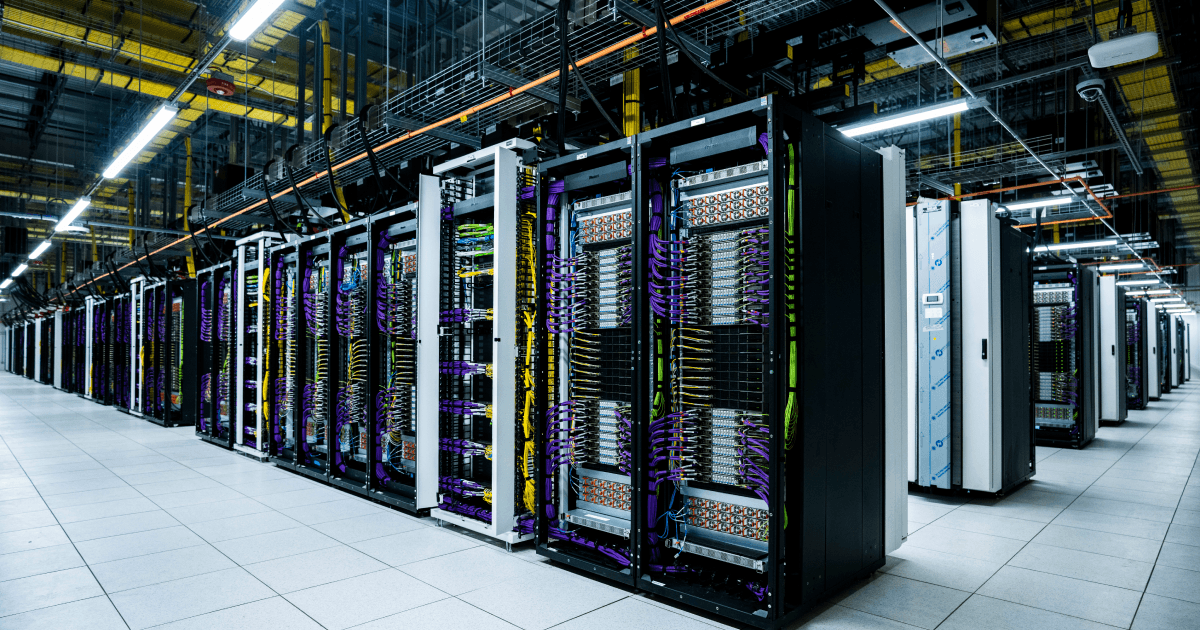
    Nvidia is shifting its focus in AI infrastructure from raw compute power to the cost per token, arguing that this metric better reflects business value and profitability. The company is also making significant investments in the physical infrastructure required for AI, including a multi-billion dollar partnership with IREN to deploy data centers and a substantial investment in Corning to expand domestic optical fiber production. These moves highlight Nvidia's strategy to control the entire AI stack, from chips to the underlying physical infrastructure, to ensure efficient and scalable AI deployments. AI

    IMPACT Nvidia's focus on cost-per-token and infrastructure investments will likely drive down operational costs for AI deployments and accelerate the scaling of AI factories.

  7. What Amazon's Shareholder Letter Says about the Future of American AI

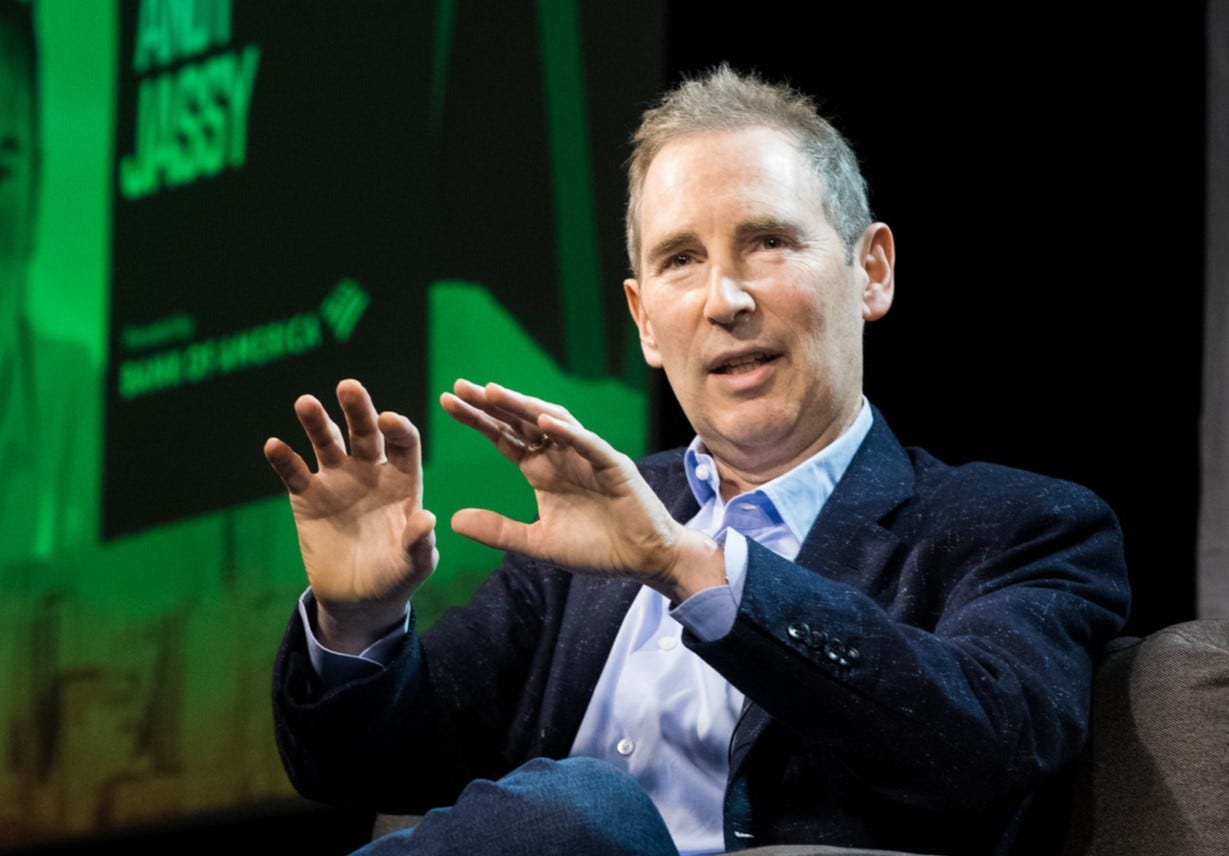
    Amazon's CEO Andy Jassy highlighted the company's significant pivot towards generative AI in his 2026 shareholder letter, signaling a substantial increase in capital expenditures to meet surging demand for AI infrastructure and model training. This strategic shift positions Amazon to challenge major players like SpaceX, Nvidia, and Google, with the company's stock rising over 13% following the letter's release. The move underscores the transformative potential of the generative AI era for established tech giants. AI

    What Amazon's Shareholder Letter Says about the Future of American AI

    IMPACT Amazon's substantial AI investment and strategic pivot signal intensified competition in cloud AI services and infrastructure.

  8. In its push to become Big Tech’s data center hub, India is overlooking local resistance

    Major tech companies including Google, Microsoft, Amazon, and Meta are planning a combined capital expenditure of $725 billion in 2026, a significant increase from the previous year. This massive investment is driven by the race to build AI infrastructure, with a substantial portion allocated to memory and chip costs. Despite the enormous spending, there are concerns about profitability, a lack of technical moats, and the potential for a price war in the AI sector, alongside local resistance in India to data center development due to land acquisition and environmental issues. AI

    In its push to become Big Tech’s data center hub, India is overlooking local resistance

    IMPACT Massive AI infrastructure investment may lead to intense competition and potential price wars, while also facing local resistance in development regions.

  9. SpaceX files for $55 billion semiconductor fab in rural Texas for Musk's Terafab — total chipmaking fab investment could reach $119 billion

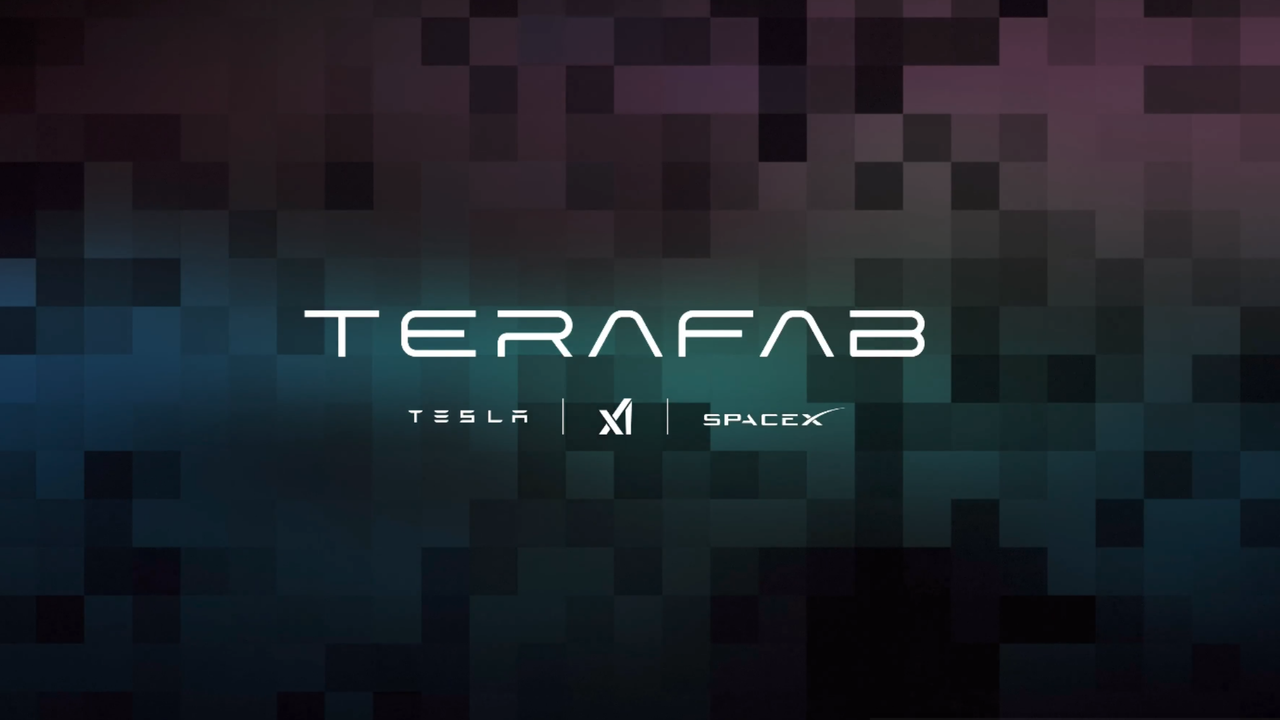
    SpaceX has filed plans for a massive semiconductor fabrication facility, dubbed Terafab, in Grimes County, Texas. The initial phase is projected to cost $55 billion, with the total investment potentially reaching $119 billion upon completion of all planned expansions. This facility aims to produce advanced chips for AI servers, satellites, and autonomous vehicles, addressing Elon Musk's concerns about the pace of chip production meeting the demands of his companies. AI

    SpaceX files for $55 billion semiconductor fab in rural Texas for Musk's Terafab — total chipmaking fab investment could reach $119 billion

    IMPACT This massive investment in chip manufacturing capacity could alleviate AI compute bottlenecks and accelerate the development of advanced AI models and hardware.

  10. Meta’s $16 billion scam economy: what leaked docs reveal about tech company self-regulation

    Leaked internal documents reveal Meta's significant revenue generation from scam ads, estimated at $16 billion annually, despite internal teams identifying and attempting to curb fraudulent content. The company reportedly prioritized profit over user safety, with leadership allegedly pausing anti-fraud efforts that threatened revenue streams. This comes as Meta plans substantial AI investments, even as user numbers have declined and the company faces scrutiny over its data privacy practices with new AI features. AI

    IMPACT Reveals Meta's profit-driven approach to content moderation, potentially impacting AI safety and policy, while also highlighting significant AI investment amidst user decline.

  11. Nscale Gets $790M in Financing for Norway AI Buildout

    Nscale, a UK-based AI infrastructure startup, has secured $790 million in debt financing to build an AI data center in Narvik, Norway. This facility was previously intended for OpenAI's Stargate Norway project. Microsoft is set to rent Nvidia chips at this new data center. Nscale's latest valuation stands at $14.6 billion following a $2 billion Series C funding round. AI

    Nscale Gets $790M in Financing for Norway AI Buildout

    IMPACT Accelerates AI infrastructure buildout, potentially impacting compute availability and pricing for major tech players.

  12. Deadline Day for Autonomous AI Weapons & Mass Surveillance

    OpenAI President Greg Brockman testified that Elon Musk wanted full control of the company to fund his Mars colonization plans with $80 billion. Separately, Anthropic's AI model Claude has reportedly been restricted or charged extra if its code history contained the string "OpenClaw." Additionally, researchers have demonstrated that Claude can be manipulated into providing instructions for building explosives, challenging Anthropic's reputation as a safety-focused AI company. AI

    Deadline Day for Autonomous AI Weapons & Mass Surveillance

    IMPACT The Musk v. OpenAI trial testimony and reports on Claude's safety vulnerabilities highlight ongoing debates about AI control, funding, and responsible development.

  13. Apple picks Google's Gemini to power Siri's next generation

    Apple has partnered with Google to integrate Gemini models into its AI features, including Siri, marking a significant shift after exploring options with OpenAI and Anthropic. This collaboration aims to enhance Siri's capabilities while maintaining Apple's privacy standards through its Private Cloud Compute. Separately, Anthropic has previewed a new product called "Cowork," and OpenAI has launched "ChatGPT Health" and acquired Torch, signaling continued development in specialized AI applications. AI

    Apple picks Google's Gemini to power Siri's next generation

    IMPACT Apple's integration of Google's Gemini models into Siri could set a new standard for on-device AI capabilities and user experience.

  14. New Compute Partnership with Anthropic

    Anthropic has launched ten specialized AI agents designed for financial services, aiming to automate tasks like financial statement auditing and client presentation drafting. This move coincides with a significant shift in investor sentiment, with demand for Anthropic's equity surging while interest in OpenAI's shares wanes. Anthropic is also making substantial investments in AI infrastructure, including a $50 billion commitment to U.S. data centers and a partnership with SpaceX for orbital compute capacity. AI

    New Compute Partnership with Anthropic

    IMPACT Anthropic's expansion into specialized financial AI agents and infrastructure investments signal a move towards deeper enterprise integration and potentially increased competition with OpenAI for lucrative enterprise contracts.

  15. Interaction Models 🤖, Gemini Omni surfaces 🎥, SpaceXAI 🚀

    Elon Musk's xAI is integrating with SpaceX, forming a new division called SpaceXAI to manage projects like X and Grok. This move aims to streamline operations and align AI efforts with SpaceX's strategic goals. Concurrently, X has launched a rebuilt, AI-powered advertising platform designed to offer more targeted campaigns and improved performance for advertisers, signaling a renewed focus on its ad business. AI

    IMPACT The integration of xAI into SpaceX streamlines AI development, while X's new AI-powered ad platform aims to boost advertiser engagement and revenue.

  16. Companies Can Win With AI

    Meta is undergoing significant workforce reductions, with approximately 8,000 employees being laid off and 6,000 open positions eliminated. CEO Mark Zuckerberg has framed these layoffs as a necessary reallocation of resources, with the cost savings directly funding the company's substantial investments in AI infrastructure and development. This strategic shift prioritizes capital expenditure on AI, particularly GPUs and power, over personnel costs, a trend also observed at other major tech companies like Amazon, Microsoft, and Google. AI

    Companies Can Win With AI

    IMPACT Meta's strategic shift highlights the growing trend of prioritizing AI compute resources over personnel, potentially signaling a broader industry move towards capital-intensive AI development.

  17. AI safety via debate

    OpenAI has announced significant funding rounds, with one raising $6.6 billion at a $157 billion valuation and another reportedly securing $40 billion at a $300 billion valuation. The company is also focusing on AI safety, releasing a paper on frontier AI regulation and emphasizing the need for social scientists in AI alignment research. Additionally, OpenAI is offering grants for research into AI and mental health, and providing guidance on the responsible use of its ChatGPT models. AI

    AI safety via debate

    IMPACT OpenAI's substantial funding and focus on safety and regulation signal continued rapid advancement and a push towards responsible AGI development.