PulseAugur / Pulse
LIVE 06:54:53

Pulse

last 48h
[10/10] 89 sources

What AI is actually talking about — clusters surfacing on Bluesky, Reddit, HN, Mastodon and Lobsters, re-ranked to elevate originality and crush noise.

  1. I was trying to build persistent memory but ended up with this!

    A developer created a tool called GrapeRoot to optimize how LLMs like Anthropic's Claude Code interact with large codebases. The tool addresses the high cost and inefficiency of repeatedly re-reading code by using a knowledge graph approach for pre-injection, rather than standard context engineering. Benchmarks indicate GrapeRoot offers improved quality and significantly lower costs, with savings of 40-60% on certain tasks compared to vanilla Claude Code. AI

    IMPACT Optimizes LLM interaction with codebases, potentially reducing costs for developers working with large code repositories.

  2. Musk sells 220,000 GPUs to Claude for use: 5-hour quota doubles, cooperation to build space computing power

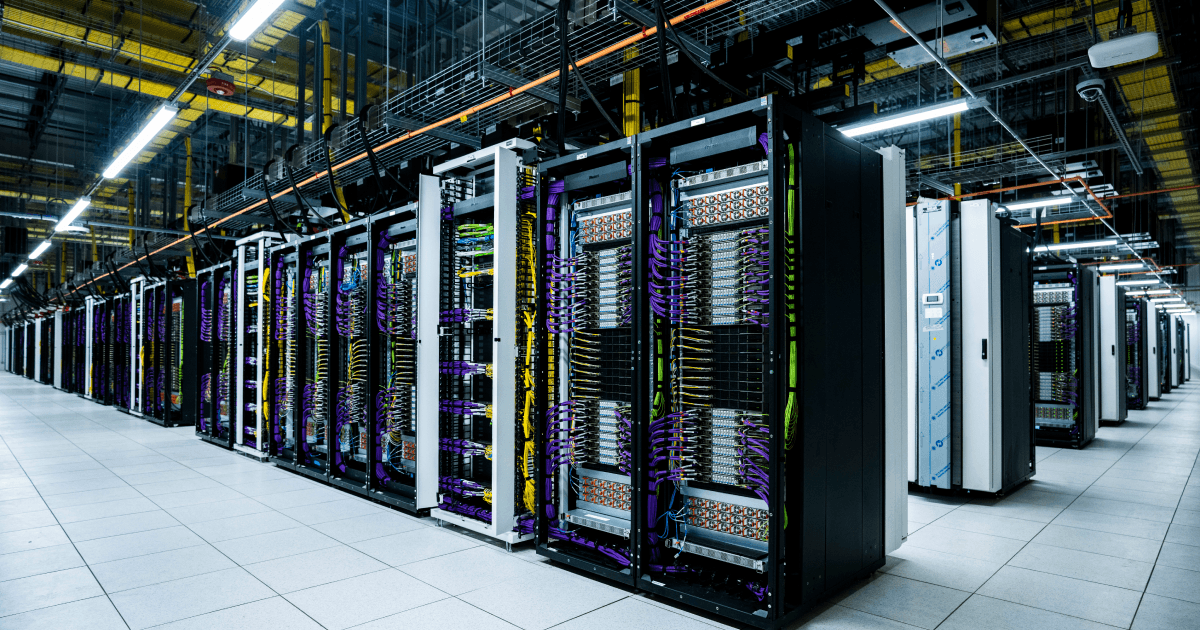
    Anthropic has secured a significant compute deal with SpaceX, taking over the entire capacity of the Colossus 1 data center, which houses over 220,000 NVIDIA GPUs. This partnership immediately doubles the rate limits for paid Claude Code users and removes peak-hour restrictions, addressing user complaints about service strain. The agreement also includes Anthropic's interest in developing orbital AI compute capacity with SpaceX, signaling a strategic move to secure infrastructure amidst rapid growth and intense competition. AI

    IMPACT Secures critical compute resources for Anthropic, potentially enabling faster model development and wider user access, while also highlighting the growing importance of strategic infrastructure partnerships.

  3. SpaceX and Anthropic, xAI’s Two Companies, Elon Musk and SpaceXAI’s Future

    Anthropic has entered into a significant compute deal with SpaceXAI, agreeing to lease capacity from Elon Musk's Colossus 1 supercomputer in Memphis, Tennessee. This partnership aims to alleviate Anthropic's growing compute demands, which have led to usage limits for its Claude Pro and Claude Max subscribers. The agreement also marks a notable shift in Musk's public stance towards Anthropic, following previous criticisms. AI

    IMPACT Reshapes AI infrastructure dynamics, potentially impacting pricing and availability for AI workloads.

  4. One App to Rule All Knowledge Work

    AI-powered desktop applications are emerging as the new operating system for knowledge work, integrating with existing tools like email and calendars. Companies like OpenAI, Anthropic, and Cursor are developing unified platforms that handle coding, planning, and tracking tasks. These applications aim to streamline workflows by connecting directly to user data and offering advanced agentic capabilities, potentially redefining office software for the next decade. AI

    One App to Rule All Knowledge Work

    IMPACT AI desktop applications are converging, integrating with existing tools to streamline knowledge work and potentially redefine office software.

  5. Prompt-caching – auto-injects Anthropic cache breakpoints (90% token savings)

    A new plugin called prompt-caching has been released that significantly reduces token costs when using Anthropic's Claude models, particularly for developers. The plugin automatically identifies and caches stable content like system prompts and file reads, lowering costs by up to 90% on repeated interactions. While Anthropic has introduced its own auto-caching feature, prompt-caching offers enhanced observability and can be applied to custom applications built with the Anthropic SDK, addressing a different layer of cost optimization. AI

    IMPACT Developers can significantly reduce their Claude API costs by using this plugin for applications and agents.

  6. MCP is the USB-C of AI tools, and most devs are still using their AI assistant like it is 2023

    The Model Context Protocol (MCP) is emerging as a standard for connecting AI applications to external data and tools, enabling models like Claude and ChatGPT to access information and perform tasks. Several articles highlight MCP's role in bridging the gap between AI capabilities and real-world data access, emphasizing the need for secure and controlled connections, especially when interacting with sensitive databases. Tools like APIKumo are automating the creation of MCP endpoints for APIs, while Conexor provides infrastructure for secure database and API connections, underscoring the protocol's growing importance in making AI more functional and integrated. AI

    MCP is the USB-C of AI tools, and most devs are still using their AI assistant like it is 2023

    IMPACT MCP is becoming a crucial standard for AI integration, enabling seamless connections to data and tools and potentially simplifying development by offering a unified interface.

  7. OpenAI co-founds Agentic AI Foundation, donates AGENTS.md

    OpenAI, Anthropic, and Block have co-founded the Agentic AI Foundation (AAIF) under the Linux Foundation to provide open standards for interoperable agentic AI systems. OpenAI is contributing its AGENTS.md format to the foundation to ensure long-term support and adoption. This initiative aims to prevent fragmentation in the rapidly developing agentic AI ecosystem as these systems move into real-world production. The move is supported by major tech companies including Google, Microsoft, and AWS. AI

    OpenAI co-founds Agentic AI Foundation, donates AGENTS.md

    IMPACT Establishes a neutral governance body for agentic AI standards, potentially accelerating interoperability and safe adoption across industries.

  8. New Compute Partnership with Anthropic

    Anthropic has launched ten specialized AI agents designed for financial services, aiming to automate tasks like financial statement auditing and client presentation drafting. This move coincides with a significant shift in investor sentiment, with demand for Anthropic's equity surging while interest in OpenAI's shares wanes. Anthropic is also making substantial investments in AI infrastructure, including a $50 billion commitment to U.S. data centers and a partnership with SpaceX for orbital compute capacity. AI

    New Compute Partnership with Anthropic

    IMPACT Anthropic's expansion into specialized financial AI agents and infrastructure investments signal a move towards deeper enterprise integration and potentially increased competition with OpenAI for lucrative enterprise contracts.

  9. Companies Can Win With AI

    Meta is undergoing significant workforce reductions, with approximately 8,000 employees being laid off and 6,000 open positions eliminated. CEO Mark Zuckerberg has framed these layoffs as a necessary reallocation of resources, with the cost savings directly funding the company's substantial investments in AI infrastructure and development. This strategic shift prioritizes capital expenditure on AI, particularly GPUs and power, over personnel costs, a trend also observed at other major tech companies like Amazon, Microsoft, and Google. AI

    Companies Can Win With AI

    IMPACT Meta's strategic shift highlights the growing trend of prioritizing AI compute resources over personnel, potentially signaling a broader industry move towards capital-intensive AI development.

  10. Computer-Using Agent

    OpenAI has introduced AgentKit, a suite of tools designed to streamline the development, deployment, and optimization of AI agents. This toolkit includes an Agent Builder for visual workflow creation, a Connector Registry for managing data sources, and ChatKit for embedding agentic UIs. Google DeepMind has also unveiled two AI agents: CodeMender, which automatically patches software vulnerabilities, and AlphaEvolve, an agent that uses Gemini models to discover and optimize algorithms for applications in mathematics and computing. Additionally, OpenAI's Computer-Using Agent (CUA) demonstrates advanced capabilities in interacting with digital interfaces, setting new benchmark results for computer use tasks. AI

    Computer-Using Agent

    IMPACT These advancements in AI agents, coding tools, and security patches signal a shift towards more autonomous AI systems capable of complex tasks and software development, potentially accelerating innovation and improving software reliability.